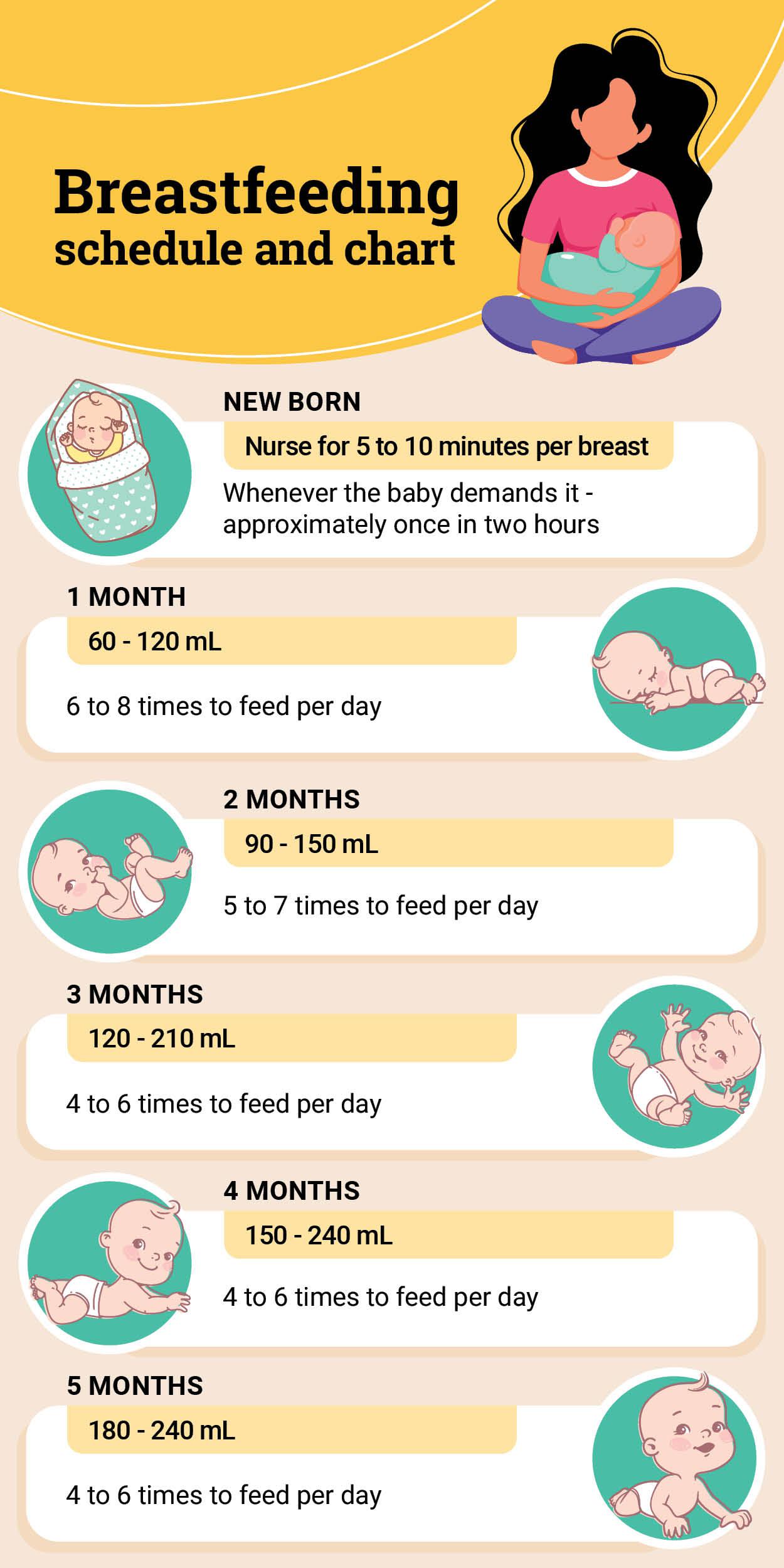
A 5-month-old will often breastfeed about 5 to 8 times in 24 hours, but there is no single correct number for every baby. Some babies nurse more often, especially during growth spurts, while others take larger or faster feeds and nurse less often.
For most healthy babies in the United States, the best plan is to breastfeed on demand. Offer the breast when your baby shows early hunger cues rather than following the clock alone. A baby who is growing well, has regular wet diapers, and seems alert between feeds is usually getting enough milk.
The American Academy of Pediatrics (AAP) and the Centers for Disease Control and Prevention (CDC) support continued breastfeeding through 6 months and beyond, as desired by the parent and child. Most babies begin complementary foods at about 6 months, but solid foods should not replace breast milk yet.
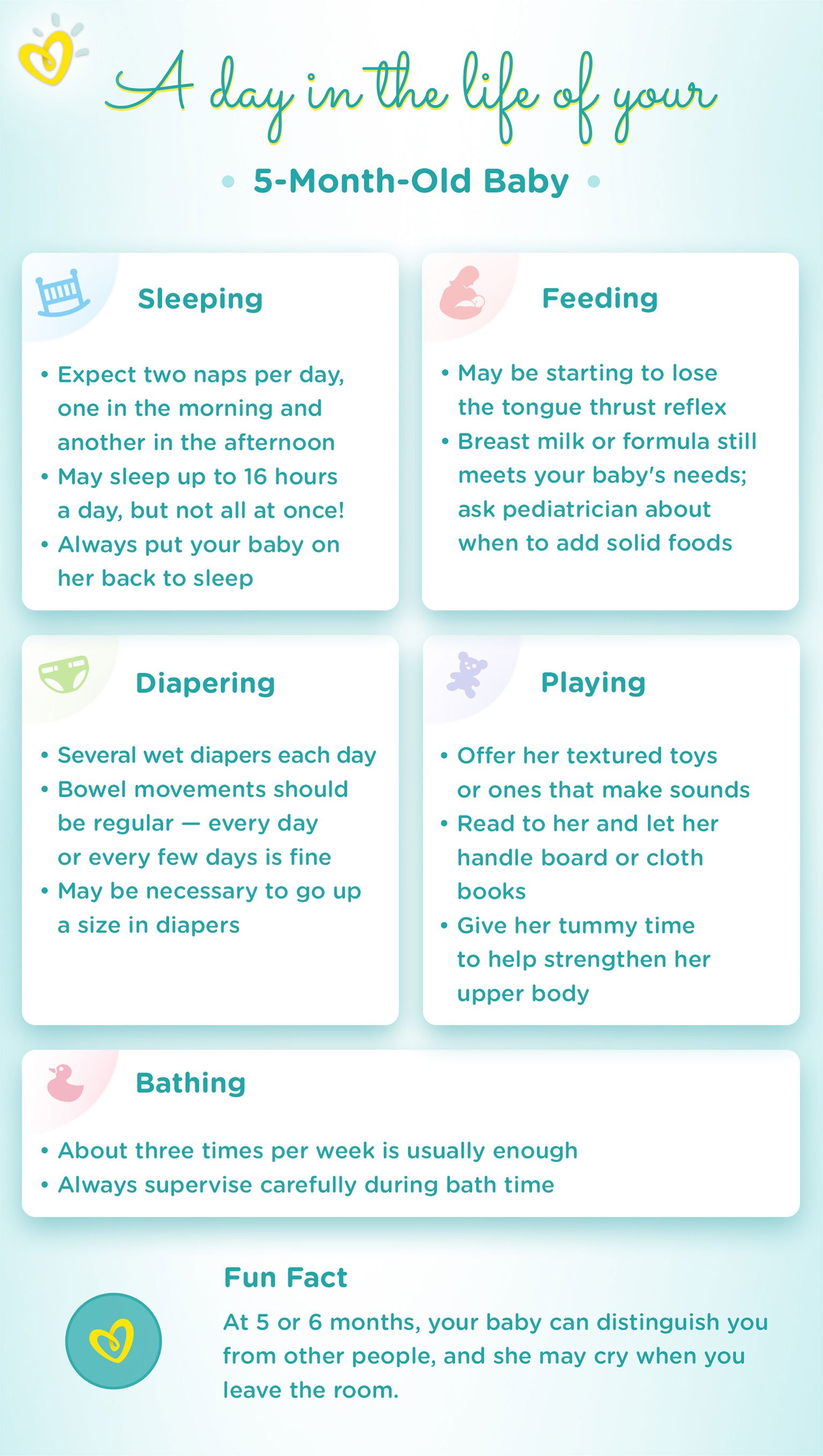
How many times should a 5-month-old breastfeed?
Most 5-month-olds breastfeed several times during the day and may still nurse at night. A common pattern is roughly every 3 to 4 hours, but some babies want to nurse every 2 hours and others may go longer between feeds.
The number of feeds can change from day to day. Your baby may nurse more often during:
- A growth spurt
- Illness or teething
- Hot weather
- Travel or a change in routine
- Periods of increased activity
- Times when your milk supply is temporarily lower
A 5-month-old may also become more efficient at nursing. This means a short feed does not always mean your baby received too little milk. Some babies can take a full feed in 5 to 10 minutes, while others need 20 minutes or more.
A typical 24-hour pattern
The following is an example, not a required schedule:
| Time | Possible feeding pattern |
|---|---|
| 7 a.m. | Nurse after waking |
| 10 a.m. | Nurse before or after a nap |
| 1 p.m. | Nurse |
| 4 p.m. | Nurse |
| 7 p.m. | Nurse before bed |
| Overnight | One to three feeds, or none |
Some babies nurse more often in the evening. This is sometimes called cluster feeding. It can be normal, especially before a longer sleep period.
The main point is simple: counting feeds can help you notice a pattern, but diaper output, growth, and your baby’s behavior are better signs of adequate intake.

Should you nurse a 5-month-old on a schedule or on demand?
For most healthy babies, nursing on demand works better than enforcing a strict schedule. Offer the breast when your baby shows hunger cues, and allow your baby to stop when full.
Early hunger cues include:
- Turning the head toward the breast
- Opening and closing the mouth
- Sucking on hands or fingers
- Bringing hands to the mouth
- Stirring or becoming more alert
- Making small sounds
Crying is a later hunger cue. A very upset baby may have a harder time latching, so responding to earlier signs can make feeding easier.
At the end of a feed, your baby may:
- Release the breast
- Turn away
- Relax the hands and arms
- Stop sucking and swallowing
- Fall asleep while relaxed
– Show little interest when the breast is offered again
Do not force your baby to finish one breast or take the second breast. You can offer the second side after the first, but let your baby decide whether to continue.
A flexible routine can still help. For example, you might offer the breast after waking, before naps, before bedtime, and whenever your baby shows hunger cues. This gives your day some structure without ignoring your baby’s needs.

How do you know if a 5-month-old is getting enough breast milk?
A 5-month-old is likely getting enough milk when several signs appear together. No single sign can confirm intake on its own.
Look for:
- At least about five or six very wet diapers per day after the early newborn period
- Regular stools, although stool frequency varies among breastfed babies
- Steady growth along your baby’s growth curve
- Audible swallowing during feeds
- A deep latch that is not painful
- A baby who seems relaxed or satisfied after many feeds
- Normal alertness and activity when awake
Your child’s clinician should track weight and length over time. One weight measurement is less useful than the overall pattern.
Breast softness is not a reliable sign of low milk supply. Around this age, your breasts may feel less full because your body has adjusted to your baby’s feeding pattern. Pumping less milk than expected also does not always mean your baby is not getting enough. Babies often remove milk more effectively than a breast pump.
Signs that feeding may need attention
Contact your baby’s pediatrician or a lactation professional if your baby:
- Has noticeably fewer wet diapers
- Is difficult to wake for feeds
- Seems weak or unusually sleepy
- Has a dry mouth or no tears when crying
- Has dark urine or pink-orange crystals in the diaper
- Nurses very briefly and seems hungry after nearly every feed
- Has persistent trouble latching
- Is not gaining weight as expected
- Vomits repeatedly or cannot keep feeds down
Seek urgent medical care for a baby who is hard to wake, has trouble breathing, appears severely dehydrated, or is not feeding.

How long should each nursing session last?
There is no required length for a nursing session. A 5-month-old may take a full feed in 5 minutes, 15 minutes, or longer.
Instead of watching the clock, watch for active milk transfer. During effective nursing, you may see or hear:
- A slow, deep suck
- Regular swallowing
- Movement near the baby’s jaw or ear
- A relaxed hand and body
- The breast becoming softer
Some babies nurse for comfort after they finish drinking. That is also normal if the parent is comfortable and the baby is safe.
If nursing is painful throughout the feed, check the latch. Pain that continues after the first few seconds, cracked nipples, bleeding, clicking sounds, or frequent slipping off the breast may point to a latch or oral-motor problem. A lactation consultant can assess the feeding in person.
A baby who suddenly takes much longer to feed may be distracted, tired, congested, or experiencing a change in milk flow. Try feeding in a quiet room and discuss ongoing changes with the pediatrician if diaper output or growth also changes.

How often should a 5-month-old nurse at night?
Night nursing varies widely at 5 months. Some babies still breastfeed two or more times overnight. Others wake once, and some sleep for a longer stretch without feeding.
Night waking does not automatically mean your breast milk supply is low or that your baby is not ready for sleep. Babies wake for many reasons, including hunger, comfort, changes in sleep cycles, illness, and normal development.
If your baby wakes, you can offer the breast when hunger seems likely. You do not need to wake a healthy, growing 5-month-old for every feed unless your child’s clinician has advised you to do so.
Continue to follow safe sleep guidance from the AAP:
- Place your baby on their back for every sleep.
- Use a firm, flat sleep surface.
- Keep pillows, blankets, toys, and other soft items out of the sleep space.
- Keep your baby’s sleep area in your room, but not in your bed.
- Avoid feeding on a couch or soft chair if you might fall asleep.
If you bring your baby into bed to feed, return the baby to their own sleep space before you go to sleep. Alcohol, cannabis, sedating medicines, smoking, and extreme fatigue increase the danger of bed-sharing.

Should a 5-month-old nurse before or after starting solid foods?
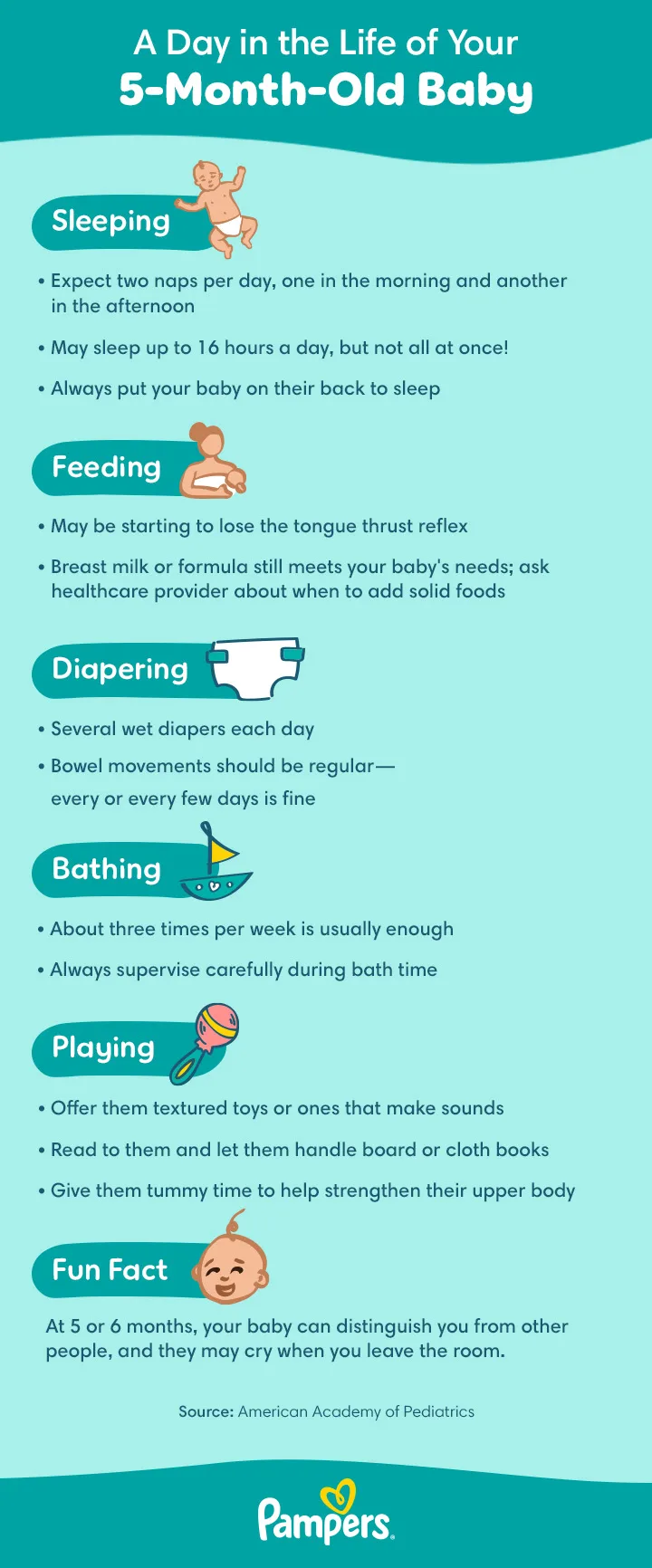
Most babies begin solid foods at around 6 months, not at 5 months, unless their health care provider gives different advice. Breast milk should remain the main source of nutrition during the first year.
When your baby is ready for solids, offer breast milk first or between meals so that solid foods do not displace needed milk. Early foods are for learning tastes, textures, and eating skills. They do not provide all the calories and nutrients that breast milk or infant formula provides at this age.
Signs of readiness for complementary foods include:
- Sitting with little support
- Good head and neck control
- Reaching for food
- Bringing objects to the mouth
- Opening the mouth when food is offered
- Swallowing food instead of pushing it out with the tongue
Do not start solids only because your baby wakes at night, seems interested in your food, or wants to nurse often. Those signs alone do not prove that your baby is ready.
The CDC advises avoiding honey before 12 months because of the risk of infant botulism. Cow’s milk should not replace breast milk or infant formula before 12 months. Ask your pediatrician about iron-rich foods, allergen introduction, and the safest way to begin.

What if you breastfeed and use formula?
If you use both breast milk and infant formula, your baby’s total number of feeds may vary. A formula bottle may replace a nursing session, or you may nurse first and offer a small amount of formula afterward.
If you want to maintain milk production, regular milk removal matters. When a bottle replaces a breastfeed, pumping around that time may help protect your supply. This is not a guarantee, because milk production can also be affected by latch, hormones, illness, medications, and individual differences.
Use commercial infant formula prepared exactly according to the label. Do not dilute formula, add extra powder, or use homemade formula. If you have questions about how much formula to offer, ask your baby’s clinician.
A combination-feeding plan should account for:
- Your baby’s weight gain
- Wet diapers
- How often your baby nurses
- How much formula your baby takes
- Your milk-supply goals
- Any medical reason for supplementation
Why might a 5-month-old suddenly nurse more often?
A temporary increase in nursing is often normal. Babies may ask to feed more during a growth spurt or when they are tired, sick, teething, or adjusting to a new routine.
Before assuming low milk supply, check the basics:
- Watch diaper output. A clear drop in wet diapers deserves medical advice.
- Look at the latch. A shallow latch can reduce milk transfer.
- Notice swallowing. Long periods of sucking without swallowing may signal a transfer problem.
- Consider distractions. A 5-month-old may stop often to look around.
- Check for illness. Congestion, fever, mouth pain, or ear pain can affect feeding.
- Review growth. Your pediatrician can compare current weight with earlier measurements.
Avoid using a baby’s frequent nursing alone as proof that you need lactation supplements, special foods, or a strict pumping plan. Those products and routines may not address the real cause.
A lactation consultant can help observe a feed, assess positioning, and discuss milk transfer. In the United States, you can look for an International Board Certified Lactation Consultant (IBCLC), often through a hospital, pediatric office, or local breastfeeding clinic.
Common mistakes when feeding a 5-month-old
The most common mistake is treating a sample schedule as a rule. A schedule can help you plan, but it should not override hunger cues, diaper changes, or medical advice.
Other mistakes include:
- Waiting for crying before offering the breast
- Measuring feeding success only by minutes at the breast
- Assuming soft breasts mean low supply
- Comparing your baby’s sleep or feeding pattern with another baby’s
- Starting solids early to make the baby sleep longer
- Limiting feeds to create a strict routine
- Ignoring pain, poor latch, or a drop in wet diapers
- Giving water, juice, or cow’s milk instead of breast milk or formula
A useful approach is to track feeds briefly if you are concerned. Record the time, which side you offered, wet diapers, and any unusual symptoms for 24 to 48 hours. Share that record with your pediatrician or lactation consultant rather than trying to diagnose the problem from the log alone.
Quick answers about nursing a 5-month-old
Is feeding every 2 hours normal at 5 months?
It can be normal, especially during a growth spurt, illness, teething, or periods of cluster feeding. If frequent feeding continues and your baby has fewer wet diapers, seems unsatisfied, or is not gaining weight, contact the pediatrician.
Can a 5-month-old go 4 hours without nursing?
Some healthy, growing babies can go 4 hours between daytime feeds. Others need to nurse sooner. Follow hunger cues and your clinician’s advice rather than forcing a fixed interval.
Does a 5-month-old need to nurse at night?
Not every baby needs a night feed, but many 5-month-olds still nurse overnight. Whether to wake your baby depends on growth, health, and advice from the baby’s health care provider.
How many wet diapers should a 5-month-old have?
Many breastfed babies have about five or six or more very wet diapers in 24 hours. A sudden decrease matters more than an exact number. Contact the pediatrician if diaper output falls or your baby shows signs of dehydration.
Should I wake my 5-month-old to breastfeed?
A healthy baby who is growing well usually does not need to be woken for every feed. Ask the pediatrician before allowing longer stretches if your baby was premature, has poor weight gain, is ill, or has another medical concern.
The bottom line
Most 5-month-olds nurse about 5 to 8 times in 24 hours, but a wider range can be normal. Offer the breast on demand, watch hunger and fullness cues, and use wet diapers and steady growth as your main checks.
Breast milk should remain your baby’s primary food at this age. If feeding becomes painful, diaper output drops, or growth is uncertain, contact your pediatrician or an IBCLC rather than changing feeds based on a schedule alone.