
To swaddle a baby, wrap a thin, lightweight blanket around the baby’s body while leaving the head and neck uncovered. Keep the wrap snug around the chest but loose around the hips and legs. Always place a swaddled baby on their back, on a firm, flat sleep surface.
Swaddling may help some newborns feel calm and reduce sudden arm movements. It does not prevent Sudden Infant Death Syndrome (SIDS), and unsafe swaddling can raise the risk of suffocation, overheating, hip injury, or death.
This guide follows safe-sleep guidance from the American Academy of Pediatrics (AAP), the National Institutes of Health, and the International Hip Dysplasia Institute.

What you need before swaddling
You need one thin, breathable blanket or a properly sized swaddle designed for newborns. A cotton or muslin blanket works well. Avoid thick quilts, fleece blankets, loose blankets, and weighted swaddles.


Before you begin, check that:
- The baby is calm or drowsy, not crying hard.
- The baby is lying on a safe, flat surface.
- The blanket is clean and free from tears.
- The room is comfortable, not hot.
- The baby’s head and face will remain uncovered.
- You can place the baby on their back right after wrapping.
A flat surface such as a crib, bassinet, or bedside sleeper is safest. The sleep space should have a firm mattress with a fitted sheet and no pillows, bumpers, toys, positioners, or loose bedding.
A swaddle should fit the baby’s chest without squeezing it. The legs must have room to bend and move. The hips should be able to open naturally, rather than being pulled straight down.
Choose the right blanket size
A square blanket about 40 to 48 inches on each side often gives an adult enough fabric to make a secure wrap. The exact size matters less than the fit.
Do not use a blanket that is so large that extra fabric can reach the baby’s face. Do not use a blanket that is too small to stay closed. A wearable swaddle may be easier for some families, but follow its size and weight limits.

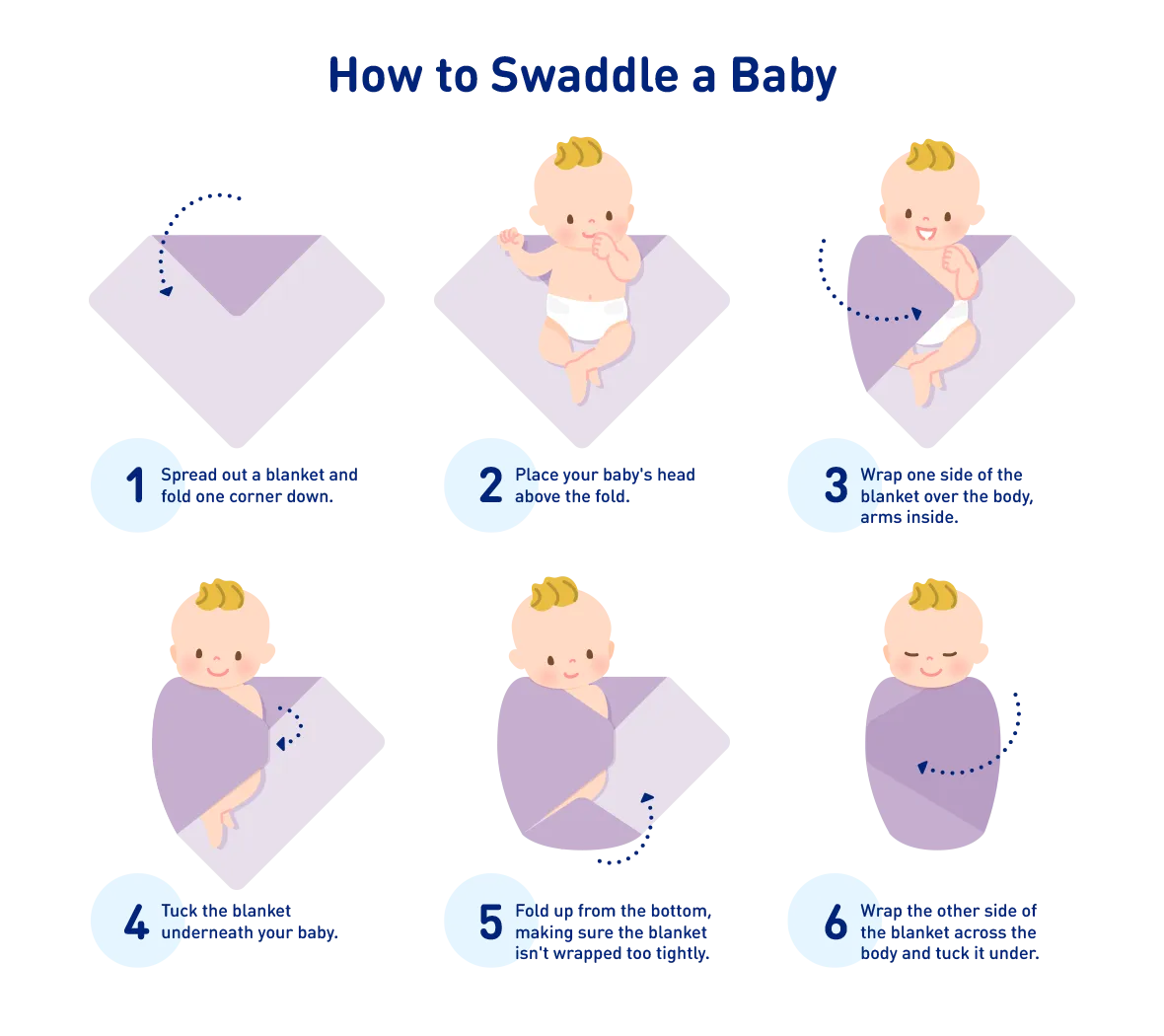
How to swaddle a baby in six steps
Use the following method for a basic arms-in swaddle. Stop if the baby becomes upset, overheated, or hard to settle.
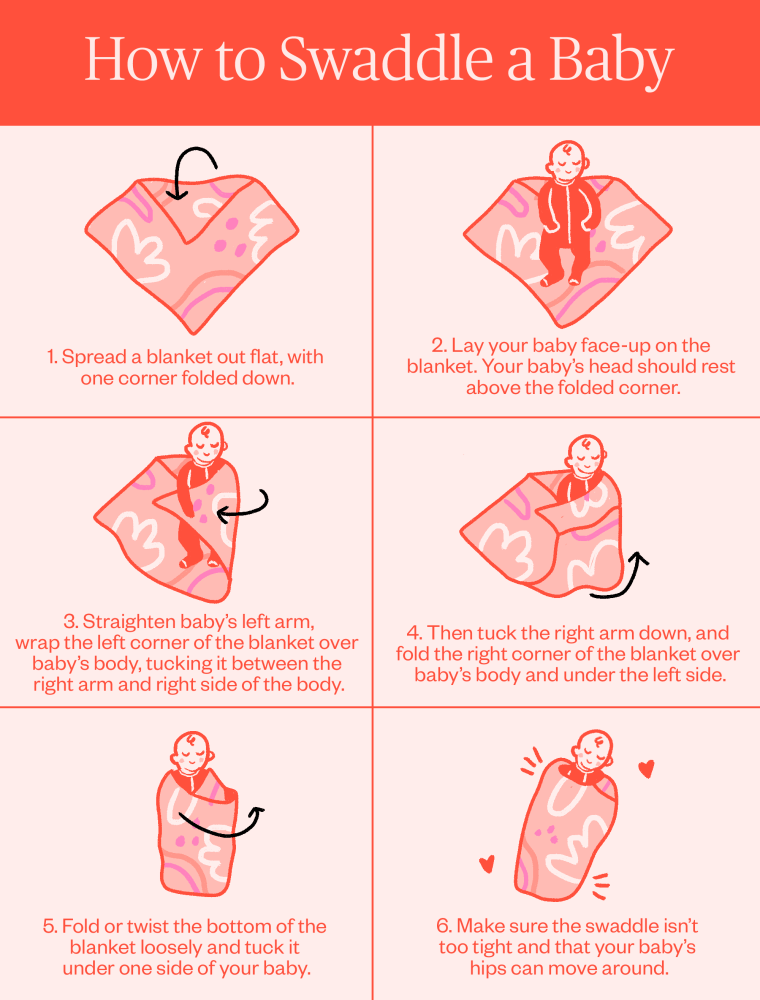
1. Lay the blanket in a diamond shape
Place the blanket on a safe, flat surface with one corner pointing up. Fold the top corner down by about 4 to 6 inches. This creates a straight edge near the baby’s shoulders.
2. Place the baby on their back
Lay the baby face up on the blanket. Their neck should rest just above the folded edge. The blanket must stay below the shoulders.
The baby’s head and neck should never be inside the wrap. Make sure the fabric cannot move over the chin, mouth, or nose.
3. Wrap the first side
Hold the baby’s right arm gently against their body. Pull the left side of the blanket across the baby’s chest and right arm.
Tuck the fabric under the baby’s left side. Keep the wrap smooth. Do not press hard on the chest or force the arm into an awkward position.


4. Fold up the bottom
Bring the bottom corner up over the baby’s feet and lower body. Tuck it near the baby’s left shoulder.
Leave enough space for the legs to bend and move. The baby should be able to bring their knees up and out. The bottom of the swaddle should look loose, not tight.
5. Wrap the second side
Hold the baby’s left arm gently against their body. Pull the remaining side of the blanket across the chest and left arm.
Tuck the edge behind the baby. The wrap should be firm enough to stay closed but loose enough to allow normal breathing.
6. Check the fit and position
Place two or three adult fingers between the blanket and the baby’s chest. This is a simple fit check, not a precise medical rule. The baby’s chest should rise and fall freely.
Check these points:
- The baby is on their back.
- The face and neck are clear.
- The blanket is below the shoulders.
- The hips and knees can bend.
- The wrap cannot come loose near the face.
- The baby does not seem hot or sweaty.
After checking the swaddle, move the baby to their own empty crib, bassinet, or bedside sleeper.

How to swaddle safely for sleep
Safe swaddling begins with safe sleep. The swaddle is only one part of the sleep setup.
The AAP recommends placing babies on their backs for every sleep, including naps. Use a firm, flat, non-inclined sleep surface made for infant sleep. Keep the baby’s sleep area in the same room as you, but not in the same bed.
Swaddling should not be used as a way to hold a baby in a certain position. Never place a swaddled baby on their side or stomach. If a swaddled baby rolls onto their stomach, return them to their back when you notice it and stop swaddling from that point forward.
Avoid overheating
Overheating may increase sleep risk and can make a baby ill. Dress the baby in about one more layer than a comfortable adult would wear in the same room, then check the baby’s chest or back.
Signs the baby may be too warm include:
- Sweating
- Damp hair
- Hot chest or back
- Flushed skin
- Rapid breathing
- Heat rash
- Unusual fussiness or sleepiness
Hands and feet may feel cool even when the baby is comfortable. Use the chest or back as a better guide.
Do not use hats indoors for sleep unless a medical professional gives a specific reason. Never place a heating pad, electric blanket, hot-water bottle, or extra blanket near a sleeping baby.


Never use weighted swaddles
Weighted sleep sacks, weighted blankets, and weighted swaddles can place pressure on a baby’s chest or make it harder to move. The AAP advises against weighted sleep products for infants.
Also avoid swaddles that:
- Cover the face
- Have loose straps
- Compress the chest
- Pull the legs straight
- Use cords, ties, or long fasteners
- Are too large for the baby
- Have added rice, beads, or other weight
If you use a commercial swaddle, check the product’s size range and follow its instructions. A product that fits one baby may be too loose or too tight for another.
How to protect a baby’s hips while swaddling
A safe swaddle leaves room around the hips and legs. Babies need to move their legs into a bent, open position. This position supports normal hip development.
Do not wrap the lower half of the body tightly. Avoid pulling the legs straight down and pinning them together. A tight lower wrap may contribute to hip problems, including developmental dysplasia of the hip.
To check the lower part of the swaddle:
- Place your hand between the blanket and the baby’s legs.
- Make sure the knees can bend.
- Check that the legs can move apart.
- Confirm that the blanket does not press tightly across the hips.
- Retuck the blanket if the baby kicks it loose.
A “hip-healthy” wearable swaddle should provide space for the legs and hips. Look for clear sizing and use instructions. If your baby has a hip condition, was born with a hip concern, or wears a brace, ask the child’s clinician before swaddling.

When should you stop swaddling?
Stop swaddling as soon as the baby shows signs of trying to roll. Do not wait until the baby completes a roll.
Signs may include:
- Turning from the back to the side
- Twisting the body
- Pushing up during tummy time
- Repeatedly getting onto the side
- Trying to roll in the crib
- Breaking out of the swaddle and moving freely
Rolling often begins around 3 to 4 months, but it can happen earlier or later. The right time to stop depends on the baby’s movement, not a fixed age.
Once rolling signs begin, switch from an arms-in swaddle to a properly fitted sleep sack with the arms free. Do not use an arms-out product if it is too loose around the neck or chest.
If the baby can roll both ways, you do not need to keep turning them back after every roll. Still, always place the baby on their back at the start of sleep and keep the crib empty.

What to do if the baby keeps escaping
A baby who repeatedly breaks out of a swaddle may need a different size, a different wrap style, or a transition to arms-out sleep.
First, check the fit. A wrap that is too loose may come undone. A wrap that is too tight may make the baby fight it. Make sure the chest is secure while the hips remain loose.


Next, check the baby’s stage. If the baby is trying to roll, do not make the swaddle tighter. Stop using an arms-in wrap instead.
You can also try:
- Swaddling before the baby becomes overtired
- Using a smaller, properly fitted product
- Leaving one arm out during a short transition
- Moving to both arms out
- Using a plain, non-weighted sleep sack
- Offering a pacifier if you use one and breastfeeding is established, if applicable
Never add another blanket over a swaddled baby. Never pin the swaddle to the mattress, crib, or clothing.
If the baby seems unable to breathe, has blue or gray skin, is limp, or is difficult to wake, call 911. If the baby has a fever, trouble feeding, fast breathing, or unusual sleepiness, contact a health care professional promptly.

Common swaddling mistakes to avoid
Small changes can make a swaddle unsafe. Avoid these common errors:
Covering the chin
The top edge should stay below the shoulders. If the blanket reaches the chin, it can move over the baby’s face.
Wrapping the hips tightly
The legs should not be straight and pressed together. Leave space for movement.
Putting the baby to sleep on the side
Start every sleep with the baby on their back. A swaddle does not make side sleeping safe.
Using a loose blanket after the baby breaks free
A loose blanket can cover the face. If the baby keeps escaping, stop using the blanket and choose an appropriate arms-out sleep sack.
Swaddling a baby who is already rolling
Rolling can turn a swaddled baby face down. Stop arms-in swaddling at the first sign of rolling.
Adding layers without checking the baby
A swaddle counts as a clothing layer. Feel the chest or back and remove a layer if the baby is hot or sweaty.
Using a swaddle for every situation
Do not use a swaddle in a car seat, stroller, swing, bouncer, or carrier unless the product instructions specifically allow it and the baby is properly secured. Loose fabric can interfere with the harness or cover the airway. For routine sleep, move the baby to a firm, flat sleep surface as soon as possible.
Frequently asked questions
Is swaddling safe for a newborn?
Swaddling can be safe for a newborn when the baby is placed on their back, the face stays uncovered, the hips can move, and the wrap is stopped when rolling signs appear. Safe swaddling does not remove the need for an empty crib and a firm, flat sleep surface.
Should a baby’s arms be swaddled up or down?
Either position may work if the baby can breathe freely and the wrap is not tight. Many newborn swaddles place the arms gently alongside the body. If the baby is close to rolling or shows rolling signs, both arms must be free.
Can a baby sleep in a swaddle all night?
A baby may sleep in a properly fitted swaddle during a nap or overnight if the baby is not showing signs of rolling and all safe-sleep rules are followed. Check the baby during feeds and routine care. Stop using an arms-in swaddle as soon as rolling begins.


Can I swaddle a baby with their legs straight?
No. Keep the hips and knees loose, bent, and able to move. Pulling the legs straight and wrapping them tightly can interfere with healthy hip development.
Can I swaddle a baby who is crying?
You can try, but stop if the baby becomes more upset or struggles. A crying baby may need feeding, burping, a diaper change, comfort, or medical attention. Never shake a baby. If you feel overwhelmed, place the baby on their back in the crib and take a short break.
Conclusion
The safest way to swaddle a baby is to keep the head and neck uncovered, the chest comfortably snug, and the hips and legs loose. Place the baby on their back in an empty crib, bassinet, or bedside sleeper.
Watch closely for rolling signs. When they appear, stop arms-in swaddling and move to an arms-out sleep sack. For personal advice—especially if your baby was premature, has breathing problems, or has a hip concern—ask your pediatrician or another qualified health care professional.
