
A baby can sleep in a bassinet overnight, often until rolling or reaching its product limits.
Understanding how long can a baby sleep in a bassinet helps parents balance comfort, feeding needs, and safe sleep. There is no single number of hours for every baby. The right answer depends on your baby’s age, health, development, and the bassinet’s safety instructions.
How long can a baby sleep in a bassinet?
A baby may sleep in a bassinet for a full nap or overnight stretch if the bassinet is approved for sleep and your baby remains within its limits. Some newborns sleep for two to four hours at a time, while older babies may sleep for longer stretches.
The more important question is not only how long a baby sleeps in a bassinet during one stretch. It is also how long the baby can safely use the bassinet overall.
Most babies outgrow a bassinet between 3 and 6 months. Some reach the limit sooner. Stop using it when your baby:
• Starts rolling or tries to roll
• Pushes up on their hands and knees
• Pulls up or sits without support
• Reaches the bassinet’s weight or height limit
• Looks cramped or can touch the sides easily
Always follow the product manual. A bassinet with a 15-pound limit should not be used for a heavier baby, even if the baby has not started rolling.
Can a newborn sleep in a bassinet all night?
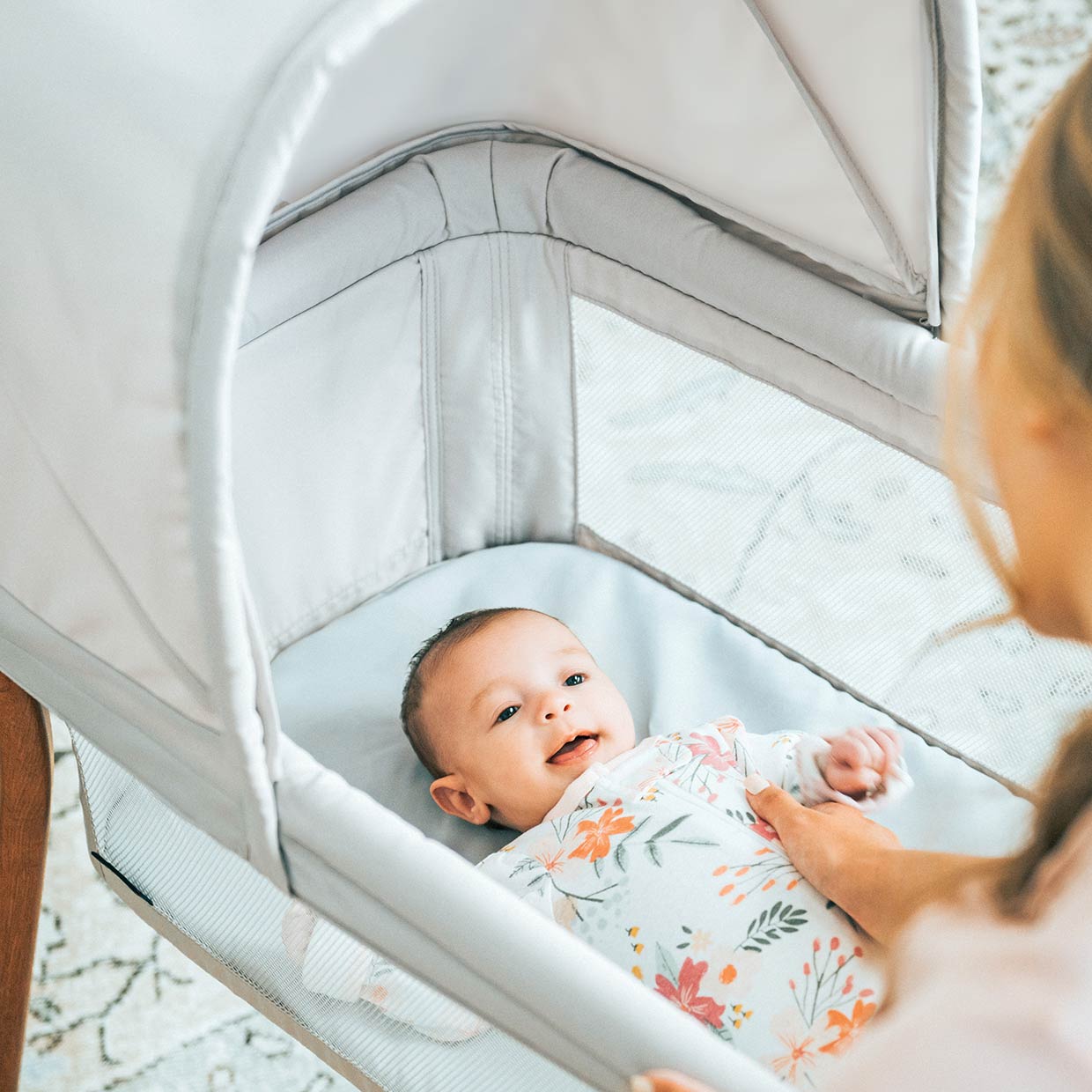
Yes, a healthy newborn can sleep in a bassinet overnight when the sleep space is safe and the baby’s feeding plan allows it. Newborns often wake every two to four hours because their stomachs are small. Some wake more often, while others sleep for a longer first stretch.
During the early weeks, ask your pediatrician how often your baby should feed. Many newborns need regular feeds until they regain their birth weight and show steady growth. A doctor may advise you to wake the baby for feeds if the baby was premature, has poor weight gain, has jaundice, or has another health concern.
Once your health care professional confirms that your baby is growing well, you may not need to wake the baby for every overnight feed. Still, babies differ. A long sleep stretch is not a problem by itself, but feeding needs should come first.
A useful routine is simple:
Feed your baby as directed by your pediatrician.
Change the diaper if needed.
Place the baby on their back in the bassinet.
Keep the room calm, dark, and quiet.
Return the baby to the bassinet after soothing.
Never keep a newborn asleep in a car seat, swing, bouncer, or inclined sleeper. Move the baby to a firm, flat sleep surface as soon as possible.

Safe sleep rules for a bassinet
The safest bassinet setup is plain and firm. The American Academy of Pediatrics recommends placing babies on their backs for every sleep, including naps. This advice applies even when a baby can turn their head well.
Use these safe sleep practices:
• Place the baby on a firm, flat mattress made for that bassinet.
• Use only a fitted sheet designed for the product.
• Keep pillows, blankets, quilts, bumpers, toys, and stuffed animals out of the bassinet.
• Keep the baby’s face and head uncovered.
• Share a room, but not a bed, for at least the first six months when possible.
• Keep the bassinet away from cords, blinds, heaters, and other hazards.
• Make sure the bassinet stands on a stable, level surface.
• Check that the sides lock properly and that the mattress fits tightly.
• Stop using the bassinet when your baby reaches any stated limit.
A wearable blanket can help keep a baby warm without loose bedding. Choose one that fits well around the chest and does not cover the face. Avoid weighted sleep sacks because they may increase risk during sleep.
A bassinet should also meet current safety standards. Avoid products with an inclined sleeping surface, deep cushioning, or a design that allows the baby to slide down. If you are unsure whether a product is safe for sleep, ask your pediatrician and check the manufacturer’s instructions.
When should a baby stop sleeping in a bassinet?
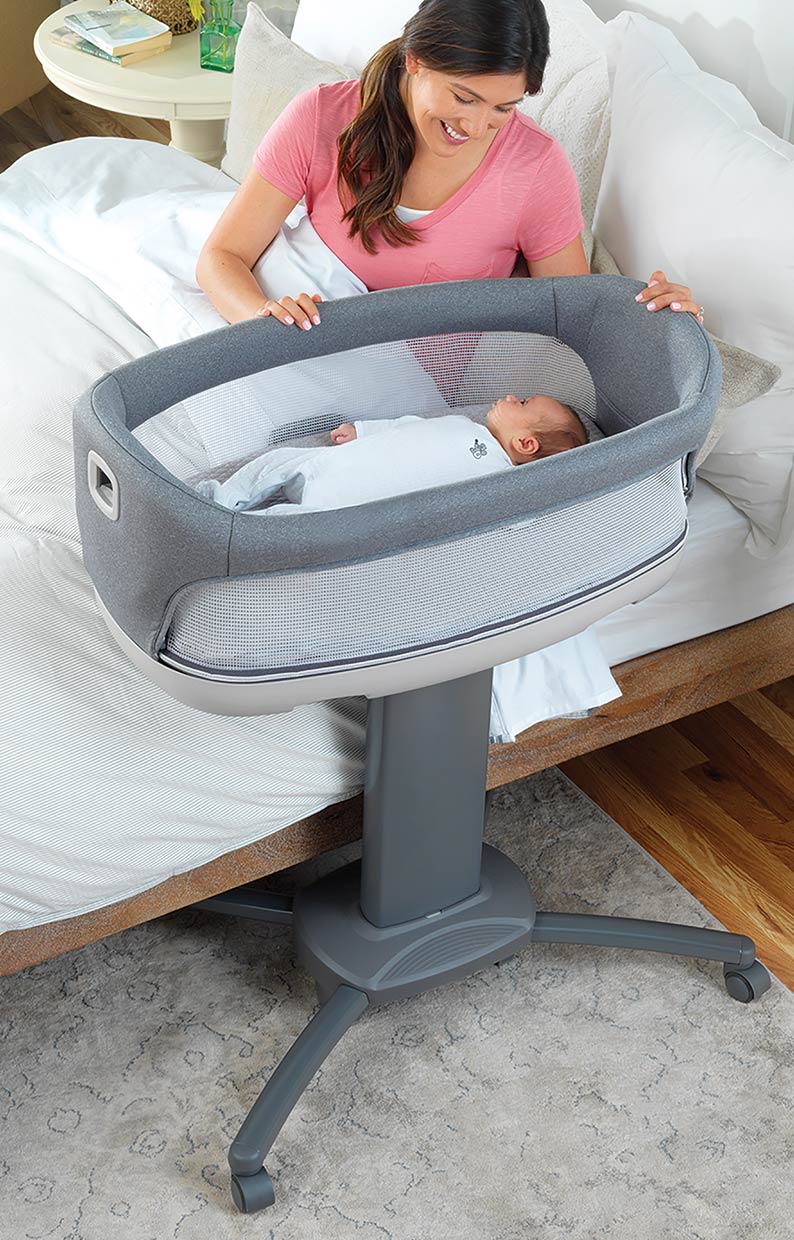
The best time to move a baby from a bassinet is when the baby reaches a developmental or product limit. Age is only a rough guide. A small, still newborn may fit safely at 5 months, while an active 3-month-old may need to move sooner.
Rolling is one of the clearest signs that the bassinet may no longer be suitable. Once a baby tries to roll, the baby needs more room and a sleep space designed for that stage. Do not wait for a complete roll if your baby is repeatedly twisting, rocking, or lifting the shoulders.
You should also check the bassinet every few weeks. Look for:
• Your baby touching the sides with the head or feet
• Knees bent tightly because the space is too short
• The baby pushing against the sides
• A weight or height limit that is close
• A mattress or frame that shows wear
Many parents feel nervous about this move. That is normal. The bassinet can feel like a small nest, but a crib or portable crib gives a growing baby more room and stronger safety margins.
Move the baby to a crib, mini crib, or portable crib with a firm, flat mattress. Keep the same safe sleep habits after the move.
How many hours can a baby sleep in a bassinet?
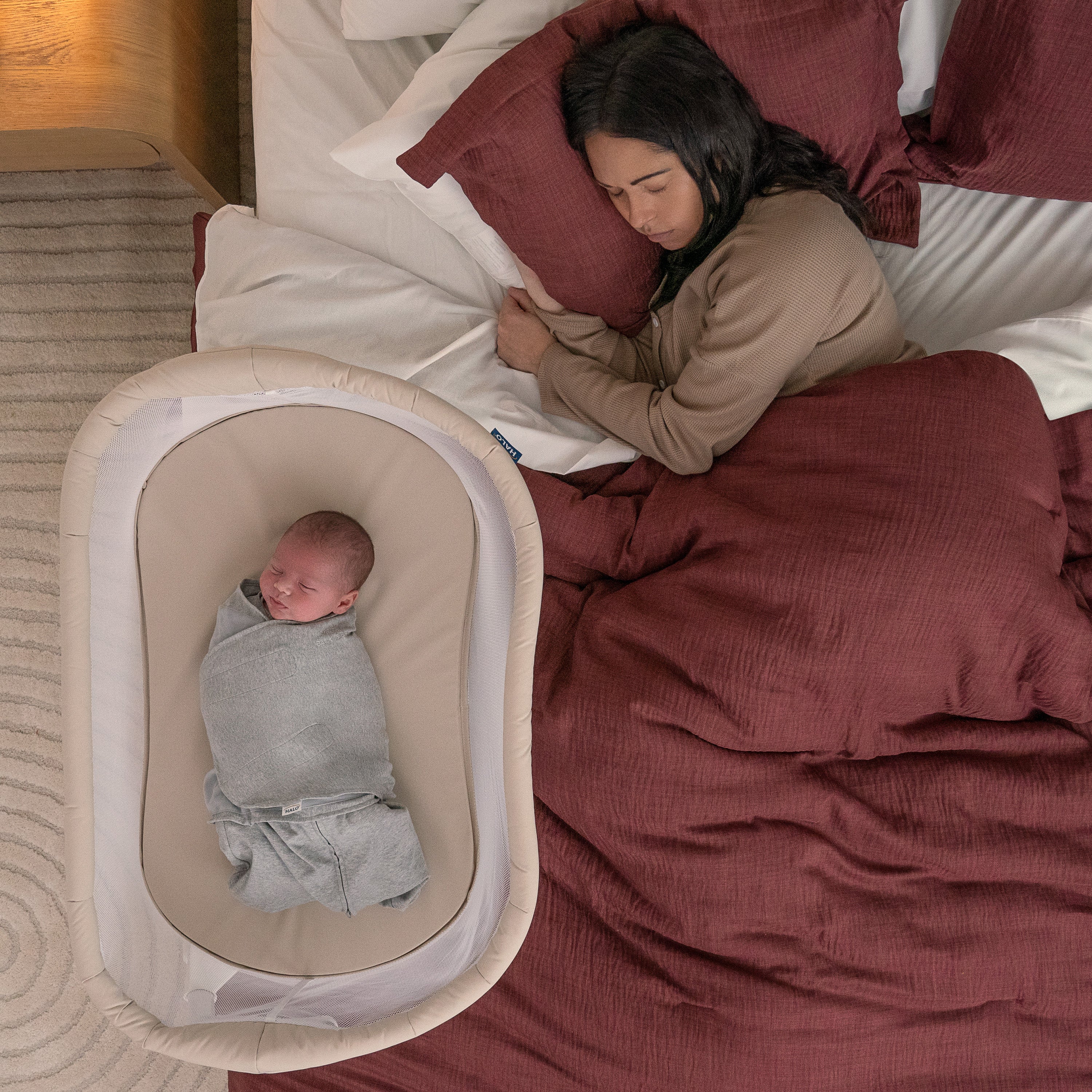
There is no universal maximum number of hours for one sleep period. How long can a baby sleep in a bassinet depends on age, feeding, health, and the product’s design. A bassinet is a sleep space, not a timer, so the baby can remain there during a safe nap or overnight sleep.
Typical sleep patterns may look like this:
• Newborns often sleep 14 to 17 hours in 24 hours, but in short stretches.
• Babies around 1 to 3 months may begin to have a longer nighttime stretch.
• Babies around 4 to 6 months may sleep for longer periods, though night waking is still normal.
These figures are averages, not goals. Some babies sleep less, and some sleep more. Your baby’s mood, feeding, wet diapers, and growth offer more useful clues than a single sleep chart.
If a newborn sleeps unusually long and is difficult to wake, call a health care professional. Also seek advice if the baby is feeding poorly, has fewer wet diapers, seems weak, or has trouble breathing.
Never wake a sleeping baby simply because the bassinet has been used for a certain number of hours. Wake the baby when feeding guidance, health concerns, or a product limit requires it.

Bassinet naps and supervised sleep
A bassinet can be used for naps as well as nighttime sleep. The same rules apply during the day. Put the baby on their back, use a firm flat surface, and keep the space free of loose objects.
Supervision does not make an unsafe sleep space safe. A parent watching nearby may notice a problem, but supervision cannot prevent every airway or suffocation hazard. Babies should not nap in a swing, lounger, nursing pillow, or adult bed.
It is common for a baby to fall asleep while being held. That can be a sweet moment, but the safest plan is to move the baby to the bassinet when the caregiver feels sleepy or cannot maintain close attention. Adult beds, couches, and recliners carry a high risk of falls and suffocation.
One practical lesson many new parents learn is to set up the bassinet before the baby arrives. Keep it close to the bed, use a fitted sheet, and practice placing the baby down. A simple setup makes safe sleep easier during a tired 2 a.m. feeding.
What to do if your baby will not sleep in the bassinet
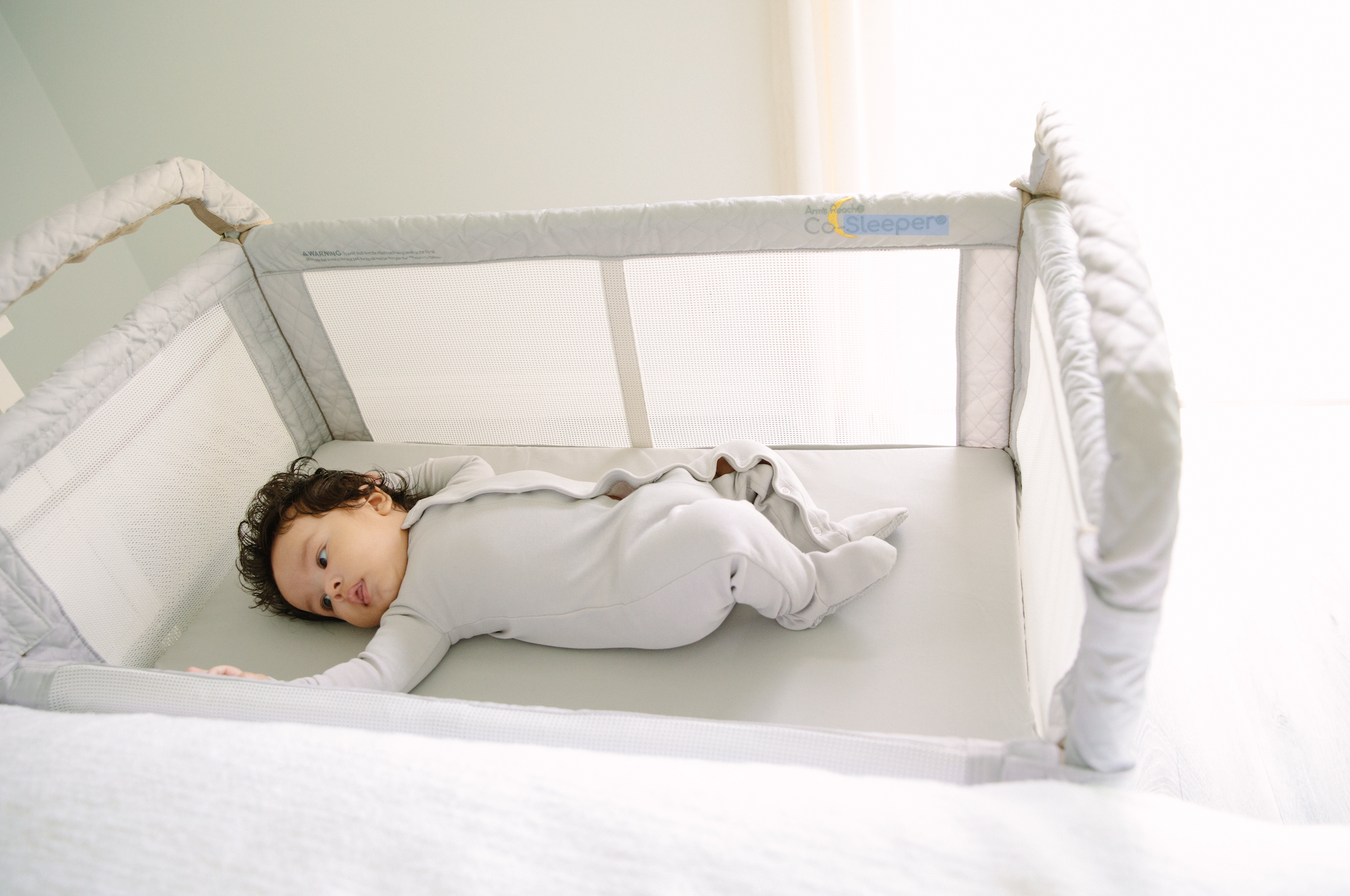
Some babies sleep well in a parent’s arms but wake as soon as they touch the bassinet. This does not mean the bassinet is unsafe or that you are doing something wrong. Newborns often prefer warmth, movement, and the sound of a caregiver.
Try these gentle steps:
Check basic needs. Feed the baby, burp them, and change the diaper if needed.
Keep the room dim. Bright lights can make it harder to return to sleep.
Use a calm transfer. Lower the baby slowly, placing the bottom down first and the head last.
Keep a hand on the baby’s chest for a few seconds after placement.
Use a properly fitted, nonweighted swaddle only if the baby is not showing signs of rolling.
Stop swaddling when the baby tries to roll.
Offer a pacifier if your baby accepts one and feeding is well established, unless your clinician advises otherwise.
Repeat the same short routine before naps and bedtime.
Do not add a pillow, rolled towel, sleep positioner, or soft item to make the bassinet feel more comfortable. These products can increase the risk of suffocation or entrapment.
If your baby has reflux, ask a pediatrician for safe advice. Do not raise the mattress or let the baby sleep on an incline unless a medical professional gives specific instructions. Babies with reflux are still safest sleeping flat on their backs.

Common bassinet mistakes to avoid
Parents are often told that a bassinet is automatically safe because it is small. That is not always true. Some products are made for resting, lounging, or travel but are not approved for unsupervised sleep.
Avoid these common mistakes:
• Using a bassinet after the baby starts rolling
• Ignoring the weight or height limit
• Adding extra padding beneath the fitted sheet
• Covering the bassinet with a blanket to block light
• Allowing the baby to sleep in a swing or bouncer
• Using a loose swaddle after rolling begins
• Placing the bassinet near a window blind cord
• Letting pets sleep inside or beside the bassinet
• Assuming a sleeping baby does not need regular feeding
• Buying a used product without checking for recalls or missing parts
Product labels can be confusing. Look for clear instructions that state whether the product is intended for infant sleep. Check the frame, mattress, sides, and locking parts before every use.
If you buy a secondhand bassinet, find the model number and check for safety recalls. Do not use it if the mattress is damaged, the sides sag, or the original parts are missing.
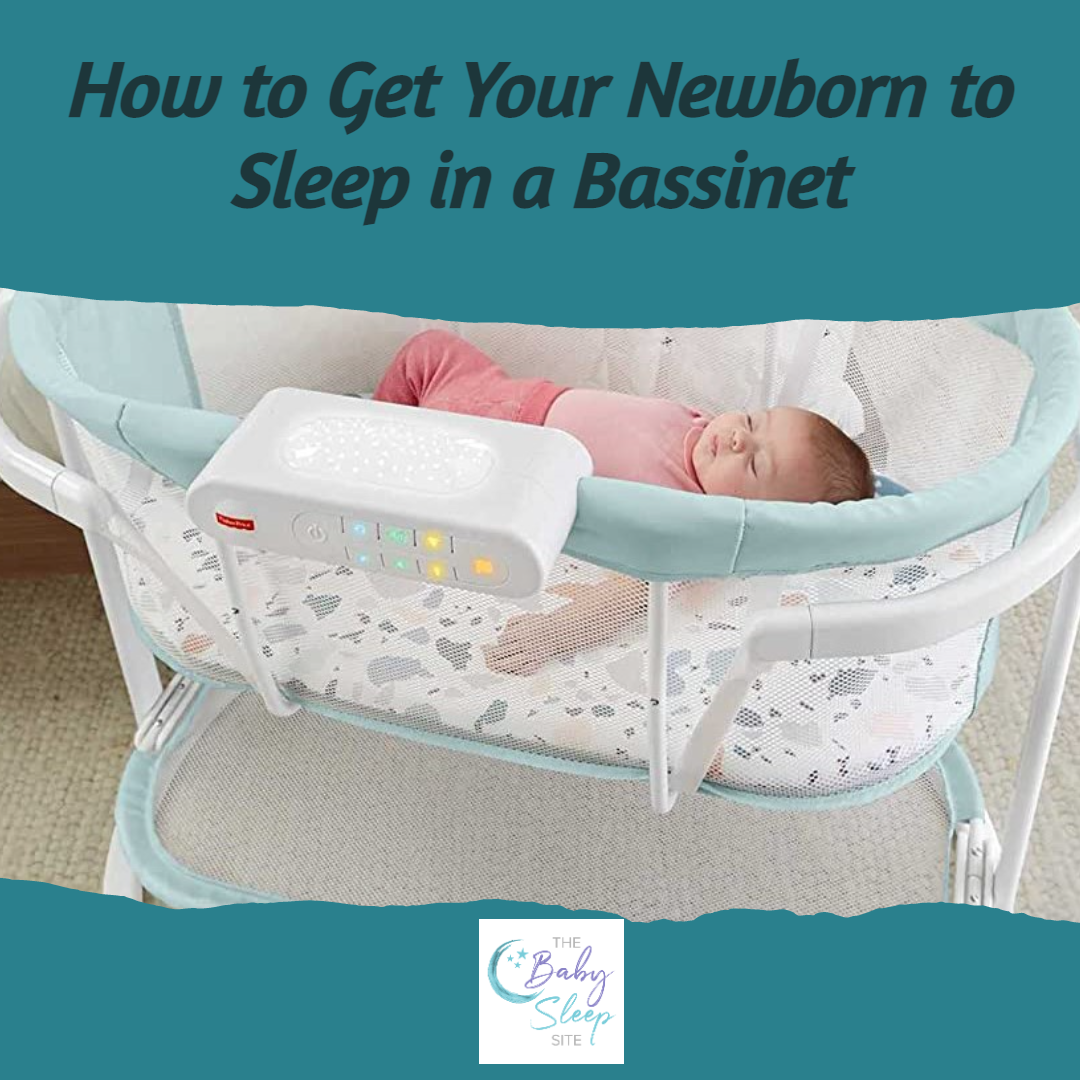
How to create a safe bassinet routine
A predictable routine can help your baby understand that the bassinet is a place for sleep. It does not need to be long. Even five minutes can work.
Try this order:
• Dim the lights.
• Feed the baby.
• Burp and change the diaper.
• Use a sleep sack or swaddle when appropriate.
• Sing softly or speak in a calm voice.
• Place the baby on their back while sleepy or asleep.
• Keep the room quiet and comfortable.
A routine will not make every baby sleep through the night. Babies wake for hunger, comfort, growth, illness, and normal development. The goal is not perfect sleep. The goal is a safe and repeatable pattern.
Parents also need rest. Take shifts with another adult when possible. If you feel yourself falling asleep while holding the baby, place the baby in the bassinet before you rest. Asking for help is a safety step, not a sign of failure.

Frequently asked questions about how long can a baby sleep in a bassinet
How long can a newborn sleep in a bassinet at night?
A newborn can sleep in a bassinet overnight if the bassinet is safe and the baby remains within its limits. Newborns often wake every two to four hours, but feeding needs may require more frequent waking.
Can a baby sleep in a bassinet all night?
Yes, a baby can sleep in a bassinet all night when the product is approved for sleep and the baby is placed on their back on a firm, flat surface. Follow your pediatrician’s feeding advice, especially during the first weeks.
What age should a baby stop using a bassinet?
Many babies move from a bassinet between 3 and 6 months, but age is not the main rule. Stop sooner if the baby rolls, tries to roll, pushes up, reaches the weight or height limit, or seems cramped.
Can a baby sleep in a bassinet after rolling?
No. Once a baby shows signs of rolling, stop using a bassinet unless the manufacturer clearly states that it is safe for that stage. Move the baby to a suitable crib or portable crib with a firm, flat mattress.
Is it safe for a baby to sleep in a bassinet during the day?
Yes, a bassinet can be used for daytime naps when it is designed for sleep and set up correctly. Use the same rules as nighttime: back sleeping, a firm flat surface, a fitted sheet, and no loose items.
Should I wake my baby to feed during the night?
Ask your pediatrician, especially if your baby has not regained birth weight, was born early, has jaundice, or is not gaining well. Once your baby is growing steadily, your clinician may say that you can let the baby sleep for longer stretches.
Can a baby sleep in a bassinet with a blanket?
Loose blankets should not be placed around a sleeping baby. Use a properly fitted wearable blanket instead, and keep the baby’s face and head uncovered.
Conclusion
How long can a baby sleep in a bassinet depends on more than the clock. A baby can often sleep there for naps and overnight periods until rolling begins or the bassinet’s weight, height, or developmental limits are reached.
Use a firm, flat surface, place your baby on their back, keep the bassinet empty, and follow feeding guidance from your pediatrician. Check the product manual often, watch for new movement, and move your baby to a crib when the bassinet becomes too small or unsafe.
Safe sleep does not need to be complicated. Set up a simple routine, trust reliable guidance, and ask your health care provider when your baby’s needs are unique. Share your own bassinet experience or explore more trusted newborn sleep resources to feel confident in your next step.