
Most babies can ride in a stroller from birth only when it fully reclines or includes a safe newborn bassinet.
Knowing when can babies ride in stroller depends on the stroller design, your baby’s head control, and the manufacturer’s age and weight limits. This guide explains safe stroller ages, newborn options, warning signs, and simple steps to help you choose and use a stroller with confidence.
When Can Babies Ride in a Stroller?
When can babies ride in stroller depends more on support than on age alone. A newborn cannot hold up their head or sit upright. Their neck and spine need a flat, firm, well-supported position.
Many babies can use a stroller from birth if it has one of these features:
• A fully flat newborn mode
• A manufacturer-approved bassinet
• A newborn insert made for that exact stroller
• A travel system with a properly attached infant car seat
If the stroller only has an upright seat, wait until your baby has strong head and neck control. This often happens around 4 to 6 months, but babies develop at different rates.
Always check the stroller manual first. Some strollers are approved for newborns, while others are not safe until 3 months, 6 months, or later.
Can Newborns Ride in a Stroller?
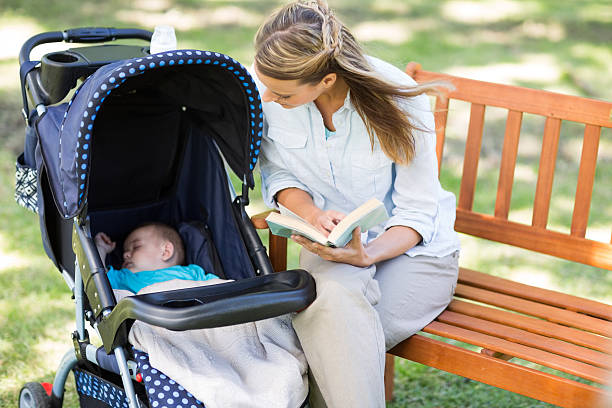
Newborns can ride in a stroller when the stroller supports them in a flat or nearly flat position. A bassinet stroller is often the simplest choice because it lets the baby lie on their back without being folded at the hips.
A newborn should not sit unsupported in a standard stroller seat. Even a slight slump can push the chin toward the chest. This may make breathing harder, especially in very young babies.
Look for these safety features:
• A firm, level sleeping surface
• A snug, well-fitting mattress or pad
• Breathable fabric around the baby
• A secure frame and locking system
• A five-point harness when the stroller is used in a seated position
• Clear instructions for newborn use
Do not add pillows, thick blankets, head supports, or aftermarket cushions unless the stroller maker specifically approves them. Extra padding can create a suffocation or overheating risk.
When can babies ride in stroller safely also depends on how long they ride. Start with short trips and watch your baby closely. A calm walk around the block is a better first outing than a long day at a busy event.

Stroller Age Guide by Development Stage
Age can offer a general guide, but development and stroller design matter more. Use this chart as a starting point, not as a replacement for the product manual or your pediatrician’s advice.
Birth to about 3 months
Choose a bassinet, a fully flat stroller, or an approved infant car seat attachment. Keep the baby’s face uncovered and check their breathing often.
Babies in this stage usually lack the neck strength needed for an upright seat. Avoid jogging, rough paths, and sudden movement unless the stroller is specifically designed for newborn use.
About 3 to 6 months
Some babies may use a partially reclined seat if they have steady head control and the manual allows it. Many babies still need a deep recline and strong upper-body support.
Do not move your baby to an upright position simply because they seem interested in looking around. Interest is not the same as physical readiness.
Around 6 months and older
Many babies can use a regular stroller seat once they can sit upright with little help. They should still use the harness every time.
At this stage, check that your baby does not lean, slide, or slump. If they do, use a more reclined position and ask your pediatrician for guidance if you have concerns.
Around 6 to 8 months and beyond
Some babies are ready for a jogging stroller once they can sit well and control their head and trunk. Many manufacturers recommend waiting until about 6 to 8 months, while some experts advise waiting longer for running on uneven ground.
Follow the exact age limit for your jogging stroller. A smooth walk and a fast run do not place the same stress on a baby’s body.

Using an Infant Car Seat on a Stroller
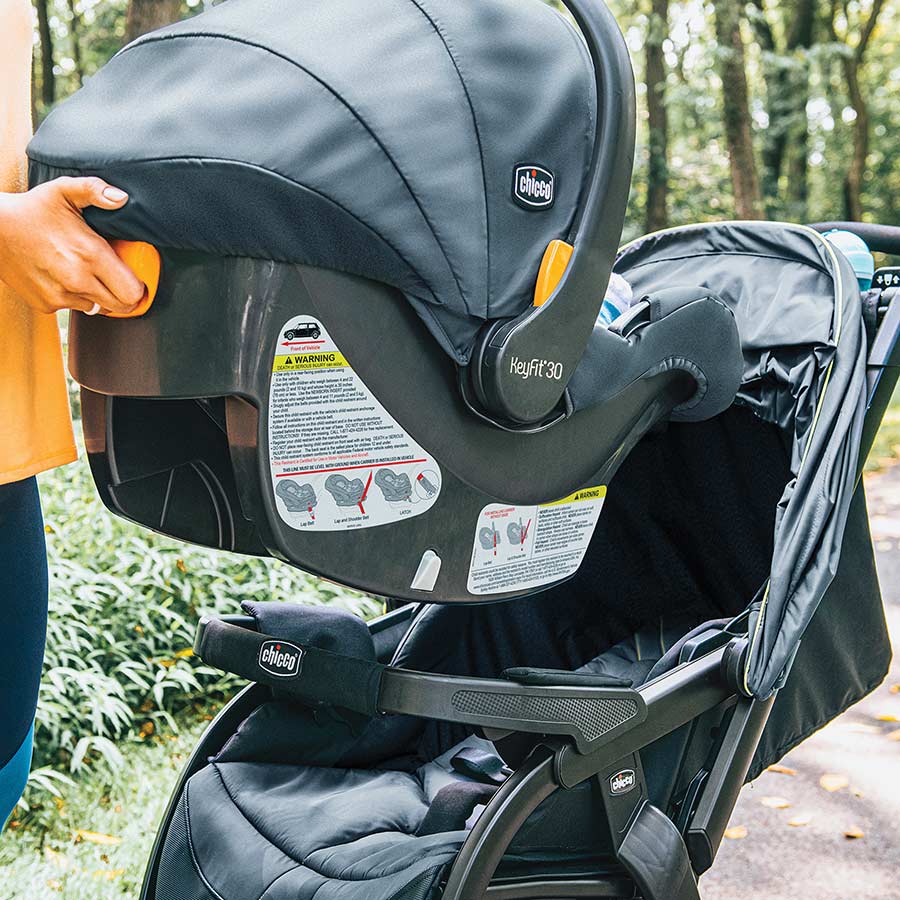
A travel system can be useful during the newborn stage. It allows you to move a sleeping baby from the car to the stroller without lifting them into a new position.
However, an infant car seat is designed for travel in a vehicle. It is not a flat sleep space, and it should not replace a bassinet for long walks or naps.
Use these rules:
• Attach the car seat only with the approved adapter or stroller frame.
• Confirm that both sides lock into place.
• Keep the car seat within its approved recline range.
• Use the harness correctly and snugly.
• Keep the baby’s head and face visible.
• Move the baby to a firm, flat sleep surface when you reach your destination.
Health experts advise against routine sleep in sitting devices, including car seats. If your baby falls asleep during a walk, monitor them closely and transfer them to a safe sleep space when practical.
When can babies ride in stroller with a car seat? They can do so from birth only when the car seat and stroller are compatible and the products allow that use. Read both manuals because compatibility can vary between models.
Signs Your Baby Is Ready for an Upright Stroller Seat
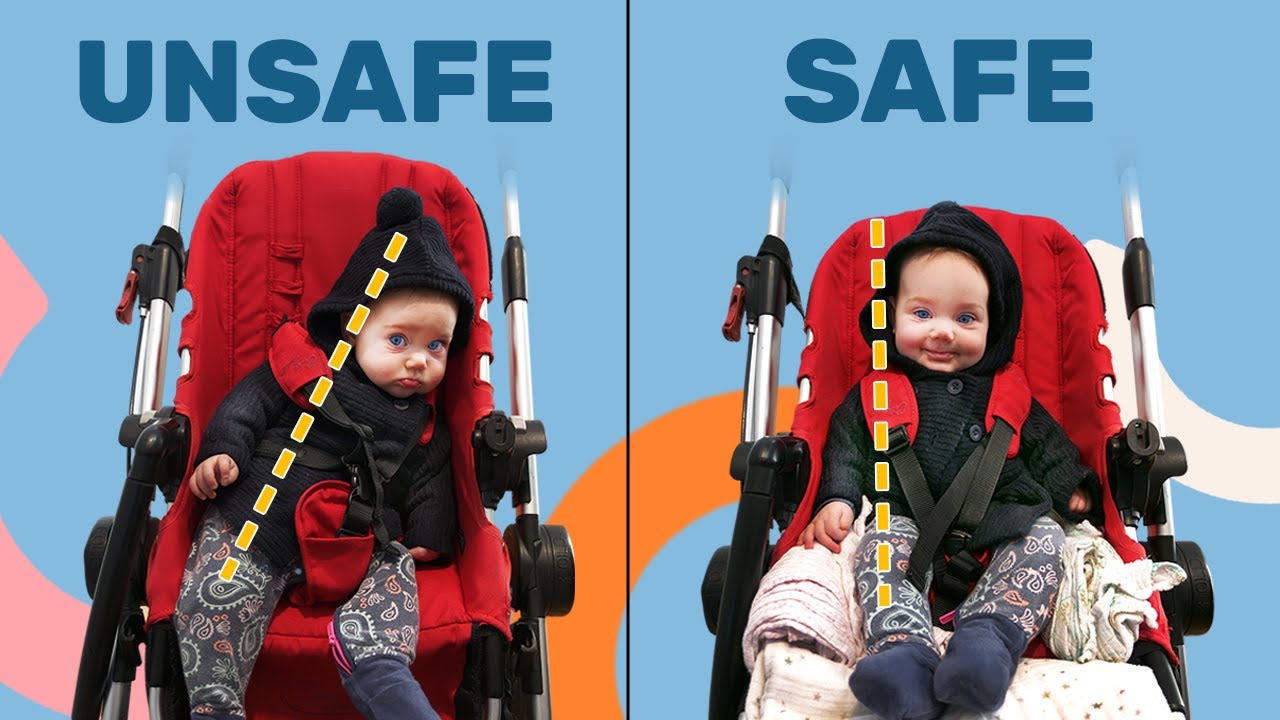
A baby may be ready for an upright stroller seat when they show steady control of their head, neck, and upper body. They should not fold forward or slide down when placed in the seat.
Look for these signs:
• Your baby holds their head steady during normal movement.
• Your baby can sit with little or no support.
• Your baby stays centered in the seat.
• Your baby does not slump when the stroller moves.
• Your baby seems comfortable in a supported seated position.
• The stroller manual approves the baby’s age, weight, and developmental stage.
A baby who can sit for a few seconds on the floor may still need more support in a moving stroller. Stroller movement adds bumps and changes in balance, so readiness should be judged with care.
If your baby was born early or has low muscle tone, they may need more time. Ask your child’s doctor before changing stroller positions in these cases.

How to Use a Stroller Safely
Safe stroller use involves more than choosing the right age. A stroller is like a small vehicle for your baby. It needs a working brake, a secure harness, and a clear path.
Follow these practical steps:
Read the manual before the first use. Check age, weight, height, recline, and attachment limits.
Inspect the stroller. Look at the wheels, brakes, frame, harness, and locking points.
Use the harness every time. A five-point harness should fit snugly over the shoulders and hips.
Keep the seat reclined when your baby lacks full head control.
Keep blankets, toys, and bags away from your baby’s face.
Use the parking brake whenever you stop.
Keep one hand on the stroller near roads, stairs, and slopes.
Never leave your baby alone in the stroller.
Do not hang heavy bags from the handle unless the manufacturer permits it.
Keep the stroller away from hot cars, open flames, pools, and sharp drop-offs.
Check your baby’s temperature. Babies can become too warm under covers or in direct sun.
Stop and reposition your baby if they slump, slide, or look uncomfortable.
A stroller fan, sunshade, or blanket may seem helpful, but covering the stroller can trap heat. Use only accessories designed and approved for your model.
Common Stroller Mistakes to Avoid
Many stroller problems come from small shortcuts. Parents are busy, and it is easy to think that a short trip does not need the same care. Safety rules still apply, even for a five-minute walk.
Avoid these common mistakes:
• Using an upright seat with a newborn
• Assuming every stroller is safe from birth
• Leaving a baby asleep in a car seat for a long time
• Adding a loose pillow or cushion for support
• Covering the stroller with a thick blanket
• Skipping the harness because the baby seems calm
• Using a jogging stroller on rough ground too soon
• Carrying heavy bags on the handle
• Letting an older child ride on the handle or footboard without approval
• Using a damaged stroller or one with a recall
One lesson many parents learn quickly is that convenience should not decide stroller position. The safest setting may look less exciting to a baby, but good support matters more than a better view.
If a stroller feels unstable, wobbles, or will not lock, stop using it. Check for a recall through the manufacturer or the U.S. Consumer Product Safety Commission.
Stroller Safety for Walks, Travel, and Sleep
Short walks are usually a gentle way to introduce your baby to a stroller. Pick a smooth route, avoid extreme heat or cold, and stay close enough to check your baby often.
For travel, practice folding and opening the stroller at home. Make sure you know how to lock it before using it in a parking lot, airport, or crowded sidewalk.
Strollers are not always safe sleep spaces. If your baby falls asleep while riding, keep the harness secure, watch their position, and move them to a firm, flat sleep surface as soon as you can. The American Academy of Pediatrics recommends a separate, firm sleep surface for routine sleep.
Extra care is needed for babies with breathing, heart, muscle, or developmental concerns. Your pediatrician may recommend a specific recline angle, insert, or type of stroller.
When can babies ride in stroller during hot weather? They can ride when they are dressed for the temperature and protected from direct sun, but avoid long trips during the hottest part of the day. Never drape a blanket over the stroller to block sunlight because air flow may become poor.

How to Choose the Right Stroller for a Newborn
If you want to use a stroller from birth, search for a model clearly labeled for newborn use. Do not rely only on product photos or a sales label.
Check these details:
• Does the stroller lie fully flat?
• Does it include a newborn bassinet?
• Is the bassinet approved for overnight sleep, or only for supervised travel?
• What are the minimum age and weight limits?
• Does the seat provide proper head and neck support?
• Is the harness easy to adjust?
• Can you use the stroller with an approved infant car seat?
• Does the frame lock securely?
• Are replacement parts available?
• Has the product been recalled?
A bassinet and a car seat serve different purposes. The bassinet offers a flatter position, while the car seat offers safe restraint during vehicle travel. Neither should be used outside the manufacturer’s instructions.
When can babies ride in stroller is often printed on the product label, but the label may not explain every detail. Read the full manual and contact the manufacturer if the instructions are unclear.

When to Ask a Pediatrician
Most stroller questions can be answered by checking the manual and watching your baby’s development. Still, medical advice is important when your baby has special health needs.
Contact your pediatrician if your baby:
• Has trouble holding their head up
• Slumps forward or turns blue around the lips
• Has noisy, difficult, or fast breathing
• Was born very early
• Has low muscle tone or a neuromuscular condition
• Seems distressed in the stroller
• Has repeated problems with feeding or breathing while reclined
Stop the ride if your baby’s face becomes covered, their chin presses to their chest, or their body slips out of position. Reposition them in a safe, supported posture before continuing.
The right answer to when can babies ride in stroller may be different for a healthy full-term baby and a baby with medical needs. Personalized advice is worth getting when you have any doubt.
Frequently Asked Questions About When Can Babies Ride in Stroller
Can a 1-month-old baby ride in a stroller?
Yes, a 1-month-old can ride in a stroller with a fully flat newborn mode, approved bassinet, or compatible infant car seat. A regular upright seat is not suitable unless the manufacturer specifically approves it for newborn use.
Can a newborn ride in a stroller without a car seat?
Yes, a newborn can ride without a car seat when the stroller has a safe, flat bassinet or newborn-approved carrycot. The baby should lie on their back with their face uncovered and remain supervised.
When can babies sit in a stroller seat?
Many babies can sit in a regular stroller seat around 4 to 6 months, but readiness depends on head and trunk control. Follow the stroller manual and wait until your baby can sit with strong support and without slumping.
Can a baby sleep in a stroller?
A stroller should not be used as a routine sleep space unless the product is specifically designed and approved for sleep. Move a sleeping baby to a firm, flat, separate sleep surface as soon as practical.
Is it safe to use an infant car seat on a stroller?
It is safe only when the car seat and stroller are approved as a compatible system. Attach the seat exactly as directed, use the harness, watch your baby closely, and avoid using the car seat as a long-term sleeping space.
When can babies ride in a jogging stroller?
Many jogging strollers allow use when a baby is about 6 to 8 months old and can sit upright with good head and trunk control. Check the exact manufacturer guidance, especially before jogging on uneven ground.
How long can a newborn stay in a stroller?
There is no single time limit for every stroller or baby. Keep newborn trips short at first, monitor breathing and temperature, and follow the limits in the stroller and car seat manuals.
Conclusion
When can babies ride in stroller depends on safe support, not just a number on the calendar. Newborns need a flat bassinet, a fully reclined stroller, or an approved travel system, while older babies can move to an upright seat after they develop strong head and sitting control.
Read the manual, use the harness, check your baby often, and avoid loose padding or covered stroller openings. Choose the stroller setting that supports your baby best today, then reassess as your baby grows. Share this guide with another parent and check your stroller manual before your next walk.