
An IUGR baby is smaller than expected because growth slowed during pregnancy.
The term “IUGR baby” can sound frightening, but it describes a growth pattern, not one single disease. In modern care, doctors often use fetal growth restriction, or FGR, because it better explains the concern: a baby may not be reaching its expected growth potential. This guide explains what IUGR means, why it happens, how doctors diagnose it, and what parents can expect before and after birth.

What Is an IUGR Baby?
An IUGR baby is a fetus or newborn that is smaller than expected for its gestational age. Doctors often use the term when estimated fetal weight or birth weight falls below the 10th percentile for the number of weeks of pregnancy.
For example, a baby at 35 weeks may weigh less than most babies at the same stage. This does not always mean the baby is unhealthy. Some babies are naturally small because of family traits. Others are small because they did not receive enough oxygen or nutrients during pregnancy.
IUGR is an older and still common term. Many health professionals now prefer fetal growth restriction, or FGR. The key issue is not simply size. It is whether the baby is growing as expected and whether the placenta is working well.
An IUGR baby may be:
• Small but healthy and naturally petite
• Growth restricted because of placental problems
• Affected by an illness, infection, or genetic condition
• At risk for problems before or after birth
A small measurement is a signal for closer care. It is not a final diagnosis by itself.
IUGR Versus Small for Gestational Age
The terms IUGR and small for gestational age, or SGA, are related but not identical.
A small-for-gestational-age baby has a birth weight below the expected range, often below the 10th percentile. Some SGA babies are healthy and simply small by family pattern.
An IUGR baby has evidence that growth may have slowed or that the baby is not reaching its natural growth potential. Doctors may look at blood flow, growth over time, amniotic fluid, and other findings before making this judgment.
This difference matters. A naturally small baby may need routine monitoring. A growth-restricted baby may need frequent testing, early delivery, or special newborn care.
Doctors may also describe IUGR as:
• Early-onset FGR, diagnosed before 32 weeks
• Late-onset FGR, diagnosed at or after 32 weeks
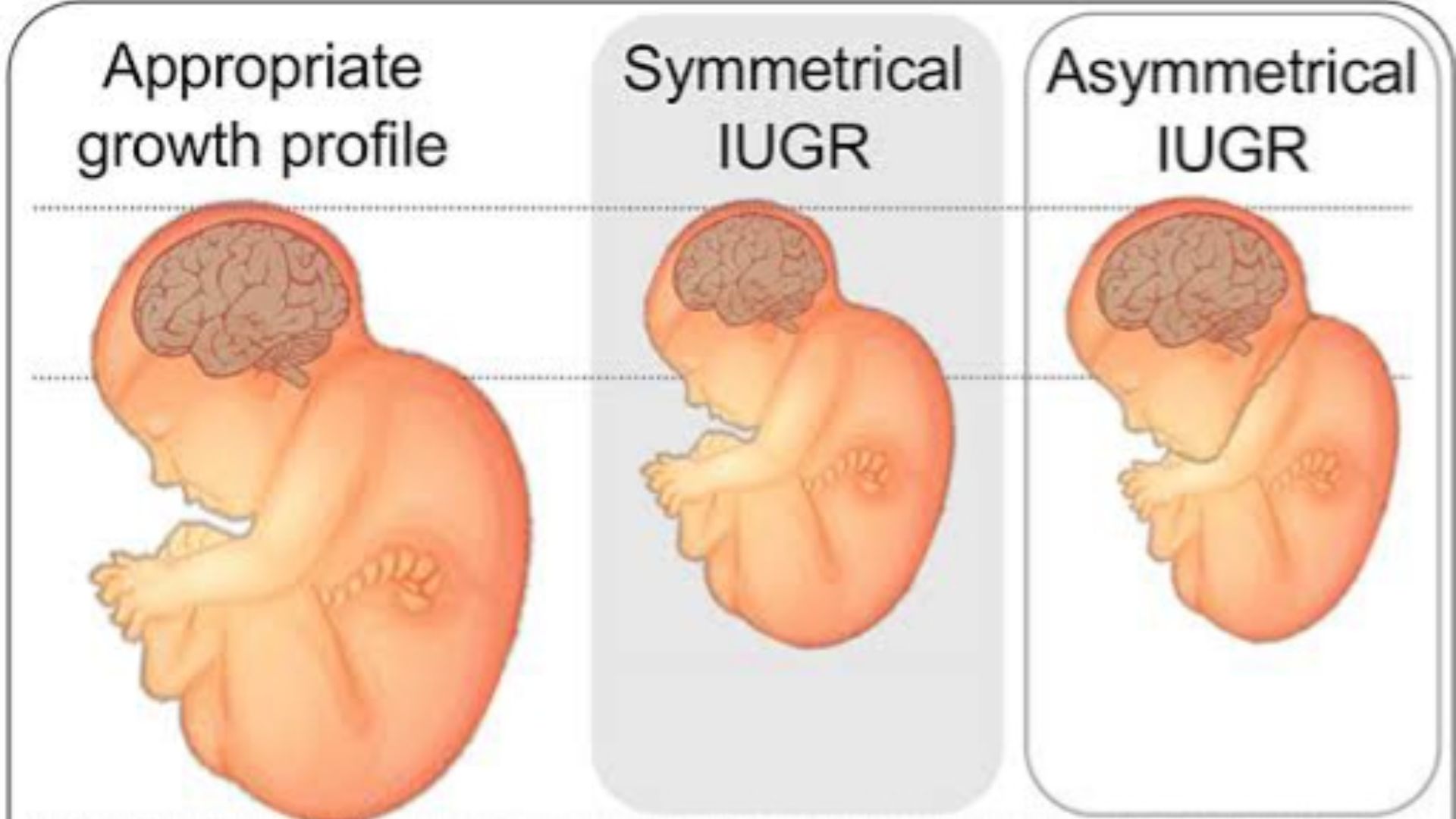
• Symmetric growth restriction, when the head, body, and limbs are all small
• Asymmetric growth restriction, when the abdomen is smaller while the head is relatively preserved
These patterns can offer clues, but they do not identify the cause on their own.

What Causes IUGR?
The placenta is the baby’s lifeline. It carries oxygen and nutrients from the pregnant person to the fetus. If the placenta does not work well, the baby may receive less fuel for growth.
Common causes and risk factors include:
• Placental problems, such as poor blood flow or placental insufficiency
• High blood pressure or preeclampsia
• Diabetes with blood vessel complications
• Kidney, heart, or autoimmune disease
• Smoking, vaping, alcohol, or certain drugs
• Poor nutrition or severe illness
• Some infections during pregnancy
• Genetic or chromosomal conditions
• Multiple pregnancy, such as twins or triplets
• Problems with the umbilical cord
• A uterus or placenta abnormality
In many cases, doctors do not find one clear cause. This can be frustrating for families. It does not mean the parent did something wrong. Even with excellent prenatal care, placental function can be difficult to predict or control.
A common mistake is to blame normal stress, a busy day, or one missed meal. These usually do not explain IUGR. Still, avoiding tobacco, alcohol, and non-prescribed drugs and attending prenatal visits can support a healthier pregnancy.

What Are the Signs of an IUGR Baby?
IUGR often has no clear symptoms. A pregnant person may feel completely well while the baby grows more slowly than expected. This is why prenatal visits and measurements are so important.
Possible clues include:
• The uterus measures smaller than expected for the pregnancy stage
• The baby’s movements seem to decrease
• An ultrasound shows a low estimated fetal weight
• The baby has a small abdominal measurement
• Amniotic fluid is lower than expected
• Doppler testing shows unusual blood flow
Fundal height is the measurement from the pubic bone to the top of the uterus. It can help screen for growth concerns, but it cannot diagnose IUGR by itself. Body shape, fibroids, twins, and an incorrect due date can affect the measurement.
Contact a health care professional promptly if fetal movement decreases. Do not wait for the next appointment. A sudden change in movement can be a sign that the baby needs assessment.

How Doctors Diagnose IUGR
Diagnosis usually involves more than one ultrasound. Doctors compare the baby’s measurements with growth charts for the pregnancy stage and review the pattern over time.
An ultrasound may measure:
• Head size
• Head circumference
• Abdominal circumference
• Femur length
• Estimated fetal weight
The abdominal circumference can be especially helpful because it may reflect the baby’s energy stores and nutrition. However, ultrasound weight estimates are not exact. They can be off by about 10% or more, especially late in pregnancy.
Doctors may also use:
• Umbilical artery Doppler to check blood flow through the placenta
• Middle cerebral artery Doppler to assess how blood moves to the brain
• Nonstress tests to monitor the baby’s heart rate
• Biophysical profiles to assess movement, breathing, muscle tone, and fluid
• Amniotic fluid checks
• Maternal blood pressure and urine tests
• Tests for infections or genetic conditions when appropriate
A single scan is only one photograph. A series of scans acts more like a short film. The growth trend often gives doctors more useful information than one isolated number.

How Is IUGR Managed?
There is no medicine that reliably makes a growth-restricted baby grow faster in the womb. Care focuses on finding the cause, watching the baby closely, and choosing the safest time for birth.
Management may include:
• More frequent ultrasounds
• Doppler blood-flow studies
• Nonstress tests or biophysical profiles
• Blood pressure monitoring
• Treatment for an underlying condition
• Steroid injections if early birth is possible
• Magnesium sulfate in some very early preterm births
• Planning delivery when remaining pregnant becomes riskier
Bed rest is not a proven treatment for IUGR. It may also raise the risk of blood clots, muscle loss, and emotional strain. Do not start strict bed rest or take supplements for fetal growth unless your medical team recommends them.
The timing of delivery depends on several factors. Doctors consider gestational age, estimated weight, blood flow, fluid levels, testing results, maternal health, and whether the baby is worsening.
If the baby is stable, pregnancy may continue with close monitoring. If blood flow or heart-rate testing becomes concerning, delivery may be safer than waiting.

What Happens During Delivery?
An IUGR baby may be born vaginally or by cesarean birth. IUGR alone does not always require a cesarean delivery. The decision depends on the baby’s condition, position, heart-rate pattern, blood-flow results, and other pregnancy factors.
During labor, the care team may use continuous fetal heart-rate monitoring. A growth-restricted baby may have less ability to handle the stress of contractions, especially when placental blood flow is poor.
The newborn team may be present at delivery. This does not always mean the baby will need intensive care. It simply allows trained staff to respond quickly if the baby has trouble breathing, staying warm, or maintaining blood sugar.
Parents can ask before delivery:
• Will a newborn specialist attend the birth?
• What weight or test results might lead to NICU care?
• Can I hold my baby right away?
• How will feeding and blood sugar be monitored?
• What warning signs should I watch for after discharge?
Knowing the plan can reduce fear and help families feel prepared.
IUGR Baby Risks After Birth
Many IUGR babies do well, especially when the cause is mild and delivery occurs at a safe time. However, a small newborn may need extra support during the first hours or days.
Possible concerns include:
• Low blood sugar
• Low body temperature
• Trouble feeding
• Low oxygen levels
• Jaundice
• Higher red blood cell levels
• Breathing problems if born early
• Difficulty gaining weight
A small baby loses heat faster because it has less body fat. Skin-to-skin contact, warm clothing, and careful temperature checks can help, based on the hospital’s guidance.
Feeding may take patience. Some babies tire quickly or need small, frequent feeds. Nurses may check blood sugar and weight before creating a feeding plan. In some cases, expressed breast milk, donor milk, or formula may be used while feeding skills improve.
Needing extra care is not a failure. It is support while the baby learns to breathe, feed, and regulate body temperature.
Can an IUGR Baby Catch Up in Growth?
Many IUGR babies show catch-up growth during infancy and early childhood. The pace varies. Some grow quickly during the first months, while others remain smaller than average but develop normally.
Growth should be tracked using weight, length, and head circumference. Development matters too. Doctors may monitor movement, language, feeding, hearing, and vision.
A baby’s growth pattern is more useful than one number. A steady curve is often reassuring, even if the curve remains below average.
Parents should keep routine visits and ask about:
• Feeding amounts and wet diapers
• Weight gain
• Developmental milestones
• Iron or vitamin needs
• Sleep and safe-sleep practices
• Follow-up after a NICU stay
An IUGR baby should not be overfed without medical advice. Rapid weight gain is not always healthier. The goal is steady growth with good nutrition and normal development.
What Parents Can Do
Parents cannot control every cause of IUGR, but they can take practical steps that support safe care.
Keep every prenatal appointment. Growth concerns can change quickly.
Take prescribed medicines as directed. Do not stop blood pressure medicine without medical advice.
Avoid smoking, alcohol, and non-prescribed drugs.
Eat regular, balanced meals and drink enough fluids.
Learn your baby’s usual movement pattern.
Call promptly if movements decrease, bleeding occurs, fluid leaks, or severe headache develops.
Ask for clear explanations of ultrasound results and delivery plans.
After birth, follow the feeding and weight-check schedule.
One lesson that helps many families is to focus on trends rather than scary labels. “Below the 10th percentile” is information. It is not a prediction of a child’s future.
When to Seek Urgent Medical Care
Contact your maternity unit or clinician right away if you notice:
• Much less fetal movement than usual
• No movement after using the movement-count plan given by your clinician
• Vaginal bleeding
• Fluid leaking from the vagina
• Regular painful contractions before term
• Severe headache or vision changes
• Sudden swelling of the face or hands
• Severe upper abdominal pain
• Shortness of breath or chest pain
These symptoms can have different causes, but they deserve prompt assessment. Do not rely on a home Doppler to reassure yourself. Hearing a heartbeat does not confirm that the baby is receiving enough oxygen or growing safely.
Frequently Asked Questions About What Is IUGR Baby
What does IUGR mean in pregnancy?
IUGR means intrauterine growth restriction. It describes a fetus that is smaller than expected or is not growing at its expected rate during pregnancy.
Is an IUGR baby always unhealthy?
No. Some babies are naturally small and healthy. Others have growth restriction linked to placental, maternal, fetal, or genetic concerns, so doctors use testing to assess the overall picture.
Can an IUGR baby become normal size?
Many IUGR babies have catch-up growth after birth. Others remain smaller but stay healthy and develop normally, especially when they receive regular growth and developmental checks.
What is the main cause of IUGR?
Placental insufficiency is a common cause because the placenta may not deliver enough oxygen and nutrients. High blood pressure, infections, genetic conditions, multiple pregnancy, and other factors can also contribute.
Does IUGR mean the baby must be delivered by cesarean?
No. IUGR alone does not automatically require a cesarean birth. Delivery method depends on fetal testing, blood flow, gestational age, fetal position, and the health of the pregnant person.
Can eating more food cure IUGR?
Extra food does not usually correct placental insufficiency or other medical causes of IUGR. A balanced diet supports health, but treatment must be guided by a qualified prenatal care team.
Will an IUGR baby need the NICU?
Some IUGR babies need NICU care for feeding, temperature, breathing, or blood sugar support. Others stay with their parents if they are stable and can feed well.
Conclusion
An IUGR baby is smaller than expected or may be growing more slowly because of reduced growth potential. The size alone does not tell the whole story. Doctors also assess growth trends, placental blood flow, amniotic fluid, fetal movement, and overall health.
Close monitoring helps the care team balance two goals: allowing more time to mature while avoiding risks from a placenta that may not be working well. After birth, steady feeding, warmth, glucose checks, and regular follow-up support a healthy start.
If IUGR has been mentioned in your pregnancy, ask your care team what the measurements mean, how often testing is needed, and what findings would change the delivery plan. Use trusted medical resources, keep your appointments, and share this guide with another parent who needs clear information.