Choose a stroller travel system by matching car-seat safety, stroller fit, daily use, and long-term value.
Learning how to choose a stroller travel system can make new-parent life much easier. The right set lets you move a sleeping baby from the car to the stroller with less fuss, but not every travel system fits every car, home, or lifestyle. This guide explains the safety checks, features, costs, and real-world details that matter most before you buy.
What Is a Stroller Travel System?
A stroller travel system is a stroller sold with a matching infant car seat and car-seat base. The infant car seat usually clicks into the stroller frame and the vehicle base. This creates one connected setup for travel from the newborn stage through the early stroller years.
The main benefit is convenience. You can often remove a sleeping infant from the car without lifting the baby out of the car seat. That can be a lifesaver during quick errands, doctor visits, and cold or rainy days.
However, convenience should never replace safety. An infant car seat is made for vehicle travel and short transfers. It is not a safe place for routine sleep outside the car. The American Academy of Pediatrics recommends moving a baby to a firm, flat sleep surface as soon as practical after arriving.

How to Choose a Stroller Travel System: Start With Safety
Safety is the first step in how to choose a stroller travel system. Look for a car seat that meets current U.S. federal safety standards and has clear labels, instructions, and expiration information.
A stroller can feel smooth and sturdy, but the infant car seat is the part that protects your baby during a crash. Check the full system, not just the stroller.
Check the infant car seat
Look for these features:
• A rear-facing infant seat with a clear height and weight range
• A five-point harness with easy adjustment
• A padded head support that does not push the baby’s head forward
• A secure handle that locks into the approved carrying positions
• A level indicator for correct installation
• An adjustable base with lower anchors and a seat belt installation path
• A visible expiration date
• A registration card or online registration option for recall notices
Infant car seats should face the rear of the vehicle. Keep your baby rear-facing until the seat’s height or weight limit is reached. Many convertible car seats allow longer rear-facing use, so a travel system is not always the only safe choice for a newborn.
Confirm the safety label
In the United States, child restraints must meet Federal Motor Vehicle Safety Standard 213. A compliant product will have required labeling and instructions. Avoid used seats with an unknown history, missing parts, visible damage, or no confirmed expiration date.
A car seat may look clean but still have hidden crash damage. If a seat has been in a moderate or serious crash, replace it. You should also check the National Highway Traffic Safety Administration recall database and register the seat with the manufacturer.
Test the installation
Before buying, ask whether the car seat can be installed correctly in your vehicle. A seat that is safe on paper may not fit well beside another car seat or on a narrow bench.
Visit a certified Child Passenger Safety Technician when possible. Technicians can check the angle, tightness, harness position, and base installation. This small step can prevent a large mistake.

Match the Travel System to Your Car
Your car has a major role in how to choose a stroller travel system. A travel system may fit one vehicle well and work poorly in another.
Measure the back seat before you shop. Check the width of the seating area, the space between the front and back seats, and the position of the seat belts or lower anchors.
Think about car-seat angle and front-seat space
Rear-facing car seats often need room behind them. If the front passenger seat must move far forward, the setup may be uncomfortable or unsafe.
Place the car seat in the position you use most. Then check whether:
• The base sits flat and stable
• The level indicator shows the correct angle
• The seat does not press hard against the front seat unless the manual allows it
• The buckle does not rest across the wrong part of the base
• You can tighten the installation without excess movement
A properly installed car seat should not move more than one inch from side to side or front to back when tested at the belt path. Always follow the specific seat manual because installation rules can vary.
Check more than one vehicle
If grandparents, a babysitter, or another parent will drive your baby, test the system in those cars too. Some bases are easier to install than others. A lightweight seat may also be helpful when it needs to move between vehicles.
One common mistake is choosing a travel system in a store without testing it in the actual car. The trunk may not close, the handle may hit the seat, or the base may sit at the wrong angle. Real-world testing is more useful than a showroom impression.

Choose a Stroller for Your Daily Routine
The best stroller travel system is not always the lightest or most expensive model. It is the one that suits your normal day.
Think about where you will use it most:
• City sidewalks
• Suburban sidewalks
• Parks and gravel paths
• Shopping centers
• Public transportation
• Airports
• Small stores
• Long walks
A compact stroller may be ideal for an apartment and frequent car trips. A larger stroller may work better for long walks, rough paths, and more storage.
Consider stroller weight
A travel system can become heavy when you add the car seat, diaper bag, and baby. Check the weight of the stroller frame, the infant car seat, and the combined setup.
If you often use stairs, lift the stroller into a trunk, or use public transit, weight matters a great deal. Try folding and lifting the stroller with one hand if possible. The stroller may feel manageable in a store but much heavier after a long day.
Check the folded size
Measure your trunk opening, not just the trunk’s total space. A stroller can fit inside the cargo area but fail to pass through the opening.
Also check whether you can fit groceries, a diaper bag, or another child’s gear beside it. A compact fold is helpful, but a tiny fold is not worth much if the stroller takes several steps to collapse.
Test the steering and brakes
Push the stroller over smooth and uneven surfaces. Notice whether it turns easily and stays stable when you hang a small bag from the handle.
Look for:
• A brake that engages with one clear step
• A handle height that feels comfortable
• Wheels that do not wobble
• A front wheel lock for rough ground
• A frame that does not flex too much
Do not place heavy bags on the handle unless the manual allows it. Extra weight can increase the risk of tipping.
Compare the Main Stroller Features
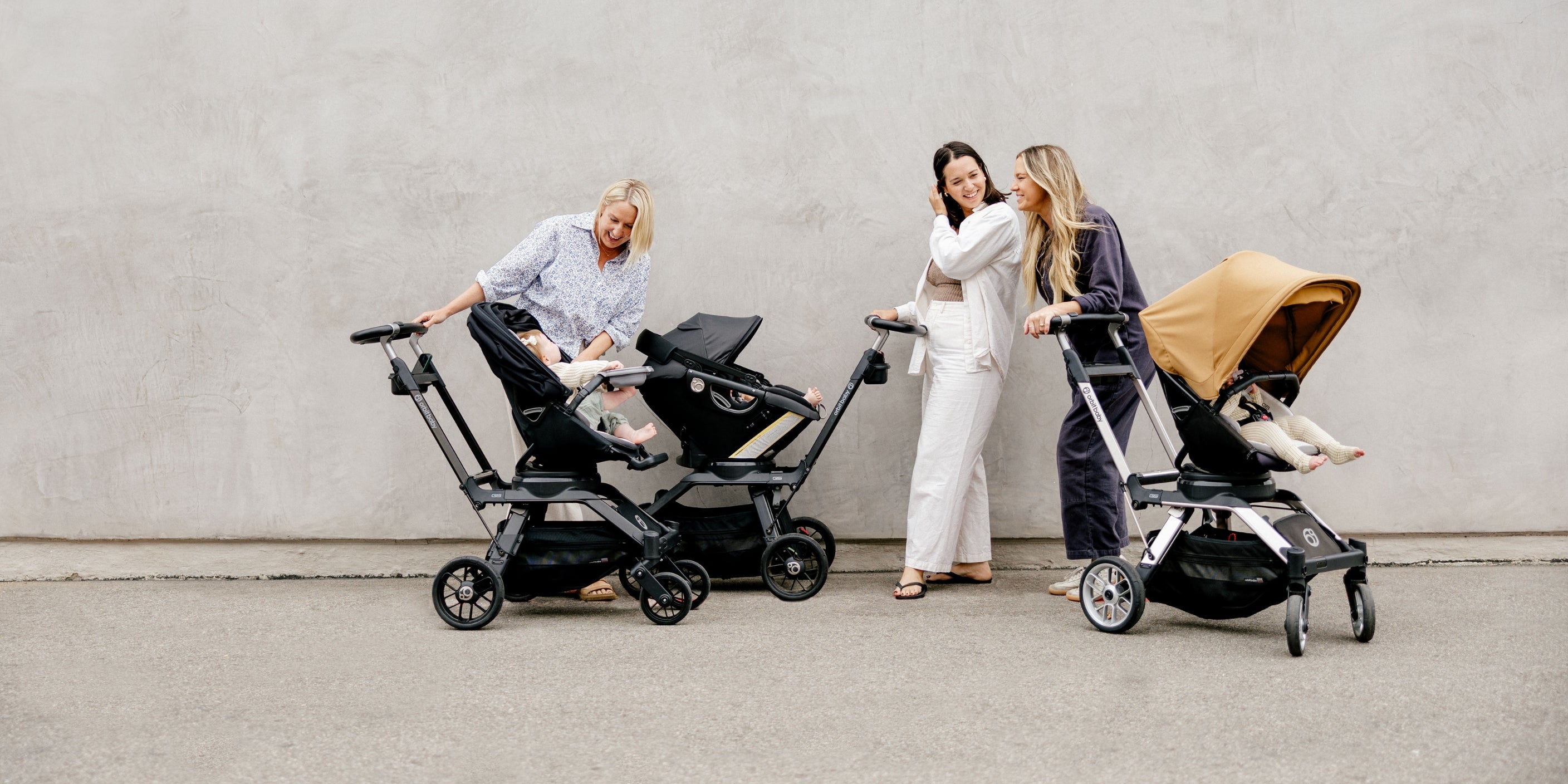
Features matter, but more features do not always mean a better stroller. Focus on functions that solve problems you will actually face.
Recline and newborn use
Many travel systems allow a car seat to attach to the stroller from birth. Later, the stroller seat may recline for an older baby.
Check the manufacturer’s minimum age and weight rules. Do not place a newborn in an upright seat unless it fully supports the baby and the manual says it is suitable from birth.
A near-flat recline can be useful, but it does not turn every stroller into a safe sleep space. Keep the stroller under supervision and move your baby to an approved sleep surface for routine sleep.
Canopy and weather protection
A large canopy helps block sunlight and light rain. Look for a canopy that extends far enough to cover the baby without touching the face.
Useful details include:
• A peekaboo window
• Airflow panels
• A water-resistant fabric
• A removable or washable cover
• A sun protection rating listed by the manufacturer
Never drape a blanket over the stroller canopy. It can reduce airflow and cause dangerous heat buildup.
Basket and storage
A large basket can make daily errands much easier. Check whether you can reach it when the seat is fully reclined.
You may also want:
• A parent cup holder
• A child tray
• A snack tray
• A zippered pocket
• A secure phone holder
These items can be helpful, but avoid hanging too much weight from the handle. Follow the stroller’s weight limits.
Seat direction and future use
Some strollers allow the seat to face the parent or the outside world. Parent-facing mode can help you monitor a young baby. Forward-facing mode may give an older child a better view.
Check the stroller seat’s maximum weight and height limits. A travel system may last longer if the stroller supports a toddler well after the infant car seat stage ends.
Check Car-Seat and Stroller Compatibility
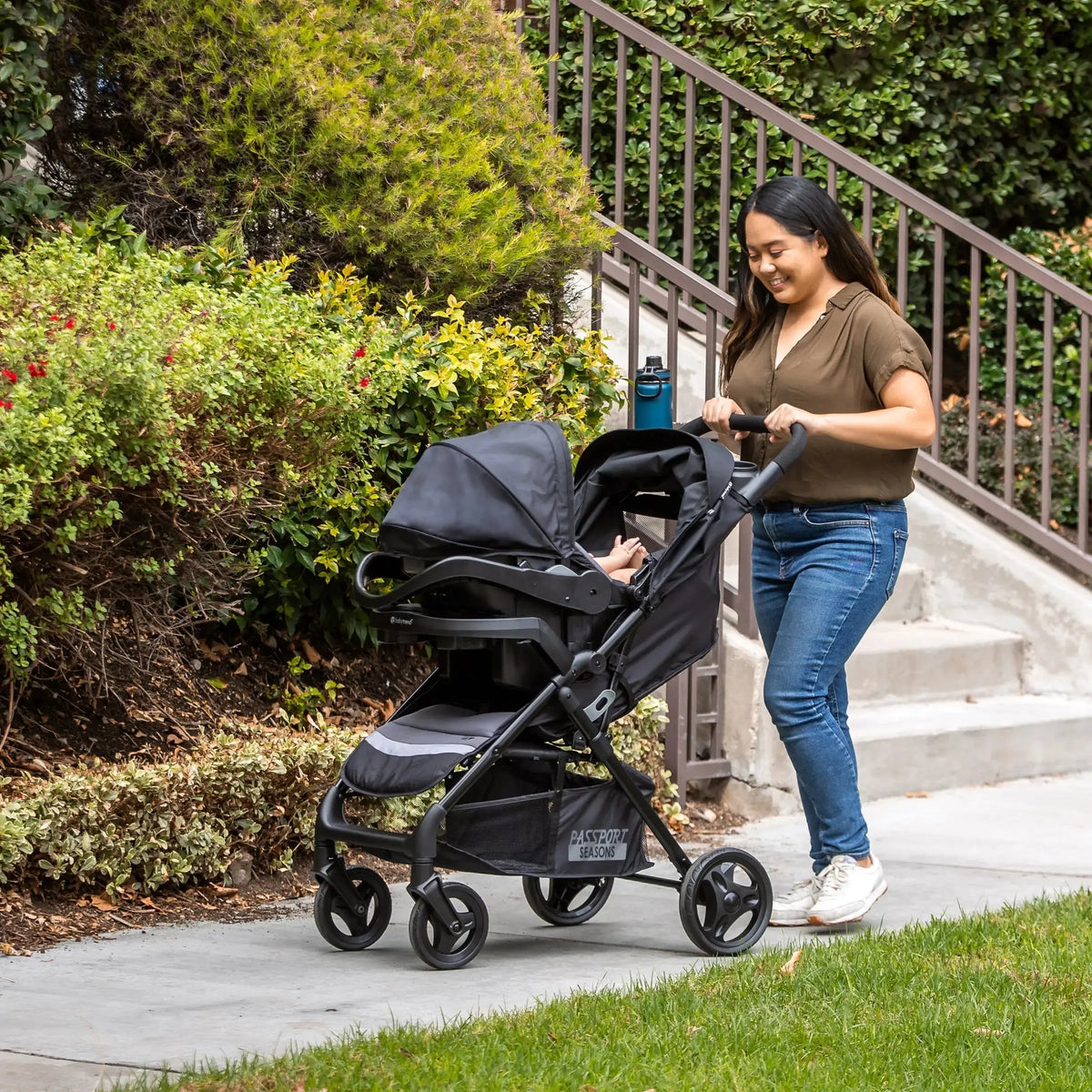
Compatibility is central to how to choose a stroller travel system. The infant car seat should attach with a firm, audible click and release only when the correct buttons are used.
Do not assume that two products from the same brand work together. Some brands use different adapters for different stroller lines. A loose, improvised, or third-party connection can create a serious safety risk.
Look for a complete, tested match
The safest path is usually a travel system sold as one complete set. If you buy a separate stroller and car seat, confirm compatibility on the manufacturer’s official product page and manual.
Check these points:
• The exact stroller model
• The exact car-seat model
• The required adapter
• The approved infant weight range
• Whether the adapter affects folding
• Whether the car seat locks in two places or one
• Whether the manufacturer allows the combination
After attachment, gently lift the car-seat handle as directed in the manual. The seat should remain secure. Do not use a setup that rocks, shifts, or needs extra straps.
Practice the release
Parents often test the click but not the release. Try removing the car seat while holding the handle and keeping your fingers away from the release buttons until ready.
You should be able to attach and remove the seat without twisting the frame or waking the baby. Practice at home before your first trip.
Think About Your Home and Lifestyle
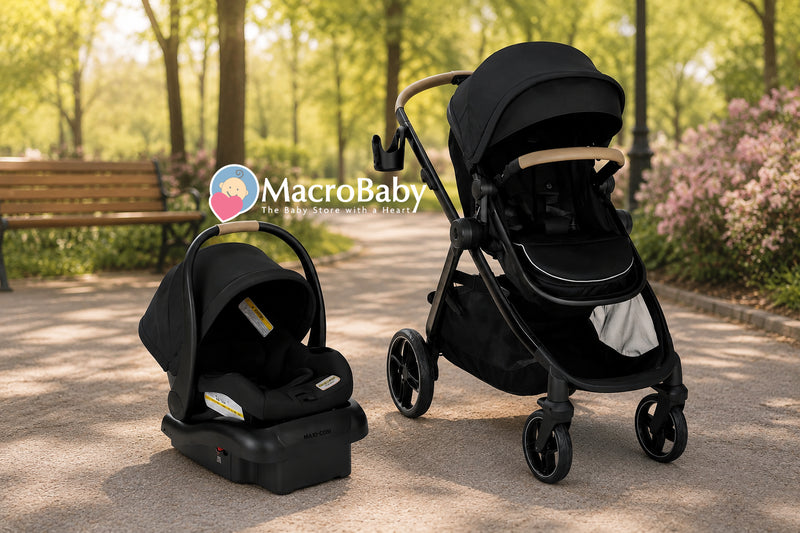
How to choose a stroller travel system also depends on where you live. A product that works for a suburban home may be frustrating in a city apartment.
For apartment living
Choose a stroller that fits through your door, elevator, and storage area. Measure narrow hallways and elevator entrances if needed.
A lighter frame and one-hand fold may matter more than a large basket. If you must carry the stroller up stairs, consider whether a compact stroller with a separate infant car seat would be easier.
For city life
City parents may value:
• Small wheels that turn well indoors
• A narrow frame
• A quick fold
• A strong brake
• Easy access to public transit
• A washable seat
Large wheels can make rough sidewalks easier, but they may take more room on buses and in small shops.
For suburban life
A suburban family may need more trunk space, storage, and all-purpose wheels. A bigger basket can help with groceries and park trips.
If you drive often, focus on quick car-seat installation and a fold that leaves room for other items. A travel system that takes up the whole trunk may become a daily annoyance.
For travel and air trips
Many travel systems are too large to use comfortably in an airport. Check the stroller’s folded size, gate-check policy, and protective bag options.
Airlines set their own rules, and policies can change. Confirm details with the airline before flying. Also remember that gate-checking does not guarantee that the stroller will return without marks or damage.
Compare Cost, Quality, and Long-Term Value
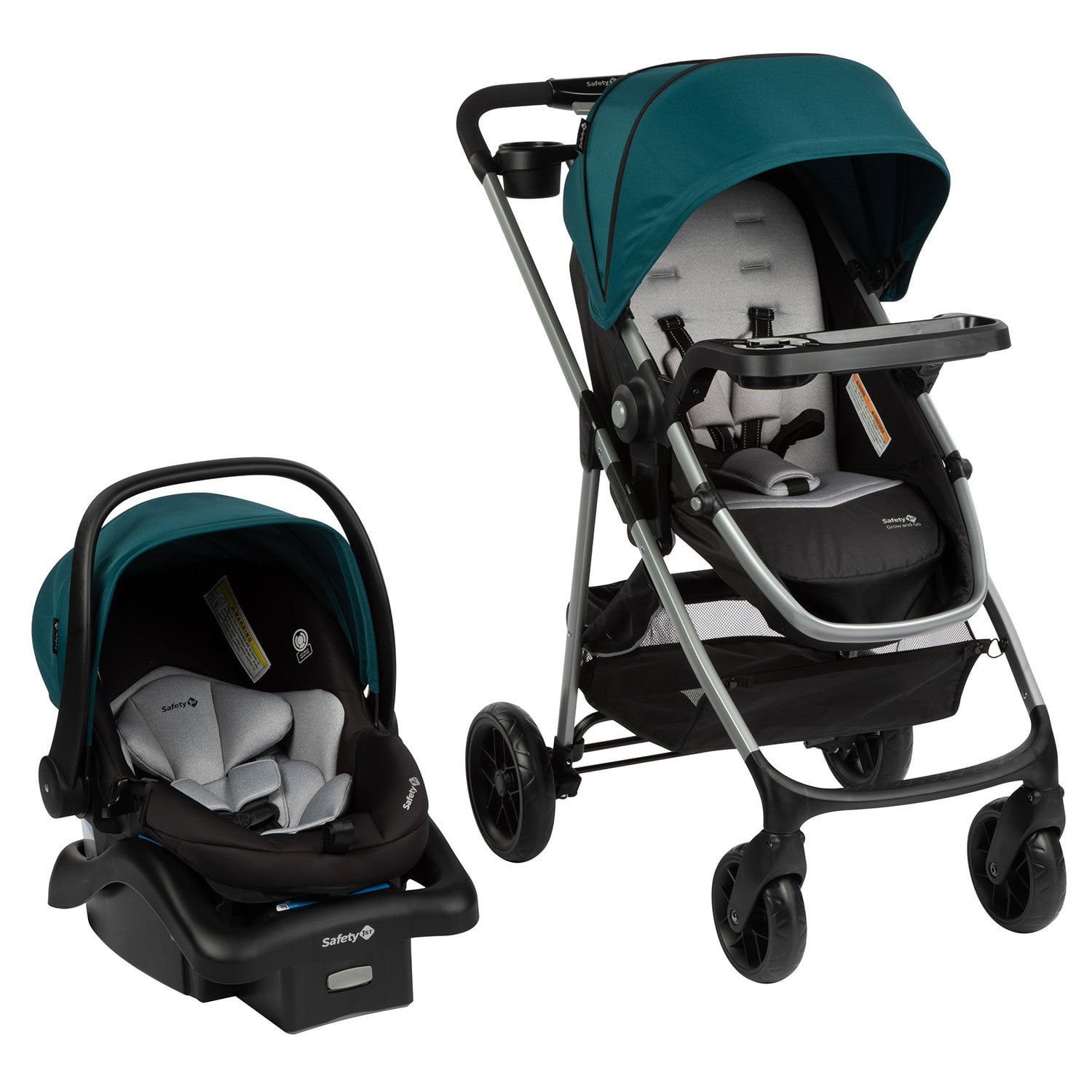
Price is an important part of how to choose a stroller travel system, but the cheapest option may cost more if it breaks early or does not fit your routine.
Set a total budget that includes possible extras:
• Rain cover
• Cup holder
• Extra base
• Travel bag
• Car-seat protector approved by the manufacturer
• Replacement parts
Avoid adding aftermarket padding, head supports, or inserts unless the car-seat manufacturer approves them. Products that were not tested with the seat can change how the harness works.
Consider the full use period
Ask how long you expect to use each part. The infant car seat may last about one year, depending on the child’s growth and the seat limits. The stroller may last several years.
A stroller with a strong toddler seat can offer better long-term value. However, do not pay for features you will not use, such as all-terrain wheels if you mostly shop indoors.
Review the warranty and parts
A trustworthy brand should provide clear warranty terms and replacement parts. Check whether you can replace wheels, fabrics, adapters, or the car-seat base.
Read reviews with care. Look for repeated comments about broken brakes, difficult folds, loose wheels, poor customer support, or fabric that is hard to clean. One angry review may not show a pattern, but many similar reports deserve attention.
Avoid These Common Travel-System Mistakes
Knowing what to avoid makes how to choose a stroller travel system much easier. Many buying mistakes happen because parents focus on appearance instead of daily function.
Buying by looks alone
A stylish stroller may have a poor fold, small basket, or uncomfortable handle. Push it, fold it, lift it, and place it in your car before you decide.
Ignoring the weight
A stroller that weighs more than expected can be difficult after childbirth. Add the car seat and baby’s weight to imagine the real load.
Using the car seat as a crib
The car seat is for travel and short transfers. If your baby falls asleep during a trip, move the baby to a firm, flat, approved sleep surface when you arrive.
Adding unapproved accessories
Aftermarket inserts, liners, toys, and covers can interfere with the harness or airflow. Use only accessories approved for your exact model.
Skipping the manual
Read the car-seat and stroller manuals before the first use. Pay close attention to harness height, recline rules, weight limits, cleaning directions, and folding instructions.
Forgetting recall checks
Register the products after purchase. Check recall information from the manufacturer and the National Highway Traffic Safety Administration. A registered product makes it easier to receive urgent safety updates.

A Simple Stroller Travel System Buying Checklist
Use this checklist in a store or while shopping online. It can help you compare products without getting distracted by marketing terms.
-
Confirm that the infant car seat meets current U.S. safety standards.
-
Check the rear-facing height and weight limits.
-
Look for an expiration date and product registration option.
-
Test the car-seat fit in your vehicle.
-
Confirm that the base can be installed tightly.
-
Measure your trunk opening and storage area.
-
Fold and lift the stroller several times.
-
Test the brakes, wheels, handle, and recline.
-
Check the stroller seat’s toddler weight limit.
-
Confirm that the car seat locks securely into the stroller.
-
Review the warranty, recall history, and replacement-part policy.
-
Compare the total cost, including accessories and a second base.
This process is a practical answer to how to choose a stroller travel system. It shifts attention from clever advertising to safety, comfort, and daily use.
When a Travel System May Not Be the Best Choice
A travel system is useful, but it is not right for every family. Some parents prefer a convertible car seat and a lightweight stroller purchased separately.
A convertible car seat can stay in the vehicle and often supports rear-facing use for longer. A separate stroller may be lighter and easier to fold. The tradeoff is that you cannot usually move a sleeping infant from the car without lifting the baby.
A travel system may also be less suitable if:
• You use public transportation every day
• You live in a walk-up apartment
• You have very limited trunk space
• You want a jogging stroller
• You need a double stroller soon
• You prefer a car seat with a longer rear-facing life
Your choice should fit your real routine. The best product is not the one with the longest feature list. It is the one you can use safely and confidently every day.
Expert Tips for Using a Travel System Safely
Correct use is just as important as choosing the product. Even a well-designed system cannot protect a child if the harness is loose or the base is poorly installed.
Follow these habits:
• Keep the harness snug, with no slack at the shoulders.
• Place the chest clip at armpit level when the seat includes one.
• Remove bulky coats before buckling your baby.
• Keep the car seat rear-facing as long as allowed by the seat.
• Lock the stroller brake before placing your baby inside.
• Use the stroller’s harness every time.
• Keep small objects away from the baby.
• Avoid hanging heavy bags from the handle.
• Check the car seat and stroller for loose parts before each use.
• Keep the stroller away from stairs, pools, and hot surfaces.
A snug harness should pass the pinch test: you should not be able to pinch extra webbing at the child’s shoulder. If you are unsure, ask a Child Passenger Safety Technician to check the fit.
Frequently Asked Questions About How to Choose a Stroller Travel System
What is the most important factor in choosing a stroller travel system?
Car-seat safety and correct installation should come first. After that, choose a stroller that fits your car, home, walking needs, and budget.
Are stroller travel systems safe for newborns?
They can be safe when the infant car seat is used correctly and the baby meets its size requirements. The stroller seat must also be approved for newborn use, and the car seat should not be used as a routine sleep space.
Can any infant car seat fit any stroller?
No. Infant car seats and strollers are not universally compatible. Use a complete matching system or an adapter specifically approved by both manufacturers.
How long can a baby use a stroller travel system?
The infant car seat can be used until the child reaches its height or weight limit, or until the seat expires. The stroller may last much longer, depending on its seat limit, condition, and manufacturer instructions.
Is a lightweight stroller travel system better?
A lightweight system is easier to lift, store, and use on public transportation. A heavier model may offer larger wheels, more storage, and better stability, so the best choice depends on your routine.
Should I buy a used stroller travel system?
A used stroller may be acceptable if it is in good condition, but be careful with a used car seat. Avoid one with an unknown crash history, missing parts, damage, expired dates, or no reliable recall information.
Do I need a second car-seat base?
A second base can save time if the baby rides in two vehicles. It is not required if you can install the car seat safely with the vehicle seat belt each time.
Conclusion
Learning how to choose a stroller travel system means balancing safety, fit, comfort, weight, storage, and long-term value. Start with the infant car seat, test it in your vehicle, and then choose a stroller that works with your home and daily routine.
Do not buy based on appearance alone. Fold the stroller, check the brakes, test the car-seat connection, read the manuals, and confirm the latest recall information. Take time to compare your options, then choose the system that makes safe travel feel simple.