Quick answer
You generally should not give gripe water to a newborn unless your baby’s pediatrician tells you to use a specific product. In the United States, there is no proven safe age or standard dose for gripe water in newborns. Many products have different ingredients and age limits, and gripe water has not been proven to treat colic, gas, reflux, or crying.
A newborn is usually a baby younger than 28 days. At this age, feeding problems, vomiting, fever, belly swelling, or unusual crying can signal an illness—not simple gas. Call your child’s pediatrician before giving gripe water or any nonprescription remedy.

What is gripe water?
Gripe water is a liquid sold as a dietary supplement for babies. Products may contain some mix of water, herbs, sweeteners, sodium bicarbonate, or flavoring agents. The formula can vary widely by brand and country.
Gripe water is not the same as breast milk, infant formula, oral rehydration solution, or a medicine prescribed by a doctor. The U.S. Food and Drug Administration does not approve dietary supplements for safety and effectiveness before they reach the market in the same way it approves prescription drugs.
Some product labels suggest use after a certain age, such as 2 weeks or 1 month. A label’s minimum age does not prove that gripe water is safe or effective for your newborn. It only reflects the manufacturer’s directions for that product.
Why gripe water is usually not recommended for newborns
The main concern is that newborns have small bodies, immature organs, and limited ways to handle an incorrect dose or an unwanted ingredient. Even a small amount may matter more to a newborn than to an older child.
The American Academy of Pediatrics’ parent guidance does not recommend gripe water for colic because research has not shown a reliable benefit. Gripe water also does not have a standard formula. One bottle may differ from another in its herbs, sweeteners, preservatives, or other ingredients.
Possible concerns include:
- Allergic reactions to herbs or other ingredients
- Vomiting or diarrhea
- Changes in feeding
- Exposure to added sugar
- Contamination, if the product is made, stored, or handled poorly
- Medication or supplement interactions
- Delayed medical care when crying has another cause
- Incorrect dosing, especially with a kitchen spoon
Products containing sodium bicarbonate, also called baking soda, may be especially unsuitable for infants. A newborn’s sodium and fluid balance can change quickly. Never give a baking soda mixture made at home.
Is there a safe age for gripe water?
There is no single evidence-based age at which gripe water becomes safe for every baby. The answer depends on the product, ingredients, the baby’s health, and the reason for use.
For a newborn, the safest general rule is:
Do not give gripe water unless your baby’s pediatrician has reviewed the exact product and advised you to use it.
This advice also applies if your baby was born early, has a low birth weight, has feeding trouble, has a medical condition, or takes any medicine. Premature babies may need extra care with fluids and supplements.
After the newborn period, parents should still ask a pediatrician before using gripe water. Older infants can also have allergies, swallowing problems, reflux, infection, or other causes of crying that gripe water will not fix.
What to do before giving anything for gas or crying
Crying does not always mean gas. Newborns may cry because they are hungry, tired, too warm, too cold, wet, overstimulated, or uncomfortable. They may also cry because of illness.
Try these safe checks first:
- Check feeding. Make sure your baby is feeding as usual and has a good latch if breastfeeding.
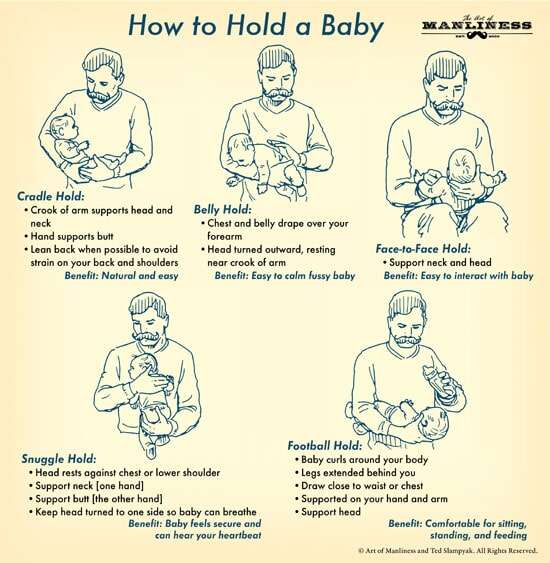
- Burp gently. Hold your baby upright and pat or rub the back softly.
- Keep your baby upright after feeds. Hold your baby upright for about 20 to 30 minutes when practical, while staying awake and watching closely.
- Check the diaper and clothing. Look for a wet diaper, tight clothing, or a hair wrapped around a toe or finger.
- Use calm movement. Hold, rock, or walk with your baby. Stop if your baby seems distressed.
- Reduce stimulation. Dim lights and lower noise.
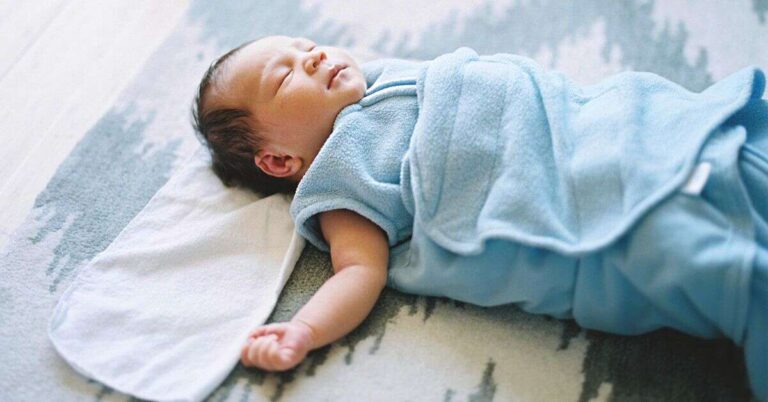
- Use safe sleep rules. Always place your baby on the back on a firm, flat sleep surface. Do not use pillows, wedges, loungers, or inclined products for sleep.
Do not add cereal, water, juice, tea, or herbal products to a newborn’s feed unless a health professional specifically instructs you to do so. Breast milk or iron-fortified infant formula should remain the main food and drink for a young infant.
When to call the pediatrician
Call your baby’s pediatrician if crying is new, persistent, or hard to soothe. Ask for advice before using gripe water, gas drops, probiotics, herbal products, or other remedies.
Contact the pediatrician promptly if your baby:
- Feeds much less than usual
- Has fewer wet diapers than expected
- Spits up often or seems uncomfortable during feeds
- Has repeated vomiting
- Has diarrhea or blood in the stool
- Has a swollen, hard, or tender belly
- Is unusually sleepy, weak, or difficult to wake
- Has trouble breathing
- Cries sharply or continuously
- Does not seem to act normally
For a baby younger than 3 months, a rectal temperature of 100.4°F (38°C) or higher is an emergency that needs immediate medical advice. Call your pediatrician or seek urgent care right away. Do not give gripe water to treat a fever.
Call 911 for severe breathing trouble, blue or gray lips, a seizure, unresponsiveness, or another life-threatening emergency.
How to check a gripe water product
If a pediatrician recommends a product, take the bottle or a clear photo of the label to the appointment. Check the following:
| Check | Why it matters |
|---|---|
| Minimum age | A product may not be intended for newborns |
| Full ingredient list | Some products contain herbs, sweeteners, or sodium bicarbonate |
| Dose and measuring tool | A kitchen spoon can cause dosing errors |
| Storage directions | Some liquids need refrigeration after opening |
| Expiration date | Do not use an expired product |
| Seal and packaging | Do not use a bottle with a broken seal |
| Recall status | Products can change or be recalled |
| Manufacturer contact details | Clear contact information supports better traceability |
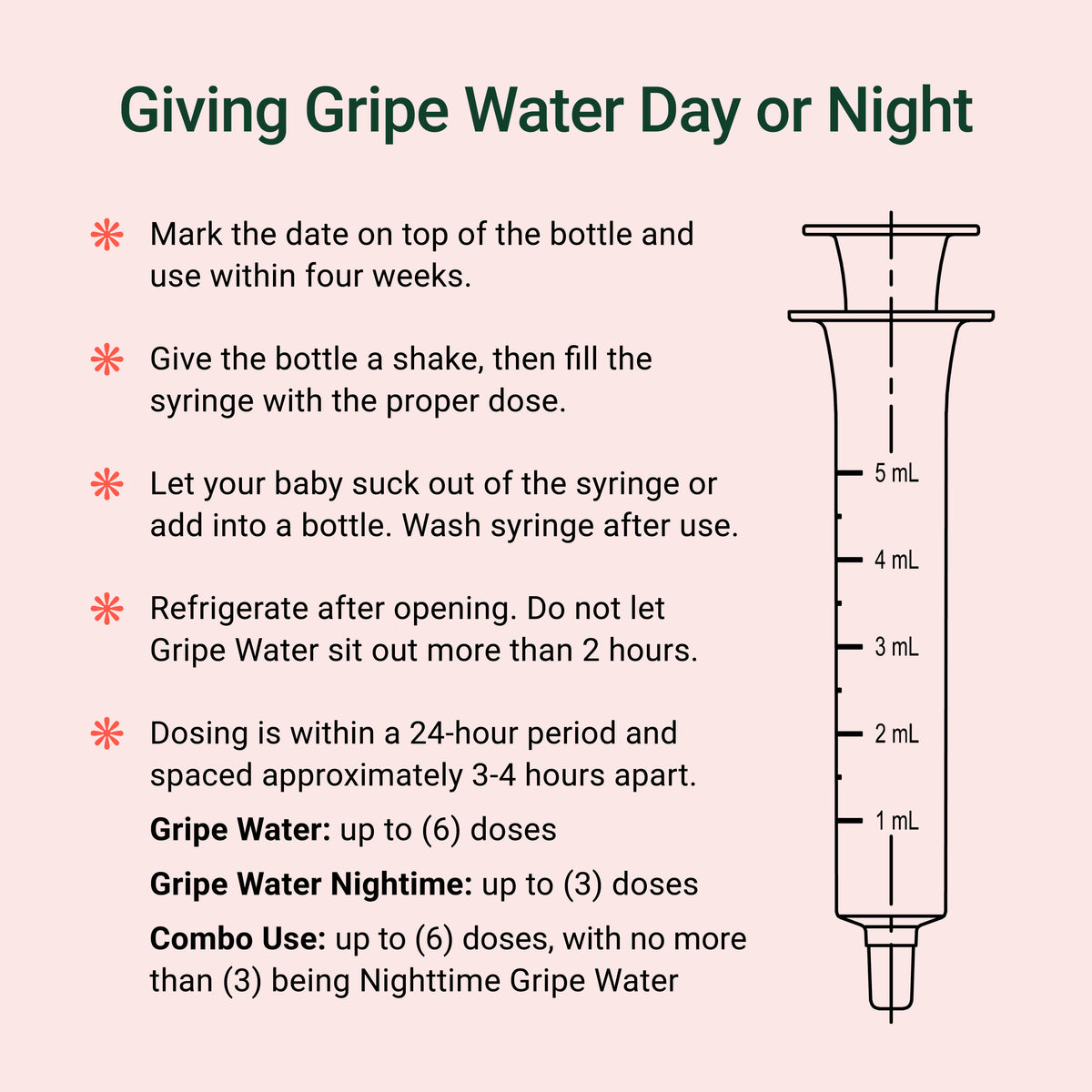
Use only the dose and method given by the pediatrician and the product label. Do not combine two products that contain similar ingredients. Do not give a product more often than directed.
If your baby has a reaction after taking any product, stop using it and contact a medical professional. For trouble breathing, facial swelling, severe weakness, or collapse, call 911.

Gripe water alternatives for common newborn concerns
The best alternative depends on the cause of the crying. There is no single remedy for every newborn.
If your baby seems gassy
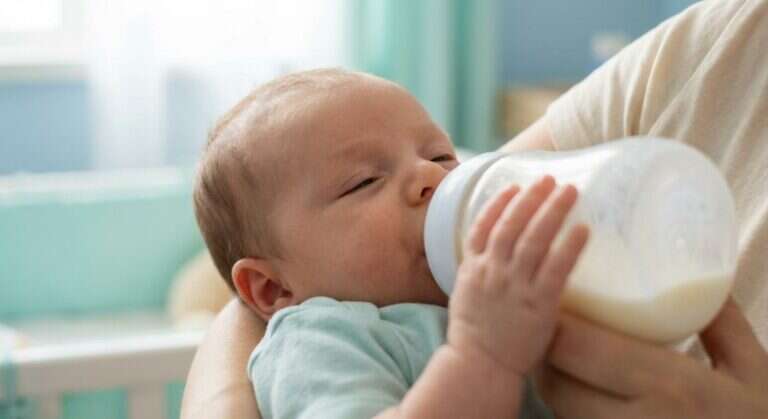
Try a slower, calmer feed and burp your baby during and after feeding. If bottle-feeding, ask the pediatrician whether the nipple flow is suitable. A flow that is too fast may cause gulping, while a flow that is too slow may lead to extra sucking and swallowed air.
Do not change formulas repeatedly without medical advice. Frequent changes can make it harder to identify the cause of symptoms.
If your baby spits up
Small amounts of spit-up are common. Keep your baby upright while you are awake and watching after feeds. Always place your baby flat on the back for sleep, even if reflux is suspected.
Seek medical care for forceful vomiting, green vomit, blood, poor weight gain, dehydration, or a swollen belly.
If your baby may have colic
Colic usually means repeated, intense crying in an otherwise healthy baby. It often begins in the first weeks of life and improves with time, but a clinician should assess a newborn with severe or unusual crying.
Try holding, gentle rocking, swaddling when appropriate, quiet sounds, and reduced light. Put your baby on the back in the crib if you feel overwhelmed. Never shake a baby.
If you feel unable to cope
Place your baby safely on the back in an empty crib and step away for a few minutes. Call someone you trust for help. Crying can be exhausting, but shaking or hitting can cause brain injury or death.

Common mistakes to avoid
Giving a homemade remedy
Do not mix water, baking soda, herbs, honey, or essential oils for a newborn. Homemade doses are hard to measure, and some ingredients can be harmful.
Honey should not be given to babies younger than 12 months because of the risk of infant botulism. Essential oils can also irritate the skin or airways and should not be given by mouth.
Assuming “natural” means safe
Herbal ingredients can cause side effects and allergic reactions. “Natural” does not mean tested for newborns, and supplement quality may vary.
Using gripe water instead of medical care
Gripe water may temporarily change how a baby acts without treating the cause. Do not use it to manage fever, poor feeding, repeated vomiting, breathing problems, or unusual sleepiness.
Using a kitchen spoon
Kitchen spoons are not reliable measuring tools. If a clinician tells you to use a liquid medicine or supplement, use the supplied oral syringe or another approved measuring device.
Changing the sleep position
Do not place a newborn on the side or stomach to reduce gas or reflux. The American Academy of Pediatrics recommends back sleeping on a firm, flat surface for every sleep.
Frequently asked questions
Can you give gripe water to a 1-week-old baby?
Do not give gripe water to a 1-week-old unless the baby’s pediatrician specifically recommends the exact product. A 1-week-old is especially vulnerable to dosing errors, dehydration, infection, and feeding problems.
Can gripe water help newborn gas?
Gripe water has not been proven to reliably treat newborn gas. Gentle burping, careful feeding, and a pediatrician’s assessment are safer ways to address ongoing symptoms.
Can you give gripe water to a breastfed baby?
Breastfeeding does not make gripe water automatically safe. Ask the pediatrician before giving any supplement. Giving extra liquids may also affect how often a baby breastfeeds.
Can you give gripe water to a formula-fed baby?
Formula-fed babies should not receive gripe water without medical advice. Do not dilute formula or add gripe water to a bottle unless the pediatrician gives clear instructions.
Is gripe water safe for babies with reflux?
Do not use gripe water as a reflux treatment without medical guidance. Frequent, forceful, green, or bloody vomiting needs prompt medical assessment.
What should I give my newborn for gas?
Usually, offer normal breast milk or properly prepared infant formula and try gentle burping. If gas is painful, persistent, or linked with poor feeding, vomiting, a swollen belly, or fewer wet diapers, call the pediatrician.
Key takeaways
- Do not give gripe water to a newborn without the pediatrician’s advice.
- There is no standard, proven-safe age or dose for gripe water.
- Product ingredients and directions differ by brand.
- Gripe water has not been shown to reliably treat colic or gas.
- Never use homemade remedies, honey, baking soda mixtures, or essential oils.
- Fever of 100.4°F (38°C) or higher in a baby younger than 3 months needs immediate medical advice.
- Safe sleep means placing your baby on the back on a firm, flat surface.
Conclusion
If you are wondering how soon you can give gripe water to a newborn, the safest answer is: not without speaking with your baby’s pediatrician first. The label may list an age, but it cannot account for your baby’s feeding, health, weight, birth history, or symptoms.
For now, check feeding, diapers, burping, and comfort measures. If your newborn seems ill, is hard to wake, feeds poorly, vomits repeatedly, has breathing trouble, or has a temperature of 100.4°F (38°C) or higher, seek medical care rather than trying gripe water.
Sources
- American Academy of Pediatrics, HealthyChildren.org: Colic and Crying
- American Academy of Pediatrics, HealthyChildren.org: How to Keep Your Sleeping Baby Safe
- U.S. Food and Drug Administration: Questions and Answers on Dietary Supplements
- American Academy of Pediatrics, HealthyChildren.org: Fever and Your Baby
- Centers for Disease Control and Prevention: Infant Botulism Prevention