
Introduction
A Velcro baby is an informal term for a baby who wants near-constant physical contact with a parent or caregiver. The baby may cry when put down, reach to be held, wake when a caregiver leaves, or settle only in someone’s arms.
This term is common among parents in the United States, but it is not a medical diagnosis. Many babies become clingy as part of normal development. Still, sudden changes in behavior can sometimes point to illness, pain, stress, or a change in routine.
A Velcro baby is not “spoiled.” Holding, soothing, and responding to a baby’s needs can help build a sense of safety. The goal is not to force independence. It is to offer comfort while slowly helping the baby feel safe for short periods apart.

What does “Velcro baby” mean?
“Velcro baby” describes a baby who seems attached to a parent like hook-and-loop fastener. The phrase usually refers to a strong need for closeness, not a specific condition.


A baby may:
- Cry when you put them down
- Want to be held for much of the day
- Follow you with their eyes
- Reach for you when another person holds them
- Wake when you leave the room
- Settle faster with touch, rocking, or feeding
- Resist play or sleep without a parent nearby
- Become upset during changes in routine
Some babies show this behavior from birth. Others become more clingy after a period of being more independent.
The behavior may come and go. A baby who plays alone one week may need extra contact the next. This change does not mean you caused a problem or handled the baby incorrectly.
Is a Velcro baby normal?
For many babies, clinginess is a normal part of development. Babies have limited ways to show fear, tiredness, hunger, discomfort, and the need for connection. Crying and reaching are their main signals.
The American Academy of Pediatrics explains that responsive care helps babies form secure relationships. When a caregiver responds to a baby’s needs, the baby learns that help is available. This does not mean a caregiver must respond perfectly every time.
Separation anxiety is also common. It often becomes more noticeable during the second half of the first year and can continue into the toddler years. The CDC lists crying when a parent leaves as a common social and emotional milestone for many babies around 9 months.
Temperament matters, too. Some babies are more sensitive to noise, new people, movement, or changes in routine. Others need more help to calm their bodies. A highly alert or easily upset baby may ask for more contact than a calm baby who can self-soothe for short periods.
Clinginess is usually less concerning when the baby:
- Eats and feeds as usual
- Has regular wet diapers
- Sleeps within their usual pattern
- Has periods of calm or play
- Responds to familiar caregivers
- Is growing as expected
- Has no signs of pain or illness
The label “Velcro baby” can be useful for describing a family’s experience, but it should not replace a health assessment when something feels wrong.

Why do some babies become clingy?
A baby may want constant contact because of normal development, temperament, discomfort, or a change in their world. Often, more than one factor is involved.


Developmental changes
Babies learn new skills quickly. Rolling, crawling, pulling up, and walking can make the world feel exciting but less predictable. A baby may return to a trusted caregiver for comfort between new experiences.
As babies begin to understand that a person still exists after leaving, they may also protest separation. This is part of object permanence, or the growing understanding that people and objects continue to exist when out of sight.
Separation anxiety
Separation anxiety can make a baby cry when a parent leaves the room. The baby may understand that the parent is gone but may not yet understand when the parent will return.
This can affect:
- Child care drop-off
- Bedtime
- Visits with relatives
- Nap routines
- Short trips to another room
Hunger, tiredness, or overstimulation
A tired baby may seem clingy because they need help settling. Hunger can make a baby less patient. Bright lights, loud sounds, crowds, and too much activity can also lead to crying and a need for close contact.
A simple check of sleep, feeding, and stimulation often helps explain a difficult stretch.
Teething or illness
Teething may cause sore gums and extra fussiness. A cold, ear infection, reflux symptoms, constipation, fever, or another health problem can also make a baby want to be held more often.
Do not assume that every sudden change is teething. If the behavior changes sharply or comes with other symptoms, contact the baby’s pediatrician.
Changes at home
Babies may react to changes such as:
- A new child-care setting
- A parent returning to work
- Travel
- A move
- A new sibling
- A change in caregivers
- A disrupted sleep schedule
Babies may not understand the reason for the change, but they can notice differences in routine and caregiver availability.
Individual temperament
Some babies need more time to warm up to new people or places. This is not a flaw. It is one part of how a baby responds to the world.
A baby’s temperament can affect how much contact they seek, how quickly they calm, and how well they handle transitions.

How to care for a Velcro baby without feeling trapped
You can meet a baby’s need for comfort while also protecting your own rest and safety. The best plan is flexible. What works on a calm day may not work when the baby is sick, overtired, or facing a major change.
1. Check basic needs first
Before trying to change the behavior, check whether the baby is:


- Hungry
- Tired
- Too hot or cold
- Wet or uncomfortable
- Overstimulated
- In pain
- Sick
- In need of a burp or a diaper change
A baby who needs food, sleep, or medical care will not learn independence through pressure.
2. Offer contact in safe ways
Holding, cuddling, talking, singing, and gentle rocking can help a baby feel secure. You can also offer contact while sitting on the floor, lying beside the baby during supervised play, or using a safe carrier according to its instructions.
If you use a baby carrier, keep the baby’s face visible and airway clear. Follow the carrier maker’s instructions and current U.S. Consumer Product Safety Commission guidance. Do not use a carrier as a substitute for a safe sleep space.
3. Practice very short separations
Start with a small step. Put the baby on a safe play surface while you stay nearby. Talk to the baby as you move a few feet away. Return before the baby becomes highly distressed when possible.
Over time, try short periods with another trusted caregiver. The goal is not to make the baby stop needing you. The goal is to show that brief separation is safe and that you return.
4. Use a calm goodbye
Sneaking away may make separation harder because the baby cannot predict when you will leave. Use a short, steady phrase such as, “I’m going to the kitchen. I’ll be back soon.”
Keep the goodbye simple. Long, emotional goodbyes can increase stress for some babies.
5. Build a predictable routine
A simple pattern can help:
- Give the baby a cuddle.
- Name what will happen.
- Move to a short activity.
- Return for contact.
- Repeat when the baby is calm.
Predictability acts like a handrail. It gives the baby something familiar to hold onto during change.
6. Share care with trusted adults
Let another safe caregiver take over while you remain nearby. They can start with easy tasks, such as singing, offering a toy, taking a walk, or helping with a diaper change.
If the baby cries, that does not mean the caregiver is doing something wrong. Give the caregiver time to build their own relationship with the baby, unless the baby shows signs of illness or danger.
7. Protect your own breaks
Caring for a clingy baby can be exhausting. If you feel overwhelmed, place the baby on their back in an empty crib or bassinet and step away for a few minutes. Take slow breaths, call someone you trust, or ask for help.
Never shake, hit, or jerk a baby. If you fear you may lose control, put the baby in a safe sleep space and call for immediate help. In the United States, you can call or text 988 for crisis support.
Parents can also contact Postpartum Support International at 1-800-944-4773.

Signs that the plan is working
Progress may look small. The baby may:
- Stay calm for one extra minute
- Accept comfort from another caregiver
- Play while you sit nearby
- Recover faster after you leave
- Sleep for part of a nap without being held
- Return to calm after a short protest
Crying during practice does not automatically mean harm. Look at the full pattern: the length of the upset, the baby’s ability to recover, and whether the baby is safe and supported.
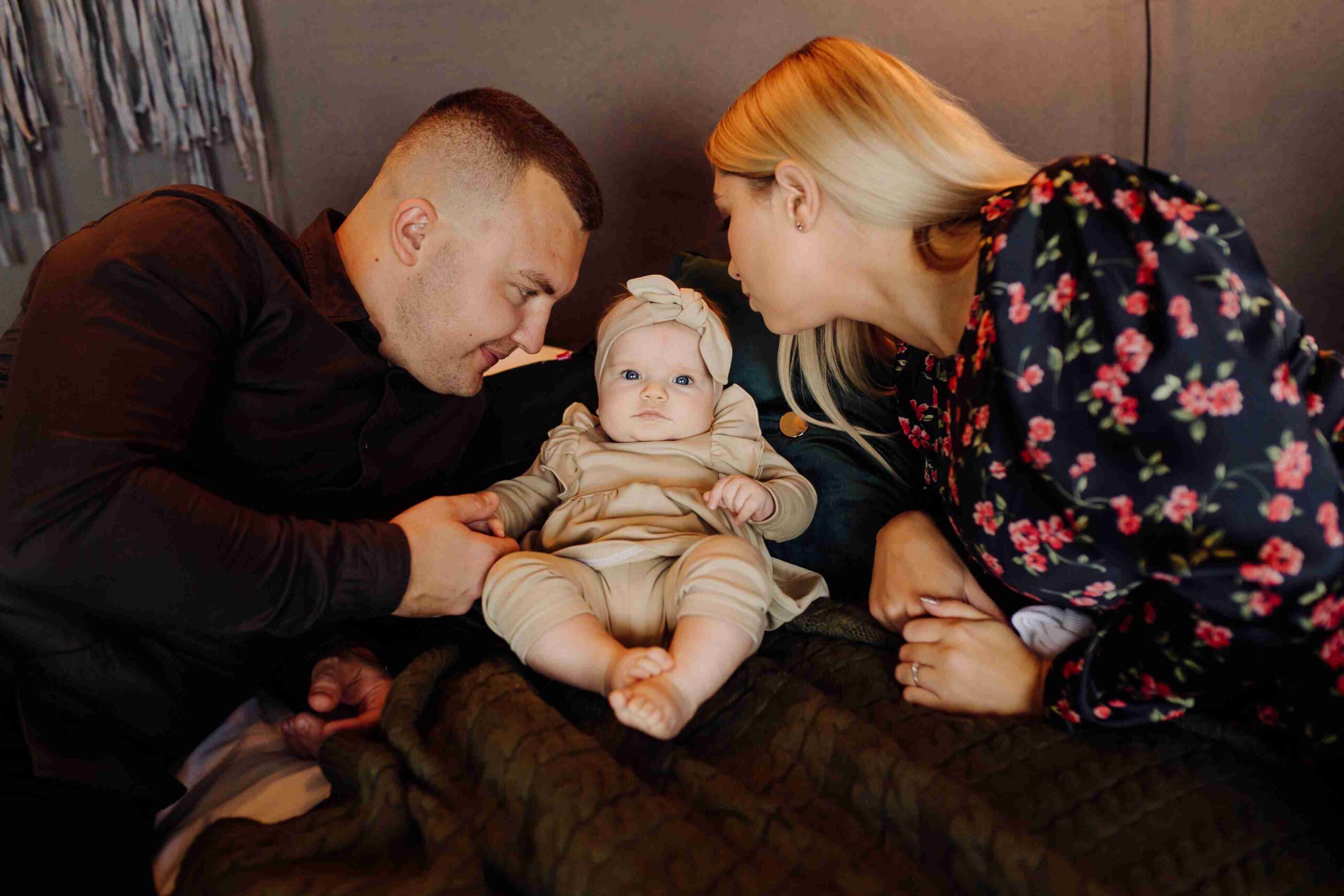
Can holding a baby too much spoil them?
No. Holding a baby does not spoil them or create a need for constant contact in the way the word “spoil” suggests.
Babies do not cry to manipulate adults. They use crying to signal a need or an uncomfortable state. Responsive care can help babies develop trust and emotional security.
That does not mean you must hold the baby every second. It is safe to put a baby down in a safe place when you need to eat, shower, use the bathroom, or rest.
The key difference is between responsive care and unsafe exhaustion. A caregiver can respond warmly while still using a crib, asking for help, and setting gentle limits around unsafe situations.
Velcro baby sleep and safe sleep rules
A baby may fall asleep quickly while being held, but an adult’s arms, chest, couch, or bed may not be a safe sleep space. The American Academy of Pediatrics recommends that babies sleep:
- On their backs for every sleep
- On a firm, flat surface
- In a crib, bassinet, or play yard
- With a fitted sheet only
- Without pillows, blankets, bumpers, or stuffed toys
Room-sharing without bed-sharing is recommended, especially during early infancy. If you bring the baby into bed to feed or comfort, move the baby back to their own sleep space when you are ready to sleep.
Do not sleep with a baby on a couch or armchair. These surfaces create a high risk of accidental suffocation and falls. Avoid weighted sleep products, including weighted swaddles and weighted blankets, unless your child’s doctor gives specific advice and the product meets current safety rules.
Contact naps can be part of family life when the adult is fully awake and alert. If you feel sleepy, place the baby in their own safe sleep space.

When should you call the pediatrician?
Call the baby’s pediatrician if clinginess is sudden, severe, or paired with other symptoms. The pediatrician can help decide whether the change may relate to illness, pain, feeding, sleep, development, or stress.
Seek medical advice if the baby has:


- Fever or trouble breathing
- Poor feeding or repeated vomiting
- Fewer wet diapers than usual
- Unusual sleepiness or difficulty waking
- A weak cry or unusual behavior
- Signs of pain
- A rash with other illness symptoms
- Poor weight gain
- A major change in movement or response
- Crying that cannot be soothed
Call 911 for severe breathing trouble, blue or gray skin, a seizure, serious injury, or a baby who cannot be awakened normally.
You should also ask for help if the baby’s need for contact is leaving you unable to sleep, eat, work, or care for yourself. Parent exhaustion is a health concern, not a personal failure.
Velcro baby vs. high-needs baby
“Velcro baby” and “high-needs baby” are informal parenting terms. Neither is a formal diagnosis.
A Velcro baby usually refers to a strong need for physical closeness. “High-needs baby” may describe a wider pattern, such as intense crying, frequent waking, strong reactions, difficulty settling, and a high need for stimulation or contact.
These labels can help parents explain what they see. They can also oversimplify a baby’s needs. A pediatrician should assess symptoms that are intense, sudden, persistent, or linked to feeding, growth, sleep, or development.
Common mistakes to avoid
Forcing independence too quickly
Leaving a distressed baby alone for long periods may increase stress and does not teach all babies to self-soothe. Use gradual practice that matches the baby’s age and state.
Treating all crying as behavioral
Crying can signal hunger, illness, pain, fatigue, or overstimulation. Check physical needs before changing routines.
Ignoring caregiver burnout
A plan that depends on one exhausted adult is not a good plan. Share care, lower nonessential tasks, and accept practical help.
Using unsafe sleep as a shortcut
A baby may sleep longer in a parent’s bed, on a couch, or in a recliner, but these are not safe substitutes for a crib or bassinet.
Comparing babies
Babies reach social and sleep milestones at different rates. Compare the baby with their own pattern, not with a sibling, friend’s child, or social media post.

Frequently asked questions
Do Velcro babies grow out of it?
Many babies become more comfortable with short separations as they mature, develop communication skills, and gain experience with trusted caregivers. The timing varies. Clinginess may return during illness, travel, developmental changes, or major family transitions.
Is a Velcro baby more attached to one parent?
Sometimes. Babies may prefer the person who feeds them, handles most care, or spends the most time with them. A preference can also appear during separation anxiety. It does not mean the baby will always reject other caregivers.
How can I put down a Velcro baby?
Try putting the baby down when they are calm rather than already overtired. Use a safe, flat surface for sleep and a clear play area for awake time. Stay close, use your voice, and begin with short periods.
Can babywearing help?
Babywearing can give a baby closeness while allowing an adult to use both hands. It must be used correctly. Keep the baby’s face visible, chin off the chest, and airway clear. Follow the carrier instructions, age and weight limits, and safety guidance.
Is clinginess a sign of autism?
Clinginess alone does not indicate autism. Babies develop social and communication skills at different rates. If you have concerns about eye contact, gestures, sounds, movement, or lost skills, speak with the pediatrician and ask about developmental screening.
Key takeaways
- A Velcro baby is a baby who wants frequent closeness and contact.
- The term is informal, not a medical diagnosis.
- Clinginess often relates to normal development, temperament, separation anxiety, tiredness, or change.
- Holding a baby does not spoil them.
- Use gradual separation, predictable routines, trusted caregivers, and safe sleep practices.
- Seek medical advice for sudden behavior changes or signs of illness.
- Protect caregiver rest and put the baby in a safe crib or bassinet whenever you need a break.
Conclusion
A Velcro baby is asking for connection, not trying to control you. Respond with warmth, check for basic needs, and build independence in small steps. There is no need to choose between comforting your baby and caring for yourself.
If the behavior is sudden, extreme, or linked to illness, feeding, sleep, or development, contact the baby’s pediatrician. When you are exhausted, use a safe crib or bassinet, step away briefly, and ask for support.
