
Most babies laugh for the first time around 3 to 4 months, though some laugh earlier or later.
Wondering when do babies laugh for the first time is common for new parents. A baby’s first laugh can feel like a tiny window opening into their growing world. It often follows weeks of smiles, sounds, eye contact, and playful moments. This guide explains what to expect, how to encourage laughter, and when to ask your child’s doctor for advice.
When do babies laugh for the first time?
Most babies laugh for the first time between 3 and 4 months of age. Some babies may giggle near the end of the second month, while others may not laugh clearly until 5 or 6 months.
There is no single “correct” day for a first laugh. Babies grow at different rates, and temperament plays a role. A calm baby may smile and watch for a long time before making a loud laugh, while a more expressive baby may chuckle often.
When asking when do babies laugh for the first time, it helps to separate a real laugh from other early sounds. A newborn may make noises during sleep or while feeding. These sounds are not usually social laughter.
A true laugh often happens during interaction. Your baby may look at you, smile, make a happy sound, and then laugh again when you repeat the game.
Baby laughter milestones by age
Baby development follows a broad pattern, not a strict calendar. The ages below are general guides for full-term babies.
Birth to 2 months
During the first weeks, most babies communicate through crying, facial movements, and small sounds. You may notice a brief smile during sleep or after feeding.
By about 2 months, many babies begin to smile in response to a familiar face or voice. This is called a social smile. It often comes before the first laugh.
2 to 3 months
Your baby may begin making more vowel sounds, squeals, and happy noises. They may enjoy eye contact, gentle talking, and simple songs.
Some babies begin to chuckle during this stage. The sound may be soft and short at first. You might hear it while kissing their belly, making a silly face, or playing peekaboo.
3 to 4 months
This is the most common age range for a baby’s first clear laugh. Many babies now enjoy playful sounds and repeated actions.
They may laugh when you:
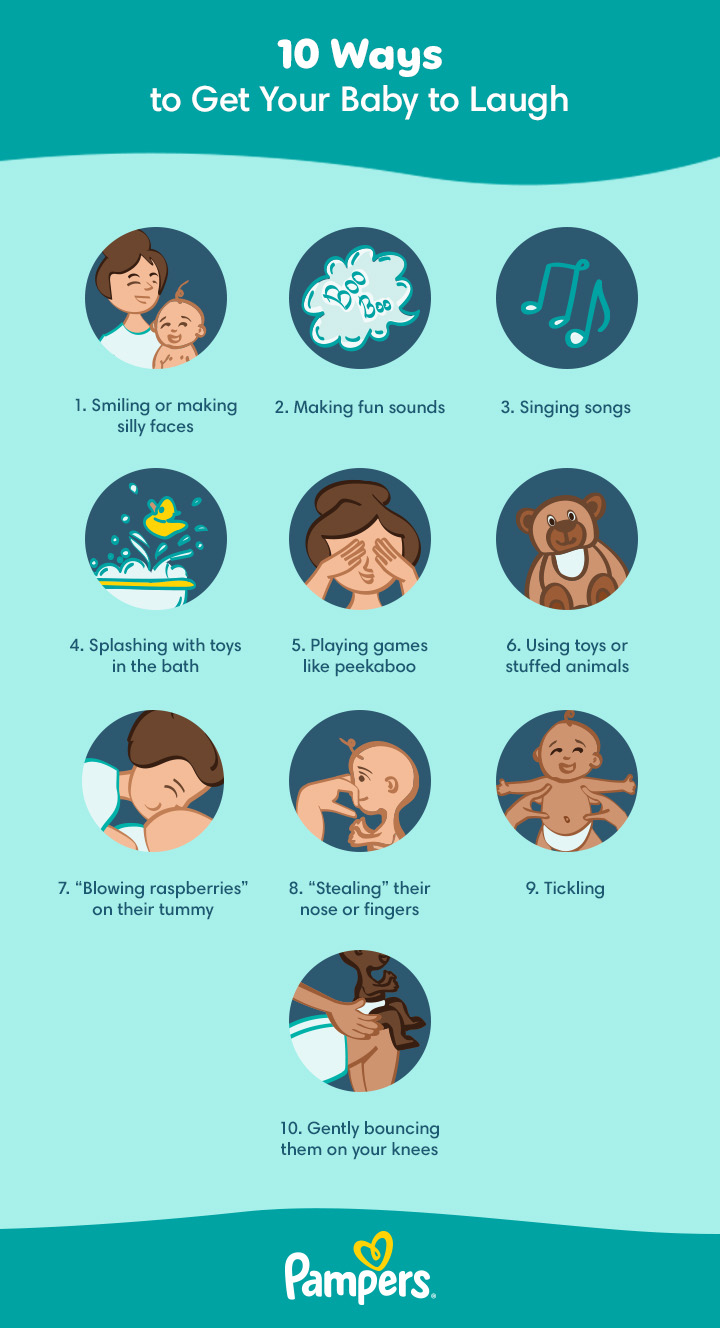
• Make a funny face
• Blow gentle raspberries on the belly
• Sing with a playful voice
• Bounce them gently while supporting the head
• Play peekaboo
• Copy their sounds
4 to 6 months
Laughing often becomes more frequent and easier to recognize. Babies may laugh at movement, unusual sounds, and familiar games.
They may also begin to show a sense of anticipation. For example, your baby may smile before you uncover your face during peekaboo. This shows that they remember the pattern and enjoy waiting for the fun part.
So, when do babies laugh for the first time? Often around 3 to 4 months, with a wider normal range that extends beyond this period.
Why do babies laugh?
Laughter is part of social and emotional development. It helps babies connect with caregivers and learn how people respond to one another.
Early laughter may happen because your baby:
• Recognizes your face or voice
• Enjoys a surprising sound
• Anticipates a familiar game
• Feels comfortable and safe
• Responds to touch or movement
• Copies your smile or facial expression
A baby’s brain is learning cause and effect. When you smile and speak, your baby may smile back. When you repeat a funny sound, your baby may learn that the sound leads to attention and play.
Laughter is also linked with growing control over the body. Babies gradually gain better control of their breathing, facial muscles, and vocal sounds. That control helps turn a smile or squeal into a laugh.
Think of laughter as a small conversation. Your baby makes a sound, you respond, and your baby learns that communication can bring joy.

First smile versus first laugh
A first smile and a first laugh are related, but they are not the same milestone.
Many babies show a social smile by about 2 months. A social smile usually happens when your baby sees your face, hears your voice, or enjoys your attention.
A laugh usually comes later. It may begin as a breathy chuckle, squeal, or short burst of sound. It may take several weeks before the laugh sounds like the familiar giggle parents expect.
This difference matters when considering when do babies laugh for the first time. A baby who smiles often but has not laughed yet may still be developing right on schedule.
Your baby may also laugh silently at first. Some babies open their mouths, brighten their eyes, and make a happy movement before the sound becomes clear.

How to encourage your baby to laugh
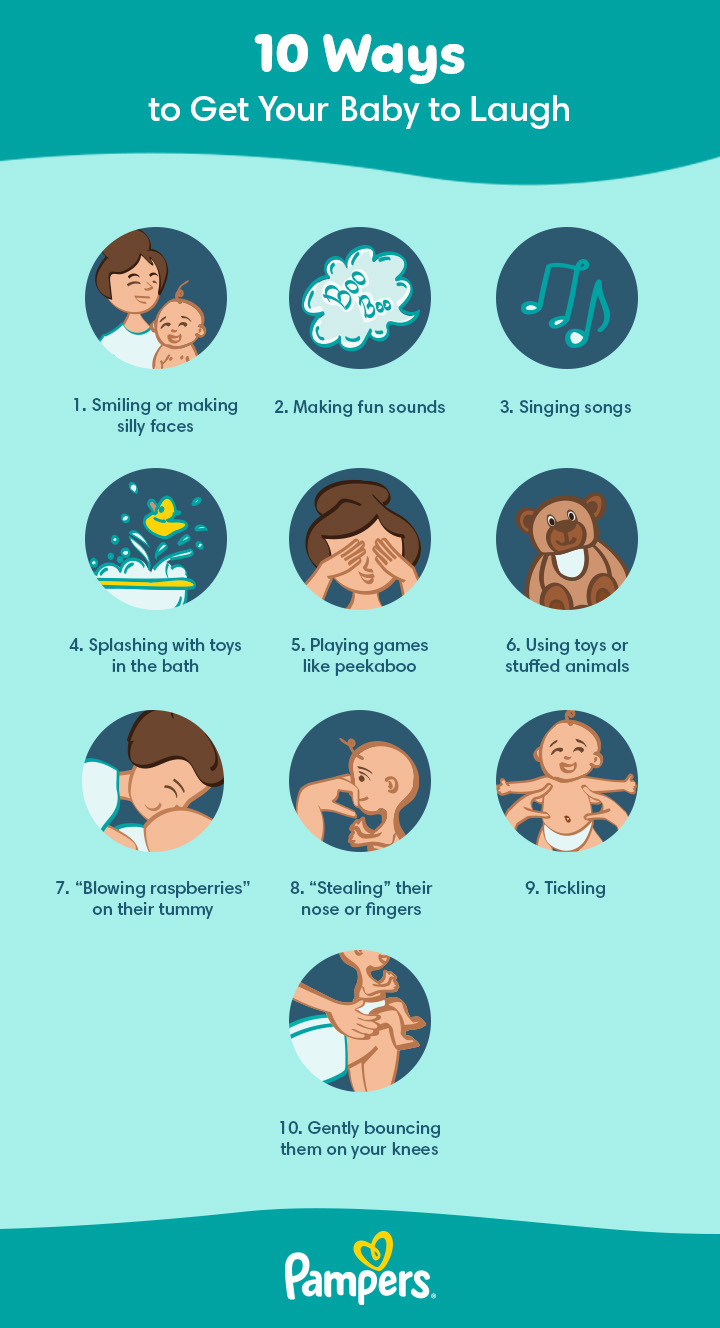
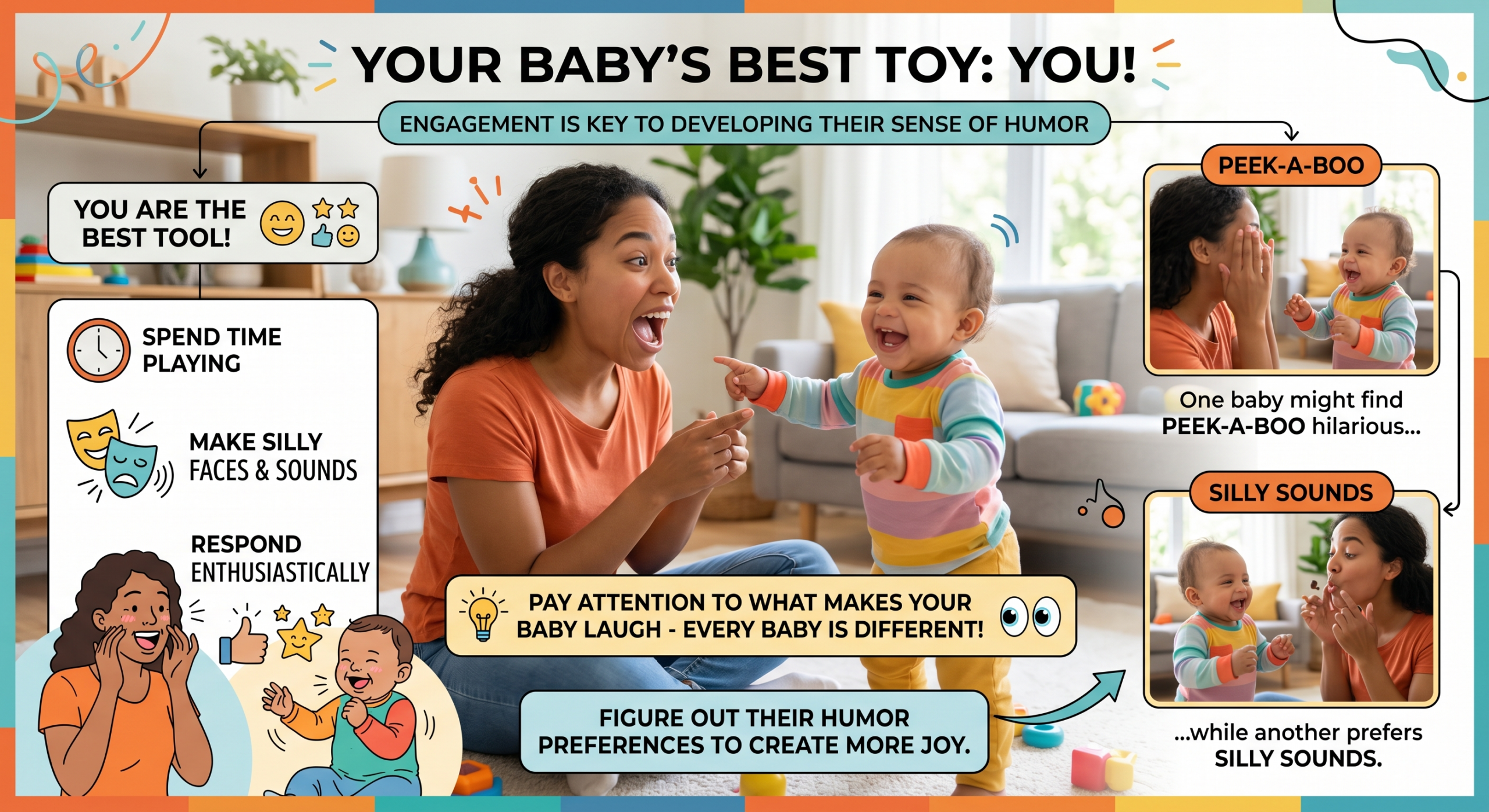
You do not need special toys or expensive classes to encourage laughter. Babies often laugh most during simple, warm interactions.
Try these gentle ideas:
- Make eye contact and smile.
- Use a high, playful voice.
- Copy your baby’s coos and facial expressions.
- Play peekaboo with a soft cloth or your hands.
- Sing the same short song each day.
- Make gentle, silly faces.
- Give light belly kisses if your baby enjoys them.
- Pause during play to let your baby respond.
- Repeat games your baby seems to enjoy.
- Stop if your baby turns away, fusses, or looks tired.
Timing matters. A fed, rested baby is more likely to enjoy play. Many babies are most alert after a nap or diaper change.
One practical lesson parents often learn is that repetition works better than constant new tricks. A simple game may seem boring to an adult, but repetition helps a baby predict what will happen. That little pause before peekaboo can become the best part.
Never shake, toss, or handle a baby roughly to make them laugh. Even playful movement must be gentle, controlled, and suited to your baby’s age and head control.

What if your baby does not laugh yet?
If your baby has not laughed by 3 or 4 months, there is usually no reason to panic. Normal development has a wide range, and some babies are simply quieter or more serious.
Ask yourself what else your baby is doing. Are they making eye contact? Do they smile at times? Do they react to your voice? Do they make sounds or show interest in people?
When asking when do babies laugh for the first time, remember that laughter is only one part of development. Doctors look at a group of social, language, movement, and emotional skills.
Contact your pediatrician if your baby:
• Does not smile socially by about 3 months
• Rarely looks at faces or seems to avoid eye contact
• Does not respond to loud sounds or familiar voices
• Loses a skill they previously had
• Seems unusually hard to engage
• Shows other developmental concerns that worry you
A missed laugh alone does not diagnose a problem. Still, parents should trust their concerns. Your child’s doctor can review your baby’s medical history, birth history, hearing, vision, and overall development.

Does prematurity change when babies laugh?
Premature babies may reach milestones later when their age is counted from the day they were born. For this reason, doctors often use corrected age during the first 2 years.
Corrected age estimates how old a baby would be if they had been born on their due date. For example, a baby born 8 weeks early at 4 months after birth may be assessed closer to 2 months corrected age.
This can affect when do babies laugh for the first time. A premature baby may laugh later than a full-term baby while still following a healthy developmental path.
Your pediatrician can explain which age to use. Other factors may also affect timing, such as hearing problems, illness, vision issues, muscle tone, and the baby’s individual personality.

Is laughter a sign of healthy development?
Laughter can be a positive sign of social and emotional growth. It may show that a baby recognizes familiar people, enjoys interaction, and responds to playful communication.
However, laughter alone does not measure overall health. Some babies laugh often but develop other skills at a different pace. Other babies are less expressive but still communicate well through eye contact, sounds, smiles, and body movements.
Healthcare providers usually consider several milestones together. These may include:
• Social smiles
• Eye contact
• Response to sounds
• Cooing and babbling
• Head control
• Hand movement
• Interest in people and objects
• Emotional responses
The Centers for Disease Control and Prevention provides milestone checklists for different ages. The American Academy of Pediatrics also recommends regular well-child visits to track development and address concerns early.

Common mistakes parents make when waiting for a first laugh
Parents often feel pressure when they see another baby laugh earlier. Comparing babies can create worry, even though development is not a race.
Common mistakes include:
• Treating a smile during sleep as a social smile
• Expecting a loud giggle right away
• Using too much stimulation
• Continuing a game after the baby shows stress
• Comparing siblings or friends’ babies
• Waiting too long to discuss a wider developmental concern
A baby may look away because they need a break, not because they dislike you. Turning away, yawning, rubbing the eyes, or becoming fussy can signal tiredness.
The best approach is to enjoy the process. Talk, sing, cuddle, and respond to your baby’s sounds. These everyday moments support development whether or not they produce a laugh.
When to contact a pediatrician
Speak with your child’s doctor if you have concerns about when do babies laugh for the first time or about development in general. You do not need to wait for a routine appointment if something feels wrong.
Write down what you notice. Include your baby’s age, corrected age if premature, social responses, sounds, reactions to voices, and any skills they may have lost.
A short video can also help, especially if your baby shows an unusual sound or movement that does not happen during the visit. Do not record instead of responding to your baby, but a brief clip can give the doctor useful context.
Early conversations are helpful because doctors can check hearing, vision, feeding, muscle tone, and communication skills. Reassurance is also valuable when development is simply moving at its own pace.
Frequently Asked Questions
When do babies laugh for the first time?
Most babies laugh for the first time around 3 to 4 months. Some laugh earlier, while others begin closer to 5 or 6 months.
Can a baby laugh at 2 months?
Yes, some babies may make a small chuckle at 2 months. At this age, many babies are still developing their social smile, so laughter may be brief or inconsistent.
What is the difference between a baby smile and a baby laugh?
A social smile is a facial response to a person, voice, or interaction. A laugh adds a vocal sound, such as a chuckle, squeal, or giggle.
Should I worry if my 4-month-old does not laugh?
Not always. Babies develop at different rates, but you should mention your concern to your pediatrician, especially if your baby also lacks eye contact, social smiles, sound responses, or other expected skills.
How can I make my baby laugh?
Try peekaboo, gentle singing, funny faces, soft belly kisses, and copying your baby’s sounds. Stop when your baby looks tired, turns away, or becomes upset.
Do premature babies laugh later?
They may, especially when milestones are measured by their corrected age. Ask your pediatrician how corrected age applies to your baby’s development.
Is a baby’s laugh always a sign of happiness?
Often, laughter shows enjoyment or social connection. Babies may also make random sounds, laugh from stimulation, or vocalize without a clear emotional reason, so consider the whole interaction.
Conclusion
Most babies laugh for the first time between 3 and 4 months, but a wider range can be normal. A first laugh may begin as a quiet chuckle and grow into a familiar giggle over several weeks.
Focus on warm, simple play rather than a specific date. Talk to your baby, respond to their sounds, and give them time to engage. If you have concerns about laughter or other milestones, contact your pediatrician for clear, personalized guidance.
Enjoy each smile, squeal, and soft chuckle as it comes. Share your baby’s first-laugh story in the comments, and explore trusted child development resources for more guidance.