
Most babies can use a stroller seat around 6 months, once they sit upright with steady head and neck control.
Knowing when can babies use stroller seat helps you choose the right setup without rushing your baby into a seat they are not ready for. Age gives you a useful guide, but development, seat design, recline angle, and the stroller maker’s instructions matter just as much. This guide explains the safest signs to look for, common mistakes to avoid, and how to make the switch with confidence.
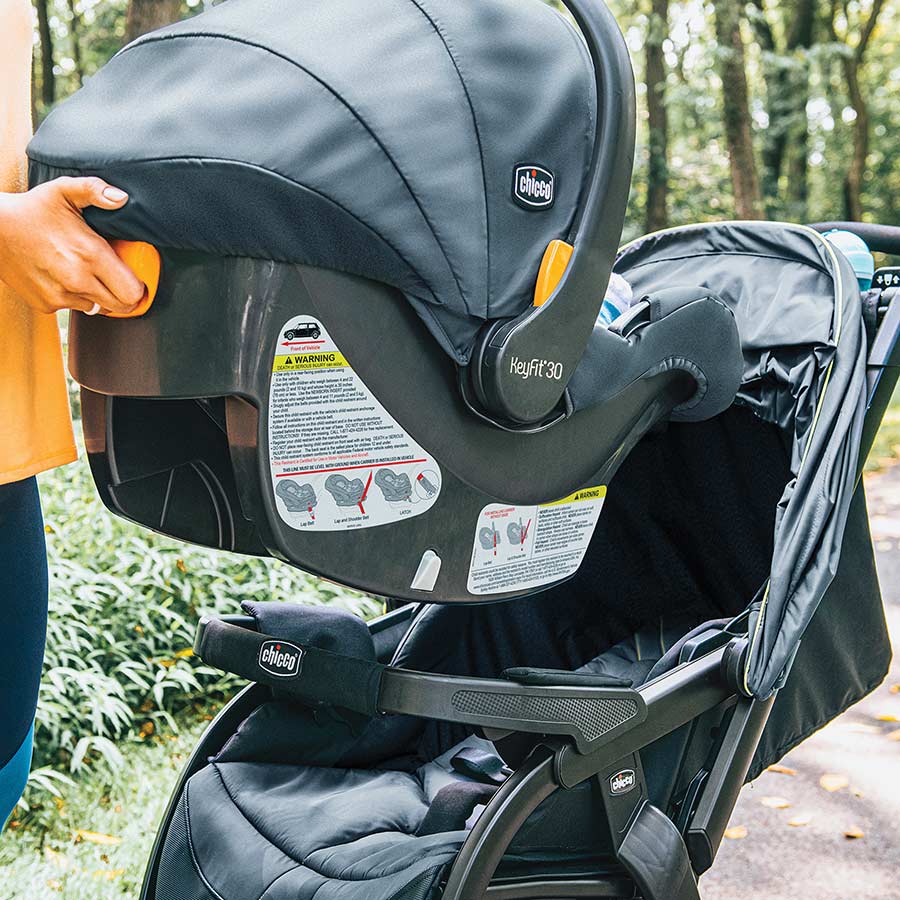
When can babies use stroller seat safely?
Most babies can use a stroller seat at about 6 months. However, some babies are ready a little earlier, while others need more time. The most important sign is not age alone. Your baby should have strong head and neck control and sit upright with little help.
A stroller seat usually gives more support than a regular chair, but it still requires your baby to hold their head steady. Young infants may slump to one side or slide down when they lack enough trunk strength. This can affect breathing and make the ride unsafe.
Before using a stroller seat, check that your baby can:
• Hold their head steady while sitting
• Sit upright with minimal support
• Keep their chin lifted instead of falling toward the chest
• Control their upper body during gentle movement
• Stay within the stroller’s weight and height limits
The answer to when can babies use stroller seat may vary by stroller type. Some seats recline nearly flat and are made for younger babies. Others are designed only for babies who can sit independently. Always read the product manual before making the switch.
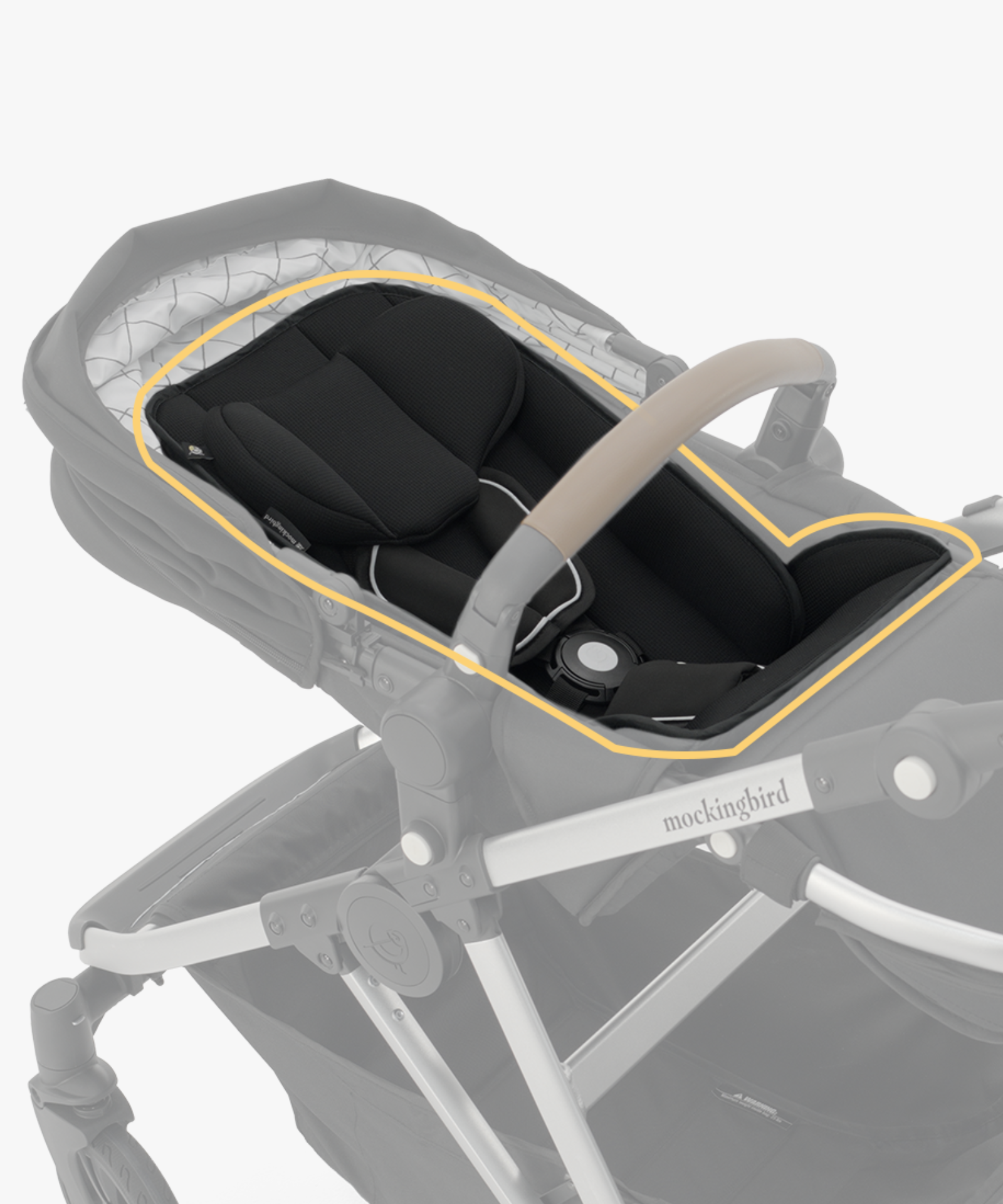
Why 6 months is a common guideline
Around 6 months, many babies gain better control of the muscles in the neck, back, and stomach. These muscles help them stay upright in a stroller seat. This age also often matches the time when babies begin sitting with less support.
Still, development does not follow a strict calendar. A healthy 5-month-old may not be ready, while a 7-month-old may still need a more supportive position. Premature babies may also reach milestones later when measured by their corrected age.
Think of a stroller seat like a small boat. Your baby needs enough balance to stay centered when the stroller moves over a bump. If your baby folds forward, leans sharply, or cannot recover from a small shift, a fully upright seat may be too soon.
Pediatric safety guidance focuses on proper positioning and supervision. The American Academy of Pediatrics advises caregivers to use restraints, follow manufacturer instructions, and avoid unsafe sleep situations in sitting devices.
The key lesson is simple: when can babies use stroller seat depends on readiness, not a birthday alone.
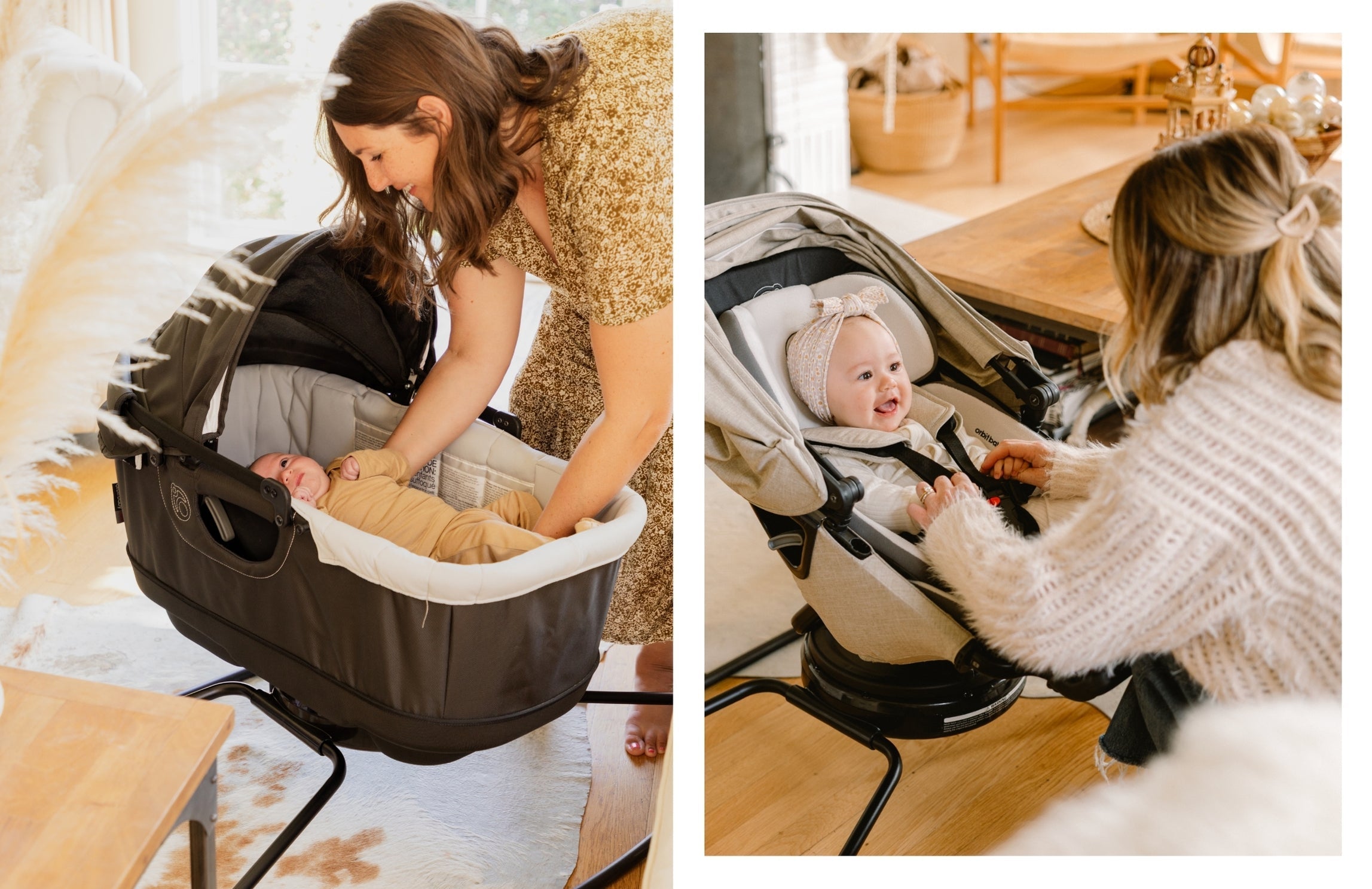
Signs your baby is ready for a stroller seat
Look for several signs together rather than relying on one skill. Sitting for a few seconds does not always mean your baby can safely manage a moving stroller. Your baby should show steady control during normal activity.
1. Strong head and neck control
Your baby should keep their head centered without repeated bobbing. The head should not flop forward when the stroller starts, stops, or rolls over a small change in ground level.
2. Stable sitting
Your baby does not need to sit perfectly alone at first. However, they should remain mostly upright with the seat’s support and should not collapse to the side or fold at the waist.
3. Good trunk control
Watch how your baby moves on the floor. If they can lean slightly and return to a centered position, they may have better control for a stroller ride. A baby who constantly slides down may need more time or a more reclined setup.
4. Comfortable breathing
Your baby’s face should remain visible, and the chin should stay away from the chest. A deep slouch can narrow the airway, especially when the baby falls asleep.
5. Correct fit in the harness
The harness should sit snugly over the shoulders and hips. You should not need to add pillows, towels, or homemade inserts to keep your baby in place unless the manufacturer specifically approves them.
If you are unsure when can babies use stroller seat for your child, ask the pediatrician during a routine visit. A health professional can consider your baby’s birth history, muscle tone, and developmental progress.

Can a newborn use a stroller seat?
Most newborns should not ride in a standard upright stroller seat. Newborns have limited head, neck, and trunk control, so they usually need a flat or highly supportive surface.
For young babies, safer options may include:
• A stroller bassinet approved for newborn use
• A stroller seat that reclines fully flat and is specifically labeled for newborns
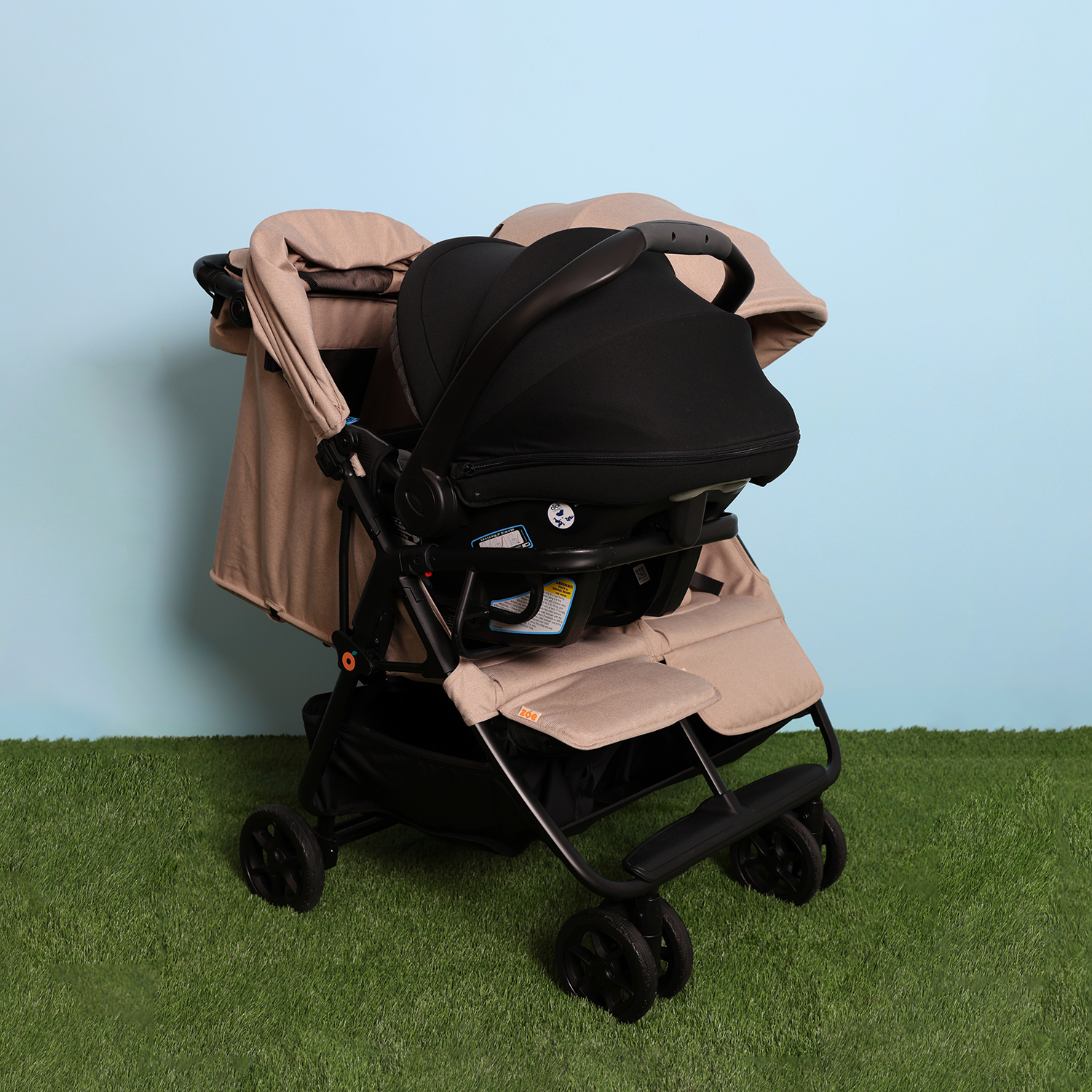
• A compatible infant car seat used only as directed by the stroller maker
A regular stroller seat may look comfortable, but a deep recline does not always create a safe newborn surface. Check whether the seat is approved for your baby’s age and size. If the manual says the seat is for babies who can sit independently, follow that limit.
An infant car seat can be useful for short transfers, but it is not a replacement for a flat sleep surface. The AAP recommends moving a sleeping baby from a car seat to a firm, flat sleep space when practical. Do not use a car seat clipped to a stroller as your baby’s routine nap spot.
When asking when can babies use stroller seat, separate “can ride in a stroller” from “can sit in the regular seat.” A newborn may safely use a bassinet attachment while waiting months before using the upright seat.

Stroller seat safety tips for babies
A safe stroller ride depends on more than the correct age. Small details, such as harness fit and seat angle, can make a major difference.
Use these habits every time:
• Fasten the five-point harness, even for a short walk
• Keep the harness snug but not tight enough to pinch
• Use the seat angle recommended for your baby’s age and ability
• Keep your baby’s face visible at all times
• Lock the stroller brakes before placing your baby inside
• Keep loose blankets, toys, and bags away from the baby’s face
• Use the stroller canopy for shade, but keep air moving around your baby
• Avoid hanging heavy bags from the handle unless the stroller allows it
• Check that wheels, brakes, buckles, and locks work before each trip
• Stay close, especially near roads, stairs, curbs, and busy areas
Never leave a baby alone in a stroller. Do not use a stroller on stairs or escalators, and do not allow an older child to push the stroller unless an adult remains in control.
If your baby falls asleep, check their position often. A sleeping baby can slowly slide into a chin-to-chest posture. If that happens, stop and reposition them. For longer sleep, move them to a firm, flat sleep surface.
These steps matter whether when can babies use stroller seat is at 5 months, 6 months, or later. Readiness does not remove the need for constant safety checks.

How to transition your baby to the stroller seat
The first rides should be short and calm. Start when your baby is fed, rested, and in a good mood. A tired or hungry baby may slump, fuss, or resist the new position.
Try this simple plan:
Place the stroller on a flat surface and engage the brake.
Set the seat to a supportive recline recommended by the manual.
Buckle the harness and check that your baby’s head stays upright.
Begin with a 10 to 15-minute walk near home.
Watch for slumping, head bobbing, pale skin, sweating, or unusual fussing.
Stop the ride if your baby cannot stay well positioned.
Increase ride time slowly as your baby becomes comfortable.
A mirror can help you monitor your baby, but it should not replace direct checks. Look at your baby’s face and posture often, especially after bumps or changes in the seat angle.
One common mistake is moving the seat fully upright on the first day. A slightly reclined position may be more comfortable while your baby builds strength. The answer to when can babies use stroller seat does not mean the seat must be upright immediately.
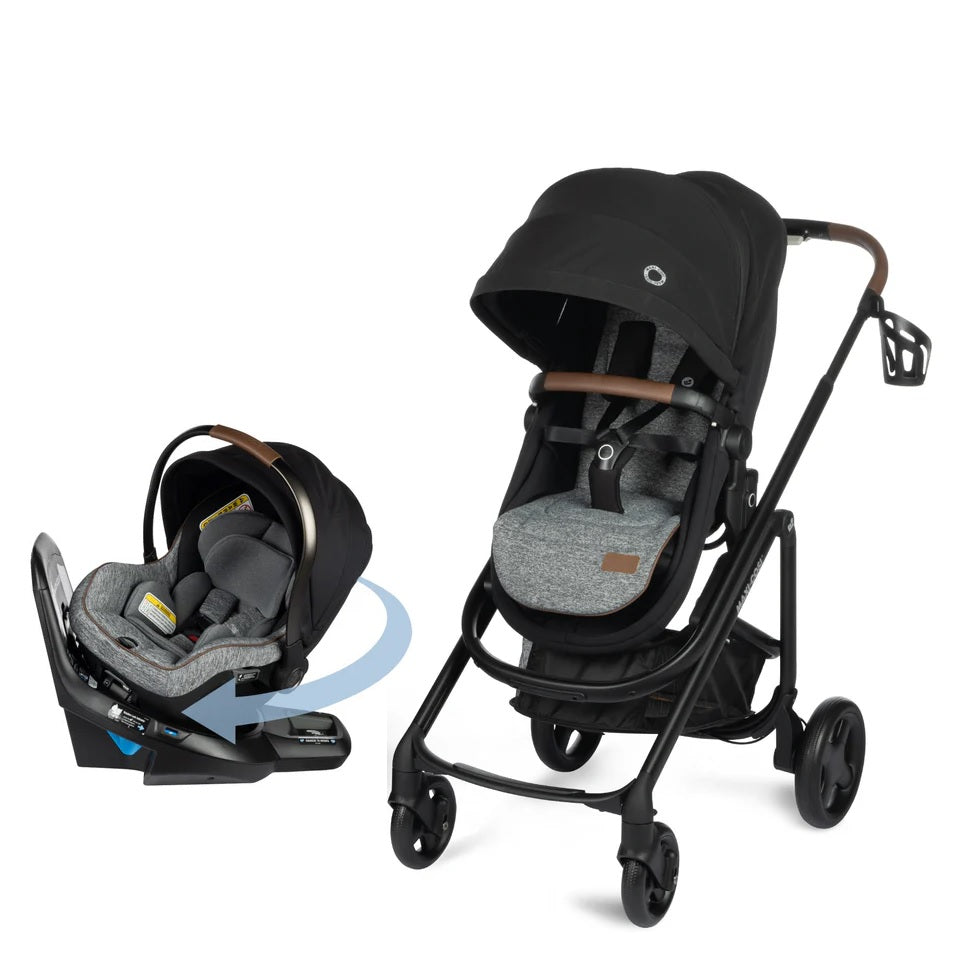
Common mistakes parents should avoid
Parents often want a clear age because it feels easier than judging development. Yet a number on a calendar cannot show how well a baby controls their head and body.
Avoid these common errors:
Using the seat because the baby looks too big for the bassinet
A baby who has outgrown the bassinet may still need a supportive reclined seat or another approved option. Check the bassinet’s weight and length limits, then review the stroller seat’s minimum age and readiness requirements.
Adding soft padding
Loose padding can change your baby’s position and may press against the face. Only use inserts that came with the stroller or that the manufacturer specifically approves.
Ignoring the manual
Different stroller seats have different limits. Some allow newborn use in a flat position, while others require independent sitting. The manual is the best source for that exact model.
Letting the baby sleep for long periods in the seat
A stroller seat is made for transport, not routine sleep. If your baby falls asleep, monitor the airway and move them to a safe sleep space as soon as practical.
Turning the seat outward too early
Some parents prefer a parent-facing position at first because it makes monitoring easier. Follow the manufacturer’s direction for seat orientation and choose the position that gives your baby the best support and visibility.
Using a damaged or recalled stroller
Inspect the frame, brakes, wheels, and harness. Check for product recalls before using a secondhand stroller. A low price is not a bargain if an important safety part is missing.

Choosing the right stroller seat
When can babies use stroller seat also depends on the seat’s design. A well-made seat should support your baby without forcing them into a deep slump.
Look for:
• A secure five-point harness
• Several recline positions
• A clear minimum age and weight range
• A sturdy footrest
• Easy-to-use brakes
• A seat that stays attached when locked
• A canopy that provides shade without blocking airflow
• A manual with clear instructions
For a newborn, consider a stroller with a true bassinet or a newborn-approved flat recline. For an older baby, a seat with several recline levels can support the gradual move from lying down to sitting upright.
Parents of premature babies or babies with low muscle tone may need extra guidance. A pediatrician or pediatric physical therapist can help assess posture and support needs. This advice is more useful than comparing your baby with another child in the same age group.
When shopping, test the stroller with the harness fastened. Make sure your baby’s head does not fall forward, the hips stay centered, and the straps do not rub the neck.
When to wait or ask a pediatrician
Wait before using a standard stroller seat if your baby cannot hold their head steady or repeatedly slides down. You should also pause if the stroller seat does not provide enough support at its most reclined approved angle.
Ask your pediatrician if your baby:
• Was born very early
• Has poor head control after the expected milestone period
• Seems unusually stiff or floppy
• Has trouble keeping the head centered
• Has a known muscle, nerve, bone, or breathing condition
• Becomes blue, pale, sweaty, or distressed in the stroller
These signs do not always mean there is a serious problem, but they deserve attention. A pediatrician can help you understand whether your baby needs more time, a different stroller setup, or an evaluation.
There is no prize for switching early. Waiting a few extra weeks is often easier than managing an uncomfortable or unsafe ride. The best answer to when can babies use stroller seat is the point when your baby’s body and the stroller work well together.
How age, development, and stroller design work together
Parents often search for one exact answer to when can babies use stroller seat, but three factors work together:
• Age: Around 6 months is a common starting point for many standard seats.
• Development: Your baby needs steady head, neck, and trunk control.
• Design: The stroller must be approved for your baby’s size and level of development.
For example, a 4-month-old may use a newborn-approved bassinet but not a regular upright seat. A 6-month-old who still slumps may need a more reclined position. A 7-month-old with strong sitting skills may be ready for a standard seat if the manual allows it.
This approach also explains why advice from friends can conflict. Their stroller may have a different seat, and their baby may have reached the needed skills at a different time.
Frequently Asked Questions
When can babies use stroller seat without a car seat?
Many babies can use a regular stroller seat around 6 months, once they have steady head and neck control. Always follow the stroller’s minimum age, weight, and development rules.
Can a 4-month-old sit in a stroller seat?
Some 4-month-olds may use a stroller seat that is specifically approved for young infants and reclines properly. A standard upright seat is usually not suitable unless the manufacturer permits it and your baby has strong control.
Can a baby sleep in a stroller seat?
A stroller seat is not recommended as a regular sleep space. If your baby falls asleep, monitor their position and move them to a firm, flat sleep surface as soon as practical.
Is a bassinet safer than a stroller seat for a newborn?
A newborn-approved bassinet usually gives better support because it keeps the baby flat. Use only a bassinet that is made for your stroller and follow its weight and age limits.
What if my baby slumps in the stroller seat?
Stop and reposition your baby, then check the recline angle and harness fit. If your baby continues to slump, wait before using that seat or ask a pediatrician for advice.
Does a baby need to sit independently before using a stroller seat?
Not always. Some stroller seats offer enough support before fully independent sitting, but your baby should have good head and neck control and meet the product’s instructions.
Conclusion
Most babies can use a standard stroller seat around 6 months, but readiness matters more than age alone. Your baby should control their head and neck, stay mostly upright, fit the harness correctly, and remain within the stroller’s limits.
Start with a supportive recline, take short rides, and watch for slumping or chin-to-chest positioning. For newborns, use a manufacturer-approved bassinet or flat newborn setup instead of rushing into an upright seat.
Check your stroller manual and speak with your pediatrician if you are unsure. With the right timing and careful setup, you can make stroller rides safe, comfortable, and enjoyable for both of you.