
Most babies can ride forward facing in a stroller around six months, once they sit upright without help.
Knowing when can babies sit forward facing in stroller depends on more than age. Your baby must have strong head, neck, and trunk control, and the stroller must allow safe upright use. This guide explains the signs to watch for, the safety rules that matter, and the common mistakes parents can avoid.
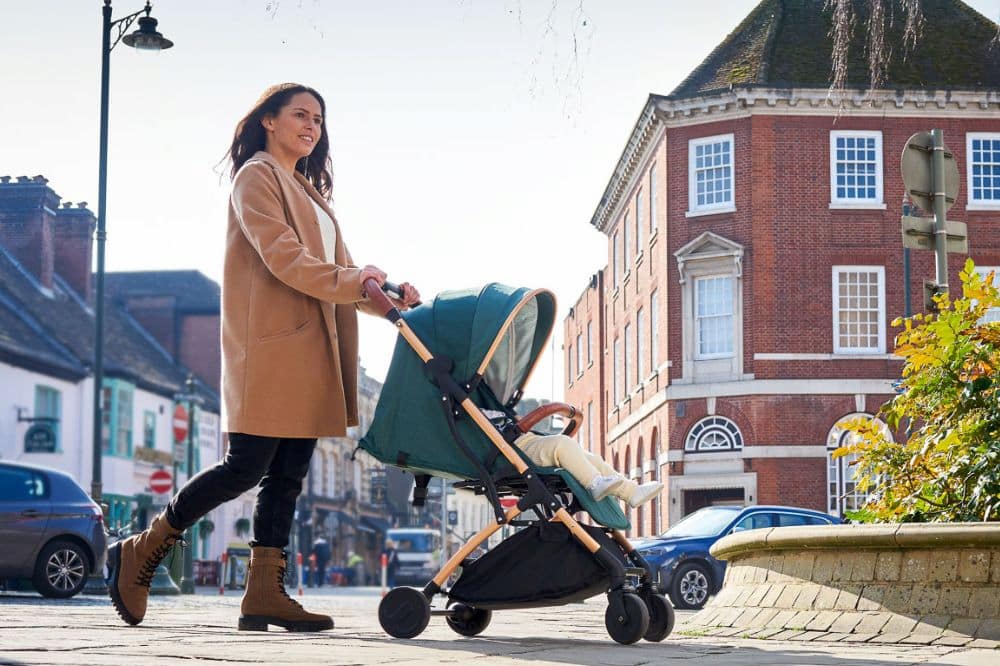
When can babies sit forward facing in a stroller?
Most babies can sit forward facing in a stroller at about 6 months. However, six months is only a general guide. Some babies are ready a little earlier, while others need more time to build strength.
The most important sign is that your baby can sit upright without support. Your baby should also keep their head steady and stay in the stroller seat without slumping to one side.
When asking when can babies sit forward facing in stroller, check these signs:
• Your baby sits upright with little or no help.
• Your baby holds their head steady during the ride.
• Your baby does not fold forward at the waist.
• Your baby does not slide down under the harness.
• Your baby can stay upright during gentle turns and stops.
• The stroller manual says the seat is safe for your baby’s age, weight, and development.
A baby who can sit for a few seconds on the floor may not yet be ready for a forward facing stroller seat. Stroller rides involve motion, bumps, turns, and sudden stops. Your baby needs enough control to manage these changes safely.

Why sitting independently matters
A forward facing stroller seat usually places your baby in a more upright position. This position needs stronger muscles than a fully reclined bassinet or newborn stroller insert.
Babies who cannot sit well may lean forward and press their face toward the seat. They may also slump sideways or slide under the harness. These positions can affect comfort and may make breathing harder.
Think of your baby’s trunk like the frame of a small tent. If the frame is not strong, the tent bends when the wind blows. A stroller can create similar movement through bumps, turns, and quick stops.
When can babies sit forward facing in stroller safely? They can do so when they have enough control to remain upright throughout the ride, not just at the start.
Parents should not use a stroller seat as a tool to teach sitting. Floor play and supervised practice are better ways to build balance and muscle strength. A stroller should support a skill your baby already has.

Age is a guide, not a safety test
Many stroller brands list 6 months as the minimum age for an upright seat. This age is common because many babies develop better sitting control around this time.
Still, babies develop at different rates. A healthy full term baby may sit independently near 6 months, while another baby may need several more weeks or months. Premature babies may also follow a different timeline.
If your baby was born early, ask the pediatrician how to judge readiness. The doctor may consider corrected age, muscle tone, head control, and other parts of development.
The answer to when can babies sit forward facing in stroller should always include three checks:
• Your baby’s development
• The stroller’s instructions
• Advice from your child’s health professional when needed
Do not rely on age alone. A date on the calendar cannot show whether a baby can control their body during movement.

Forward facing versus parent facing
Many strollers let you turn the seat toward you or toward the world. Parent facing means your baby looks at you. Forward facing means your baby looks away from you and sees the path ahead.
Parent facing can be useful when your baby is younger or still gaining sitting strength. You can see your baby’s face, watch for slumping, and offer comfort more easily.
Forward facing can be exciting for an older baby. Your child may enjoy seeing trees, people, pets, and passing cars. Yet more visual activity can also tire a young baby.
When can babies sit forward facing in stroller if the seat reverses? Follow the same readiness signs. A reversible seat does not remove the need for steady head, neck, and trunk control.
You can also switch between positions. For example, use parent facing mode during a long walk and forward facing mode for a short outing. Watch your baby’s cues rather than choosing one position for every trip.

Check the stroller manual first
Every stroller has its own design limits. Some seats support a young baby when fully reclined. Others are made only for babies who can sit without help.
Before turning the seat forward, read the instructions for:
• Minimum age
• Minimum and maximum weight
• Seat recline limits
• Harness use
• Approved accessories
• Bassinet or infant insert use
• Seat direction
• Terrain limits
A stroller manual may also explain whether the seat can face forward when partly reclined. Do not assume that two strollers with similar shapes have the same rules.
If you no longer have the manual, look for the model name and number on the frame. The manufacturer may provide instructions online. Avoid using a product if you cannot confirm its limits.
This is one of the clearest answers to when can babies sit forward facing in stroller: use the seat only in the position and age range approved by the manufacturer.
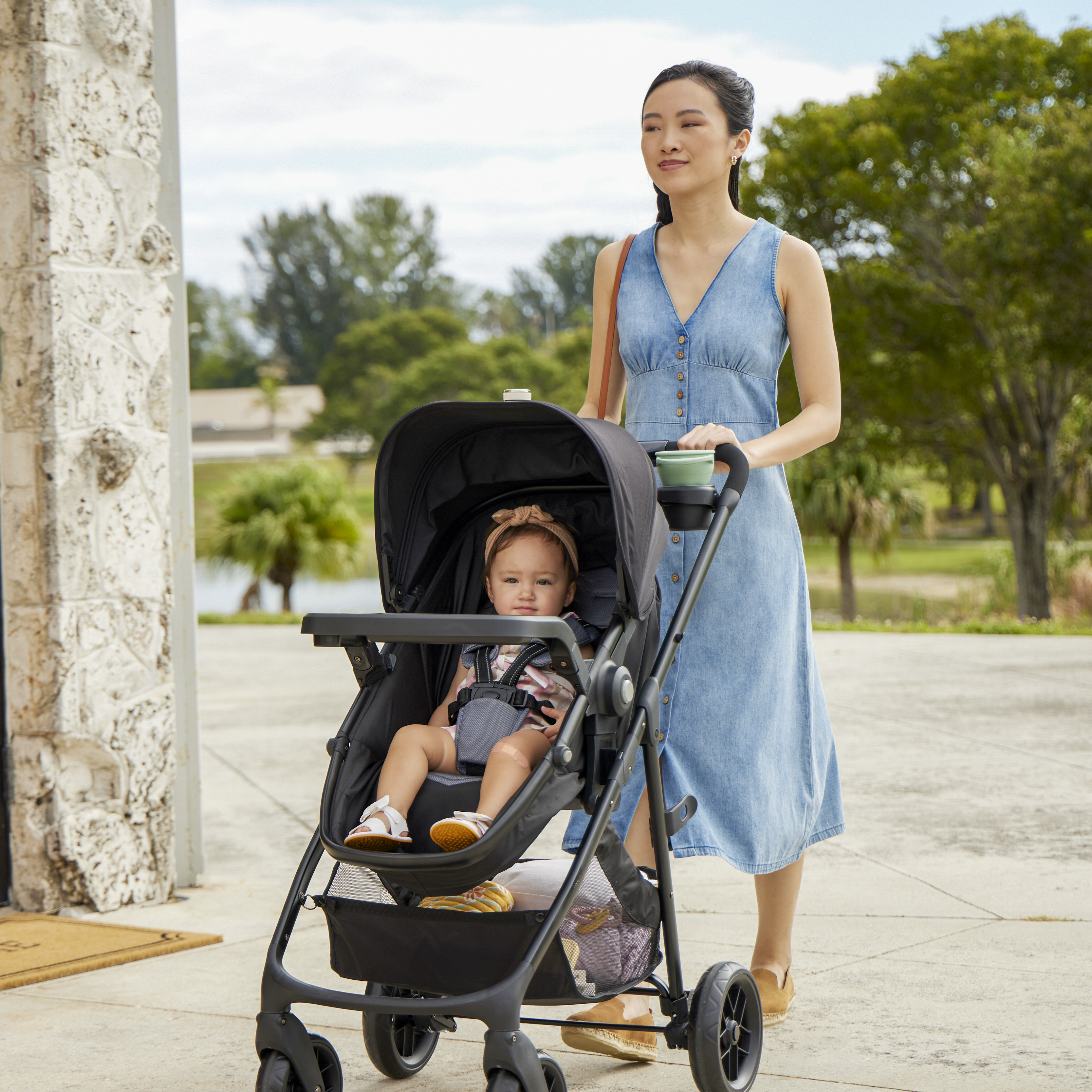
How to use a forward facing stroller safely
Once your baby is ready, set up the stroller with care. A correct fit matters as much as the seat direction.
Use these steps before each walk:
Lock the stroller frame fully open.
Check that the wheels and brakes work.
Place your baby deep in the seat.
Fasten the five point harness.
Adjust the straps so they are snug but not tight.
Keep the shoulder straps at the correct height.
Make sure your baby’s face and chest stay clear.
Keep the seat within the approved recline range.
Use the wrist strap if the stroller has one.
Test the brakes before crossing a street or slope.
The harness should hold your baby in the seat without pressing into the neck. You should not be able to pull a large fold of strap away from the body.
Never use a loose blanket under the harness. It can change the fit and allow your baby to slip down. If your baby needs warmth, place a stroller blanket over the secured harness, or use an accessory approved for that stroller.
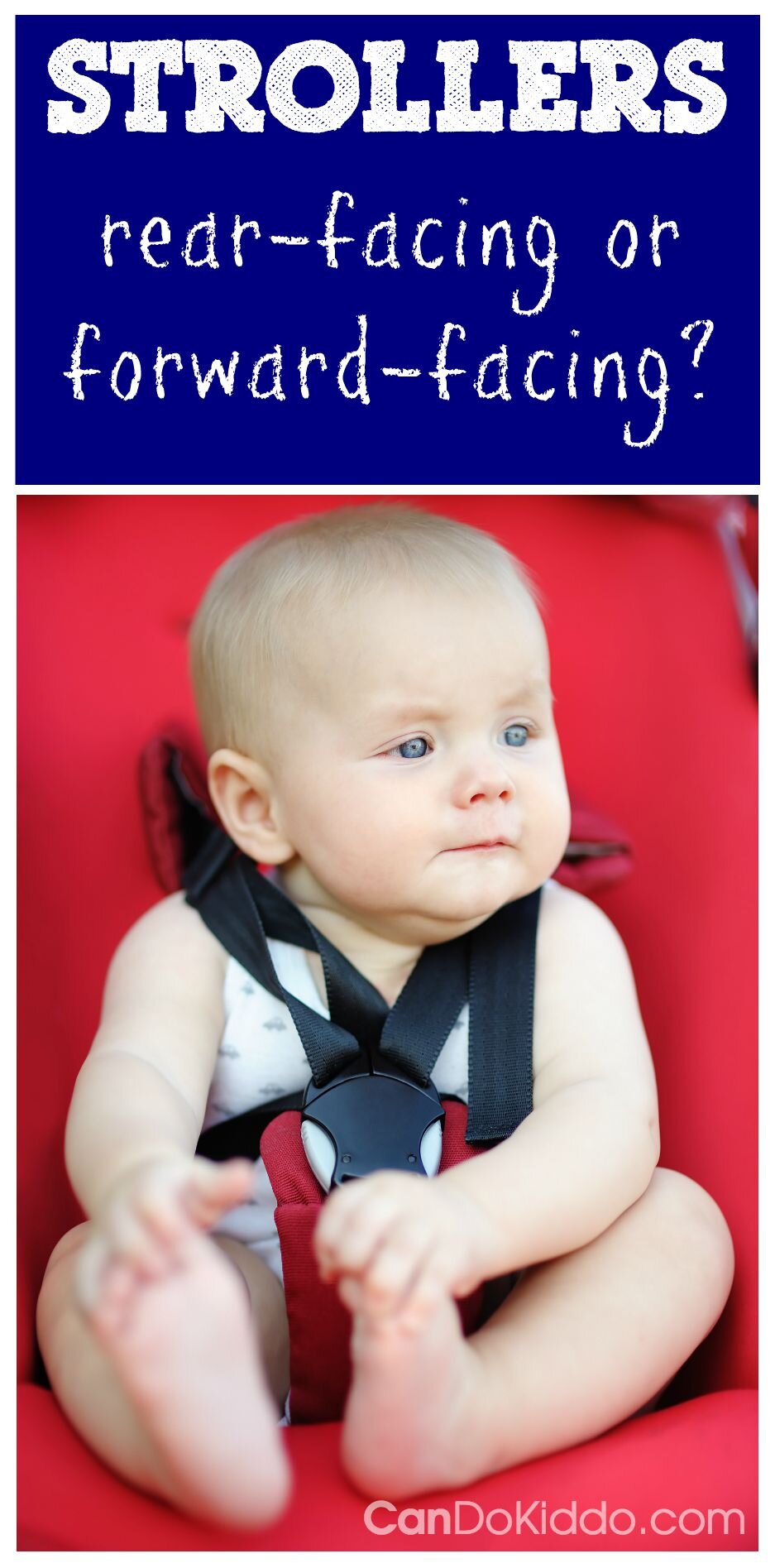
Signs your baby is not ready
Even if your baby is near 6 months old, they may need more time. Stop and return to a more supportive position if you notice any of these signs:
• The head falls forward often.
• The chin rests on the chest.
• The baby leans heavily to one side.
• The baby slides under the harness.
• The baby cannot stay centered in the seat.
• The baby seems upset or tired after a short ride.
• The baby cannot recover from a small bump or turn.
A little movement is normal. Repeated slumping is not a sign to ignore. Adjust the recline if the manual allows it, or use the parent facing position until your baby gains more control.
When can babies sit forward facing in stroller is not a race. Waiting a few more weeks does not delay your child. It gives their muscles more time to mature.
Contact your pediatrician if your baby has poor head control, seems unusually stiff or floppy, or shows a developmental concern. A doctor can offer advice based on your baby’s health and history.

Common stroller mistakes to avoid
Small errors can make a stroller ride less safe or less comfortable. These mistakes are easy to prevent once you know what to check.
Turning the seat too soon
Some parents turn the seat forward because their baby seems curious. Curiosity does not prove that the baby can sit safely. Check independent sitting and head control first.
Using a car seat as a stroller seat
An infant car seat is designed for travel in a vehicle. It is not the same as a stroller seat, even when it clicks onto a stroller frame.
Follow the car seat and stroller instructions for approved use. Do not place a car seat on a shopping cart or an unapproved surface.
Adding thick padding
Aftermarket cushions may change your baby’s position or interfere with the harness. Use only padding and inserts approved by the stroller maker.
Hanging heavy bags from the handle
Heavy bags can make a stroller tip backward. Use the storage basket within its weight limit and keep heavy items low.
Leaving the stroller unattended
Always keep a hand on the stroller near roads, stairs, ramps, and crowded areas. Engage the brake whenever you stop.
Covering the canopy with a blanket
A blanket over the canopy can reduce airflow and raise the temperature inside. Use the canopy as designed and check your baby often in warm weather.

What your baby may experience when facing forward
Forward facing can give your baby a wider view. This may support interest in the world and make walks more engaging. Some babies smile at dogs, buses, and people they see along the way.
The extra sights can also be tiring. A baby may become fussy after a busy walk because the new view brings more sound, light, and movement.
Start with short trips. A ten minute walk near home can tell you more than a long day at a crowded event.
Watch for signs of overload:
• Rubbing the eyes
• Turning the head away
• Yawning
• Fussing
• Becoming quiet or limp
• Losing good body position
If your baby seems overwhelmed, turn the seat toward you when possible or end the walk. The best stroller position is the one that keeps your baby safe, calm, and well supported.
A practical readiness checklist
Use this checklist before changing the seat direction:
• My baby sits upright without help.
• My baby has steady head and neck control.
• My baby does not slump during normal movement.
• The stroller manual allows forward facing use.
• The seat fits my baby’s size and weight.
• The harness fits snugly and correctly.
• I can see and check my baby during the ride.
• The stroller works well on the planned route.
If you cannot check every box, wait and try again later. This simple approach makes the answer to when can babies sit forward facing in stroller more personal and more accurate.
In my experience reviewing baby gear guidance, the most common mistake is focusing on the calendar instead of the child. Parents often feel pressure when another baby in their group faces forward. Development is not a contest. Your baby’s control matters more than a friend’s timing.
How long can a baby ride forward facing?
There is no single time limit for every baby or stroller. Begin with short rides and increase the length when your baby stays comfortable and well positioned.
Take breaks during longer outings. Remove your baby from the stroller when you stop for a meal, play, or a change. A stroller should not replace regular floor time, movement, and interaction.
Avoid letting your baby sleep for long periods in a seated stroller position. If your baby falls asleep, monitor their position and follow the stroller’s instructions. Move them to a safe sleep space when practical.
Weather also affects ride length. In hot weather, check for sweating, flushed skin, or unusual sleepiness. In cold weather, check hands, feet, and the chest, while avoiding bulky layers under the harness.
What safety authorities recommend
Stroller safety guidance from major child safety organizations focuses on the same core points: use the restraint, follow the manufacturer’s instructions, check the stroller before use, and never leave a child unattended.
The U.S. Consumer Product Safety Commission also advises parents to use stroller brakes, keep children secured, and avoid hanging heavy items from handles. Strollers sold in the United States must meet federal safety requirements, but correct use still depends on the caregiver.
The American Academy of Pediatrics supports age and development appropriate equipment use. Medical guidance can help when a baby has a developmental delay, was born premature, or has a condition that affects muscle control.
Product rules can change, and stroller models differ. Check current instructions for your exact model rather than relying on a general internet chart.
Frequently Asked Questions About When Can Babies Sit Forward Facing in Stroller
Can a 4 month old baby sit forward facing in a stroller?
Usually, no. Most 4 month old babies do not yet have the independent sitting and trunk control needed for an upright forward facing seat. Follow the stroller manual and wait until your baby can stay upright without support.
Is 6 months the exact age for forward facing stroller use?
No. Six months is a common guideline, not a universal rule. Your baby’s head control, sitting skill, body position, and the stroller’s instructions matter more than age alone.
Should my baby face me or face forward in the stroller?
A younger baby or a baby still building sitting strength may do better facing you. Once your baby sits steadily, forward facing can be suitable if the stroller allows it and your baby remains comfortable.
Can my baby face forward if they can sit with support?
It is usually better to wait. Sitting with support does not always show enough control for bumps, turns, and sudden stops. Look for steady independent sitting and strong head control.
Can a baby sleep in a forward facing stroller?
A baby may fall asleep during a walk, but a seated stroller is not a routine sleep space. Watch the baby’s position and move them to a safe, approved sleep surface when practical.
Does a stroller bassinet change when babies can face forward?
A bassinet may support a younger baby in a flat position, but it does not make an upright seat safe sooner. Switch to forward facing only when the baby and the stroller both meet the required conditions.
What should I do if my baby slumps forward?
Stop the stroller and reposition your baby. Check the recline setting and harness, and return to a more supportive position if the manual allows it. If the problem continues, wait longer or ask your pediatrician for advice.
Conclusion
Most babies can sit forward facing in a stroller around 6 months, but readiness depends on development, not age alone. Your baby should sit upright without help, hold their head steady, and remain well positioned in a stroller approved for their size and age.
Read the manual, use the five point harness, start with short walks, and watch your baby closely. When can babies sit forward facing in stroller is a question best answered by careful observation rather than comparison with other families.
Check your stroller today, review its instructions, and make the switch only when your baby is truly ready. Share your experience or explore more trusted baby safety resources before your next outing.