
Flying with young children can feel like moving a small home through an airport. A stroller wagon may help, but it may not receive the same treatment as a standard stroller.
The short answer is sometimes. Many U.S. airlines allow certain stroller wagons to be checked at the gate, but others require them to be checked at the ticket counter. The decision can depend on the airline, aircraft, wagon size, folded shape, weight, and whether the wagon fits through the jet bridge and aircraft door.
Always check your airline’s current stroller and wagon policy before leaving for the airport. A gate agent may also make the final decision on the day of travel.
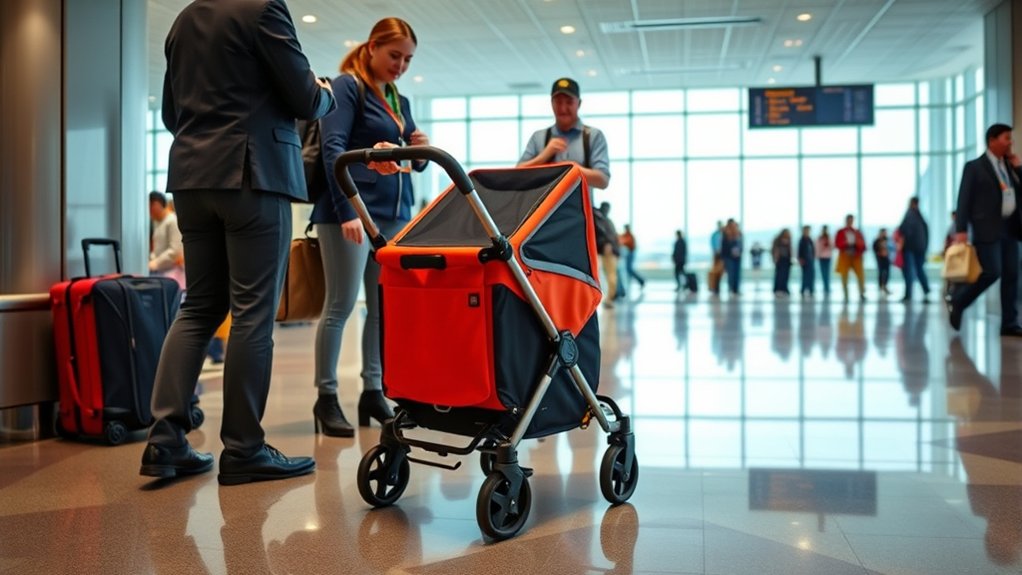
Can stroller wagons be gate checked?
A stroller wagon can be gate checked only if the airline permits it and the wagon meets the carrier’s size and handling rules. Some airlines treat stroller wagons like strollers. Others classify them as large, bulky, or non-collapsible equipment and require counter check-in.


Gate checking means you use the wagon through the airport. At the gate, an agent places a special tag on it. You then leave it near the aircraft door before boarding. Ground staff place it in the aircraft hold, and you may collect it at the aircraft door after landing.
This is different from checking the wagon at the ticket counter. With counter check-in, the wagon travels with regular checked bags. You usually collect it at baggage claim, not at the plane.
Why airline rules differ
Airlines do not use one universal rule for stroller wagons. A compact, foldable wagon may fit the airline’s stroller policy. A large wagon with wide wheels, a fixed frame, or a canopy may not.
The main factors are:
- Whether the wagon folds
- Its folded size
- Its weight
- Whether it can pass through the jet bridge
- Whether the aircraft has room for gate-checked items
- The airline’s definition of a stroller
- The airport’s local handling rules
- The flight’s aircraft type and available cargo space
A policy that works on one airline may not work on another. Even the same airline may apply different rules at different airports.
Gate check is not the same as carry-on
Most stroller wagons are too large to bring into the passenger cabin. Folding the wagon does not automatically make it a carry-on item.
A carry-on must fit within the airline’s cabin baggage limits and fit in the overhead bin or another approved storage space. A wagon that exceeds those limits will normally need to be checked.
Do not assume that a wagon is allowed in the cabin because a compact stroller is. Airlines often have separate rules for stroller wagons.

How to find out if your wagon can be gate checked
The safest method is to confirm both the airline’s written policy and the airport procedure.
1. Check the airline’s official baggage policy
Look for pages titled:
- Traveling with children
- Strollers and car seats
- Special items
- Checked baggage
- Mobility and child equipment


Read the full policy. Do not rely only on a search result or a social media post. Airline rules can change, and some policies use the word “stroller” without clearly mentioning wagons.
Search the airline’s site for terms such as:
- stroller wagon
- folding wagon
- child wagon
- push wagon
- gate-check stroller
- large stroller
If the policy is unclear, contact the airline before travel. Ask this direct question:
“Can I gate check my specific stroller wagon at the aircraft door, or must I check it at the ticket counter?”
Give the airline the wagon’s brand, model, folded dimensions, and weight.
2. Check the wagon manufacturer’s specifications
Use the manual or the manufacturer’s official product page. Record:
- Weight
- Folded length
- Folded width
- Folded height
- Wheel size
- Whether the wagon locks when folded
- Whether the handle folds
- Whether the canopy or accessories can be removed
These details help the airline give a more useful answer. A photo alone may not show how large the wagon becomes when folded.
3. Ask at the airport before security
At check-in, show the wagon to an airline employee if possible. Ask whether the item has been accepted for gate checking.
If the airline requires counter check-in, checking the wagon early may save time. If the airline permits gate checking, ask where to get the gate-check tag. Some airports issue the tag at the ticket counter. Others issue it at the gate.
4. Confirm the return process
Ask where you will receive the wagon after landing. Common options include:
- At the aircraft door
- At the bottom of the jet bridge
- At baggage claim
- At a special oversized-baggage area
The answer may differ by airport. If you need the wagon to move through the airport after landing, tell the gate agent before boarding.

What to do when gate checking a stroller wagon
Prepare the wagon as if it will face rain, dirt, impact, and rough handling. Gate-checked items travel in the aircraft hold and may be moved by hand or vehicle.
Before leaving home
- Remove loose items. Take out toys, snacks, blankets, cups, and small bags.
- Remove accessories. Detach cup holders, organizers, removable canopies, and other parts when the manual allows it.
- Clean the wagon. Dirt and food can make inspection and handling harder.
- Photograph it. Take clear photos of the wagon, wheels, frame, fabric, and accessories.
- Write down the model and serial number. Keep this information with your travel documents.
- Use a protective travel bag if suitable. A bag can reduce dirt and scratches, but it does not guarantee protection from damage.
- Secure the folded frame. Use the wagon’s built-in lock or the method listed in the manual.


Do not place valuables, medication, passports, electronics, or fragile items inside the wagon. Checked items are not a safe place for those belongings.
At the gate
Arrive early enough to speak with the gate agent. Tell the agent that you want to gate check the wagon. The agent may inspect its folded size or ask you to fold it.
Attach the gate-check tag where it is easy to see. Keep the claim portion of the tag. You may need it if the wagon does not arrive at the aircraft door.
Follow the agent’s instructions about where to leave the wagon. Some airports use a marked area near the aircraft door. Others collect it at the end of the jet bridge.
After landing
Wait for the wagon in the location the agent gave you. Do not assume it will appear at the plane door. If it is missing, go to the airline’s baggage service desk before leaving the airport.
Inspect the wagon before you leave. Check the:
- Wheels
- Brakes
- Handle
- Fold latch
- Frame
- Fabric
- Canopy
- Safety restraints
Report damage or missing parts as soon as possible. Keep the baggage tag and photos. The airline may ask for them when you file a report.
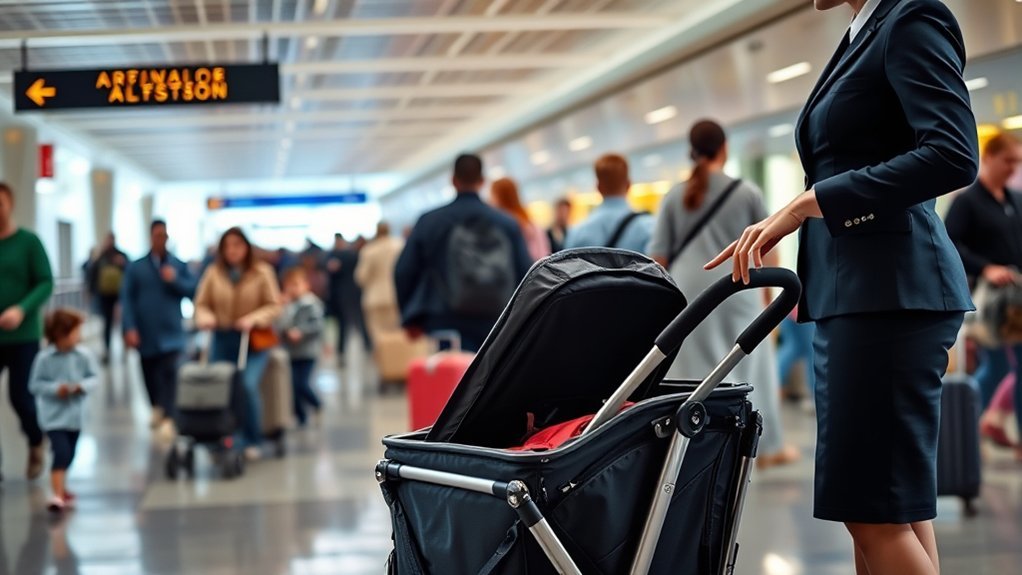
Gate checking versus counter checking
The best option depends on convenience, risk, and the airline’s rule.
| Option | Main benefit | Main drawback |
|---|---|---|
| Gate check | You can use the wagon in the terminal | It may be handled late and may not return at the aircraft door |
| Counter check | The airline handles it with checked baggage from the start | You cannot use it after check-in |
| Carry-on | The wagon stays with you | Most wagons are too large for the cabin |
| Leave it at home | No airport handling risk | You lose the wagon’s storage and seating benefits |
Gate checking is useful when a child needs to rest or when you have bags to carry. Counter checking may be better when the wagon is large or when the airline does not clearly accept wagons at the gate.
For a large wagon, a protective bag and counter check may be more predictable than relying on a last-minute gate decision. For a compact wagon, gate checking may be practical if the airline confirms that option.
A simple decision guide
Choose gate checking when:
- The airline confirms that your wagon is eligible.
- The wagon is compact when folded.
- You need it in the terminal.
- You can remove loose parts.
- You can accept a possible wait after landing.
Choose counter checking when:
- The airline requires it.
- The wagon is large, heavy, or difficult to fold.
- The folded wagon exceeds the airline’s stroller limits.
- You do not need it inside the airport.
- You want to avoid a gate-side refusal.
Choose another child-transport option when:


- The airline will not accept the wagon.
- You have a tight connection.
- You are traveling through a small airport with limited jet-bridge service.
- The wagon is essential immediately after landing and the airline cannot confirm where it will be returned.
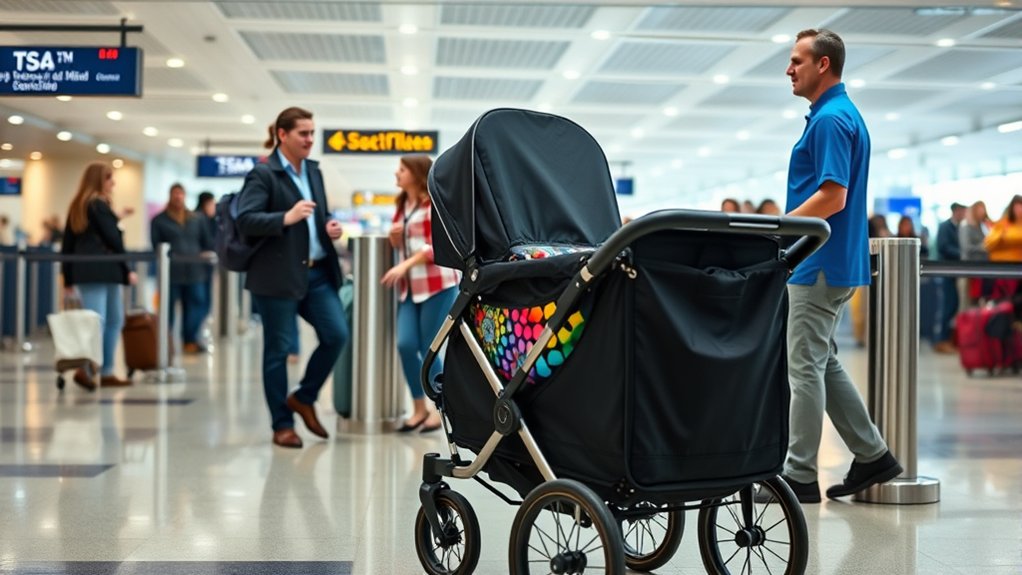
What size stroller wagon is most likely to be accepted?
There is no single U.S. size limit for gate-checked stroller wagons. Each airline sets its own rules, and gate agents may consider the aircraft and airport.
Still, a wagon is more likely to be accepted when it:
- Folds into a compact shape
- Has a secure folded latch
- Has no sharp or loose parts
- Is easy for one person to move
- Has removable accessories
- Resembles a folded stroller rather than a large utility wagon
A wide, non-folding wagon is less likely to qualify for gate checking. It may need to go to the ticket counter or travel as oversized baggage.
Do not compare only the wagon’s open size. The folded dimensions matter most for transport and storage. Weight also matters because a heavy wagon may be subject to a separate airline limit.

Can stroller wagons be gate checked for free?
Not always. Some airlines allow standard strollers and child safety seats to be checked without a fee, but a stroller wagon may fall outside that policy.
Possible outcomes include:
- Free gate checking under the airline’s stroller rule
- Free counter checking as child equipment
- A checked-bag fee
- An oversized or overweight fee
- Refusal at the gate because the item does not meet the policy
Ask the airline specifically whether the fee policy applies to a stroller wagon, not just a stroller. A free stroller allowance does not automatically cover every wheeled child carrier.
If you are traveling with more than one wagon, stroller, or car seat, confirm how the airline counts those items. Rules may differ for each child and for each type of equipment.

Do airlines protect gate-checked stroller wagons from damage?
Airlines transport gate-checked items, but gate checking does not mean the item will receive special handling. The wagon may be exposed to rain, dust, bumps, and loading equipment.
A travel bag can help protect fabric and reduce surface damage. It cannot prevent all damage, and some airlines may require you to remove the bag before handing over the wagon.
Read the airline’s conditions of carriage and baggage liability rules. They may limit responsibility for damage to wheels, handles, straps, or other parts that are more likely to break. Do not place important personal items inside the wagon.
If damage occurs:
- Take photos before leaving the airport.
- Keep the baggage tag.
- Report the problem to the airline’s baggage service desk.
- Keep receipts for reasonable repair or replacement costs.
- Follow the airline’s deadline for a written claim.
The U.S. Department of Transportation provides consumer guidance for damaged, delayed, and lost baggage. Airline claim rules and deadlines can apply.


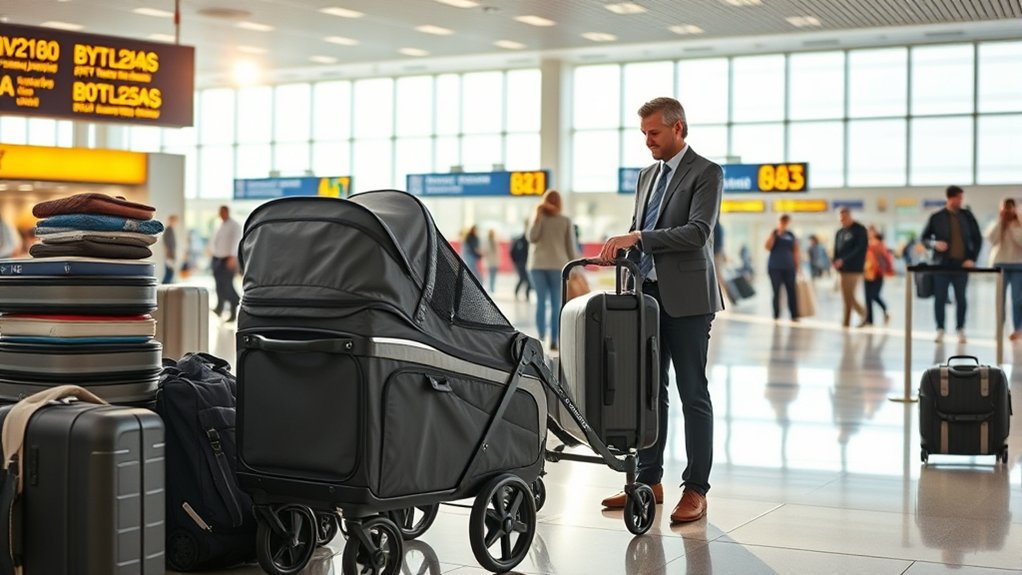
Common mistakes to avoid
Assuming every stroller policy includes wagons
A stroller wagon may have two seats and a push handle, but the airline may classify it as a wagon or large child item. Ask about the exact model.
Waiting until boarding begins
A gate agent may need time to tag and arrange the item. Arriving early gives you time to solve a problem if the wagon must go to the ticket counter.
Leaving items inside
Loose items can fall out, be removed, or become damaged. Take everything out before handing over the wagon.
Forgetting the wagon after a connection
You may need to collect and recheck the wagon during a connection, especially if the airline returns gate-checked items at baggage claim. Ask the agent about the process for every flight segment.
Treating a wagon as a child restraint
A stroller wagon is not automatically an approved aircraft seat. Children must follow the airline’s onboard seating rules. If you want to use a child restraint on the plane, check whether it is approved for aircraft use and whether it fits the aircraft seat.
The Federal Aviation Administration recommends using an approved child restraint system when appropriate. A stroller wagon normally remains outside the passenger cabin during the flight.

What if the airline refuses the wagon at the gate?
Stay calm and ask where the airline wants the wagon checked. The most common alternative is the ticket counter or an oversized-baggage location.
If the wagon is refused even though the airline’s written policy appears to allow it, show the policy to the agent and ask for a supervisor. Keep the discussion focused on the exact rule, the wagon’s folded dimensions, and the available handling method.
Do not block the boarding area or argue with an employee about safety instructions. Airport and aircraft conditions may affect what the airline can accept that day.
If you believe the airline handled the item against its published policy, document:
- Airline and flight number
- Date and airport
- Wagon model and dimensions
- What the written policy said
- What the agent told you
- Any fee charged
- Any damage or delay
You can use that record when contacting the airline after the trip. The DOT also accepts air travel consumer complaints.

Frequently asked questions
Can I gate check a stroller wagon without a travel bag?
Often, yes, if the airline accepts the wagon. A travel bag is usually not the deciding factor. However, a bag may protect the wagon from dirt and scratches, and some airlines may require special packaging for certain items.
Can I take a stroller wagon through TSA security?
Usually, the wagon must go through security screening. TSA officers may ask you to fold it, remove items, or place parts on the screening belt. Procedures can vary by airport and by the wagon’s size.
Check the TSA guidance for traveling with children before your trip. Arrive early if the wagon is large or difficult to fold.
Can I use the stroller wagon in the airport after check-in?
That depends on when and where you check it. If you counter check the wagon, you cannot use it after handing it over. If you gate check it, you can generally use it until the gate agent takes possession of it.
Will I get my stroller wagon back at the plane door?
Not always. Many gate-checked items return near the aircraft door, but some airports send them to baggage claim. Ask the gate agent before boarding and again after landing if the location is unclear.
Is a folding wagon safer to gate check than a non-folding wagon?
A folding wagon is usually easier for an airline to handle, but folding does not guarantee acceptance. The airline still controls the decision based on its policy, the wagon’s size, and local operating conditions.
Bottom line
Stroller wagons can sometimes be gate checked in the United States, but acceptance is not automatic. The airline’s written policy, the wagon’s folded dimensions, its weight, and the airport’s handling process all matter.
Before your flight, check the exact airline policy, contact the carrier with your wagon’s model and measurements, remove loose parts, and arrive early. If the airline requires counter check-in, plan for that change rather than relying on a gate-side exception.
For official information, review:
- Federal Aviation Administration: Flying with Children
- Transportation Security Administration: Traveling With Children
- U.S. Department of Transportation: Air Travel Consumer Reports and Complaints
Airline policies change, so confirm the rule shortly before departure and again at the airport.
