
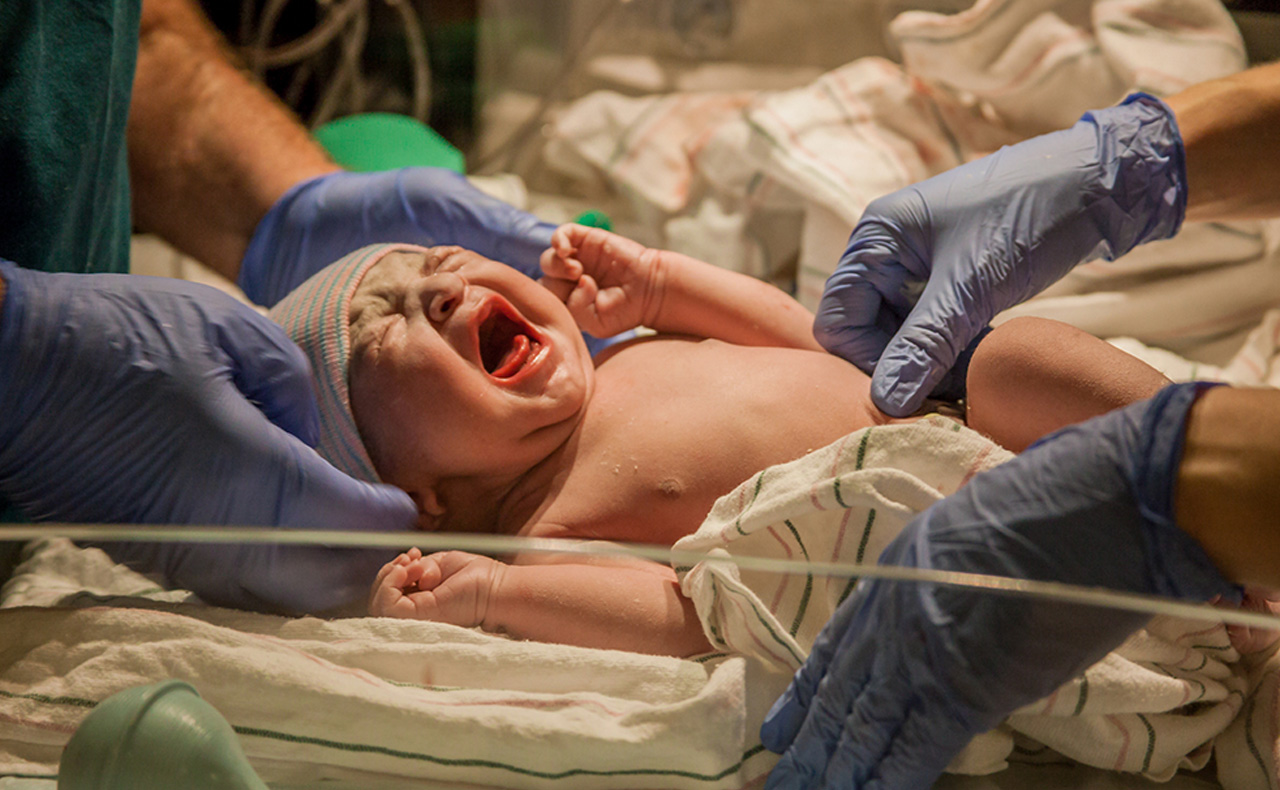
A baby may not cry right away and still be doing well. In U.S. delivery rooms, the birth team checks breathing, heart rate, muscle tone, and skin color—not crying alone. Some healthy babies breathe quietly, make small sounds, or begin crying after they are dried and placed skin to skin.
A baby who is not crying but is breathing well, moving, and has good muscle tone may only need warmth and gentle stimulation. A baby who is not breathing, is gasping, feels limp, or has a low heart rate needs immediate medical care.

Is it normal if a newborn does not cry right away?
Yes, sometimes. Crying is only one sign of a newborn’s transition from life in the womb to breathing air.
Right after birth, the care team usually looks at three key signs:


- Is the baby breathing or crying?
- Does the baby have good muscle tone?
- Is the baby full term?
The team also checks the heart rate and watches how the baby responds to simple care. These checks are part of the newborn assessment described by the American Academy of Pediatrics and the American Heart Association in their neonatal resuscitation guidance.
A quiet baby may still have a steady heart rate and normal breathing. Some babies take a few breaths before they cry. Others cry softly or only after they are dried, warmed, or rubbed gently.
The key difference is this:
A baby who is quiet but breathing is not the same as a baby who is not breathing.
The birth team does not wait for a loud cry if other signs suggest a problem. They act based on the baby’s breathing, heart rate, tone, and response.

Why might a baby not cry after birth?
Several factors can explain why a newborn is quiet. Some are harmless and brief. Others need prompt treatment.
The baby is breathing quietly
Some newborns begin with calm, regular breaths instead of a strong cry. A cry needs forceful airflow through the vocal cords. A baby may breathe well before having enough reason or energy to cry.
This can happen during a normal transition. The baby may become more vocal after drying, warming, or being placed on the parent’s chest.
The baby needs gentle stimulation
Birth can be tiring. Drying the baby with a warm towel and rubbing the back or feet can help wake the baby and support regular breathing.
In a hospital or birth center, the care team may move the baby to a warmer if the baby needs closer assessment. They may clear the airway only if secretions block breathing. Routine deep suction is not recommended for a vigorous baby.
Medicines given during labor affect the baby
Pain medicines and anesthetic drugs can cross the placenta. Depending on the medicine, dose, and timing, they may make a newborn sleepy or less active for a short time.
Examples include:
- Opioid pain medicines
- Sedating medicines
- Some types of anesthesia


The effect depends on the drug and the baby’s condition. The birth team will monitor breathing and movement rather than assume that sleepiness is harmless.
A cesarean birth can change the early transition
babies born by cesarean delivery may be more likely to have extra fluid in the lungs or need help getting breathing started. This does not mean a cesarean birth is unsafe or that the baby will have a problem.
Many babies born by cesarean breathe and cry normally. The delivery method is only one part of the assessment.
The baby was born early
Premature babies may have weaker muscle tone, less energy, and less mature lungs. They may not cry strongly even when they need help with breathing.
A premature baby may need warmth, breathing support, or care in a neonatal intensive care unit. The risk depends on gestational age, birth weight, and the baby’s condition.
The baby had a difficult birth
A long or difficult labor, problems with the placenta, or reduced oxygen before birth can affect a baby’s breathing and activity. A baby may be born limp, pale, blue, or slow to respond.
These signs require rapid assessment. A quiet baby with poor tone is more concerning than a quiet baby who is pink, moving, and breathing well.
Fluid or mucus blocks the airway
Fluid and mucus can make breathing noisy or difficult. Most newborns clear normal fluid on their own. If the airway seems blocked, the care team may use appropriate steps to open it.
Parents should not put a finger, bulb syringe, or other item into a newborn’s mouth unless a trained clinician tells them to do so.
A medical condition affects breathing
Less common causes include:
- Infection
- Low blood sugar
- Lung disease
- Heart problems
- Birth defects
- Blood loss
- Problems with oxygen before or during birth
These conditions cannot be diagnosed by crying alone. The baby needs a full medical assessment.

What do doctors and nurses do when a baby is quiet?
The care team follows the baby’s condition, not a fixed rule that every newborn must cry at once.
1. Check breathing and heart rate
The first question is whether the baby is breathing effectively. Gasping, weak breaths, or no breathing are not normal crying delays.
The team also checks the heart rate. A low heart rate can mean the baby is not getting enough oxygen and may need breathing support.


2. Keep the baby warm
Newborns lose heat quickly. Staff dry the baby, remove wet towels, and use skin-to-skin contact or a radiant warmer when appropriate.
Warmth helps reduce stress and supports normal breathing. Premature or unstable babies may need more active temperature control.
3. Provide gentle stimulation
If the baby is breathing but not active, the team may rub the back or gently stimulate the feet. This can help the baby begin regular breathing.
They do not shake the baby. Shaking can cause severe injury.
4. Open the airway when needed
The team positions the baby’s head and neck to support airflow. If secretions block breathing, they may clear them.
Routine suctioning of the mouth and nose is not needed for a baby who is breathing well. Excess suction can irritate the airway and delay other care.
5. Give breathing support if needed
If the baby is not breathing well, trained staff may use positive-pressure ventilation. This means giving breaths through a mask.
If the baby does not improve, the team may use other forms of support. These can include chest compressions, medicines, or a breathing tube. Such steps are based on the baby’s heart rate and response to treatment.
The American Academy of Pediatrics provides neonatal resuscitation training for health professionals. Parents should not try to perform these procedures without training.

What signs show that a quiet newborn may be in trouble?
A lack of crying is concerning when it occurs with other warning signs.
Tell the medical team at once if a newborn:
- Does not breathe
- Takes only gasping breaths
- Has blue, gray, or very pale skin
- Feels limp or unusually weak
- Does not respond to touch
- Has severe chest pulling with each breath
- Makes a persistent grunting sound
- Has very slow or very fast breathing
- Stops breathing after starting
- Becomes less alert or less active
A baby’s hands and feet can look blue soon after birth because circulation is still changing. Blue lips, tongue, or face are more concerning, especially with breathing trouble.
A newborn may also have a brief period of irregular breathing. Short pauses can occur in healthy babies. Long pauses, repeated pauses, color change, or poor response need immediate medical assessment.
A simple comparison
| Baby’s behavior | What it may mean | What to do |
|---|---|---|
| Quiet but breathing, moving, and warm | Normal transition may be occurring | Allow the birth team to monitor the baby |
| Breathing but sleepy after labor medicine | Temporary medicine effect is possible | Tell the care team about all medicines used |
| Weak breathing or gasping | The baby may need help starting effective breaths | The trained birth team should act at once |
| Limp, pale, blue, or unresponsive | Possible serious problem | Immediate newborn resuscitation and medical assessment are needed |
| Crying loudly but struggling to breathe | Crying does not rule out a problem | Ask the team to assess the breathing |


Does a baby have to cry to prove that they are healthy?
No. Crying is helpful, but it is not a complete health test.
A baby can be healthy without a loud cry if the baby has effective breathing, a steady heart rate, good tone, and a normal response to care. Some babies cry later. Some make only soft sounds during the first minutes.
The Apgar score also does not depend only on crying. It uses five areas:
- Appearance or skin color
- Pulse or heart rate
- Grimace or response to stimulation
- Activity or muscle tone
- Respiration or breathing
Health professionals usually record the Apgar score at one and five minutes after birth. The score helps describe how the baby is adapting and whether the baby may need more support. It does not by itself diagnose a disease or predict a child’s long-term health.
A baby can have a low early Apgar score and improve quickly. A baby can also cry but still need care if breathing is not effective.

Does a quiet birth affect bonding or breastfeeding?
Usually, no. A quiet start does not by itself prevent bonding or breastfeeding.
If the baby is stable, the team may place the newborn skin to skin on the parent’s chest. This can help keep the baby warm and support early feeding. The parent can talk softly, touch the baby, and watch the breathing.
If the baby needs medical support, staff may first move the baby to a warmer or another care area. This can feel frightening, but it is done to assess and support the baby. The parent can ask:
- Is my baby breathing on their own?
- What is the heart rate?
- Does my baby need oxygen or other support?
- Can I have skin-to-skin contact when it is safe?
- Can someone explain what is happening?
If the baby is stable, feeding support can often begin soon. If the baby is premature, sleepy, or receiving intensive care, a lactation consultant or neonatal nurse can help the parent express breast milk and plan feeds.
What should parents do if the baby does not cry at home?
A baby who is not crying at home needs an immediate breathing check. Do not wait for the baby to cry.
If the baby is not breathing normally, is gasping, is limp, or does not respond:
- Call 911 in the United States, or have someone call while you begin infant CPR if you are trained.
- Follow the dispatcher’s instructions.
- Place the baby on a firm, flat surface.
- Do not shake the baby.
- Do not blow forcefully into the baby’s face.
- Do not delay emergency care to feed the baby or search for advice online.
If the baby is breathing normally but is unusually hard to wake, has a color change, feeds poorly, or has repeated pauses in breathing, call the baby’s doctor or seek urgent care. For severe breathing trouble, call 911.


At a planned home birth, a trained birth professional should assess the baby immediately. Families should have an emergency plan and know how to reach emergency medical services before labor begins.

Common myths about newborn crying
“A baby must cry loudly to clear the lungs.”
Not always. A baby can breathe effectively without a loud cry. Normal breathing, heart rate, tone, and color matter more than volume.
“A quiet baby always has brain damage.”
No. Many healthy babies are quiet for a short time. A diagnosis cannot be made from crying behavior alone.
“Suctioning always helps a baby breathe.”
No. Suction is useful when secretions block the airway. Routine suctioning in a baby who is breathing well may cause harm or delay needed care.
“A baby who cries cannot have a breathing problem.”
Crying does not guarantee normal breathing. A baby can cry and still have grunting, chest pulling, poor color, or low oxygen levels.
“The parent caused the baby not to cry.”
In most cases, a quiet start is not the parent’s fault. Many factors can affect a newborn’s early breathing and activity, including medicines, gestational age, delivery events, and normal adjustment.

Key takeaways
- Some babies do not cry right away and are still healthy.
- The birth team checks breathing, heart rate, muscle tone, and color—not crying alone.
- A quiet baby who breathes well may only need warmth and gentle stimulation.
- Gasping, no breathing, limpness, blue lips or face, and poor response are emergencies.
- Do not shake, force-feed, or suction a newborn without medical instruction.
- At home, call 911 for a baby who is not breathing normally or is unresponsive.
Frequently asked questions
How long is it normal for a baby not to cry after birth?
There is no safe time limit based on crying alone. The care team assesses breathing, heart rate, tone, and response right away. If those signs are normal, a baby may cry later.
Is a baby who is born blue always in danger?
Not always. A newborn’s hands and feet may look blue during the first minutes as circulation changes. Blue lips, tongue, face, or ongoing blue color with breathing problems need immediate assessment.
Can pain medicine during labor make a baby quiet?
Yes. Some medicines can make a newborn sleepy or less active. The effect depends on the medicine, dose, timing, and the baby’s condition. Tell the birth team about all medicines used during labor.
Do babies born by C-section cry less?
Some babies born by cesarean delivery may take longer to clear lung fluid or begin strong breathing. Many still transition normally. The care team checks the baby rather than relying on the type of delivery.
When should I worry about a quiet baby after leaving the hospital?
Seek urgent help for trouble breathing, gasping, blue lips or face, unusual limpness, poor response, repeated pauses, or a baby who cannot feed because of breathing difficulty. Call 911 in the United States for severe symptoms.
Conclusion
A newborn does not need to cry loudly to be healthy. The important signs are effective breathing, a steady heart rate, good muscle tone, normal color, and a response to care.
If a baby is quiet, the birth team should assess the baby at once. Parents should ask what the team sees and what support the baby needs. When a baby is not breathing normally, is limp, or changes color, immediate emergency care matters more than waiting for a cry.
