
Most babies start drooling around 2 to 3 months, although normal timing can vary widely.
When do babies start drooling? Most parents notice wet chins, damp bibs, and small saliva bubbles during the early months. Drooling often increases as babies learn to use their mouths, explore toys, and prepare for solid foods. This guide explains what is normal, how teething fits in, and when drooling may need medical attention.

When do babies start drooling?
Most babies start drooling between 2 and 3 months of age. Some babies drool earlier, while others may not drool much until 4 to 6 months. Both patterns can be normal.


At this age, babies make more saliva. They are also still learning how to swallow it well. Their mouth muscles are developing, so saliva may spill out instead of moving smoothly to the back of the throat.
When do babies start drooling can depend on several factors:
• Saliva production may increase at different rates.
• Some babies keep their mouths open more often.
• Babies who suck their hands or chew toys may seem to drool more.
• Teething can add to the wetness, but drooling does not always mean a tooth is about to appear.
A wet shirt or bib is usually just part of normal infant development. Drooling alone is rarely a sign of illness.

Why do babies drool so much?
Babies drool because their saliva glands are becoming more active before they have full control of their mouth and throat muscles. Think of it as a small plumbing system that is producing more water than the drain can handle.
Babies also learn through their mouths. They chew on fingers, teething rings, blankets, and safe toys. This mouth activity can stimulate saliva and make drooling more noticeable.
Common reasons for increased drooling include:
• Normal growth of the saliva glands


• Better awareness of the hands and mouth
• Sucking fingers or pacifiers
• Chewing on toys
• Early teething changes
• A mild cold or nasal blockage
• Excitement or focused play
When do babies start drooling is not the same as when do babies start teething. A baby may drool for months before the first tooth appears. Some babies barely drool during teething, while others soak several bibs each day.

Is drooling a sign of teething?
Drooling can happen during teething, but it is not proof that a tooth will appear soon. Many babies begin drooling around 2 to 3 months, while the first tooth often arrives near 6 months. The timing can range from about 4 to 12 months.
Teething may also cause:
• Swollen or tender gums
• A strong need to chew
• Fussiness
• Changes in sleep
• Mild eating changes
• Increased drooling
Teething should not cause a high fever, repeated vomiting, severe diarrhea, breathing trouble, or extreme sleepiness. These symptoms may point to another problem and deserve medical advice.
A useful lesson for parents is to look at the whole child, not just the drool. A happy baby who feeds well and has normal wet diapers is usually doing fine.

What does normal baby drooling look like?
Normal drooling can range from a damp chin to frequent streams of saliva. It may increase during play, feeding, tummy time, or periods when a baby chews on their hands.
Normal drooling often happens with:
• Clear saliva
• A wet bib or shirt
• Mild redness around the mouth
• Hand chewing
• Normal feeding and sleep
• Normal energy and behavior


The skin around the mouth may become red because saliva contains digestive enzymes. Constant moisture can also irritate the chin, cheeks, neck, or upper chest.
When do babies start drooling becomes less important than how your baby acts. Drooling is usually harmless when your baby breathes comfortably, swallows normally, feeds well, and seems alert.

How long does baby drooling last?
Drooling may continue for many months. It often peaks during the second half of the first year, when babies chew more and explore objects with their mouths.
Many children drool less as they gain better control of their lips, tongue, and swallowing muscles. Some children still drool during sleep, active play, or teething.
There is no exact age when drooling must stop. A small amount of drool can remain normal into the toddler years, especially during concentration or mouth exploration.
Talk with a pediatrician if heavy drooling continues with problems such as:
• Trouble chewing or swallowing
• Frequent coughing during feeds
• Poor weight gain
• Speech concerns
• Ongoing mouth breathing
• Weak facial movement
• Repeated chest infections
These signs do not always mean something serious. They simply deserve a closer look.

How to protect a baby’s skin from drool
Drool rash is common and usually improves with simple skin care. The goal is to keep the skin clean, dry, and protected without scrubbing it.
Try these steps:
Pat the skin dry with a soft cloth. Avoid rubbing.
Change wet bibs and clothing often.
Apply a thin layer of plain petroleum jelly or a fragrance-free barrier cream.
Keep the neck folds clean and dry.
Use soft cotton bibs that do not fit tightly.
Wash cloth bibs with a gentle, fragrance-free detergent.
Avoid scented wipes, harsh soaps, and adult skin products. They may make irritation worse.
If the rash spreads, cracks, bleeds, develops yellow crusts, or does not improve after several days of gentle care, contact your child’s healthcare professional.

Safe ways to soothe a drooling, teething baby
If drooling comes with sore gums, offer safe ways to chew. A cool, clean teething ring may help. A damp washcloth that has been chilled can also provide comfort when used under close supervision.


Helpful options include:
• Clean fingers for gentle gum pressure
• A firm, age-appropriate teether
• Cool foods for babies who are already eating solids
• Extra bib changes
• Gentle wiping and barrier cream
Never give a baby a frozen teether, as extreme cold can hurt the gums. Avoid amber teething necklaces, teething bracelets, and similar products because they can cause choking, strangulation, or other injuries.
Do not use numbing gels or medicine unless your child’s healthcare professional recommends it. Some products can be unsafe for infants.
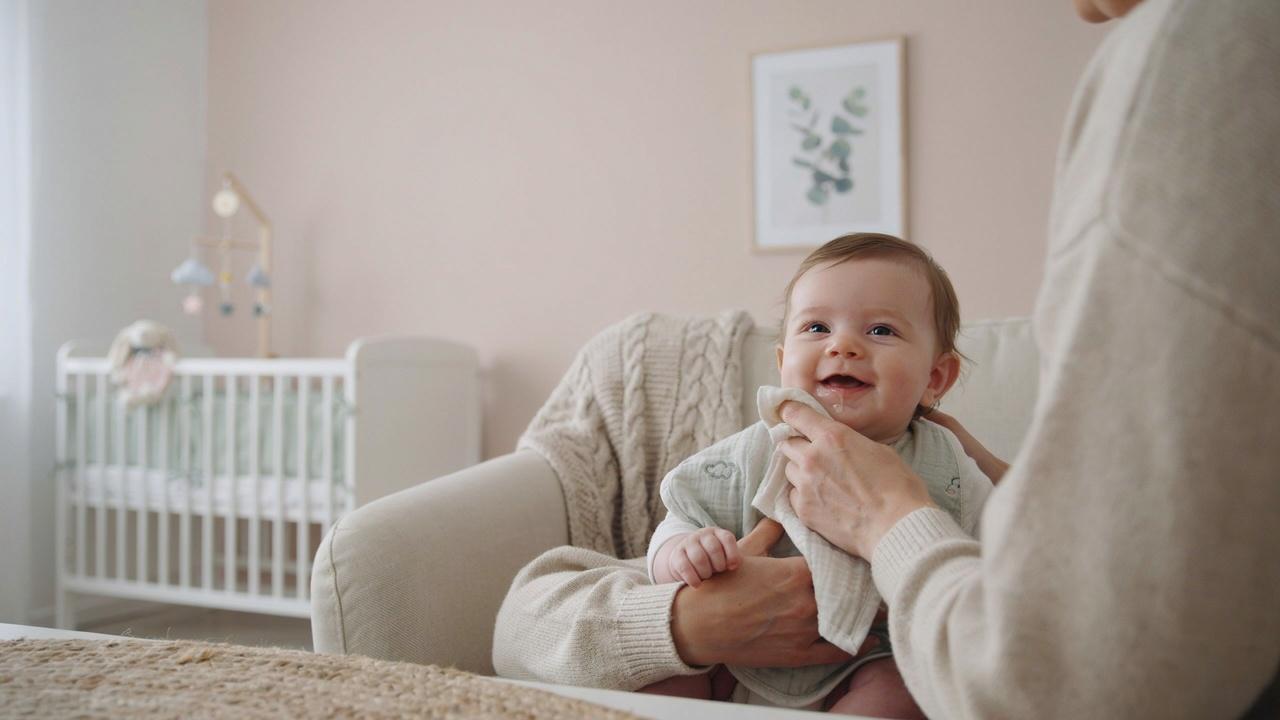
Drooling and feeding
Drooling is not usually a problem during breastfeeding or bottle-feeding. However, a baby who coughs, chokes, turns blue, or struggles to breathe during feeds needs urgent medical attention.
Some babies drool more when they begin tasting purees or finger foods. This is often part of learning. Food, saliva, and new mouth movements can make the face look much wetter than usual.
Watch for signs of comfortable feeding:
• Steady breathing
• Good sucking and swallowing
• Regular wet diapers
• Ongoing growth
• Calm behavior after feeds
When starting solid foods, follow your pediatrician’s advice. Most babies are ready near 6 months when they can sit with support, control their head, and show interest in food. Drooling alone does not prove that a baby is ready for solids.
When should you call a doctor about drooling?
Call your baby’s healthcare professional if drooling comes with signs of illness or difficulty swallowing. Seek prompt medical care if your baby cannot breathe, swallow, or handle saliva.
Contact a healthcare professional for:
• Sudden, severe drooling
• Trouble breathing


• Choking or repeated coughing
• A muffled or unusual cry
• Refusal to feed
• Signs of dehydration
• High fever
• Severe swelling in the mouth or neck
• Unusual sleepiness or weakness
• Possible poisoning or a swallowed object
Sudden drooling with breathing trouble is an emergency. Call 911 in the United States if your baby appears unable to breathe or turns blue.
A careful parent does not need to panic over every wet bib. Still, it is wise to trust your instincts when your baby looks unwell or behaves very differently.
Common mistakes parents make about baby drooling
One common mistake is assuming that every drooling episode means a tooth is coming. Drooling may begin long before teething and may continue after a tooth appears.
Another mistake is wiping the skin too often or too firmly. Repeated rubbing can damage the skin barrier and create a rash. Patting gently and using a thin protective layer works better.
Parents may also use unsafe teething products after hearing advice from friends or social media. Avoid products that contain small detachable parts, benzocaine, alcohol, or strong numbing ingredients unless a qualified healthcare professional tells you to use them.
The best approach is simple: keep the baby comfortable, protect the skin, use safe teethers, and watch for warning signs.
A simple daily plan for managing drool
You do not need a complicated routine. A few small steps can make your baby more comfortable.
• Check the chin and neck during the day.
• Pat away moisture instead of rubbing.
• Change wet bibs quickly.
• Apply a thin barrier cream when the skin looks pink.
• Wash teethers often.
• Offer safe chewing options.
• Track feeding, wet diapers, and behavior if your baby seems unwell.
A small supply of soft bibs, washcloths, fragrance-free cleanser, and petroleum jelly can make daily care much easier. Many parents find that keeping a spare shirt and bib in the diaper bag prevents stress during errands.
Frequently Asked Questions
When do babies start drooling the most?
Many babies drool more between 3 and 6 months, when saliva production and mouth exploration increase. Drooling may rise again during teething and when babies begin chewing on toys or fingers.
Do babies drool before they start teething?
Yes. Babies may drool for several months before their first tooth appears. Drooling is common at 2 to 3 months, while the first tooth often arrives near 6 months.
Is excessive drooling normal in a 3-month-old?
Usually, yes. A 3-month-old may drool often because saliva production is increasing and swallowing control is still developing.
Can drooling mean a baby is sick?
Drooling alone usually does not mean a baby is sick. Drooling with fever, breathing trouble, feeding problems, severe sleepiness, or sudden swelling needs medical advice.
How can I stop my baby’s drool rash?
Pat the skin dry, change wet bibs, and apply a thin layer of petroleum jelly or a fragrance-free barrier cream. Seek medical advice if the rash spreads, cracks, becomes crusty, or does not improve.
Should I give my baby medicine for drooling?
Most babies do not need medicine for normal drooling. If teething causes pain, ask your child’s healthcare professional which options are safe for your baby’s age and weight.
When do babies start drooling less?
Many children drool less as their mouth muscles and swallowing skills mature. The exact timing varies, and some toddlers still drool during sleep, play, or deep concentration.
Conclusion
When do babies start drooling? Most begin around 2 to 3 months, but earlier or later can still be normal. Drooling often reflects healthy growth, mouth exploration, and developing swallowing control rather than illness.
Keep your baby’s skin dry, use safe teething tools, and watch feeding and breathing closely. If drooling appears suddenly with trouble swallowing, breathing problems, fever, or unusual behavior, contact a healthcare professional promptly.
Save this guide for the early months, share it with another parent, and talk with your pediatrician if your baby’s symptoms seem unusual.
