
Jogging strollers are better for active families, but regular strollers win for daily comfort and ease.
Choosing between a jogging stroller and a regular stroller depends on where, how, and how often you plan to use it. After comparing wheel design, safety features, comfort, storage, weight, and daily handling, the answer becomes clear: a jogging stroller is not automatically better. It is better for running and rough paths, while a regular stroller is often the smarter choice for errands, travel, and everyday use.
What Is the Difference Between a Jogging Stroller and a Regular Stroller?
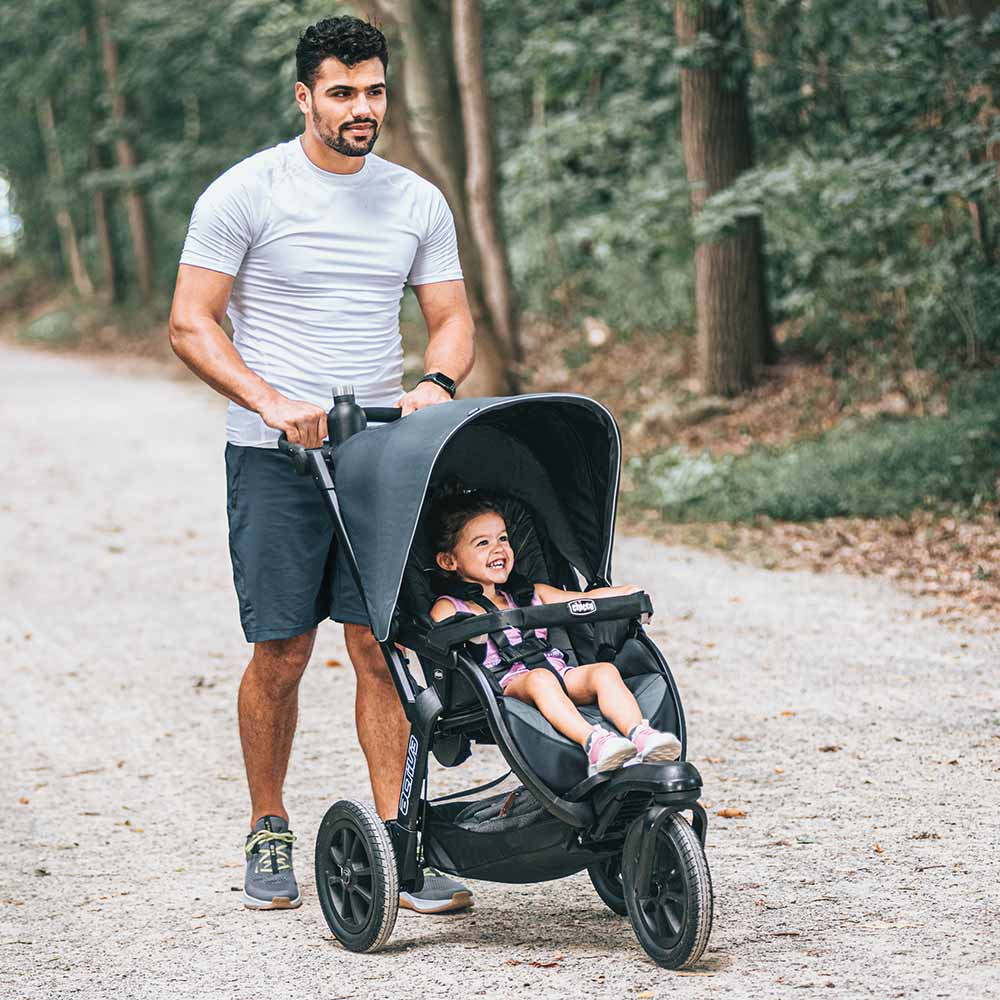
A jogging stroller is built for movement over uneven ground and, in some cases, for running with your child. It usually has three wheels, a fixed or lockable front wheel, air-filled tires, a strong frame, and better suspension.
A regular stroller is made for walking, shopping, travel, and general daily use. It often has four smaller wheels, a swivel front wheel, a lighter frame, and a smaller folded size.


The main difference is simple:
• Jogging strollers focus on stability, speed, and rough terrain.
• Regular strollers focus on turning, storage, portability, and daily comfort.
When parents ask, “Are jogging strollers better than regular strollers?” they are often comparing two products made for different jobs. It is like comparing hiking boots with running shoes. One is not best for every path.
Are Jogging Strollers Better Than Regular Strollers?
Jogging strollers are better than regular strollers for parents who run, walk on gravel, or use trails. Their large tires and suspension help create a smoother ride on grass, dirt, and cracked sidewalks.
However, regular strollers are usually better for stores, crowded sidewalks, restaurants, airports, and small cars. Their swivel wheels make quick turns easier, and their lighter design is less tiring to lift.
The best choice depends on your routine. Consider these questions:
• Do you plan to run with your child?
• Will you use the stroller on trails or rough sidewalks?
• Do you need to lift it into a car often?
• Will you use it in tight stores or busy city spaces?
• Is your home short on storage space?


If you run several times each week, a jogging stroller may justify its size and cost. If you mainly walk to the store or use public transport, a regular stroller may serve you better.
Benefits of a Jogging Stroller
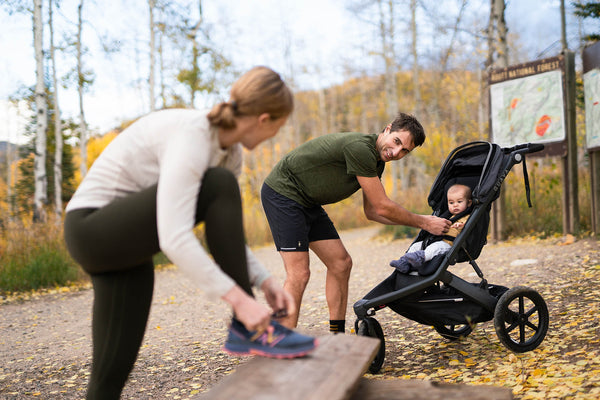
A jogging stroller offers several clear benefits. These advantages come from its wheels, frame, safety systems, and suspension.
Better Stability on Rough Ground
Most jogging strollers use large rear wheels and a single front wheel. The bigger wheels roll over roots, gravel, grass, and uneven pavement with less jolting.
A regular stroller may catch on small cracks or sink into soft ground. A jogging stroller handles these surfaces more like a bicycle than a shopping cart.
Improved Suspension
Many jogging strollers include shock absorbers or a built-in suspension system. This helps reduce vibration as you move over rough paths.
Suspension does not remove every bump. Still, it can make the ride more comfortable for your child and reduce strain on your arms.
Safer Control During a Run
A jogging stroller often includes a wrist strap and a hand brake. The wrist strap keeps the stroller connected to you if you lose your grip. The hand brake can help control speed on a slope.
The front wheel may lock in a straight position. This improves tracking and reduces sudden side-to-side movement while running.
More Space for Growing Children
Jogging strollers often have wider seats and higher weight limits than compact regular strollers. Many also provide more legroom.
Always check the maker’s height and weight limits. A larger seat does not mean the stroller is safe for every child at every age.
Better Performance on Trails
If your family enjoys parks, nature paths, or long outdoor walks, a jogging stroller can be useful. It tends to roll with less effort than a small-wheel stroller.
That said, “all-terrain” does not mean “safe for every trail.” Deep mud, steep rocks, narrow paths, and sharp drops still require caution.
Limitations of a Jogging Stroller
Jogging strollers also have drawbacks. These issues matter because many parents buy one for running and later discover that it is awkward for daily tasks.
They Are Often Heavy
A jogging stroller may weigh much more than a lightweight or travel stroller. Lifting it into a vehicle can be difficult, especially after a long day.
The weight also matters when carrying the stroller up stairs or storing it in an apartment.


They Need More Storage Space
Large wheels and a strong frame create a bigger folded package. Measure your trunk, closet, and entryway before buying.
A stroller that fits in a store display may not fit well in your car. This is one of the most common buying mistakes.
They Can Be Hard to Turn
A locked front wheel helps with straight-line control. It can make tight turns harder, though.
Some models let you switch the wheel between swivel and locked modes. This feature is useful for shopping and walking, but you must set it correctly before running.
They Cost More
Quality jogging strollers often cost more than basic regular strollers. You are paying for larger tires, stronger frames, suspension, and running-related safety features.
A high price does not guarantee a better fit. A less expensive regular stroller may be the better value if you will never run with it.
They Are Not Always Suitable for Newborns
Many jogging strollers are not designed for newborns in the standard seat. Young babies may need a compatible bassinet or car seat system, depending on the model.
The American Academy of Pediatrics generally advises waiting until a baby has enough head and neck control before running with the child in a jogging stroller. Follow the stroller maker’s age guidance and ask your pediatrician when unsure.

Benefits of a Regular Stroller
A regular stroller can be a better choice for most daily routines. Its design usually favors convenience over speed.
Easier Steering in Busy Places
Swivel wheels help a regular stroller turn in narrow aisles, elevators, and crowded sidewalks. You can often steer around people with one hand.
This makes regular strollers useful at shopping centers, farmers markets, museums, and restaurants.
Lighter and Easier to Carry
Many regular strollers weigh less than jogging models. A lighter frame helps when using stairs, buses, or a car.
This feature may matter more than parents expect. You may push a stroller for one hour but lift it several times each day.
Smaller Fold
Regular strollers often fold into a smaller shape. Some compact models fit in overhead aircraft bins, although airline rules vary.
A smaller fold also helps in homes with limited storage. Measure before purchase, and check the folded dimensions rather than relying on product photos.


More Convenient for Travel
A regular stroller may be easier to take through airports and hotels. Compact models can fit beside a restaurant table or in a small rental car.
For frequent travel, look for a secure fold, a carry handle, a sun canopy, and a comfortable seat.
More Useful for Everyday Errands
A regular stroller works well for walks, stores, appointments, and short trips. Some models offer a parent cup holder, child tray, under-seat basket, and adjustable handle.
These features may not sound exciting, but they make daily life smoother. A stroller should support your routine, not create more work.

Limitations of a Regular Stroller
A regular stroller is not designed for every surface or speed.
Small wheels can struggle on gravel, sand, grass, and broken sidewalks. The frame may also feel less stable when pushed quickly or over rough ground.
Many regular strollers have limited suspension. You may notice more shaking on uneven paths, especially with a lightweight model.
A regular stroller should not be used for running unless the manufacturer clearly approves it for that purpose. Walking quickly is different from running. Running creates more force, speed, and risk of tipping.
Regular strollers may also have lower weight limits and smaller seats. Check the product label as your child grows.

Jogging Stroller Safety Rules
Safety is the most important part of deciding whether jogging strollers are better than regular models. A stroller with three wheels is not automatically safe for running.
Follow these basic rules:
• Use the wrist strap every time you run.
• Lock the front wheel before running if the manufacturer instructs you to do so.
• Keep the hand brake within easy reach.
• Use the five-point harness and adjust it snugly.
• Stay on smooth, familiar paths when you begin.


• Avoid steep hills until you can control the stroller well.
• Never run near traffic without a safe barrier or protected path.
• Do not exceed the stroller’s weight or age limit.
• Check tire pressure before longer runs.
• Stop using the stroller if the frame, wheel, brake, or harness is damaged.
Your child’s head and neck control also matter. Infants can be vulnerable to strong movement and poor support. Do not use a stroller seat for running before the manufacturer’s approved age.
A good habit is to walk with the stroller for several days before attempting a run. Learn how it turns, stops, folds, and handles slopes.

Key Features to Compare Before Buying
Whether you choose a jogging stroller or a regular stroller, compare the features that affect real use.
Wheel Type
Air-filled tires usually provide a smoother ride but need regular inflation. Foam-filled or rubber tires do not go flat as easily, but they may feel firmer.
Large wheels are helpful on rough paths. Small wheels are often easier in stores and tight spaces.
Front Wheel
A fixed front wheel improves straight-line stability. A swivel wheel makes daily steering easier.
Some jogging strollers offer a lockable swivel wheel. This is one of the most useful designs for families who want one stroller for several tasks.
Brakes
Look for a parking brake that is easy to set. A hand brake is helpful on slopes and during runs.
Test the brake in a store if possible. It should engage firmly without forcing your foot or hand.
Harness
A five-point harness holds the child at the shoulders, hips, and between the legs. It should adjust smoothly and sit flat against the child.
Never rely on the stroller bar alone to keep a child secure.
Canopy and Weather Protection
A large canopy helps protect your child from direct sun. Some canopies include vents, peekaboo windows, and water-resistant fabric.
Use sunscreen and protective clothing as advised by your child’s health professional. A canopy does not replace safe sun habits.
Seat Recline
A deep recline can help with naps and comfort. A fully flat position is not always the same as a safe newborn bassinet.
Read the maker’s instructions carefully. Do not assume that a reclined seat is suitable for a baby who cannot sit upright.
Storage Basket
Check whether you can reach the basket when the seat is reclined. Look at the basket’s weight limit as well.
A large basket helps with diapers and groceries, but too much weight can affect balance.
Fold and Transport
Practice the fold before buying. Try lifting the stroller with one hand and placing it in a car.
A stroller can have excellent outdoor performance and still be a poor match for your home or vehicle.
Can One Stroller Do Everything?
Some families can use one all-purpose jogging stroller. This works best when the model has a lockable swivel wheel, a manageable fold, and enough storage.
Still, one stroller rarely performs perfectly in every setting. A jogging model may handle trails well but feel bulky in a crowded store. A regular model may turn beautifully but struggle on gravel.
If your budget allows, some families choose two strollers:
• A jogging stroller for exercise and outdoor paths.
• A compact regular stroller for errands, travel, and quick trips.
You do not need two strollers if one model fits your main needs. Think about your weekly routine, not an imaginary lifestyle.

Jogging Stroller vs. Regular Stroller: Quick Comparison
| Feature | Jogging stroller | Regular stroller |
|---|---|---|
| Best use | Running, trails, rough paths | Errands, travel, sidewalks |
| Wheels | Large, often air-filled | Smaller, often solid |
| Front wheel | Fixed or lockable | Usually swiveling |
| Suspension | Usually stronger | Often basic |
| Weight | Usually heavier | Usually lighter |
| Folded size | Often larger | Often smaller |
| Steering | Stable at speed | Easy in tight spaces |
| Cost | Often higher | Wide range |
| Newborn use | Model-specific | Model-specific |
| Running approval | Common in suitable models | Usually not approved |
This comparison shows why asking “Are jogging strollers better than regular strollers?” has no single answer. The better stroller is the one that matches your surface, pace, storage, and child’s age.
Common Buying Mistakes to Avoid
Parents often focus on appearance and forget how the stroller will work at home.
Avoid these mistakes:
• Buying a jogging stroller without measuring the car trunk.
• Running with a stroller that is approved only for walking.
• Choosing air-filled tires without planning for tire checks.
• Ignoring the handle height.
• Overloading the storage basket.
• Forgetting to test the brake.
• Assuming a large canopy gives full sun protection.
• Buying a model that is too heavy to lift safely.
• Failing to check replacement parts and warranty support.
• Choosing a stroller based only on online ratings.
Product reviews can help, but they cannot replace a hands-on test. Push the stroller with one hand. Turn it. Fold it. Lift it. Check whether the handle feels natural.
In my product research and stroller comparisons, the most useful lesson is simple: comfort during a five-minute store test does not always equal comfort during a full day. Think about repeated lifting, folding, cleaning, and steering. Those small tasks become the real test.
How to Choose the Right Stroller for Your Lifestyle
Use this simple process before making a purchase.
Step 1: List Your Main Routes
Write down where you will use the stroller most often. Include sidewalks, stores, parks, trails, public transport, and stairs.
Your real routes matter more than marketing labels such as “premium” or “all-terrain.”
Step 2: Decide Whether You Will Run
If you will run at least once a week, focus on a jogging stroller that the manufacturer approves for running.
If you only want smooth walks, a regular stroller with larger wheels may be enough.
Step 3: Check Your Child’s Age
Review the seat, recline, harness, and newborn rules. Ask a pediatrician if you are uncertain about running with a young baby.
Step 4: Measure Your Storage Areas
Measure your trunk, closet, elevator, and doorway. Include the stroller when folded and unfolded.
Step 5: Set a Practical Budget
Include the cost of accessories, replacement tubes, rain covers, car seat adapters, and maintenance.
Step 6: Test the Stroller
Push it on different surfaces. Try the brake. Adjust the handle. Fold it several times.
This process helps answer “Are jogging strollers better than regular strollers?” based on your life rather than general advice.
Maintenance Tips for Both Stroller Types
Good maintenance improves safety and extends the stroller’s life.
• Check the wheels before each long outing.
• Inflate air tires to the pressure listed by the manufacturer.
• Clean sand and dirt from wheel joints.
• Test the parking brake often.
• Inspect the harness for fraying.
• Tighten loose screws only as directed.
• Keep fabric clean and fully dry before folding.
• Store the stroller away from extreme heat and moisture.
• Register the product to receive safety notices or recalls.
Never modify the frame, brake, harness, or wheel system. Homemade changes can affect balance and may void the warranty.
Frequently Asked Questions: Are Jogging Strollers Better Than Regular?
Are jogging strollers better than regular strollers for everyday use?
Not always. Jogging strollers are better on rough ground and for running, while regular strollers are often easier for stores, travel, and frequent lifting.
Can you use a jogging stroller for walking?
Yes, most jogging strollers work well for walking. Use the swivel setting when available, and follow the manufacturer’s instructions for different surfaces.
Can you run with a regular stroller?
Usually, no. Run only with a stroller that the manufacturer clearly approves for jogging or running, because regular strollers may lack the needed stability, wheel design, and braking control.
What age can a baby ride in a jogging stroller?
The correct age depends on the stroller and the child’s development. Many manufacturers advise waiting until the child has strong head and neck control, so check the manual and ask your pediatrician.
Are jogging strollers safer than regular strollers?
They can offer better control during running and on rough paths, but safety depends on correct use. A jogging stroller is not safe if the front wheel is set incorrectly, the harness is loose, or the stroller is used outside its limits.
Do jogging strollers work well on sidewalks?
Yes, especially on cracked or uneven sidewalks. They may feel less convenient than regular strollers when making sharp turns or moving through crowded areas.
Are jogging strollers worth the money?
They can be worth the cost if you run or spend lots of time on rough paths. If you mainly need a stroller for errands and travel, a regular stroller may offer better value.
Conclusion
So, are jogging strollers better than regular strollers? Jogging strollers are better for running, trails, grass, gravel, and uneven sidewalks. Regular strollers are usually better for errands, travel, tight spaces, light lifting, and simple daily walks.
Choose based on your real routine, your child’s age, your storage space, and your ability to carry the stroller. Test the fold, wheels, brake, harness, and handle before buying. The right stroller should make family life easier, so compare models carefully and share your experience or questions in the comments.
