
You can run with a regular stroller, but it is usually unsafe, uncomfortable, and hard to control.
If you are wondering, “can you run with a regular stroller?” the honest answer depends on speed, distance, terrain, and stroller design. A regular stroller is made for walking, while a jogging stroller is built to handle faster movement with better balance, wheel control, and safety features. This guide explains the risks, when a short jog may be reasonable, and how to choose a safer option for running with your child.
Can you run with a regular stroller?
In most cases, you should not run with a regular stroller. Standard strollers often have small swivel wheels, a narrow frame, limited suspension, and brakes designed for walking rather than sudden movement.
A regular stroller may tip, veer, or stop sharply when you move at a running pace. Even a smooth sidewalk can contain cracks, gravel, tree roots, or curb cuts that make fast pushing risky.
The safest rule is simple:
• Use a regular stroller for walking.
• Use a jogging stroller for running.
• Follow the stroller maker’s age, weight, and speed limits.
• Ask your child’s pediatrician when your baby is ready for a jogging stroller.
A short, slow jog may seem harmless. However, risk rises as soon as you increase speed, run downhill, turn quickly, or move over rough ground.
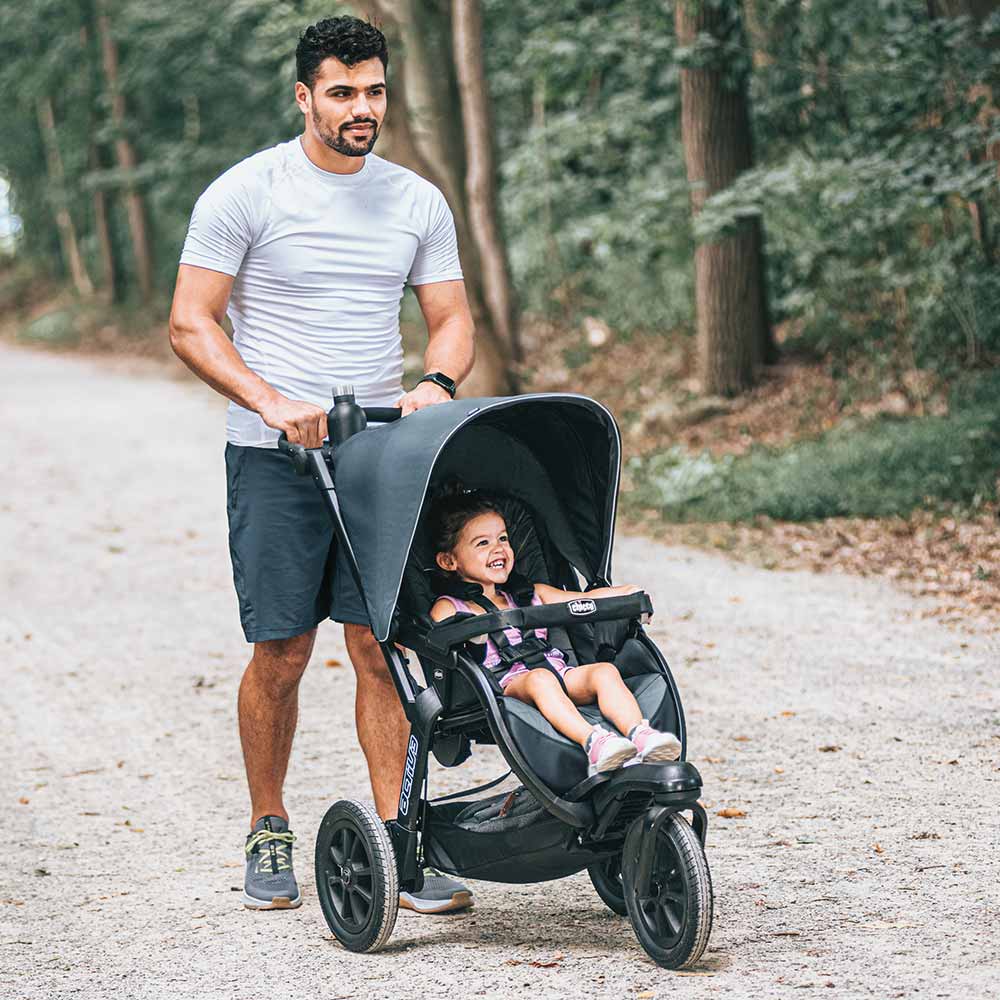
Why regular strollers are not made for running
A stroller is more than a seat on wheels. Its frame, wheel size, center of gravity, harness, and braking system all affect how it behaves. Regular strollers are designed for control at walking speed, not for the force created by running.
Small front wheels can catch on obstacles
Many standard strollers have small front wheels. These wheels work well in stores, sidewalks, and indoor spaces. They can catch on cracks or stones when pushed quickly.
A small wheel loses speed fast when it hits an obstacle. That sudden stop can make the stroller tilt forward or pull to one side.
Swivel wheels may wobble
Swivel wheels make a stroller easy to turn. That is useful in a crowded store. At running speed, however, a freely swiveling front wheel can shake or change direction without warning.
Jogging strollers often use a fixed front wheel or a lockable wheel. This design helps the stroller track in a straight line.
The frame may not absorb bumps
Jogging strollers often have larger air-filled or foam-filled tires and better suspension. These features soften bumps and help keep the seat stable.
A regular stroller may send each bump through the frame and into the child’s seat. It may also make the handle harder to control.
Brakes are not the same as a hand brake
Many everyday strollers have a foot-operated parking brake. This brake keeps the stroller still when you stop. It does not always help you slow down while running.
Many jogging strollers include a hand brake. A hand brake lets you reduce speed on hills or stop with more control.

Main risks of running with a regular stroller
Knowing the risks can help you make a calm and informed choice. Running with a regular stroller is not only about comfort. It can affect your child’s safety and your own balance.
The stroller may tip
A regular stroller can tip when one wheel hits a curb, hole, or uneven patch. A sharp turn can also shift the stroller’s weight.
The risk becomes higher when:
• The stroller has a tall, narrow frame.
• A heavy diaper bag hangs from the handle.
• The child leans to one side.
• The stroller is pushed across grass, gravel, or wet ground.
• You run downhill or make sudden turns.
You may lose control
Running changes the way your body moves. Your hands may grip the handle with less force as your arms swing. Sweat, fatigue, or a slippery handle can make control harder.
A stroller can also gain speed on a slope. If it starts moving faster than you can run, you may struggle to stop it.
Your child may be shaken
Babies and young children have limited head and neck control. Repeated bumps may cause discomfort, poor head support, or excess movement.
A stroller seat that reclines may look secure, but it may not provide the support needed for faster motion. A five-point harness helps, but it does not turn a regular stroller into a jogging stroller.
Your own body may be injured
Running while pushing a stroller changes your posture and arm swing. You may lean forward, take shorter steps, or twist your shoulders to keep the stroller straight.
Over time, this can place extra stress on your wrists, shoulders, back, hips, or knees. A stroller that pulls to one side can make the strain worse.
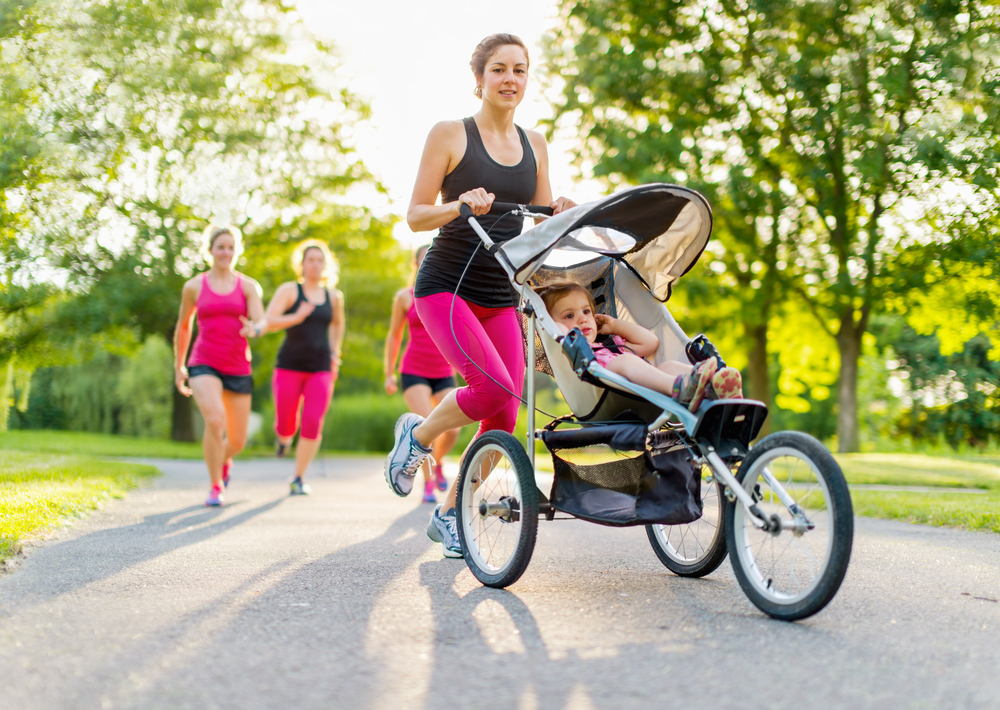
Can you run with a regular stroller for a short distance?
Some parents ask whether a quick jog to cross a street or catch up with a child counts as running. A few fast steps on a flat, clear surface are different from a planned run.
Still, you should treat even a short jog with care. Keep both hands on the handle, slow down before turns, and avoid rough ground. Never assume that a short distance removes all risk.
If you want to exercise, walking briskly is usually a better choice with a regular stroller. You can build fitness through fast walking, hill walking, or intervals without reaching a running pace.
When people ask, “can you run with a regular stroller for one block?” my practical answer is to avoid it unless there is a clear need. One unexpected crack or wheel turn can create a problem in seconds.
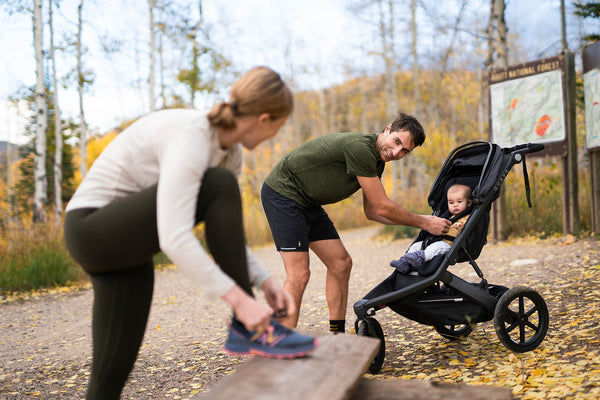
When is a jogging stroller a better choice?
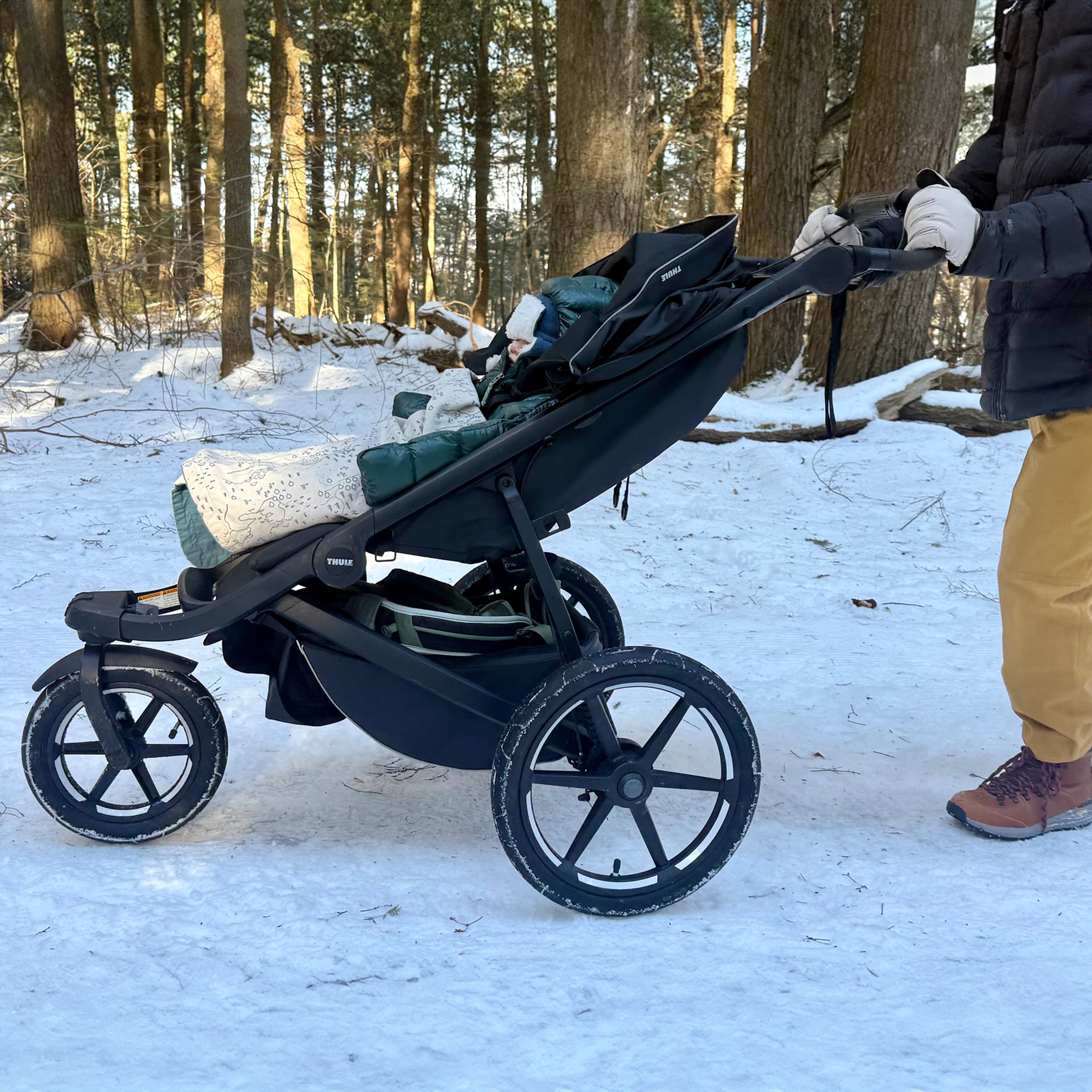
A jogging stroller is made for parents who want to run, jog, or move often on uneven paths. It does not remove every risk, but it gives you better tools for control.
Look for these features:
• A three-wheel design with a stable frame.
• A fixed or lockable front wheel.
• Large wheels with suitable tires.
• Suspension to reduce bumps.
• A five-point harness.
• A wrist safety strap.
• A hand brake, especially for hills.
• A canopy that stays secure during movement.
• A seat with strong head and torso support.
• A clear user manual with running instructions.
A jogging stroller is not automatically safe for newborns. Many manufacturers advise waiting until a child has enough head and neck control, often around 6 months, but the correct age varies by model and child.
Some jogging strollers accept a manufacturer-approved car seat adapter or bassinet. Use only parts approved for that stroller. Do not place an infant car seat in a jogging stroller unless the instructions specifically allow it.

How to run safely with a jogging stroller
If you decide to run, prepare the stroller and your route first. Good habits reduce risk, but they cannot replace the manufacturer’s instructions.
Check the stroller
Before each run, inspect:
• Tire pressure and tire condition.
• Wheel locks and alignment.
• The five-point harness.
• The hand brake and parking brake.
• The wrist strap.
• The handle and folding joints.
• The seat recline and canopy.
A loose wheel or weak brake can turn a normal run into an emergency. Do not run with a stroller that rattles, pulls, or has a damaged frame.
Choose the right route
Start on a flat, smooth path with little traffic. Avoid steep hills, crowded sidewalks, sharp corners, and trails with deep holes.
A track, paved greenway, or quiet neighborhood route may be easier to control than a busy sidewalk. Run in good light and check the weather before leaving.
Secure your child
Use the full harness every time. Make sure the straps fit snugly but comfortably. Do not attach toys, bags, or blankets where they can cover your child’s face or interfere with the wheels.
Keep heavy items low and centered. A large bag hanging from the handle can change the stroller’s balance.
Start slowly
Walk for several minutes first. Then try a slow jog on a straight section. Practice stopping, turning, and using the hand brake before increasing your pace.
A useful progression is:
Walk with the stroller on a flat path.
Practice gentle turns and controlled stops.
Jog for one or two minutes.
Walk to recover.
Increase time only when control remains easy.
Do not run faster than you can safely control. Your goal is a smooth, steady pace, not a race.
Use the wrist strap
The wrist strap connects you to the stroller if you stumble or lose your grip. It does not replace both hands on the handle, but it adds another layer of protection.
This matters most on slopes, during sudden stops, or when the path is uneven.

Common mistakes parents should avoid
Many stroller-running problems come from small choices that seem harmless. The most common mistake is treating a regular stroller like a jogging stroller because it feels sturdy.
Avoid these errors:
• Running with a baby who cannot sit or hold their head steady.
• Unlocking a swivel wheel on a jogging stroller.
• Running downhill before learning to use the hand brake.
• Hanging a heavy bag from the handle.
• Running on gravel with small stroller wheels.
• Ignoring a loose wheel or low tire.
• Using headphones that block traffic sounds.
• Running in extreme heat without checking your child often.
• Leaving the stroller unattended, even with the brake on.
• Assuming a five-point harness makes every stroller safe for running.
In my experience reviewing stroller features, parents often focus on wheel count and forget the wrist strap, brake system, and weight limit. Those details can matter more than the stroller’s appearance.
Another lesson is to test the stroller before committing to a long run. Push it empty, then with your child secured, and compare how it responds to turns, stops, and small bumps.
:max_bytes(150000):strip_icc()/prt-stroller-cluster-test-bob-gear-wayfinder-jogging-tstaples-647-1-bcb484c15c6f49bfacaa9a86e18ee4b8.jpeg)
Weather and child comfort during a stroller run
Heat, cold, wind, and sunlight can affect children faster than adults. A moving stroller may feel cool to you while your child sits still under a canopy.
Check your child often for signs of discomfort. These may include sweating, flushed skin, unusual sleepiness, pale skin, shivering, or irritability.
Use light layers and keep the canopy open enough for airflow. Never cover the stroller with a blanket, towel, or thick cloth, because this can trap heat and reduce ventilation.
On hot days, choose a cool time, such as early morning. Bring water for children who are old enough to drink it, but follow your pediatrician’s guidance for babies.
A regular stroller is not a safe choice for running in extreme weather. A jogging stroller also needs careful use when conditions are poor.
Walking workouts with a regular stroller
If you only have a regular stroller, you can still get a useful workout. Brisk walking can raise your heart rate while keeping the stroller at a safer speed.
Try this simple routine:
Walk slowly for five minutes.
Walk briskly for two minutes.
Walk at an easy pace for one minute.
Repeat the cycle five to eight times.
Cool down with five minutes of easy walking.
You can add gentle hills if the stroller rolls smoothly and you can keep both hands on the handle. Avoid pushing hard downhill, since the stroller may gain speed.
Body position also matters. Keep your shoulders relaxed, look ahead, and hold the handle without leaning heavily on it. Switch which hand leads only when the path is clear, and keep both hands ready near turns or crossings.
This approach answers the practical concern behind “can you run with a regular stroller?” You may not need to run to improve fitness. A fast walk can be safer, simpler, and easier to repeat.
What safety experts and manufacturers recommend
The American Academy of Pediatrics advises parents to follow product instructions and use age-appropriate restraints. The Consumer Product Safety Commission also highlights the importance of safe design, proper use, and checking strollers for hazards.
Manufacturer guidance is especially important because stroller designs vary. One model may allow jogging after a certain age, while another may be intended only for walking.
Read the manual before using any stroller for exercise. Check the maximum child weight, wheel settings, brake instructions, terrain limits, and approved accessories.
No general article can replace the instructions for your exact stroller. If the manual does not say that running is allowed, assume the stroller is for walking only.
Frequently Asked Questions About Can You Run With a Regular Stroller
Can you run with a regular stroller on a sidewalk?
It is not recommended, even on a smooth sidewalk. Cracks, curb ramps, pedestrians, and small obstacles can make a regular stroller difficult to control at running speed.
Can you jog with a regular stroller if it has three wheels?
Not necessarily. Three wheels do not automatically mean the stroller is designed for jogging; check for a lockable front wheel, suitable tires, suspension, a wrist strap, and manufacturer approval.
What age can a baby ride in a jogging stroller?
The correct age depends on the stroller and your child’s development. Many manufacturers recommend waiting until around 6 months, when a baby has strong head and neck control, but always follow the manual and ask your pediatrician.
Is a five-point harness enough for running with a stroller?
No. A five-point harness helps secure your child, but it does not improve wheel control, braking, frame strength, or suspension. The stroller must also be designed and approved for running.
Can you run with a regular stroller on a treadmill?
You should not run with a stroller on a treadmill. The moving belt, limited space, and difficulty controlling speed create serious fall and collision risks.
Can you use a regular stroller for fast walking?
Usually, yes, if the stroller is in good condition and the manufacturer allows normal walking use. Keep the pace controlled, use the harness, and avoid rough surfaces or steep hills.
Conclusion
You generally should not run with a regular stroller. Standard strollers are built for walking and may lack the wheel size, stability, suspension, fixed front wheel, hand brake, and wrist strap needed for safe running.
Choose a jogging stroller if running is part of your routine. Check the manual, wait until your child is developmentally ready, inspect the stroller, secure the harness, and begin on a flat route at a slow pace.
If you only have a regular stroller, try brisk walking instead. It can support your fitness goals while giving you better control. Share your stroller-running questions or explore more child safety and fitness resources before your next outing.