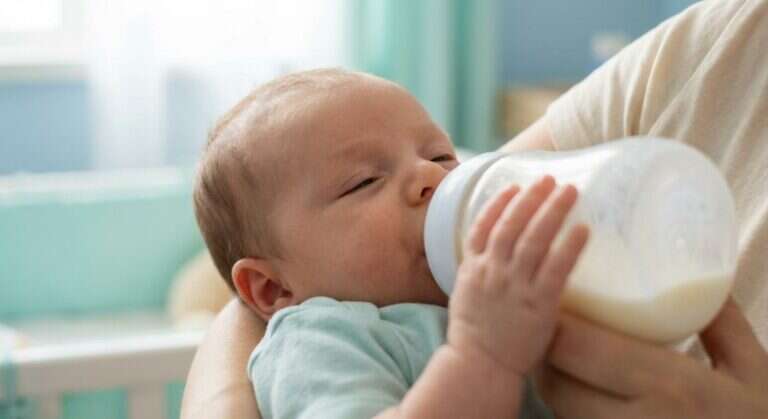
A 3-month-old baby’s stomach can usually hold about 4 to 6 ounces (120 to 180 milliliters) of milk at one feeding. Some babies take less, while others take more. The right amount depends on body size, growth, feeding method, and how often the baby eats.
This number is a guide—not a goal. Babies do not all empty their stomachs at the same rate. A healthy 3-month-old may want smaller, more frequent feeds or larger feeds spaced farther apart. Watch the baby’s hunger and fullness cues, and ask the child’s pediatrician if feeding or growth seems unusual.

What Is the Typical Milk Amount for a 3-Month-Old?
Most 3-month-old babies take around 4 to 6 ounces per feeding. Breastfed babies may take about 3 to 5 ounces, while formula-fed babies often take 4 to 6 ounces.
The American Academy of Pediatrics explains that formula amounts often rise from about 4 ounces per feed in early infancy to 6 to 8 ounces by around 6 months. This does not mean every 3-month-old should drink 6 ounces. Babies vary from feed to feed.
| Feeding type | Common amount per feed at 3 months | Usual daily pattern |
|---|---|---|
| Breast milk by bottle | About 3–5 oz (90–150 mL) | Often 6–8 feeds |
| Infant formula | About 4–6 oz (120–180 mL) | Often 5–7 feeds |
| Direct breastfeeding | Not easy to measure | Often 8 or more total feeds in 24 hours |
These are broad ranges, not strict rules. A baby may drink 2 ounces at one feed and 6 ounces at the next. Direct breastfeeding is especially hard to measure because the amount depends on milk flow, latch, feeding skill, and how long the baby nurses.
The American Academy of Pediatrics and Centers for Disease Control and Prevention both stress that feeding needs change as babies grow. Use their guidance with your baby’s growth pattern, rather than using stomach size alone.
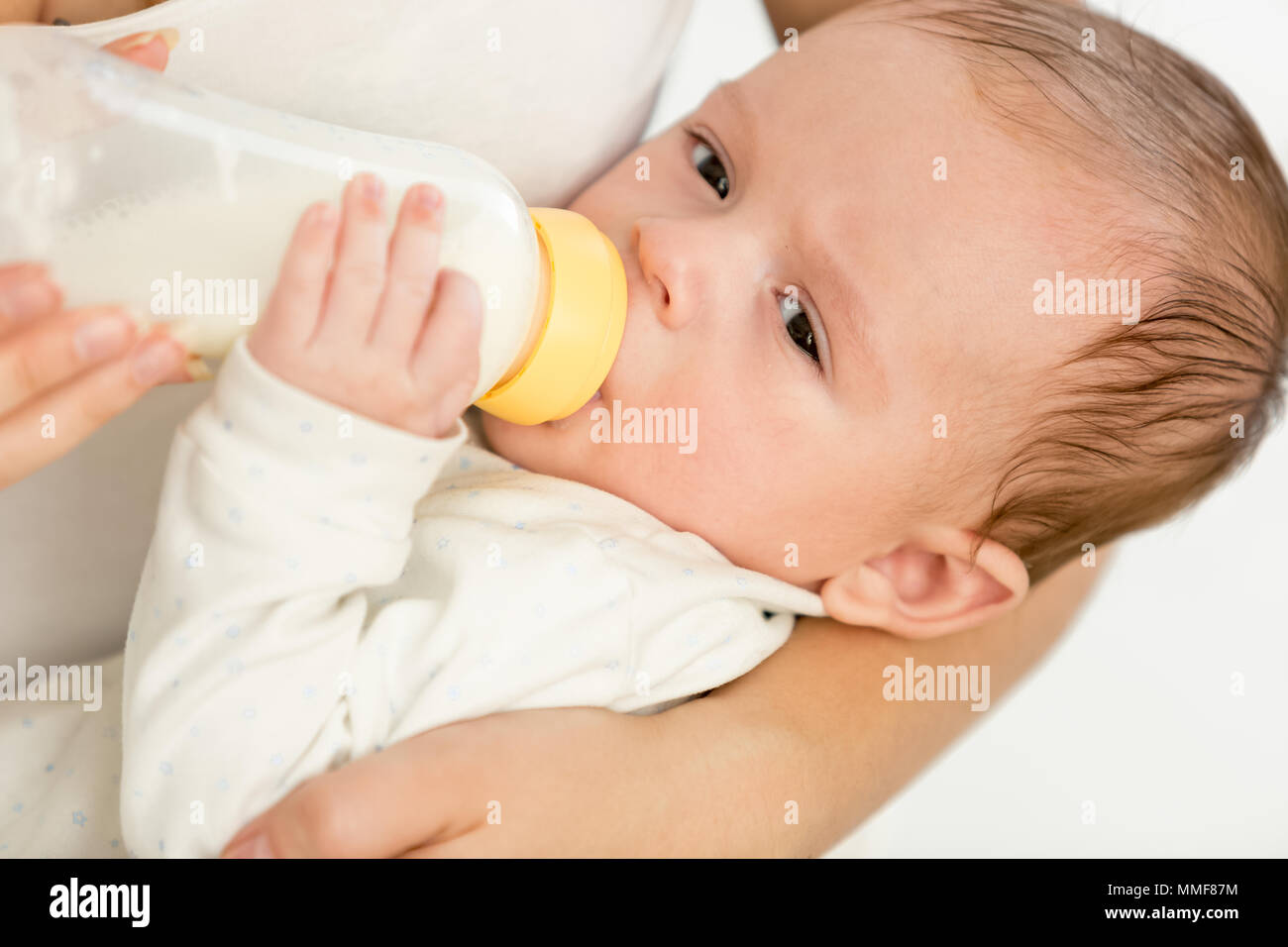
How Much Milk Does a 3-Month-Old Need in 24 Hours?
Many 3-month-old babies take about 24 to 32 ounces of milk in 24 hours, but there is no single correct daily total.
For formula-fed babies, a common clinical guide is about 2.5 ounces of formula per pound of body weight per day, up to about 32 ounces in 24 hours. This is only a general estimate. It should not replace advice from the baby’s health care provider.
For example, a hypothetical 12-pound baby might need:
- 12 pounds × 2.5 ounces = 30 ounces per day
- If divided into six feeds, that equals about 5 ounces per feed
This calculation is not a prescription. A baby may need more or less based on growth, activity, illness, sleep, and individual feeding patterns.
Breast milk intake is harder to estimate. Many breastfed babies take a similar total amount each day from about 1 to 6 months, even as they become more efficient at nursing. The number of feeds and the length of each feed may change.
Signs that a baby may be getting enough milk include:
- At least five or six wet diapers a day after the early newborn period
- Regular stools, although stool patterns vary
- Alert periods when awake
- Good muscle tone and normal activity
- Steady weight gain on the baby’s growth chart
- Relaxed hands and a satisfied appearance after many feeds
Weight gain is one of the best measures of adequate intake. Diapers and behavior help, but they do not replace growth checks with a pediatrician.

Can a Baby’s Stomach Hold 6 Ounces at 3 Months?
Yes, many 3-month-old babies can take 6 ounces, but not every baby needs or tolerates that amount.
A baby’s stomach grows during the first months of life. Still, stomach capacity is not a fixed container size. Milk moves from the stomach into the small intestine while the baby feeds, and digestion continues between feeds.
A 6-ounce bottle may be suitable for one baby and too much for another. It may also be more than the baby wants at a particular feed. Never pressure a baby to finish a bottle just because milk remains.
A larger bottle does not always help a baby sleep longer. Sleep depends on age, development, health, and routine. Feeding beyond fullness can lead to spit-up, discomfort, or excess intake.
For breastfed babies, offering a 6-ounce bottle can also create problems if the bottle flows much faster than the breast. Use a slow-flow nipple and paced bottle-feeding when possible. This gives the baby time to notice fullness.

How to Tell If a 3-Month-Old Is Hungry or Full
Hunger and fullness cues are more useful than a fixed ounce target.
Early hunger cues
A 3-month-old may show hunger by:
- Waking or becoming more alert
- Turning the head toward touch
- Opening the mouth
- Bringing hands to the mouth
- Licking or smacking the lips
- Sucking on fingers
Crying is a late hunger cue. A crying baby may have more trouble latching or taking a bottle calmly.
Fullness cues
A baby may be full when they:
- Slow down or stop sucking
- Turn away from the breast or bottle
- Relax their hands
- Close the mouth
- Push the nipple away
- Fall asleep while relaxed
- Lose interest in feeding
With bottle-feeding, follow the baby’s cues even if the bottle is not empty. The CDC recommends responsive feeding, which means responding to hunger and fullness instead of forcing a set amount.
Does Breast Milk and Formula Have the Same Stomach Capacity?
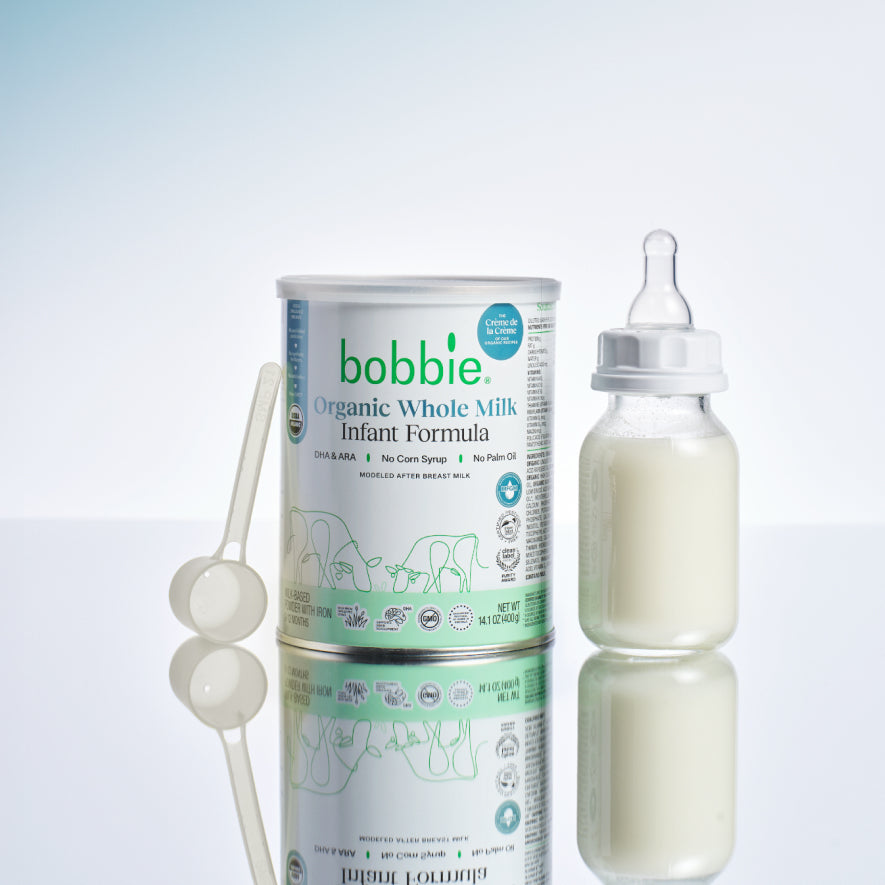
A baby’s stomach capacity is not fundamentally different because the baby drinks breast milk or formula. However, the feeding pattern can differ.
Breast milk is often digested efficiently, and breastfed babies may nurse more often. Formula-fed babies may take larger feeds with longer gaps between them. These are common patterns, not rules.
Bottle-fed breast milk and formula also make intake easier to measure. Direct nursing does not. A baby may nurse for 10 minutes and take a full feed, while another baby may need longer.
Do not add cereal, extra water, or other foods to a bottle to make it more filling. The CDC advises against adding cereal to bottles, and babies generally need only breast milk or iron-fortified infant formula until about 6 months unless a health professional gives different advice.

How to Bottle-Feed a 3-Month-Old Without Overfeeding
Use a slow, responsive approach rather than trying to make the baby finish a set amount.
- Start with a reasonable amount. Offer about 4 ounces if that matches the baby’s usual feed. You can prepare more if the baby still shows clear hunger.
- Hold the baby upright. Keep the baby’s head higher than the stomach.
- Keep the bottle mostly horizontal. This slows the flow and lets the baby control the pace.
- Pause during the feed. Burp the baby or give a short break when the baby slows down.
- Watch for fullness cues. Stop when the baby turns away, relaxes, or stops sucking.
- Do not force the last ounce. A bottle is not a serving that must be finished.
Never prop a bottle or leave a baby alone with one. Bottle propping can increase choking risk and may cause a baby to take milk too quickly.
Follow formula preparation instructions exactly. Do not dilute formula to make it last longer, and do not concentrate it unless the baby’s clinician gives specific instructions. Improper mixing can affect a baby’s fluid and nutrient balance.
Discard leftover formula after a feeding. For breast milk, follow CDC storage and handling guidance, including the time limits for milk left in a bottle after the baby has started drinking.
What If a 3-Month-Old Wants More Than 6 Ounces?
A baby who sometimes wants more than 6 ounces may simply be going through a growth period or taking fewer feeds that day. Offer more only if the baby continues to show active hunger cues.
First, check whether the baby is truly hungry. Babies may suck for comfort, need a burp, feel tired, or want to be held. A bottle can calm a baby even when hunger is not the cause of crying.
If the baby regularly takes more than 6 ounces per feed, discuss the pattern with the pediatrician. The clinician may review:
- Weight and length gain
- Number of daily feeds
- Bottle nipple flow
- Feeding speed
- Spit-up or vomiting
- Formula preparation
- Possible reflux, allergy, or another health concern
Do not restrict milk solely to keep the baby within an average range. The goal is safe, adequate nutrition and steady growth.

What If a 3-Month-Old Drinks Less Than 4 Ounces?
Some babies take less than 4 ounces at a time and still get enough milk overall. They may feed more often or have a smaller body size.
A short-term decrease can happen with a stuffy nose, mild illness, fatigue, heat, or a change in routine. Offer smaller feeds more often if the baby is willing, and keep track of wet diapers.
Call the pediatrician promptly if the baby:
- Refuses several feeds
- Has fewer wet diapers than usual
- Is hard to wake
- Has a dry mouth or no tears when crying
- Vomits repeatedly
- Has diarrhea
- Seems weak or unusually sleepy
- Is not gaining weight
Seek urgent medical care for trouble breathing, blue or gray lips, severe lethargy, or signs of serious dehydration. A 3-month-old can become ill quickly, so do not wait for a daily ounce total if the baby seems unwell.
Common Mistakes When Measuring a Baby’s Milk Intake
The most common mistake is treating an average as a required amount. Babies have different sizes, feeding skills, and schedules.
Other mistakes include:
- Counting every sucking motion as a full feed
- Comparing a breastfed baby’s intake with a bottle-fed baby’s intake
- Pressuring a baby to finish a bottle
- Increasing bottle size to improve sleep
- Using a fast-flow nipple because feeds seem slow
- Adding cereal or other foods without medical advice
- Mixing formula with too much or too little water
- Ignoring wet diapers and growth
- Assuming spit-up always means the baby ate too much
A more useful approach is to look at the whole pattern: how often the baby feeds, how the baby acts, how many wet diapers occur, and whether weight gain is steady.

Quick Answer: How Much Can a 3-Month-Old Stomach Hold?
A 3-month-old can often hold about 4 to 6 ounces of milk at one time, but this is an estimate. Many babies take smaller or larger feeds. Follow hunger and fullness cues, and use wet diapers and growth checks to judge whether intake is adequate.
FAQs
Is 4 ounces enough for a 3-month-old?
It can be. A 3-month-old may take 4 ounces at a feed and still get enough milk, especially if the baby feeds often and is growing well.
How often should a 3-month-old eat?
Many babies eat every 2 to 4 hours, but schedules vary. Breastfed babies may feed more often. Feed based on hunger cues rather than enforcing a strict clock schedule.
Should I wake a 3-month-old to feed?
Some healthy babies can sleep longer at night, but this depends on weight gain and medical history. Ask the pediatrician before allowing long stretches without feeding, especially if the baby was premature, has poor weight gain, or has a medical condition.
How many wet diapers should a 3-month-old have?
After the newborn period, many babies have about five or six or more wet diapers per day. A sudden drop from the baby’s usual pattern can signal that the baby is not taking enough fluid.
Is it normal for a 3-month-old to spit up after feeding?
Small amounts of spit-up are common in young babies. Keep the baby upright after feeding and avoid forcing extra milk. Contact the pediatrician for forceful vomiting, green or bloody vomit, poor weight gain, pain, or fewer wet diapers.
When should I ask a pediatrician about feeding?
Ask for help if the baby regularly struggles to feed, coughs or chokes during feeds, refuses milk, has repeated vomiting, has fewer wet diapers, or is not gaining weight. A pediatrician or feeding specialist can assess the baby directly.
Key Takeaways
- A 3-month-old can often hold about 4 to 6 ounces of milk.
- Some babies need less per feed and eat more often.
- A typical daily amount may be around 24 to 32 ounces, but individual needs vary.
- Hunger and fullness cues matter more than an exact bottle size.
- Do not force a baby to finish a bottle.
- Track wet diapers and growth, and contact the pediatrician about poor intake, dehydration, vomiting, or poor weight gain.
Conclusion
A 3-month-old’s stomach commonly holds about 4 to 6 ounces, but healthy feeding does not follow one exact number. Offer milk when the baby shows hunger, pause when the baby shows fullness, and judge intake by the full pattern of feeds, wet diapers, behavior, and growth.
If the baby’s usual intake changes sharply or feeding becomes difficult, contact the child’s pediatrician rather than trying to solve the problem by increasing or limiting ounces on your own.