
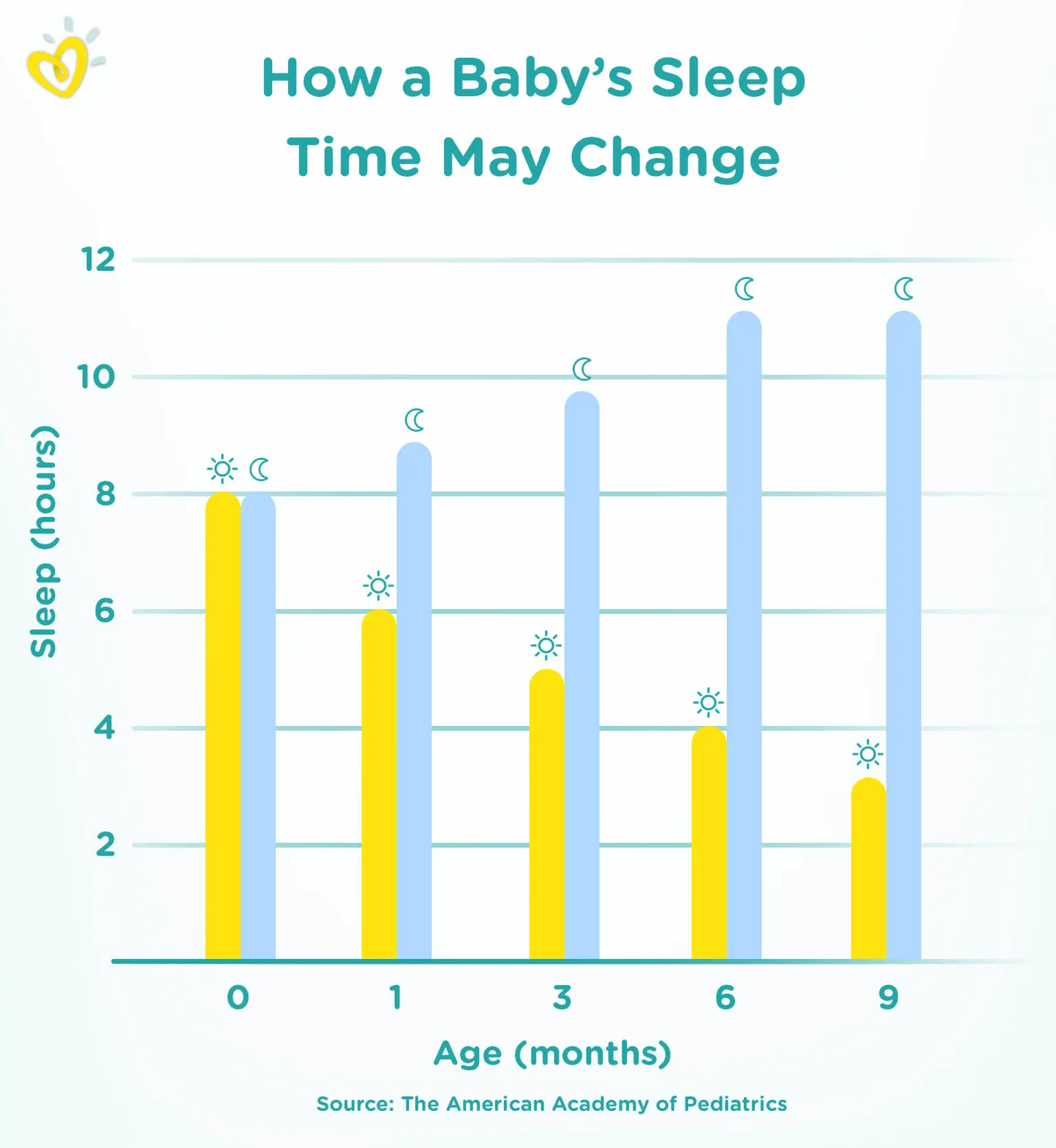
Most babies start sleeping for a longer stretch at night between 3 and 6 months old. Some do it sooner. Others wake often for many months.
“Sleeping through the night” usually means sleeping for 6 to 8 hours without waking, not sleeping from bedtime until morning. A young baby may still wake to feed, even when sleep is developing well.
In the United States, the American Academy of Pediatrics (AAP) also says safe sleep matters at every age. Place your baby on their back, on a firm, flat sleep surface, with no loose blankets, pillows, bumpers, or toys.
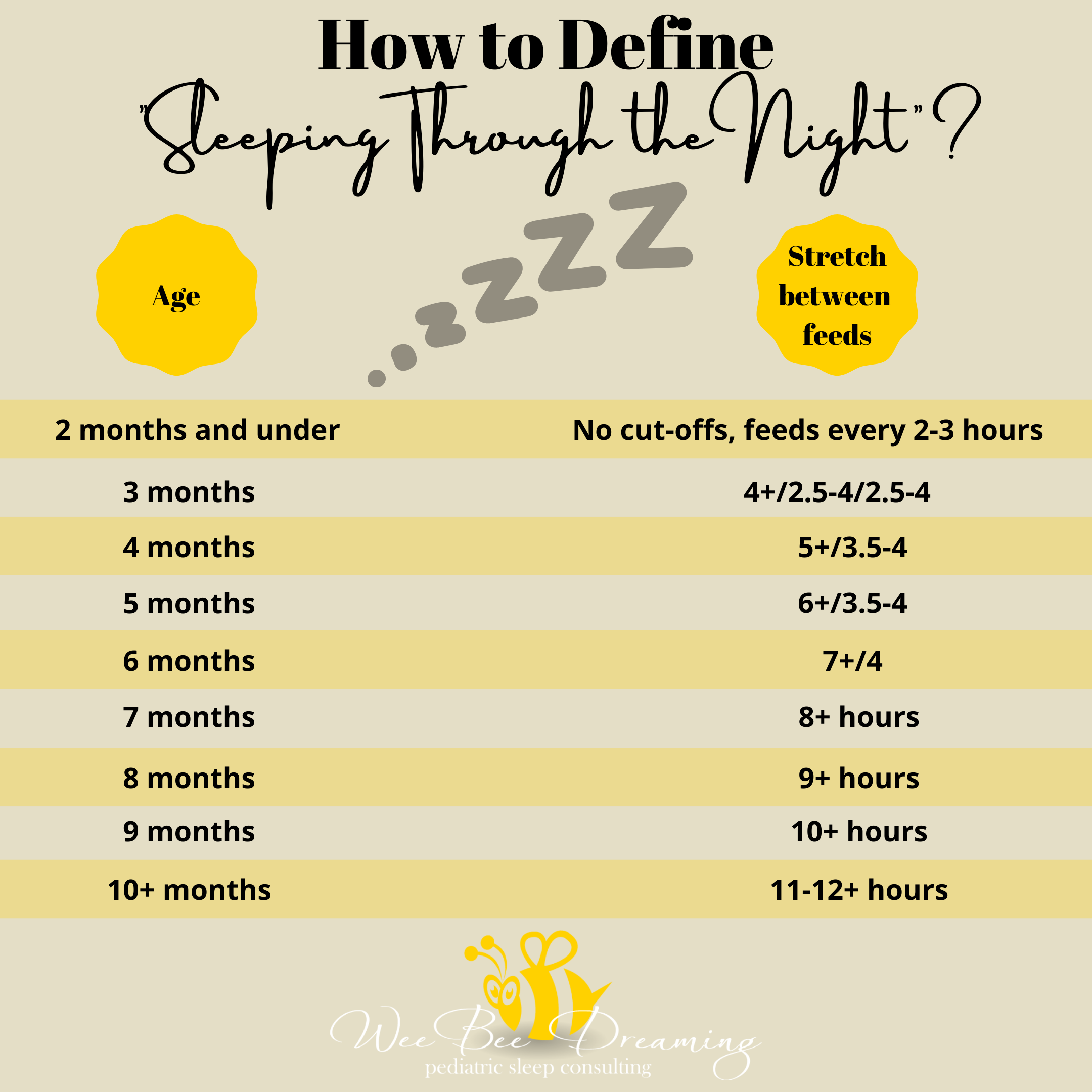
What “sleeping through the night” really means
For babies, sleeping through the night does not always mean 10 or 12 hours. Many doctors and sleep researchers use a stretch of about 6 hours as the basic measure.


A baby who sleeps from 10 p.m. to 4 a.m. may be considered to have slept through the night. A parent may still feel that this is a short night, especially if the baby wakes at 4 a.m. and needs help going back to sleep.
Night sleep also includes brief wake-ups. Babies, children, and adults all move between sleep cycles. A baby may stir, make a sound, or open their eyes without needing a full feeding or long period of help.
A simple age guide
| Baby’s age | What night sleep may look like |
|---|---|
| Newborn to 2 months | Frequent waking for feeds is normal |
| 2 to 3 months | Some babies begin one longer stretch at night |
| 3 to 6 months | Many babies begin sleeping 6 to 8 hours at times |
| 6 to 12 months | Night sleep may become more steady, but waking is still common |
| After 12 months | Many children sleep through, but illness, teething, travel, and new skills can cause wake-ups |
This table shows common patterns, not deadlines. A baby can be healthy and still wake at night after their first birthday.
When do most babies sleep through the night?
Many babies begin to sleep through the night between 3 and 6 months, when their body clock, feeding pattern, and sleep skills become more mature.
Research does not show one exact age for every baby. In a study published in Pediatrics, researchers followed healthy Canadian infants and found that not all babies slept for 6 or 8 hours in a row at 6 or 12 months. The study used parent reports and was not a test of every baby in the United States, but it shows why normal sleep varies so much.
Some babies reach a 6-hour stretch at 3 months. Others take longer. A baby who wakes once or twice at 8 months may still be within a normal range, especially if the baby grows well and seems healthy during the day.
Why the timing varies
Several factors can change when a baby sleeps for a long stretch:
- Age and brain development: Sleep rhythms mature over time.
- Feeding needs: Young babies have small stomachs and may need food at night.
- Growth: A growth spurt can lead to more waking.
- temperament: Some babies settle more easily than others.
- Daytime sleep: Too little or too much daytime sleep can affect the night.
- Illness or discomfort: Colds, reflux symptoms, eczema, and ear pain can disturb sleep.
- New skills: Rolling, crawling, standing, and separation anxiety can cause temporary changes.
- Sleep habits: A baby may need the same help at night that they received at bedtime.
A later sleep milestone does not mean a parent has done something wrong. Sleep is a developmental process, not a performance test.

Do newborns sleep through the night?
Most newborns do not sleep through the night. They often sleep for short periods and wake every few hours to feed.
Newborns have small stomachs and immature body clocks. They also do not yet have a strong difference between day and night. Long stretches of sleep may happen, but they are not usually consistent.


During the first weeks, feed your baby as advised by the baby’s health care provider. Do not try to make a newborn sleep longer by delaying feeds unless a pediatrician or other qualified clinician tells you to do so.
When can a newborn sleep longer?
The answer depends on birth weight, weight gain, health, feeding method, and medical history. A healthy full-term baby who is gaining weight well may eventually be allowed to sleep for a longer stretch, but the timing should come from the baby’s clinician.
Ask the clinician before letting a newborn go longer between feeds if the baby:
- Was born early
- Has trouble gaining weight
- Has jaundice
- Feeds poorly
- Is hard to wake
- Has a medical condition
- Has fewer wet diapers than expected
Never put cereal in a bottle or use food, supplements, or medicine to make a baby sleep longer. These steps can be unsafe and do not solve the cause of night waking.
How much sleep do babies need?
The AAP supports the sleep ranges from the National Sleep Foundation for healthy children. These are total sleep amounts in a 24-hour period, including naps:
| Age | Recommended total sleep in 24 hours |
|---|---|
| Birth to 3 months | 14 to 17 hours |
| 4 to 11 months | 12 to 16 hours |
| 1 to 2 years | 11 to 14 hours |
These ranges are guides. Your baby may sleep a little more or less and still be healthy.
The better question is not only, “How long does my baby sleep?” Look at the whole picture:
- Does the baby feed well?
- Are wet diapers typical for that baby?
- Is growth on track?
- Does the baby have periods of calm, alert time?
- Can the baby wake and move normally?
- Does the baby seem comfortable between sleep periods?
A baby who wakes often but grows and feeds well may be doing fine. A baby who sleeps for a long time but is hard to wake or feeds poorly needs medical advice.

How to help a baby sleep longer at night
You cannot force a baby to sleep through the night. You can, however, create conditions that support sleep and help the baby learn what to expect.
1. Use a safe sleep space every time
For every sleep, place your baby:
- On their back
- On a firm, flat mattress
- In a crib, bassinet, or play yard that meets current safety standards
- In the same room as you, but not in the same bed, ideally for at least the first 6 months
- With only a fitted sheet on the sleep surface
Keep the sleep space free of pillows, quilts, loose blankets, stuffed animals, positioners, and bumper pads.
Do not use couches, armchairs, adult beds, inclined sleepers, or car seats as routine sleep spaces. If your baby falls asleep in a car seat, move them to a firm, flat sleep surface when practical.


2. Help your baby tell day from night
During the day, keep normal light and household sounds. Feed your baby and offer age-appropriate interaction.
At night, keep lights low and interaction calm. Feed and change your baby as needed, then return them to the sleep space.
This simple contrast can help the body clock mature. It may take time, especially in the first two months.
3. Create a short, repeatable bedtime routine
A routine can take 20 to 30 minutes. It might include:
- A feed
- A diaper change
- Pajamas or a sleep sack
- A short book or song
- A cuddle
- Placement in the crib
The routine does not need to be elaborate. Repeating the same calm steps can signal that night sleep is coming.
4. Put the baby down when sleepy, if possible
Putting a baby down drowsy but awake may help the baby practice settling in the sleep space. It is not a rule, and it does not work every time.
Young babies often need to be held, rocked, or fed to sleep. You can respond to your baby and still build healthy sleep habits. If the baby becomes upset, comfort them and try again later.
5. Watch for tired signs
Common signs include:
- Yawning
- Looking away
- Rubbing the face
- Becoming quiet
- Fussing
- Losing interest in play
An overtired baby may cry hard and struggle to settle. Try the next sleep period a little earlier rather than waiting for extreme fatigue.
6. Consider sleep training only when it fits your family
Sleep training may include several approaches, from gradual soothing to methods that involve brief periods of waiting before responding. Research suggests that behavioral sleep methods can improve sleep for some older infants, but no single method works for every family.
There is no need to use a harsh approach. Choose a plan that fits your child’s age, feeding needs, health, and your comfort level. Ask your pediatrician for guidance if your baby is young, was born early, has poor weight gain, or has a medical concern.
Should you wake a baby to feed at night?
You may need to wake a baby for feeds in the early weeks, especially if the baby has not regained birth weight or has been told to follow a feeding plan.
Once a baby is gaining weight well, the clinician may say that you can let the baby wake naturally at night. This decision depends on the individual child.


Do not stop night feeds based only on age. Ask the baby’s health care provider if you are unsure. Breastfed babies may continue to feed at night for longer, while formula-fed babies may follow a different pattern, but neither pattern guarantees uninterrupted sleep.
Night feeding can also continue for reasons beyond hunger. A baby may feed for comfort, help with settling, or connection. If you want to reduce night feeds, make a gradual plan with a pediatrician or lactation professional when appropriate.
Why does a baby who slept well start waking again?
Sleep often gets worse for a short time after it improves. This is common and does not always mean that a new problem has developed.
Possible causes include:
- A cold or other illness
- Teething discomfort
- A change in routine
- Travel or a new caregiver
- Separation anxiety
- Learning to roll, crawl, stand, or walk
- A growth spurt
- Changes in daytime naps
- A new need for help settling
First check for illness or discomfort. Then return to the same bedtime routine and safe sleep plan. Give the change several nights if your baby is otherwise well.
If the change lasts, becomes severe, or comes with poor feeding, breathing problems, fever, pain, or unusual sleepiness, contact a health care provider.

Is it safe to let a baby sleep through the night?
Yes, a healthy baby may sleep for a long stretch when the baby’s clinician confirms that feeding and growth are going well. Sleeping longer does not remove the need for safe sleep practices.
The safest routine is:
- Back for every sleep
- Firm, flat, separate sleep surface
- No loose items in the crib
- Room-sharing without bed-sharing
- No smoke or nicotine exposure
- No alcohol, cannabis, sedating medicine, or other substance use by the adult caring for the baby
- Avoid overheating
- Stop swaddling when the baby shows signs of trying to roll
A wearable blanket can replace a loose blanket. Never use a weighted sleep sack, weighted swaddle, or weighted blanket for an infant unless a qualified medical professional gives specific advice.
Breastfeeding is linked with a lower risk of sleep-related infant death, but breastfed babies still need the same safe sleep setup. Bed-sharing can become especially dangerous when an adult is very tired or has used alcohol, cannabis, opioids, sleep medicine, or other sedating substances.
When should you call the pediatrician?
Call your baby’s health care provider if sleep changes come with signs of illness or poor feeding.
Seek prompt medical advice if your baby:
- Is difficult to wake
- Has trouble breathing
- Has blue, gray, or pale skin
- Feeds much less than usual
- Has fewer wet diapers
- Is not gaining weight as expected
- Has repeated vomiting
- Has a fever, especially if younger than 3 months
- Cries as if in pain and cannot be comforted
- Snores loudly or has pauses in breathing
A baby who wakes often is not automatically sick. But sleep is one part of a larger health picture, so changes in feeding, breathing, growth, or alertness matter more than the number of wake-ups alone.

Common mistakes parents make about night sleep
Treating 3 months as a deadline
Three months is not a required age for sleeping through the night. Some babies are ready for a long stretch then. Others are not.


Comparing one baby with another
A friend’s baby may sleep 10 hours while yours wakes every 3 hours. That difference does not prove that either parent is doing something right or wrong.
Cutting naps to improve nighttime sleep
Too little daytime sleep can lead to overtiredness. An overtired baby may wake more, not less.
Adding unsafe items to the crib
Pillows, positioners, wedges, loose blankets, and stuffed toys do not make infant sleep safer. They can raise the risk of suffocation or sleep-related death.
Feeding on a strict clock without checking the baby
Schedules can help some families, but a baby’s hunger, growth, and medical needs still matter. Watch the baby and follow professional feeding advice.
Assuming every wake-up means hunger
Some wake-ups come from a sleep-cycle change, discomfort, habit, or the need for reassurance. Check the baby’s needs, but do not assume that every sound requires a full feed.

Key takeaways
- Most babies begin sleeping for a 6- to 8-hour stretch between 3 and 6 months, but the range is wide.
- Newborns usually wake often to feed.
- Sleeping through the night does not mean a baby will never wake.
- Growth, feeding, health, temperament, and routine all affect sleep.
- Use a back-sleep position and a firm, flat, empty sleep space every time.
- Ask a pediatrician before changing night feeds, especially for a newborn or a baby with medical or growth concerns.
Frequently asked questions
What age do babies sleep 12 hours?
Some babies sleep close to 12 hours at night during the first year, but many do not. A long night can include brief wake-ups and may not mean 12 hours of uninterrupted sleep.
Do babies sleep better after starting solid foods?
Starting solid foods does not reliably make babies sleep through the night. The AAP recommends beginning complementary foods at about 6 months when a baby shows readiness, while continuing breast milk or formula as the main source of nutrition.
Is it normal for a 6-month-old to wake at night?
Yes. Many 6-month-olds still wake once or more. Consider feeding needs, sleep habits, illness, teething, and daytime sleep before trying to change the pattern.
Should I let my baby cry at night?
Families use different ways to respond to crying. A brief pause may give an older baby a chance to settle, but you should respond when the baby may be hungry, ill, hurt, or unsafe. Choose a method that fits your baby’s age and health, and ask the pediatrician for help if you are unsure.
When should I stop swaddling?
Stop swaddling as soon as your baby shows signs of trying to roll. Do not use a swaddled position once the baby can roll onto their side or stomach. Move to an appropriate wearable blanket instead.
A practical next step
Track sleep, feeds, naps, wet diapers, and mood for three days. Look for patterns rather than one difficult night. Then review the record with your baby’s pediatrician if your baby is not feeding well, is not growing as expected, or has a sudden and lasting change in sleep.
For safe-sleep guidance in the United States, use the current recommendations from the American Academy of Pediatrics, the National Institutes of Health Safe to Sleep program, and the Centers for Disease Control and Prevention.
