
If your baby is fussy, cries often, or seems hard to soothe, you are not alone. In the United States, most babies have periods of crying that are part of normal development. Still, fussiness can also signal hunger, tiredness, discomfort, illness, or a need for help with feeding.
The best first step is to check basic needs, look for signs of illness, and notice when the crying happens. Call your baby’s pediatrician if the fussiness is sudden, severe, lasts longer than usual, or comes with fever, poor feeding, breathing trouble, vomiting, or fewer wet diapers.
Quick answer: Why is my baby so fussy?
Babies often become fussy because they are hungry, tired, too hot or cold, overstimulated, uncomfortable, or need a diaper change. Gas, reflux, constipation, teething, and illness can also cause crying.
Fussiness is common in the first months of life. The American Academy of Pediatrics notes that crying often increases during the first several weeks, may peak around 6 weeks, and then improves by about 3 to 4 months. Your baby’s pattern matters more than any single crying episode.


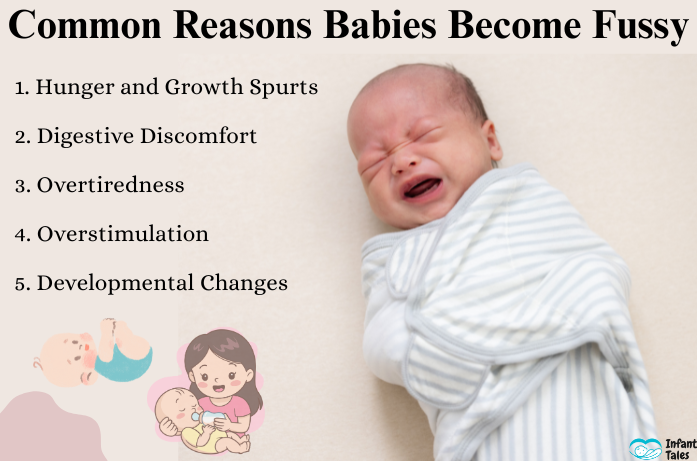
Common reasons babies get fussy
Most fussiness has a simple cause. Check these needs in a calm, consistent order.
Hunger
Hunger is one of the most common causes of crying. Many babies show early feeding cues before they cry, such as:
- Turning toward the breast or bottle
- Putting hands near the mouth
- Smacking or licking the lips
- Opening the mouth
- Becoming more alert or restless
Crying is a late hunger cue. If your baby is already upset, calm them briefly with holding or skin-to-skin contact before trying to feed. A very upset baby may have trouble latching or coordinating sucking.
If your baby feeds but still seems hungry often, ask the pediatrician or a lactation professional to check feeding technique, milk transfer, or formula preparation. Do not add cereal to a bottle or change formula without medical guidance.
A wet or dirty diaper
Some babies cry as soon as they feel wet. Others do not mind until the diaper is very full. Check the diaper when fussiness starts, especially after a feeding or nap.
Look at the skin during each change. Redness, sores, swelling, or a rash can make a baby uncomfortable. Use the diaper cream recommended by your pediatrician if the skin looks irritated.
Tiredness
An overtired baby may cry, arch, look away, rub the eyes, or become harder to settle. Newborns can need sleep after a short period of being awake. Older babies may have longer awake periods, but they can still become overtired after missed naps.
Try offering sleep at the first signs of tiredness. Put your baby on their back in a firm, flat crib, bassinet, or play yard with no pillows, loose blankets, bumpers, or stuffed toys. The CDC and AAP recommend this sleep setup to reduce the risk of sleep-related death.
Too much stimulation
Bright lights, loud sounds, visitors, screens, travel, and frequent handling can overwhelm a young baby. Fussiness may increase near the end of the day when your baby has had many new sights and sounds.
Move to a quiet, dim room. Hold your baby close, speak softly, and use slow movements. Some babies settle with gentle rocking, while others need less movement and more stillness.


Temperature or clothing
Babies may cry when they are too warm, too cold, or dressed in tight layers. Feel your baby’s chest or back rather than the hands and feet. Hands and feet can feel cool even when the body is comfortable.
Dress your baby in about one more light layer than an adult would wear in the same room. Avoid overheating, heavy blankets, hats indoors, and weighted sleep products.
Gas or swallowed air
Babies often swallow air while crying, feeding, or using a bottle. Gas may cause squirming, drawing the legs up, a tight belly, or brief crying during or after feeds.
You can try:
- Keeping your baby more upright during feeding.
- Burping during and after a feed.
- Holding your baby upright for a short time after feeding.
- Moving the legs gently in a bicycling motion when your baby is calm.
These steps may help, but gas is not always the reason for crying. Avoid gripe water, herbal products, or over-the-counter gas medicine unless your pediatrician says it is safe for your baby.
Reflux or feeding discomfort
Many babies spit up small amounts. Normal spit-up is usually not painful and does not affect growth. Reflux becomes more concerning when your baby has poor weight gain, refuses feeds, cries intensely during feeds, coughs or chokes often, or vomits forcefully.
Keep your baby upright while you are holding them after a feed. Do not place a baby to sleep on their stomach or incline the crib. Elevating the sleep surface can allow a baby to slide into an unsafe position.
Constipation
Breastfed babies may have soft stools at different intervals. Some may stool several times a day, while others go days between stools. Infrequent stooling alone does not prove constipation.
Constipation is more likely when stools are hard, dry, or painful to pass. A swollen belly, repeated vomiting, blood in the stool, or refusal to feed needs prompt medical advice.
Teething
Teething can cause extra drooling, a desire to chew, and tender gums. It should not usually cause a high fever, breathing trouble, repeated vomiting, or severe diarrhea.
Use a clean, cool teething ring. Avoid benzocaine gels, numbing products, amber necklaces, and frozen objects that can injure your baby. Ask your pediatrician before giving pain medicine, especially to a young infant.
Could fussiness mean my baby is sick?
Yes. Fussiness can be an early sign of illness, especially when it is new or unusual for your baby. Compare your baby’s behavior with their normal pattern.
Call your pediatrician promptly if your baby:
- Is much harder to soothe than usual
- Feeds poorly or refuses several feeds
- Has fewer wet diapers than expected
- Vomits repeatedly or forcefully
- Has diarrhea, blood in the stool, or a swollen belly
- Seems unusually sleepy, weak, floppy, or difficult to wake
- Has a new rash, especially with fever
- Cries when touched or moved
- Has a cough, congestion, or breathing changes
Fever in a young baby
For a baby younger than 3 months, a rectal temperature of 100.4°F (38°C) or higher requires immediate medical advice. Call your pediatrician or seek urgent care as directed. Do not wait for the fever to improve on its own.


Rectal temperature is the most reliable method for young infants when used correctly. Ask your pediatrician how to take your baby’s temperature safely. Do not give acetaminophen or ibuprofen to a young baby unless a health professional tells you the correct dose and timing. Ibuprofen is not used in babies under 6 months unless specifically directed.
Emergency warning signs
Call 911 in the United States if your baby has severe trouble breathing, turns blue or gray, has a seizure, is unresponsive, or cannot be awakened normally.
Seek immediate medical care if your baby has:
- Breathing that is fast, labored, or accompanied by grunting
- Skin pulling in between the ribs
- Blue lips or face
- Repeated projectile vomiting
- A stiff body or unusual limpness
- A swollen, hard abdomen
- A high-pitched, unusual cry with a very ill appearance
- Signs of dehydration, such as very few wet diapers, a dry mouth, or no tears when crying
Trust your judgment. A caregiver often notices that something is wrong before the symptoms are clear.

What is colic, and how is it different from normal fussiness?
Colic is a pattern of frequent, prolonged crying in an otherwise healthy infant. A traditional medical definition describes crying for more than 3 hours a day, more than 3 days a week, for at least 3 weeks. This rule helps describe the pattern, but you do not need to wait three weeks before asking for help.
Colic often begins in the first few weeks, peaks around 6 weeks, and improves by 3 or 4 months. Babies with colic may clench their fists, draw up their legs, turn red, or appear difficult to comfort.
Colic is not your fault. It does not mean you are doing something wrong, and it does not automatically mean your baby has gas or a food allergy. A pediatrician should assess ongoing crying before you make major feeding changes.
Call the pediatrician if crying is persistent, your baby is not gaining weight, feeding is difficult, or you feel overwhelmed. Keep a record of feeds, naps, stools, wet diapers, spit-up, and crying times. This can help reveal a pattern.
A simple step-by-step way to calm a fussy baby
Use the same short check each time. A predictable routine can help you find the cause without becoming overwhelmed.
1. Check for urgent symptoms
Look at breathing, skin color, alertness, temperature, and overall appearance. If your baby looks seriously ill, call 911 or seek urgent care.
2. Check basic needs
Offer a feed if your baby shows hunger cues. Change the diaper. Check clothing, temperature, and the position of the baby’s body.
3. Reduce stimulation
Dim the lights. Lower the sound. Stop passing the baby from person to person. Move to a quiet room and hold your baby close.
4. Try one soothing method
You can try:


- Skin-to-skin contact
- Slow rocking or walking
- A soft, steady sound
- Gentle back rubbing
- Swaddling for a young baby who is not yet rolling
- A pacifier, if your baby uses one
- A short break from feeding if your baby seems overwhelmed
Change methods slowly. Rapidly switching from bouncing to feeding to rocking may add more stimulation.
5. Recheck feeding and sleep
If your baby calms briefly but becomes fussy again, consider hunger, swallowed air, or tiredness. A pattern that occurs after every feed deserves a conversation with the pediatrician.
6. Stop if you feel overwhelmed
Place your baby safely on their back in an empty crib or bassinet. Step into another room for a few minutes. Call someone you trust.
Never shake, hit, throw, or jerk a baby. Shaking can cause severe brain injury or death. If you fear you may lose control, put the baby down safely and call 911 or the National Parent & Youth Helpline at 855-427-2736. You can also contact a trusted person for immediate help.

What not to do when your baby is fussy
Some common responses can create safety risks or delay needed care.
- Do not shake or forcefully bounce your baby.
- Do not sleep with your baby on a couch, recliner, or adult bed.
- Do not put cereal, medicine, or thickener in a bottle without medical advice.
- Do not use weighted swaddles or weighted sleep sacks.
- Do not prop a bottle or leave a baby alone with a bottle.
- Do not give honey to a baby under 12 months.
- Do not use herbal remedies or essential oils without asking the pediatrician.
- Do not assume that all crying is colic.
- Do not ignore a sudden change in behavior.
Swaddling may calm some newborns, but stop as soon as your baby shows signs of rolling. Always place a swaddled baby on their back for sleep.

When should you call the pediatrician?
Call your pediatrician during office hours for ongoing fussiness that does not improve with feeding, diaper changes, rest, and reduced stimulation. Also call if you are worried, even if you cannot name the reason.
Ask for help sooner if your baby was born early, has a medical condition, has feeding or weight concerns, or takes prescription medicine. The advice may differ based on age, birth history, and health.
Before you call, write down:
- Your baby’s age and temperature
- When the fussiness began
- How long each crying episode lasts
- Feeding amounts and times
- Wet and dirty diaper counts
- Vomiting, diarrhea, cough, rash, or breathing changes
- What helps and what makes the crying worse
This information can make the visit or phone call more useful.

Key takeaways
- Hunger, tiredness, overstimulation, gas, temperature, and diaper discomfort are common causes of fussiness.
- A sudden or unusual change may signal illness.
- A baby under 3 months with a temperature of 100.4°F (38°C) or higher needs immediate medical advice.
- Use safe soothing methods and place your baby on their back for sleep.
- Never shake a baby. Put your baby down safely and get help if you feel overwhelmed.
- Call the pediatrician when crying is persistent, feeding is poor, diapers decrease, or your baby seems unwell.
Frequently asked questions
Why is my baby fussy but not crying?
Some babies show fussiness through squirming, grunting, arching, facial tension, poor sleep, or frequent waking. Check hunger, tiredness, gas, temperature, and overstimulation. If the behavior is new or your baby feeds poorly, call the pediatrician.


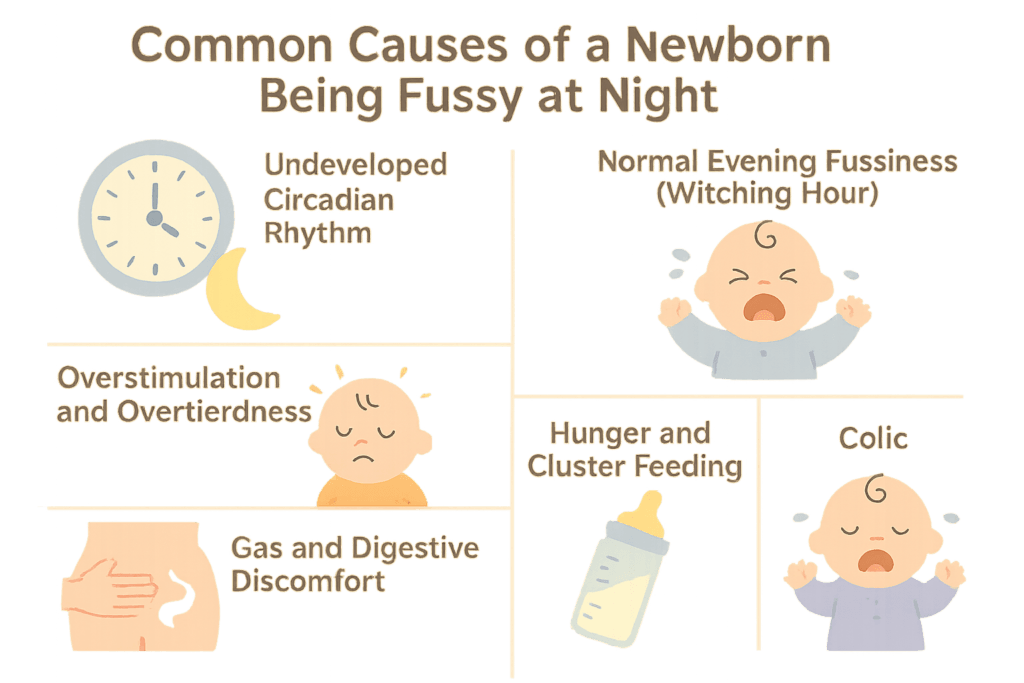
Why is my baby fussy at night?
Night fussiness may come from normal newborn sleep patterns, hunger, overtiredness, gas, or too much stimulation late in the day. Keep nighttime feeds and diaper changes quiet and dim. Continue to follow safe sleep guidance every time.
Why is my baby fussy after feeding?
Your baby may need to burp, may be feeding too quickly, or may have trouble with positioning or latch. Reflux, milk allergy, or another problem is less common but possible. Contact the pediatrician if your baby cries during most feeds, refuses feeds, vomits forcefully, has blood in the stool, or is not gaining weight.
Can a pacifier help a fussy baby?
A pacifier may help some babies settle. If you breastfeed, the AAP suggests waiting until breastfeeding is well established before introducing one, unless your health professional advises otherwise. Never attach a pacifier to a cord or clip during sleep, and do not coat it with honey or sugar.
How can I tell if my baby is crying from pain?
Pain may cause a sudden, intense, or unusual cry. Your baby may stiffen, pull up the legs, refuse feeds, or react when touched or moved. These signs do not identify the cause by themselves. Call the pediatrician if the crying is severe, persistent, or paired with fever, vomiting, swelling, injury, or poor feeding.
Conclusion
A fussy baby usually needs one of the basics: food, sleep, a clean diaper, comfort, or less stimulation. Check those needs first, but do not dismiss a strong change in your baby’s behavior.
Watch for fever, breathing problems, poor feeding, dehydration, unusual sleepiness, repeated vomiting, or a cry that feels different. When in doubt, call your pediatrician. Safe care also includes caring for yourself: place your baby in a safe crib, take a short break, and ask for help before frustration builds.
