
Introduction
The best way to clean a stroller in the United States is to remove loose dirt, wash removable fabric as the manufacturer allows, wipe the frame with mild soap and water, and let every part dry fully before use. Start by checking your stroller’s owner’s manual. Cleaning rules can differ by brand and model, especially for seat pads, harnesses, wheels, and folding parts.
A stroller can collect crumbs, dust, spilled drinks, mud, sunscreen, and germs. Regular cleaning helps prevent odors and keeps buckles, wheels, and folding joints working as intended. It also gives you a chance to spot loose parts or damage before your child rides in it.
What You Need Before Cleaning a Stroller
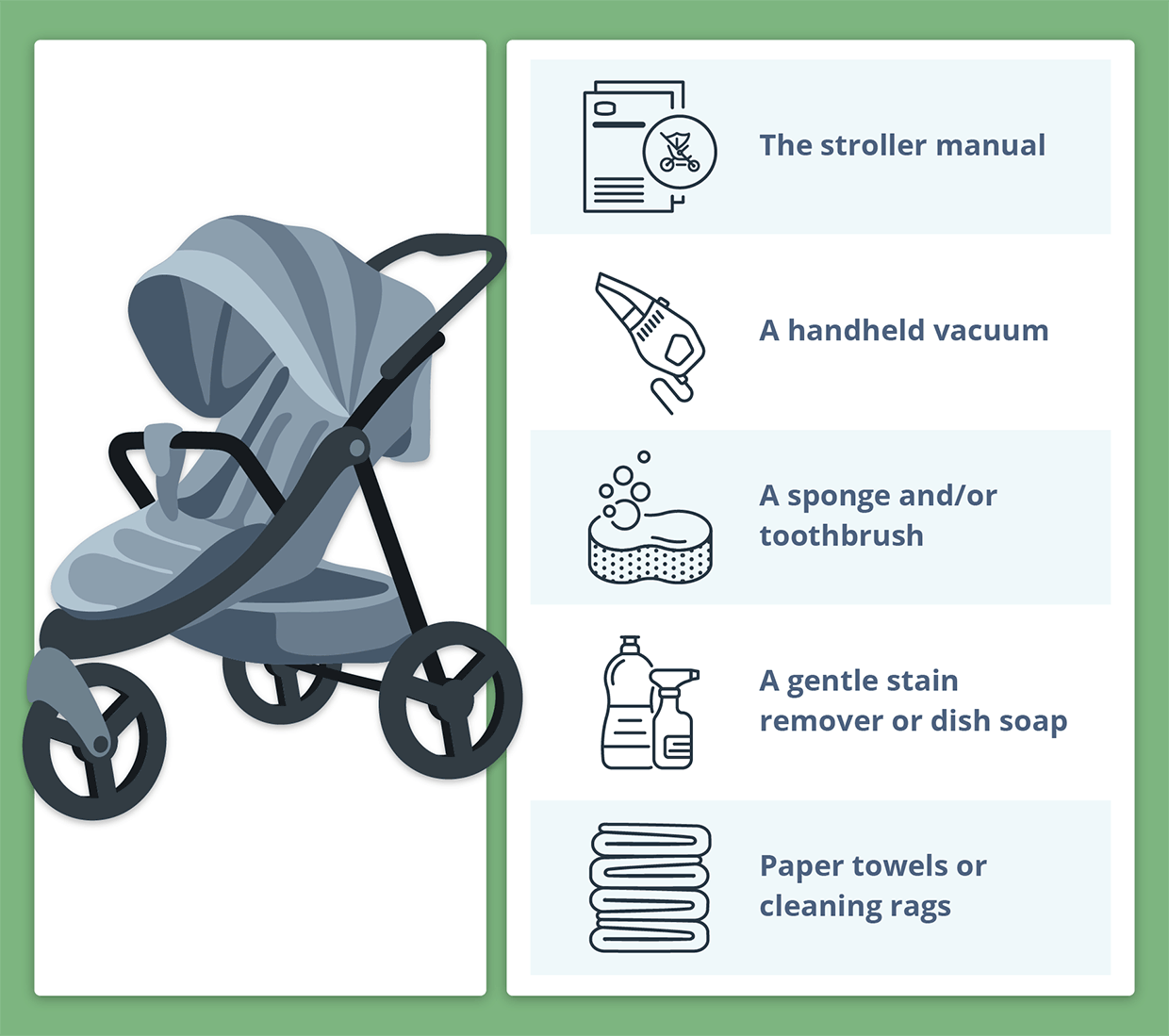
Gather these basic supplies before you begin:
- A vacuum with a soft brush or a clean soft-bristle brush
- Several microfiber cloths
- Mild dish soap or gentle laundry detergent
- Warm water
- A soft toothbrush or small cleaning brush
- A bucket or bowl
- A dry towel
- A fan, if available
- The stroller’s owner’s manual


Use only products that the manufacturer permits. Some stroller fabrics have water-resistant coatings that harsh cleaners can damage. Avoid bleach, ammonia, solvents, abrasive powders, and strong fragrances unless the manual specifically allows them.
Before cleaning, move the stroller to a well-ventilated place. A garage, porch, or washable floor can work well. Do not clean a stroller near an open flame or with an electrical appliance that could get wet.
Check the owner’s manual first
Look for instructions on:
- Machine washing or hand washing the seat fabric
- Water temperature
- Dryer use
- Harness cleaning
- Wheel removal
- Lubrication
- Cleaning the frame
- Disinfecting
- Removing the seat or canopy
If you cannot find the manual, search the manufacturer’s U.S. website using the stroller’s exact model name. Do not guess whether a fabric part is machine washable.

How to Clean a Stroller Step by Step
Clean the stroller in this order: empty it, vacuum it, remove washable parts, wash the fabric, clean the frame, scrub the wheels, and dry everything completely.
1. Empty the stroller
Remove all items from:
- The seat
- Storage baskets
- Parent cup holders
- Child trays
- Pockets
- Canopy pockets
- Under-seat storage
Check for small objects that may be hidden under the seat. Crumbs and coins can collect near the folding joints and wheel mounts.
If the stroller has a removable child tray or cup holder, set it aside. Check the manual before removing any part that is attached to the harness or seat frame.
2. Remove loose dirt and crumbs
Open the stroller as far as the manual permits. Shake it gently over a trash can or washable surface.


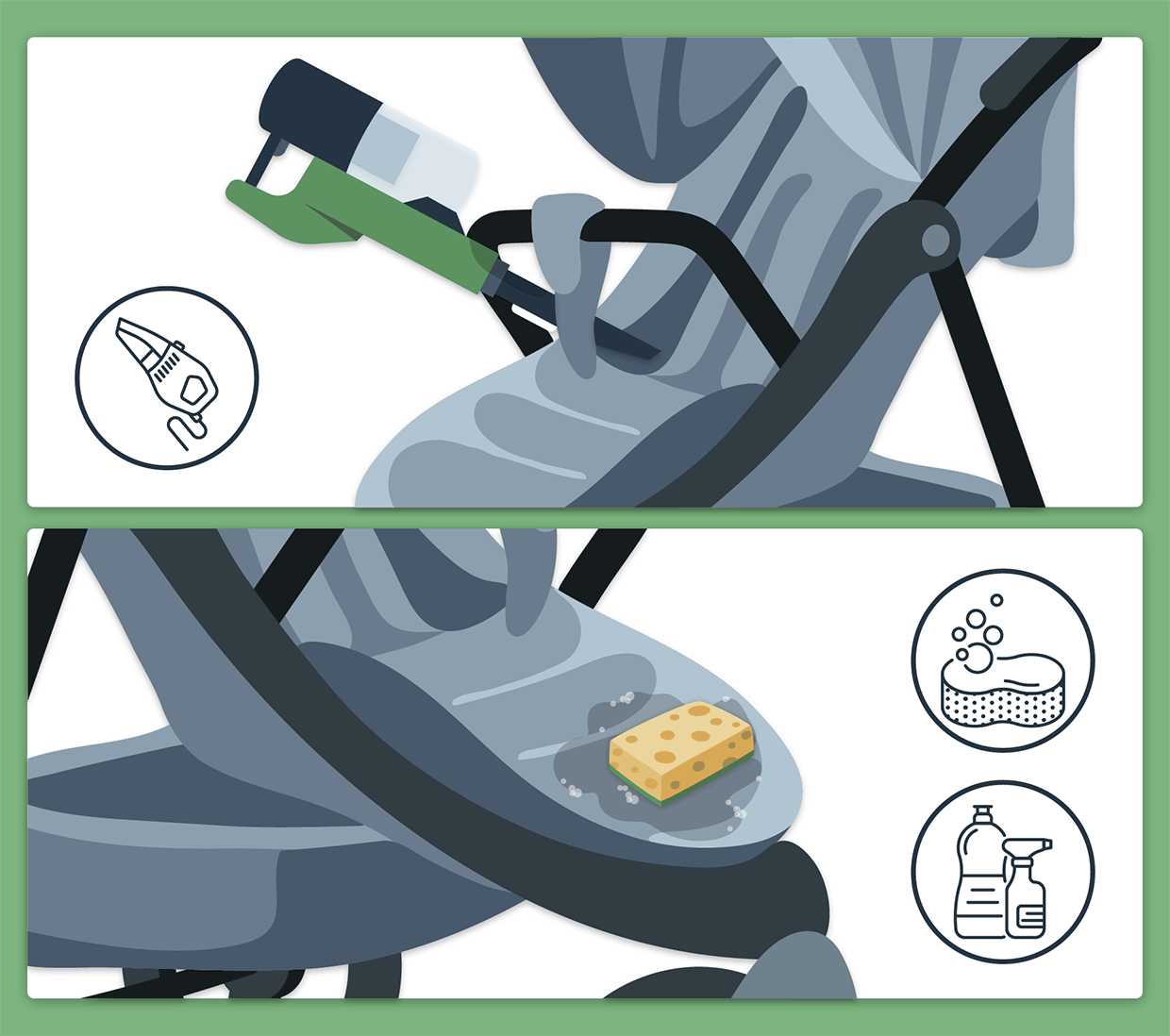
Use a vacuum with a soft brush attachment to remove:
- Crumbs
- Sand
- Pet hair
- Dust
- Dried soil
- Lint
A soft brush can loosen dirt from seams and mesh. Do not use a sharp tool to dig into fabric. It can cut the material or damage stitching.
Pay close attention to the area beneath the seat, where dirt often collects. Also check the storage basket and the space around the wheel axles.
3. Remove fabric parts only if the manual allows it
Many strollers have removable seat pads, canopies, or liners. Others use fixed fabric that should stay attached to the frame.
Follow the manual when removing fabric. Take a photo before disconnecting straps or buckles if the setup is complex. This can help you put the stroller back together correctly.
Never alter the harness, cut straps, or remove stitching to make cleaning easier. The restraint system is part of the stroller’s safety design.
4. Wash removable fabric
If the manual permits machine washing, use the recommended cycle, water temperature, and detergent. A gentle cycle and mild detergent are common instructions, but the manual controls.
If hand washing is required:
- Fill a basin with cool or lukewarm water.
- Add a small amount of mild detergent.
- Gently press the fabric under the water.
- Rub stained areas with a soft cloth.
- Rinse until no soap remains.
- Press out extra water without twisting the fabric.
- Air-dry the piece fully.
Do not wring padded fabric. Twisting can bend the padding or weaken seams.
Keep fabric away from direct, intense heat unless the manufacturer permits it. A hot dryer, radiator, or hair dryer may shrink fabric or affect its fit.
5. Spot-clean fixed fabric
For fabric that cannot be removed, mix a small amount of mild soap with warm water. Dip a cloth into the mixture and wring it out well.
Blot the dirty area instead of soaking the seat. Work from the outside of the stain toward the center. This can help keep the stain from spreading.
Use a second cloth dampened with clean water to remove soap. Then blot with a dry towel and leave the stroller open until the fabric is completely dry.
Test the cleaning mix on a hidden area first. Stop if the color bleeds, the fabric becomes sticky, or the surface changes.


6. Clean the frame
Wipe the stroller frame with a damp cloth and mild soapy water. Clean:
- Handlebar grips
- Frame tubes
- Child tray
- Cup holder
- Folding handles
- Basket supports
- Seat supports
- Areas around the wheel mounts
Keep water away from hinges, bearings, and other enclosed mechanisms unless the manual says they can be rinsed. Do not spray the stroller directly. Spray or apply cleaner to the cloth instead.
After wiping, use a clean damp cloth to remove soap. Dry the frame with a towel.
Do not use a pressure washer. High-pressure water can force dirt and moisture into moving parts.
7. Clean the wheels and wheel wells
Brush dried mud from the tires and wheel wells. Use a damp cloth with mild soap for sticky dirt.
For tight spaces, use a soft toothbrush. Turn each wheel by hand as you clean it. Check for:
- Hair wrapped around the axle
- Thread or string
- Pebbles
- Cracked tires
- Loose wheels
- Bent parts
- Uneven movement
Do not add oil or lubricant unless the stroller manual recommends it. Some products can attract dust or affect the wheel brakes.
If a wheel does not turn freely after cleaning, do not force it. Check the manual for removal or service instructions.
8. Clean buckles and harness straps carefully
The harness deserves special care. Wipe straps with a cloth dampened with mild soap and water. Wipe away soap with a clean damp cloth, then let the straps air-dry.
Do not bleach, dye, iron, machine wash, or machine dry harness straps unless the manufacturer specifically permits it. Do not soak the buckle if the manual warns against it.
Check that:
- The buckle clicks and releases as designed
- The strap is not frayed
- There are no cuts or loose stitches
- The adjustment sliders move correctly
- The harness is attached in the original position
If the harness is damaged or will not latch correctly, stop using the stroller and contact the manufacturer or an authorized service provider.
9. Reassemble the stroller
Reinstall each part according to the manual. Make sure:


- Seat fabric is secured
- Snaps and fasteners are closed
- Harness straps are routed correctly
- The canopy is attached
- The tray locks in place
- Wheels are fully seated
- The brake works
- The stroller opens and folds correctly
Do not use the stroller while any fabric, buckle, wheel, or frame part is still wet.

How to Disinfect a Stroller
Cleaning removes dirt. Disinfecting uses a product designed to reduce certain germs on a surface. You usually do not need to disinfect the entire stroller after every outing.
Clean first, then disinfect only hard, nonporous surfaces when there is a clear reason, such as contact with vomit, stool, or a known illness. Follow the product label for the surface, amount, contact time, ventilation, and rinsing instructions.
Use an EPA-registered disinfectant only when the label allows it for that surface. The EPA’s List N tool is specific to products that meet its criteria for use against SARS-CoV-2. It is not a general instruction to apply every product to stroller fabric, harnesses, or items that touch a child’s skin.
Keep disinfectants away from the child until the surface is dry and safe for use. Never mix bleach with ammonia, vinegar, or another cleaner. Mixing chemicals can create dangerous fumes.
For food-contact areas, such as a child tray, follow both the stroller manual and the product label. Some disinfectants require a clean-water rinse before the surface is used again.

How to Remove Common Stroller Stains
The safest stain method depends on the substance and the stroller material.
| Stain or mess | Safer first step | Avoid |
|---|---|---|
| Crumbs and dry dirt | Vacuum or brush | Scraping with a sharp object |
| Dried mud | Let it dry, then brush and wipe | Rubbing wet mud deeper into fabric |
| Juice or milk | Blot, then use mild soapy water | Saturating padded areas |
| Sunscreen | Blot with a damp cloth and mild soap | Strong solvents |
| Grease | Check the manual before using any degreaser | Applying heavy-duty cleaner without testing |
| Vomit or stool | Wear gloves, remove solids, clean, then disinfect suitable hard surfaces | Mixing cleaning chemicals |
| Mold or mildew | Stop use and contact the manufacturer if it reaches padding or harness parts | Covering the smell with fragrance |
For a fresh spill, act quickly. Blot with a clean towel and avoid rubbing. Rubbing can push liquid farther into the fabric.
If a smell remains after cleaning, the padding may still be damp. Allow more drying time before using another product. Do not mask a musty smell with air freshener, essential oils, or perfume. These products may irritate a child’s skin or breathing.
What to do about mold
Small surface spots on a washable, nonporous part may respond to the manufacturer-approved cleaning method. Mold inside padding, foam, or a harness is more difficult to remove safely.
If mold returns, the fabric stays damp, or the affected area is part of the restraint system, contact the manufacturer. Ask whether the part can be replaced. Do not use the stroller if you cannot clean the affected safety component properly.
How Often Should You Clean a Stroller?
Clean a stroller whenever it has visible dirt, a spill, or a mess involving bodily fluids. A quick wipe after messy outings can prevent stains from setting.
Use this simple schedule as a starting point:


- After a spill: Blot and clean the area as soon as practical.
- After a muddy outing: Remove soil from the wheels and frame before it dries hard.
- Every few outings: Empty pockets and storage areas, then vacuum crumbs.
- When needed: Wash removable fabric according to the manual.
- During regular checks: Test the brakes, harness, wheels, folding lock, and fasteners.
The right schedule depends on use. A stroller used at the beach may need more frequent wheel cleaning than one used mainly indoors. A stroller used for meals may need more frequent tray and seat cleaning.
Cleaning is also a maintenance check. The U.S. Consumer Product Safety Commission advises caregivers to follow manufacturer instructions and check for hazards with children’s products. You can search for stroller recalls through the CPSC recalls page.

What Not to Do When Cleaning a Stroller
Avoid these common mistakes:
- Do not use bleach unless the manual and product label both allow it.
- Do not put fabric in a washing machine or dryer without checking the manual.
- Do not soak the harness or buckle without manufacturer approval.
- Do not spray cleaner into brakes, hinges, or folding joints.
- Do not use a pressure washer.
- Do not scrub mesh with a hard brush.
- Do not use solvents to remove stains.
- Do not fold or store the stroller while it is damp.
- Do not use it if the harness, brake, frame, or wheel is damaged.
- Do not reassemble parts from memory if you are unsure of their correct position.
The largest risk is not a less-than-perfect appearance. It is damage to a restraint, brake, wheel, or frame part that may not be obvious at first.

How to Tell Whether the Stroller Is Ready to Use
A clean stroller is ready only after it passes a basic safety check.
Look for these signs:
- Fabric feels dry, not cool or damp.
- No soap residue remains.
- The harness buckles and adjusts normally.
- The wheels turn without unusual resistance.
- The brakes hold the stroller in place.
- The frame opens and folds as intended.
- The seat, canopy, tray, and basket are firmly attached.
- No straps are twisted, frayed, cut, or loose.
- No sharp edge or exposed screw has appeared.
If the stroller still smells strongly of cleaner, leave it in fresh air longer. If it has a damaged safety part, stop using it and contact the manufacturer. A replacement part is safer than an improvised repair.

Frequently Asked Questions
Can I wash a stroller in the washing machine?
Only if the owner’s manual says the specific fabric part is machine washable. Use the listed cycle, water temperature, and detergent. Do not assume that a removable piece is safe for machine washing.
Can I use disinfecting wipes on a stroller?
You may use them on hard surfaces only if the wipe label allows that type of material and the stroller maker does not prohibit it. Do not use disinfecting wipes on harness straps, padding, or fabric unless both instructions permit it. Follow the label’s wet contact time.
How do I clean a stroller after a baby gets sick?
Wear disposable gloves if available. Remove solid material, blot liquid, clean the area with soap and water, and disinfect compatible hard surfaces according to the product label. Wash your hands after removing the gloves. Contact the manufacturer if vomit or stool reaches padding, foam, or the harness.
Can I hose down a stroller?
Usually, no. Water can enter bearings, brakes, buckles, and folding joints. Use a damp cloth unless the manufacturer specifically says the stroller can be rinsed.
How do I get a bad smell out of a stroller?
Clean the source, rinse away soap residue, and let the stroller dry fully in a ventilated area. If the odor remains, check for hidden moisture, mold, spilled milk, or food beneath the seat. Avoid fragrances that only cover the smell.
Conclusion
To clean a stroller safely, follow the model’s manual, remove loose dirt first, wash approved fabric parts gently, wipe the frame with mild soap, clean the wheels and harness with care, and dry every part before use. Disinfect only when needed and only on surfaces approved by the product label and stroller maker.
Your next step is simple: find the stroller’s exact model number, read its cleaning instructions, then begin with a vacuum and a mild soap solution.
