
Most breastfed babies do not need routine burping, but some feel better after a gentle burp.
If you wonder, “do breastfed babies need to be burped?” the honest answer is: sometimes. Breastfeeding often leads to less swallowed air than bottle-feeding, yet feeding position, latch, milk flow, and your baby’s comfort all matter. This guide explains when to burp, how to do it safely, and when fussiness may point to another issue.
Do breastfed babies need to be burped?
Many breastfed babies swallow only a small amount of air. A deep latch helps the baby draw milk without taking in much extra air. For this reason, some babies finish a feed calm and sleepy without needing to burp.
Still, do breastfed babies need to be burped after every feed? No. Burping is not a rule that must happen after each nursing session. It is a comfort tool, much like changing a diaper or adjusting a blanket.
Some babies take in more air when they:
• Have a shallow latch
• Nurse during a strong let-down
• Cry before feeding
• Switch breasts often
• Feed while lying at an awkward angle
• Have reflux or a sensitive stomach
A baby who seems relaxed does not need repeated pats. If your baby is calm, breathing normally, and gaining weight, you can usually let them rest.

Why breastfeeding may cause less trapped air
Bottle-fed babies may swallow more air because milk can flow quickly from a bottle nipple. Breastfeeding usually allows the baby to control the pace. The breast also changes shape around the baby’s mouth, which can support a close seal.
That does not mean breastfed babies never swallow air. A poor latch can create clicking sounds, cheek dimples, nipple pain, or frequent breaks in suction. These signs may mean the baby is taking in air along with milk.
Milk flow can also affect air intake. During a forceful let-down, a baby may cough, gulp, pull away, or fuss. These actions can lead to more swallowed air and may make burping helpful.
A useful way to think about it is this: burping is not a required “step” in breastfeeding. It is more like opening a small pressure valve when your baby seems uncomfortable.
Signs your breastfed baby may need to burp
The best guide is your baby’s behavior. Do breastfed babies need to be burped when they squirm or fuss? Often, it is worth trying, especially if the behavior starts during or soon after feeding.
Look for signs such as:
• Pulling off the breast repeatedly
• Arching the back
• Clenching the fists
• Drawing the knees toward the belly
• Grunting or wriggling
• Turning red while straining
• Crying soon after unlatching
• Refusing to continue feeding after a short pause
These signs do not always mean gas. A baby may also be tired, too warm, overstimulated, hungry, or dealing with a fast milk flow. Try a gentle burp first, then reassess.
If your baby relaxes after a burp, trapped air may have played a role. If nothing changes, stop patting and offer comfort in another way.
When to burp a breastfed baby
You can burp your baby during a natural pause or after nursing. There is no perfect schedule. Do breastfed babies need to be burped between breasts? Some do, while others become upset when interrupted.
Try burping at these times:
• When your baby unlatches and seems restless
• Before switching to the other breast
• After a very fast or gulping feed
• When your baby coughs or pulls away often
• After feeding if your baby seems uncomfortable
• Before placing your baby down for sleep
If your baby feeds from both breasts, pause briefly between sides. Hold the baby upright for a minute or two. If no burp comes and the baby is calm, continue the feed.
Some babies need to burp only once. Others may burp several times. The amount of milk, feeding speed, and each baby’s digestive system can change from feed to feed.

How to burp a breastfed baby safely
Do breastfed babies need to be burped with firm pats? No. Gentle pressure works better and is safer. A baby’s back and neck are still developing, so avoid hard tapping or shaking.
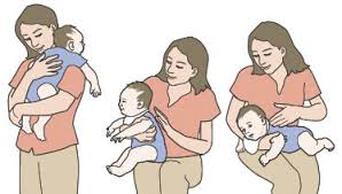
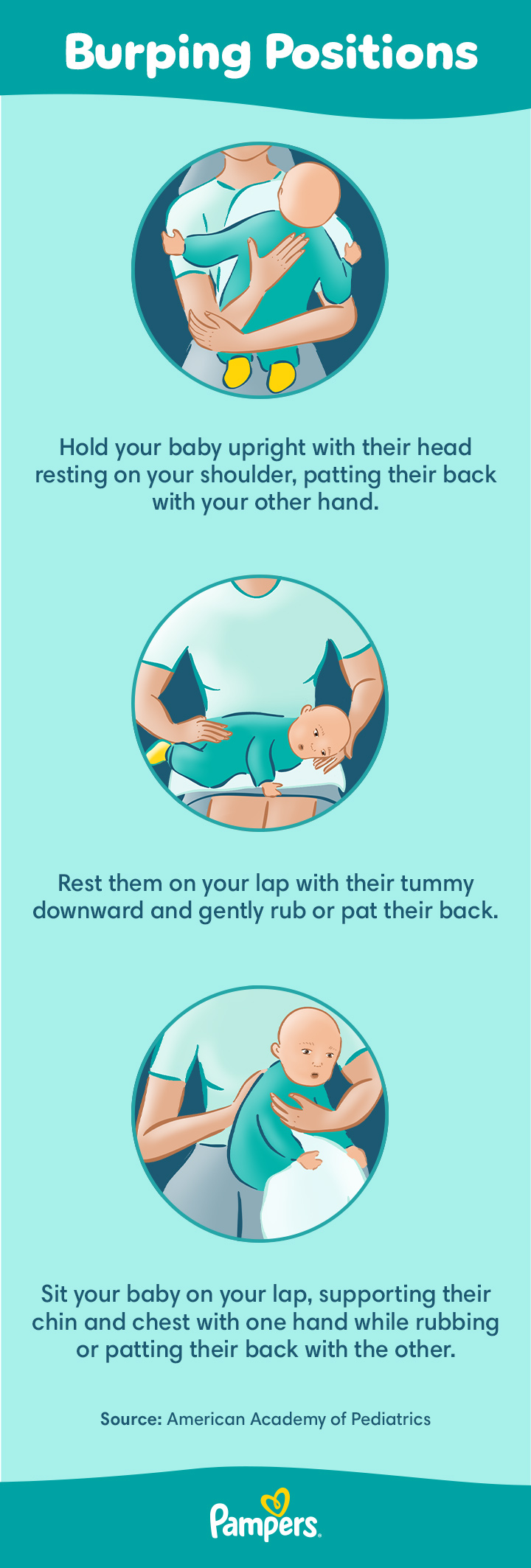
Try one of these positions:
Over your shoulder
Hold your baby upright against your chest. Support the head and neck with one hand. Use the other hand to gently rub or pat the back.
Keep a cloth over your shoulder in case your baby spits up. A small amount of milk after a feed is common.
Sitting on your lap
Sit your baby on your lap and support the chin and chest with your hand. Keep the fingers away from the throat. Lean the baby slightly forward, then gently rub the back.
This position may work well for babies who dislike being placed over the shoulder.
Across your lap
Place your baby facedown across your lap, with the head slightly higher than the chest. Support the head and keep the airway clear. Rub the back slowly rather than using strong pats.
Stop if your baby cries harder, stiffens, or seems distressed. Burping should feel calm, not like a task you must complete.

How long should you burp a breastfed baby?
Most parents can try for one to two minutes. If your baby does not burp but looks comfortable, there is no need to continue.
Do breastfed babies need to be burped for 10 or 15 minutes? Usually not. Long burping sessions can wake a sleepy baby and may cause unnecessary handling.
A simple routine can help:
- Hold your baby upright.
- Support the head and neck.
- Rub or pat the back gently.
- Wait for a minute or two.
- Stop if your baby remains comfortable.
Not every baby produces an audible burp. Air may pass later as a small spit-up, a quiet release, or normal gas through the lower bowel.
What if your baby will not burp?
Do breastfed babies need to be burped if no burp comes out? Not always. A baby can be comfortable without releasing a noticeable burp.
If your baby seems settled, keep them upright briefly and then follow safe sleep guidance. Always place a sleeping baby on their back on a firm, flat sleep surface. Do not use inclined sleepers, loose pillows, or positioners to prevent spit-up.
If your baby remains fussy, try:
• A slow walk while holding them upright
• Gentle tummy massage
• Bicycle movements with the legs
• A short pause before offering the breast again
• Checking the latch at the next feed
• Asking a lactation consultant to watch a feeding
One practical lesson for new parents is to avoid chasing a burp. Many caregivers keep patting because they expect a sound. In reality, comfort matters more than getting a burp every time.

The connection between latch and burping
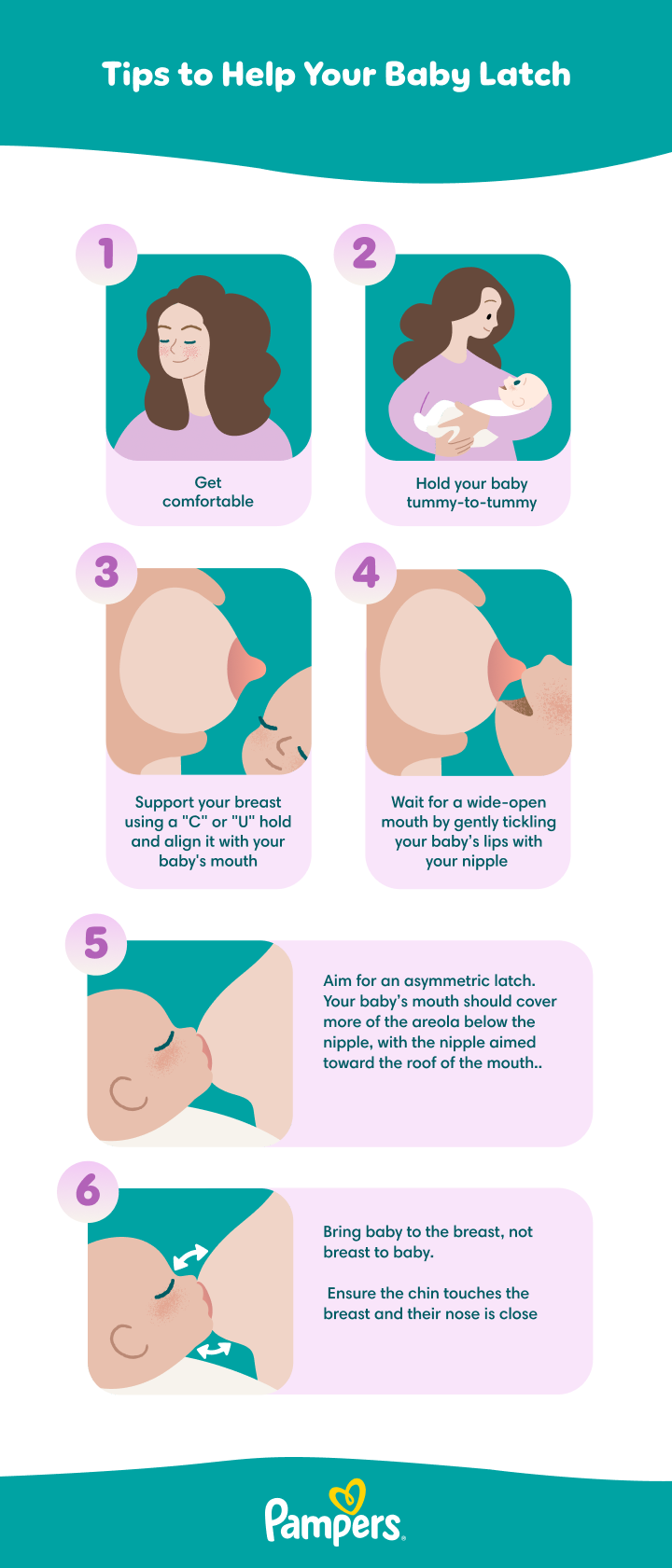
A good latch may reduce swallowed air. Your baby’s mouth should take in much of the areola, not only the nipple. The lips should be flanged outward, and the chin should rest close to the breast.
Signs of a deep latch may include:
• Wide-open mouth before attachment
• Slow, deep sucks after the first quick sucks
• Regular swallowing
• Rounded cheeks
• Little or no clicking
• No sharp nipple pain
A shallow latch may cause nipple damage and extra air intake. If feeding hurts throughout the session, or your baby clicks and loses suction, seek help from an International Board Certified Lactation Consultant or another qualified clinician.
Do breastfed babies need to be burped because of a poor latch? They may, but burping alone does not solve the cause. Improving the latch is often more useful than adding more burping.

Burping, spit-up, and reflux
Burping can release swallowed air, but it does not prevent all spit-up. Babies often spit up because the muscle between the esophagus and stomach is still developing. Small, painless spit-ups are common in early infancy.
Helpful steps may include:
• Keeping the baby upright for a short time after feeding
• Avoiding tight pressure on the belly
• Offering a calm, deep latch
• Pausing during a fast feed
• Avoiding overfeeding when possible
Never prop a bottle or force a baby to finish a feed. With breastfeeding, watch hunger and fullness cues rather than using the clock alone.
Talk with a pediatric clinician if spit-up comes with pain, poor weight gain, feeding refusal, breathing trouble, or repeated forceful vomiting. Green vomit, blood, a swollen belly, unusual sleepiness, or signs of dehydration need urgent medical attention.
Common burping mistakes to avoid
Parents often receive many different burping tips. Some are useful, but a few habits can make feeding harder.
Avoid these mistakes:
• Patting too hard
• Pressing the baby’s belly against your shoulder
• Holding the baby’s throat or chin tightly
• Keeping the baby upright for a long time after every feed
• Assuming every cry means gas
• Interrupting a peaceful feed just to force a burp
• Putting the baby to sleep on the stomach or side
• Using sleep products that are not firm and flat
Do breastfed babies need to be burped even when they are deeply asleep after feeding? You can try a brief, gentle upright hold, but do not wake a comfortable baby just to produce a burp.
Follow your baby’s cues. A relaxed baby is giving you useful information.
When to ask for medical or feeding support
Burping questions sometimes hide a larger feeding concern. Contact your baby’s pediatric clinician or a lactation professional if your baby often struggles during feeds.
Ask for help if you notice:
• Poor weight gain
• Fewer wet diapers than expected
• Frequent choking or coughing
• Blue color around the lips
• Persistent vomiting
• Blood in the stool or vomit
• Severe belly swelling
• Extreme sleepiness
• Crying after nearly every feed
• Ongoing nipple pain or breast injury
The Centers for Disease Control and Prevention, the American Academy of Pediatrics, and pediatric feeding experts emphasize watching feeding, hydration, growth, and breathing together. No single burp—or lack of one—can show whether breastfeeding is going well.
Frequently asked questions about do breastfed babies need to be burped
Do breastfed babies need to be burped after every feeding?
No. Many breastfed babies do not need to burp after every feed, especially when they have a deep latch and remain calm. Try a gentle burp if your baby seems uncomfortable, then stop if no burp comes.
Do breastfed babies need to be burped at night?
Not always. If your baby feeds quietly and falls asleep comfortably, hold them upright briefly and place them on their back in a safe sleep space. Do not keep waking or handling a settled baby to force a burp.
How long should I try to burp my breastfed baby?
Try for about one to two minutes. If your baby is comfortable and no burp appears, you can stop.
What is the best position for burping a breastfed baby?
An upright position over your shoulder or sitting supported on your lap often works well. Always support the head and neck, keep the airway clear, and use gentle rubbing or light pats.
Why does my breastfed baby fuss after feeding but not burp?
Fussiness may come from hunger, tiredness, a fast let-down, a shallow latch, reflux, or overstimulation. Try a gentle burp, check the latch, and contact a clinician if the problem is frequent or severe.
Can burping reduce spit-up in breastfed babies?
Burping may release swallowed air, but it cannot prevent all spit-up. Small, painless spit-ups are common, while painful, forceful, bloody, green, or frequent vomiting needs medical advice.
Is it safe to pat a breastfed baby firmly while burping?
No. Use soft pats or slow back rubs instead. Never shake the baby, press hard on the belly, or hold the throat tightly.
Conclusion
So, do breastfed babies need to be burped? Some do, but many do not need a burp after every feed. Watch your baby’s cues, support a deep latch, try a gentle upright hold, and stop when your baby is calm.
Burping should be a simple comfort measure, not a test you must pass. If feeding remains painful or your baby has poor growth, breathing trouble, dehydration, or forceful vomiting, contact a pediatric clinician or lactation specialist. Use these steps at your next feed, and share your experience or questions with a trusted parenting community.