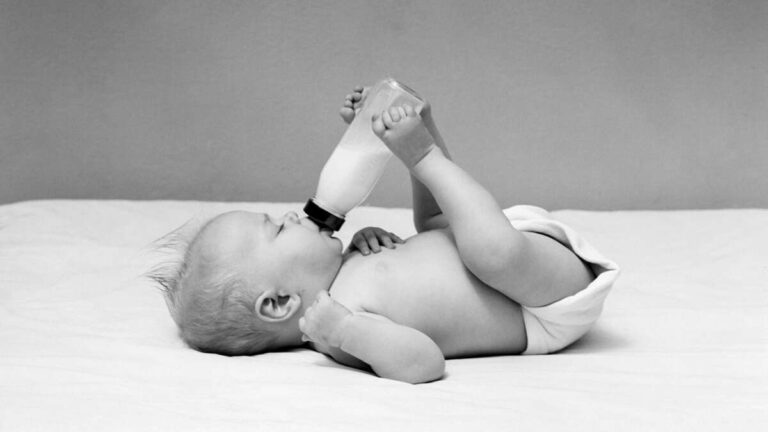
A 10-month-old in the United States usually needs breast milk or infant formula as the main source of milk, along with solid foods. Many formula-fed babies drink about 24–32 ounces (710–950 mL) of formula in 24 hours, often split into 3–5 feeds. Breastfed babies may nurse on a different pattern, so diaper output, growth, and hunger cues matter more than a measured number.
At this age, your baby is learning to eat meals, but solid food does not yet fully replace breast milk or formula. The American Academy of Pediatrics (AAP) and the Centers for Disease Control and Prevention (CDC) recommend continuing breast milk or iron-fortified infant formula through at least 12 months.

The short answer: milk needs for a 10-month-old
Most 10-month-olds need:
- Breast milk: Continue nursing when your baby shows hunger or wants comfort. There is no required number of ounces.
- Infant formula: Often about 24–32 ounces per day, divided across several bottles.
- Solid foods: Usually three small meals, with snacks as your baby’s appetite allows.
- Water: Small amounts from a cup are fine, usually about 4–8 ounces per day, unless your child’s clinician gives different advice.
- Cow’s milk: Do not use cow’s milk as the main drink before 12 months.
These are general ranges, not strict targets. Some babies drink less formula but grow well and eat a balanced range of foods. Others need more during a growth spurt.
The AAP notes that babies generally should not drink more than 32 ounces of formula in 24 hours unless their pediatrician recommends it. Too much formula can reduce interest in iron-rich foods and may contribute to excessive calorie intake.

How much formula does a 10-month-old need?
A formula-fed 10-month-old commonly drinks 6–8 ounces per bottle, with about 3–5 bottles over 24 hours. That often adds up to 24–32 ounces daily.
A sample pattern might look like this:
| Time | Example feeding |
|---|---|
| Morning | 6–8 ounces of formula |
| Breakfast | Soft food, such as oatmeal and mashed fruit |
| Late morning | 4–6 ounces of formula, if hungry |
| Lunch | Vegetables, beans, shredded meat, or other soft foods |
| Afternoon | 6–8 ounces of formula |
| Dinner | Soft family foods cut into safe pieces |
| Bedtime | 6–8 ounces of formula |
This is only an example. Your baby may prefer milk before meals, after meals, or in smaller amounts more often.
Follow your baby’s cues
Offer formula when your baby shows hunger. Stop when your baby shows fullness. Signs of hunger can include:
- Reaching for the bottle
- Opening the mouth
- Becoming excited when food or milk appears
- Sucking hands
- Leaning toward the bottle
Signs of fullness can include:
- Turning the head away
- Closing the mouth
- Pushing the bottle away
- Losing interest
- Relaxing the hands and body
Do not pressure your baby to finish a bottle. A baby may drink more during a growth spurt, illness recovery, or a busy developmental stage.
Never add cereal, juice, or other foods to a bottle unless your child’s medical clinician specifically instructs you to do so. Adding food can raise choking risk and may lead to overfeeding.

How much breast milk does a 10-month-old need?
There is no accurate ounce goal for a baby who nurses directly. Breast milk intake can change from feed to feed, and babies often become faster and more efficient at nursing as they grow.
Continue breastfeeding on demand. Many 10-month-olds nurse:
- After waking
- Before naps or bedtime
- Before or after solid meals
- During the night
- When sick, teething, or seeking comfort
If you pump breast milk, the amount may be easier to track. Still, pumped volume does not always show how much milk your baby can take while nursing. Some babies take several small bottles, while others take larger feeds less often.
If your baby receives both breast milk and formula, the total daily amount will vary. For example, a baby may nurse several times and drink 8–16 ounces of formula. There is no need to reach a fixed formula number if your baby is growing well and has regular wet diapers.

Should a 10-month-old drink cow’s milk?
No. Cow’s milk should not replace breast milk or infant formula before 12 months.
Cow’s milk has too much protein and certain minerals for a young baby’s kidneys to handle easily. It also does not provide enough iron, vitamin E, and essential fats for an infant. Offering large amounts may also fill your baby up and reduce intake of breast milk, formula, and iron-rich foods.
Small amounts of dairy foods are usually different. Many babies can eat:
- Plain, full-fat yogurt
- Pasteurized cheese
- Cottage cheese
- Foods made with milk
Choose pasteurized products and watch for choking hazards. Cut cheese into thin strips or very small pieces, depending on your baby’s feeding skills.
After 12 months, a child can usually begin drinking pasteurized whole cow’s milk, unless a clinician recommends another option. The AAP commonly advises limiting milk after age 1 to about 16–24 ounces per day, because too much can reduce appetite for other foods and may contribute to iron deficiency.
Do not switch to toddler milk simply because your baby turns 12 months. Most healthy children do not need it unless their pediatrician identifies a specific reason.

How solid foods fit with milk at 10 months
At 10 months, solids add nutrients and help your baby learn to chew, grasp, and accept new textures. They do not yet replace all breast milk or formula feeds.
Offer a variety of foods, including:
- Iron-rich foods, such as meat, poultry, beans, lentils, eggs, tofu, and iron-fortified cereal
- Soft vegetables
- Soft fruits
- Whole grains
- Plain full-fat yogurt and pasteurized cheese
- Foods with healthy fats, such as avocado or thinly spread nut butter
Offer small portions first. A tablespoon or two of a food is enough to begin, and your baby may want more.
Try offering solid food at regular family meals. Continue breast milk or formula during the day. Some families offer milk first, while others offer solids first. If your baby is filling up on milk and refusing meals, try offering solids before a milk feed once or twice daily. Do not cut milk sharply.
A simple daily rhythm
A 10-month-old may have:
- Breast milk or formula after waking
- Breakfast
- Breast milk or formula before a nap
- Lunch
- Breast milk or formula in the afternoon
- Dinner
- Breast milk or formula before bed
Some babies also nurse or take a bottle overnight. Night feeding needs vary, and a pediatrician can help if frequent waking affects sleep or feeding.
How much water can a 10-month-old drink?
A 10-month-old may drink small amounts of plain water from an open cup, straw cup, or sippy cup. The AAP gives a general range of about 4–8 ounces per day for babies 6–12 months, though needs vary.
Water can help your baby practice cup drinking and may be useful with meals. It should not replace breast milk or formula.
Avoid giving:
- Juice before 12 months
- Sports drinks
- Soda
- Sweetened drinks
- Herbal drinks unless your child’s clinician recommends them
Too much water can be dangerous for babies because it can disturb the body’s salt balance. Do not dilute formula with extra water. Always mix powdered formula exactly according to the product label.

How to know whether your baby is getting enough milk
The best signs are steady growth, regular wet diapers, and normal energy, not one specific bottle size.
Your baby is likely getting enough if they:
- Have several wet diapers each day
- Seem alert and active when awake
- Show interest in food or milk
- Have regular growth at checkups
- Relax or seem satisfied after many feeds
- Produce tears when crying, although tears can vary
A sudden change deserves attention. Call your child’s pediatrician if your baby has much fewer wet diapers, refuses several feeds, vomits repeatedly, has diarrhea, seems unusually sleepy, or is difficult to wake.
Seek urgent medical care for signs of severe dehydration, breathing trouble, a blue or gray color, bloody vomit or stool, or an infant who cannot keep fluids down.

What to do if your 10-month-old drinks too much or too little milk
If your baby drinks less than usual
First, check for a common reason:
- Teething pain
- A cold or stuffy nose
- Ear pain
- Constipation
- A change in bottle nipple flow
- A new dislike of the bottle
- Too many solid foods or snacks
- Illness
Offer smaller amounts more often. Keep feeds calm and avoid forcing the bottle. If your baby is breastfed and suddenly nurses less, offer the breast more often and watch wet diapers.
Contact your pediatrician if reduced intake lasts more than a day, occurs with vomiting or diarrhea, or comes with fewer wet diapers or unusual sleepiness.
If your baby drinks more than 32 ounces of formula
An occasional higher day may happen, especially during a growth spurt. If your baby regularly needs more than 32 ounces, speak with the pediatrician rather than restricting feeds on your own.
The clinician may review growth, feeding technique, bottle size, nipple flow, solid foods, reflux symptoms, and hunger cues. Do not thicken formula or add food to bottles without medical direction.
If your baby refuses solids
This does not always mean there is a problem. Babies may need to see and taste a food many times before accepting it. Continue offering soft, safe foods without pressure.
Focus on iron-rich foods and safe textures. If your baby coughs, chokes often, cannot manage soft textures, or refuses nearly all foods, ask the pediatrician about a feeding evaluation.

Safe milk and bottle practices
Use these habits to reduce feeding risks:
- Wash hands before preparing formula or handling food.
- Prepare powdered formula exactly as directed.
- Do not dilute formula or concentrate it without medical instructions.
- Use breast milk or formula within the storage times recommended by the CDC and product label.
- Do not prop a bottle.
- Do not put your baby to bed with a bottle.
- Begin moving from bottles to a cup around this age.
- Sit your baby upright during feeds.
- Stay with your baby while they eat or drink.
- Avoid unpasteurized milk and dairy products.
- Keep honey out of the diet until after 12 months.
- Avoid foods that are hard, round, sticky, or difficult to chew.
A bottle in bed can increase the risk of tooth decay and ear infections. As your baby approaches the first birthday, gradually make cups a larger part of the daily routine.

Frequently asked questions
Can a 10-month-old drink milk from a sippy cup?
Yes. A 10-month-old can drink expressed breast milk, formula, or small amounts of water from a sippy cup, straw cup, or open cup. Cow’s milk should still wait until 12 months unless your pediatrician gives different advice.
Does a 10-month-old need formula at night?
Not every baby needs a night bottle at 10 months. Some still nurse or take formula overnight, while others sleep through. Do not remove night feeds abruptly if your baby has poor weight gain or a medical condition. Ask the pediatrician for a plan.
Can I give my 10-month-old almond milk or oat milk?
Plant-based drinks should not replace breast milk or infant formula before 12 months. They do not have the same nutrition as infant formula. After 12 months, ask your pediatrician which milk or fortified alternative fits your child’s diet.
What if my 10-month-old drinks only 16 ounces of formula?
Some babies who also breastfeed may need only 16 ounces of formula. A formula-fed baby who regularly drinks only 16 ounces may need an evaluation, especially if growth is slow, wet diapers decrease, or the baby refuses food. The right amount depends on total milk intake and health.
Can a 10-month-old drink 40 ounces of formula?
Do not make 40 ounces a routine target. The AAP advises discussing regular intake above 32 ounces with your pediatrician. A clinician can check whether the extra feeding reflects hunger, habit, reflux, rapid feeding, or another issue.
Does my baby need vitamin D?
The CDC and AAP recommend vitamin D for breastfed babies and babies who drink less than about 32 ounces of vitamin-D-fortified formula each day. Ask your child’s clinician about the correct product and dose. Do not give extra vitamins without guidance.

What to do today
Offer breast milk or infant formula as your 10-month-old’s main milk source, and let your baby guide the amount. For formula, a common daily range is 24–32 ounces. Continue nursing as needed, serve three small meals of varied soft foods, offer small amounts of water, and wait until 12 months to use cow’s milk as the main drink.
If your baby’s intake changes sharply, wet diapers decrease, growth is a concern, or feeding becomes stressful, contact your pediatrician. Individual needs can differ, especially for babies born early or those with reflux, allergies, swallowing problems, or other medical conditions.