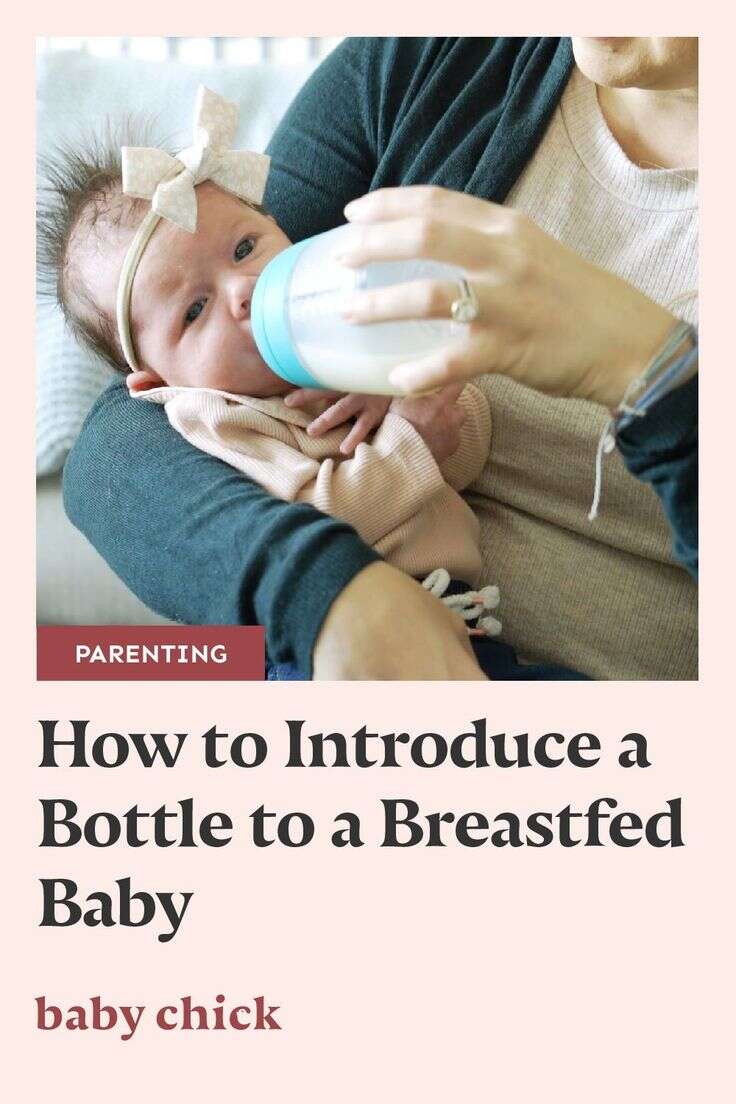
For most healthy babies in the United States, you can offer a bottle when breastfeeding is going well—often around 3 to 4 weeks after birth. This timing may help your baby learn to drink from a bottle without replacing early practice at the breast.
There is no single right date for every family. You may introduce a bottle sooner if your baby needs expressed milk or formula for medical reasons. You may also wait longer if breastfeeding is still painful, your baby is not gaining weight well, or you want to focus only on nursing.
The main goal is simple: protect milk supply, keep feeding safe, and help your baby use both the breast and bottle comfortably.
Why timing matters
Introducing a bottle too early is not automatically harmful, but it may create extra challenges. A bottle usually releases milk faster and with less effort than the breast. Some babies then become frustrated when milk flows more slowly during nursing.
Early bottle use can also make it harder to see whether a breastfeeding problem is improving. If a bottle replaces a breastfeed, your breasts may receive less stimulation. Over time, that can lower milk production for some parents.
The Academy of Breastfeeding Medicine advises avoiding artificial nipples until breastfeeding is well established when possible. The protocol notes that this often takes about 3 to 4 weeks, but the exact timing depends on the parent and baby.
What “breastfeeding is established” means
Breastfeeding may be well established when:
- Your baby latches without major pain.
- Your baby feeds often and seems satisfied after many feeds.
- You hear or see regular swallowing.
- Your baby has the expected number of wet and dirty diapers.
- Your baby is gaining weight as expected.
- Your milk supply feels steady.
- You can tell when your baby is hungry and when they are full.
These signs matter more than the calendar. A baby who is 4 weeks old but has a poor latch may not be ready for casual bottle practice. A baby who is 2 weeks old and needs expressed milk may need a bottle now, with guidance from a health professional.
The American Academy of Pediatrics recommends exclusive breastfeeding for about the first 6 months when possible. That guidance does not mean a baby must never use a bottle. It means breast milk is the main source of nutrition during that time, unless a health care professional recommends another plan.

When should you introduce a bottle to a breastfed baby?
For a healthy, full-term baby, consider introducing one bottle around 3 to 4 weeks, after breastfeeding is going well. Start earlier if your baby needs expressed milk or formula and your pediatrician, lactation consultant, or other qualified clinician recommends it.
Use this guide:
| Your situation | A reasonable approach |
|---|---|
| Breastfeeding is comfortable and weight gain is good | Try one small bottle around 3 to 4 weeks |
| You will return to work soon | Start 2 to 4 weeks before the first separation |
| Your baby needs extra milk for medical reasons | Follow your baby’s feeding plan; do not wait for a certain age |
| Your baby has a weak latch or poor weight gain | Get feeding help before adding routine bottles, unless medically directed |
| Your baby is older and refuses bottles | Try calmly, but avoid forcing the nipple |
| You want occasional flexibility | Offer a bottle once or twice a week after breastfeeding is stable |
The best timing also depends on who will give the bottle. If another caregiver will feed your baby, let that person practice before the first long separation.
Do not wait until the day you return to work. A baby may need time to learn the new feel, flow, and sucking pattern. You also need time to learn how much milk to leave and how often to pump.
Earlier bottles may be medically appropriate
A bottle may be needed earlier when:
- Your baby has low blood sugar.
- Your baby is dehydrated.
- Your baby has significant jaundice.
- Your baby is not gaining enough weight.
- Your baby cannot transfer enough milk at the breast.
- You are separated from your baby.
- You need to take a medicine that requires temporary feeding changes.
- Your clinician has prescribed supplemental feeds.
A bottle is not the only way to give extra milk. Depending on your baby’s age and medical needs, a clinician may suggest a cup, syringe, supplemental nursing system, or another method.
Do not delay needed feeds because you are worried about “nipple confusion.” The safer plan is to ask how to provide the needed milk while supporting breastfeeding.

How to introduce a bottle without disrupting breastfeeding
Start when your baby is calm and mildly hungry. A very hungry baby may cry, rush, and resist a new feeding method. A completely full baby may have little reason to practice.
Follow these steps
-
Choose a slow-flow nipple.
A newborn or slow-flow nipple may help reduce a very fast milk flow. The label is not a guarantee, because nipple speeds differ by brand. -
Have someone else offer the first bottle.
Some babies strongly prefer nursing from the breastfeeding parent. Another caregiver may have an easier time offering the bottle. -
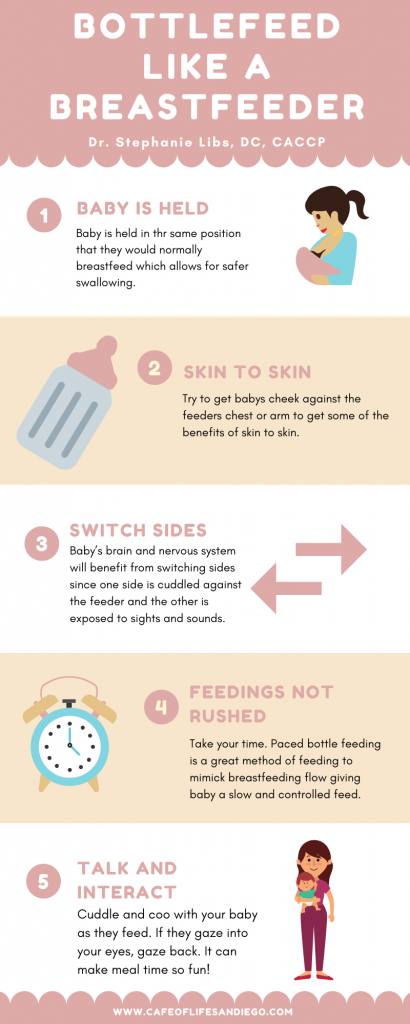
Hold your baby upright.
Keep your baby’s head and neck supported. Hold the bottle mostly horizontal rather than pointing it straight down. -
Let your baby draw in the nipple.
Touch the nipple to your baby’s upper lip. Wait for your baby to open wide. Do not push the bottle deep into the mouth. -
Use paced bottle-feeding.
Keep the bottle nearly level. Let your baby suck for several bursts, then lower the bottle or pause. This gives your baby time to breathe and notice fullness. -
Watch for feeding cues.
Pause when your baby turns away, relaxes the hands, stops sucking, or lets milk spill. These may be signs of fullness or the need for a break. -
Stop when your baby is full.
Do not encourage your baby to finish the bottle. Babies do not need to empty a bottle to receive enough milk. -
Offer the breast as usual.
If the bottle replaces a regular feed, pump around that time when possible. This helps protect milk production.
The CDC’s bottle-feeding guidance also advises holding the baby close, watching hunger and fullness cues, and never propping a bottle.
What is paced bottle-feeding?
Paced bottle-feeding slows the feed so the baby has more control. It does not copy breastfeeding perfectly, but it can reduce the chance that milk flows too quickly.
Signs that the flow may be too fast include:
- Gulping
- Coughing
- Choking
- Milk leaking from the mouth
- Pulling away often
- Breathing hard during the feed
- Finishing very quickly and still seeming uncomfortable
If these signs occur, check the nipple flow, hold the bottle more level, and add pauses. A faster nipple is not always better. It may cause your baby to take more milk than needed.

How to protect your milk supply when using bottles
Your milk supply responds mainly to milk removal. When your baby nurses less often, pumping can help replace that stimulation.
If a bottle replaces a breastfeed, try to pump near the same time, especially during the early weeks. You may not collect the same amount your baby would drink. Pump output is not a perfect measure of milk supply.
For example, if your baby usually nurses at 10 a.m. but receives a bottle at that time, you could pump at 10 a.m. or soon after. If the bottle is occasional, one missed pumping session may not cause a problem. Repeated missed feeds can matter more.
How much breast milk should you put in a bottle?
Start with a small amount, such as 1 to 2 ounces, when your baby is learning. You can offer more if your baby still shows hunger cues.
Breastfed babies often take smaller, more frequent feeds than adults expect. Avoid using a large bottle to make your baby sleep longer. That can lead to overfeeding and does not reliably improve sleep.
Use your baby’s cues rather than a fixed volume:
Hunger cues may include:
- Stirring
- Bringing hands to the mouth
- Rooting
- Licking the lips
- Opening the mouth
Fullness cues may include:
- Turning away
- Closing the mouth
- Relaxing the hands
- Slowing or stopping sucking
- Falling asleep in a relaxed way
Crying is a late hunger cue. Feeding before your baby becomes upset often makes bottle practice easier.
Pumping when you return to work
Start practicing before your first workday. The U.S. Department of Labor explains federal protections for many nursing employees who need reasonable break time and a private space to pump, other than a bathroom. Coverage and details can vary by workplace and situation.
Your baby’s care plan should include:
- How often the caregiver offers milk
- How much milk to place in each bottle
- How to store and warm the milk
- How to label the milk
- What to do with leftover milk
- How to contact you if the baby will not feed
Ask your employer and child-care provider about local policies before your return date.

How to store and prepare breast milk safely
Use clean hands, clean bottles, and safe storage practices. The CDC breast milk storage guidelines state that freshly expressed breast milk can generally remain at room temperature for up to 4 hours and in a refrigerator for up to 4 days. Fresh milk is best used within about 6 months in a freezer, although up to 12 months is acceptable when needed.
These time limits assume normal conditions. If the room is hot, the refrigerator is not cold enough, or the milk was handled poorly, use a more cautious plan.
Remember these safety rules:
- Thaw frozen milk in the refrigerator or in warm water.
- Do not microwave breast milk.
- Swirl breast milk gently to mix the fat back in.
- Test the temperature before feeding.
- Use leftover breast milk within 2 hours after the feeding ends.
- Do not refreeze thawed breast milk.
- Clean and dry feeding parts after each use.
For powdered formula, follow the instructions on the container. The CDC formula preparation guidance says prepared formula should generally be used within 2 hours of preparation and within 1 hour from the start of feeding. Prepared formula that will not be used right away should be refrigerated and used within 24 hours, unless the product label says otherwise.
Never add cereal, medicine, or other foods to a bottle unless your child’s clinician gives clear instructions.
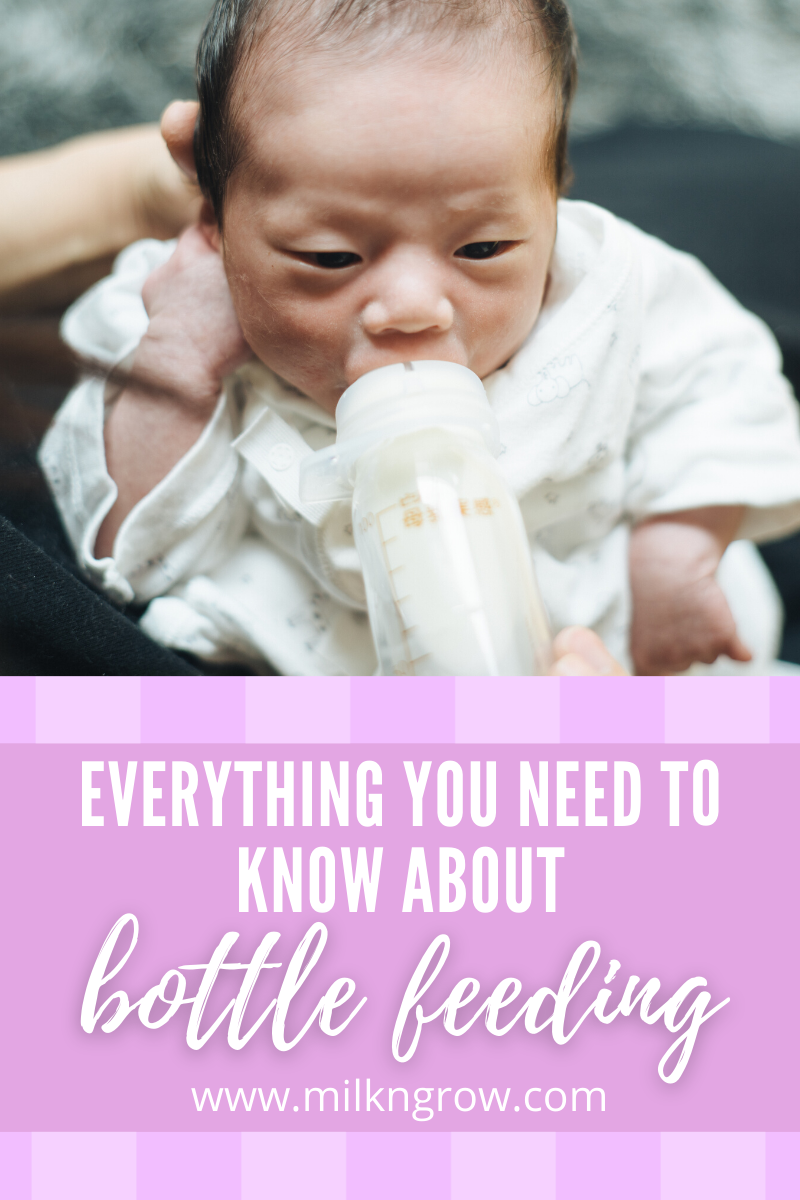
What to do if your breastfed baby refuses a bottle
Bottle refusal is common and does not mean your baby will never take one. Try again later, when your baby is calm. Keep practice brief and low pressure.
Try these changes:
- Have another caregiver offer the bottle.
- Offer it before your baby is very hungry.
- Try a different bottle nipple shape.
- Use a slow-flow nipple.
- Warm the nipple under warm water.
- Feed your baby in a different position from the usual nursing position.
- Walk or gently rock your baby while offering the bottle.
- Offer a small amount first.
- Stop if your baby cries hard or fights the bottle.
Do not force the nipple into your baby’s mouth. Do not hold the bottle in place while your baby turns away. Pressure can make the bottle feel stressful and may increase refusal.
Some babies accept milk from a small open cup when they are old enough and supervised. Cup feeding is not the same as letting a baby drink alone. Ask your pediatrician or lactation professional to show you a safe method.
When bottle refusal needs help
Contact your baby’s health care provider or a lactation consultant if your baby:
- Takes very little milk over several feeds
- Has fewer wet diapers than expected
- Seems unusually sleepy or weak
- Coughs or chokes during most feeds
- Has trouble breathing while feeding
- Is not gaining weight
- Shows signs of dehydration
- Refuses both the breast and bottle
Seek urgent medical care for breathing trouble, blue or gray lips, severe lethargy, or signs of serious dehydration.

Common mistakes to avoid
Waiting until your first day back at work
A new bottle, new caregiver, and long separation can be too many changes at once. Practice before the transition.
Choosing the fastest nipple
Fast flow may seem efficient, but it can cause coughing, gulping, and overfeeding. Let your baby’s behavior guide nipple changes.
Feeding by the clock alone
A schedule can help caregivers plan, but hunger and fullness cues still matter. Babies may take different amounts at different feeds.
Making your baby finish the bottle
A baby can be full before the bottle is empty. Forcing the last ounce can teach your baby to ignore fullness.
Replacing feeds without pumping
If you want to maintain milk production, regular bottle feeds usually need regular milk removal. Pumping does not need to be exact to the minute, but long and repeated gaps may reduce supply.
Propping the bottle
Bottle propping can raise the risk of choking, ear infections, tooth decay, and overfeeding. An adult should hold the baby and bottle during every feed.
Putting a baby to bed with a bottle
Do not leave a bottle in the crib. Milk pooling around the teeth can contribute to tooth decay. The AAP also advises against using a bottle as a sleep prop.

When to ask for professional help
Ask for help before introducing routine bottles if breastfeeding is painful, your baby is not gaining weight, or your baby falls asleep at nearly every feed.
A pediatrician can check weight, hydration, jaundice, and medical causes of feeding trouble. An International Board Certified Lactation Consultant, or IBCLC, can assess latch, milk transfer, pumping, and bottle technique.
You may also need feeding therapy if your baby has repeated coughing, choking, noisy breathing, poor coordination, or a history of prematurity. These signs can point to a feeding or swallowing problem rather than simple bottle refusal.
Quick decision guide
- Breastfeeding is going well: Try one paced bottle around 3 to 4 weeks.
- You return to work soon: Begin practice 2 to 4 weeks before the transition.
- Your baby needs extra milk: Follow the medical feeding plan now.
- Your baby is not gaining well: Get professional help before changing feeds on your own.
- Your baby refuses the bottle: Stay calm, change one factor at a time, and avoid force.
- You replace nursing often: Pump regularly to support milk production.

FAQs about introducing a bottle to a breastfed baby
Can I introduce a bottle at 2 weeks?
Yes, if your baby needs expressed milk or formula, or if your clinician recommends it. If there is no medical reason, many families wait until breastfeeding is going well, often around 3 to 4 weeks.
Will a bottle cause nipple confusion?
Not every baby develops nipple confusion. However, bottles can have a faster flow and require a different feeding pattern. Using paced feeding and a slow-flow nipple may make switching between breast and bottle easier.
Should I give a bottle before or after breastfeeding?
For practice, offer a small bottle when your baby is calm and mildly hungry. If you are trying to increase intake or treat poor weight gain, follow your baby’s clinician’s plan. A bottle after every breastfeed may reduce breast stimulation and affect supply.
What if my baby only wants to breastfeed?
Try having another caregiver offer a bottle at a relaxed time. Use short practice sessions. If your baby refuses all alternative feeding methods and you will soon be separated, contact a lactation consultant or pediatrician early.
How can I tell if my baby is drinking too fast?
Coughing, gulping, milk leaking, pulling away, or breathing hard can suggest a flow that is too fast. Use a slower nipple, hold the bottle nearly level, and pause often. Contact a clinician if breathing or swallowing problems continue.
Key takeaways
- Most healthy, full-term babies can try a bottle around 3 to 4 weeks, once breastfeeding is going well.
- Medical needs may make earlier bottle use appropriate.
- Start with a slow-flow nipple and use paced bottle-feeding.
- Let your baby stop when full. Do not force the bottle.
- Pump when bottles regularly replace breastfeeds if you want to protect milk supply.
- Practice before returning to work or leaving your baby with another caregiver.
- Get professional help for poor weight gain, dehydration, repeated choking, or breathing trouble.
Conclusion
The best time to introduce a bottle to a breastfed baby is based on feeding progress, not age alone. For many US families, 3 to 4 weeks is a useful starting point. Begin slowly, keep the feed responsive, and protect breastfeeding by replacing missed breastfeeds with pumping when needed.
If feeding is painful, weight gain is poor, or your baby struggles to coordinate sucking and breathing, ask a pediatrician or lactation professional for an individual plan.