
Stop swaddling once your baby shows rolling or regular escape from the swaddle—usually around 2–4 months.
I’ve worked with new parents and studied pediatric sleep guidance for years, so I know how confusing "when to stop swaddling baby" can feel. This guide lays out clear signs, age ranges, safety rules, and step-by-step transitions. Read on for practical tips you can start tonight to keep sleep safe and calm while you stop swaddling the right way.
Why parents swaddle and what swaddling does for baby
Swaddling soothes babies by mimicking the snug feeling of the womb. It can calm startle reflexes and help newborns sleep longer. Many parents use swaddling to reduce crying and shorten settling time.
Swaddling supports back sleeping. It reduces sudden limb movements that wake infants. But swaddles are not forever. Knowing when to stop swaddling baby keeps sleep safe as baby grows and changes.

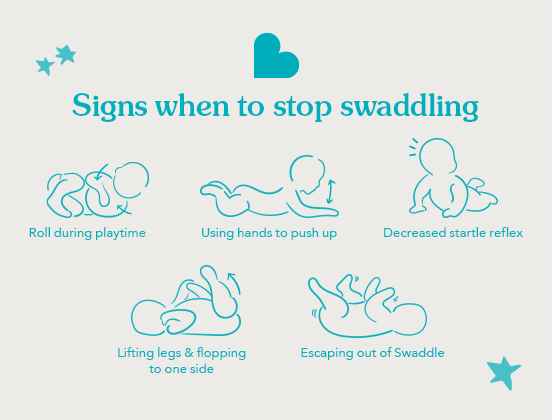
Signs your baby is ready to stop swaddling
Look for behavior and physical milestones. These are clearer than a calendar date.
- Baby rolls from back to tummy or tummy to back. Rolling usually means swaddle should stop immediately.
- Baby regularly breaks free from the swaddle. Loose fabric can cover the face and block breathing.
- Baby’s startle reflex weakens and sleep shows more movement of arms and legs.
- Baby seems uncomfortable or resists having arms restrained.
- Increased mobility like pushing up or lifting the head.
If you see rolling or frequent escapes, it answers when to stop swaddling baby right away. Stop swaddling the day rolling starts.
Age guidelines: typical timing for stopping swaddling
Ages are broad. Use them as a guide, not a rule.
- Newborn to 2 months: Most babies benefit from swaddling for soothing and sleep consolidation.
- 2 to 4 months: Watch closely. Many begin to roll or show stronger arm movement. This window is common for stopping swaddles.
- Around 4 months: Most babies can roll. This is the safest latest point to stop swaddling regularly.
- After 4 months: Swaddling is rarely safe if baby can roll. Choose an alternative sleep garment.
When to stop swaddling baby often falls between 2 and 4 months. Still, check your baby’s behavior more than the calendar.
Safe alternatives to swaddling
If your baby needs the snug feel but is starting to move, there are safer options.
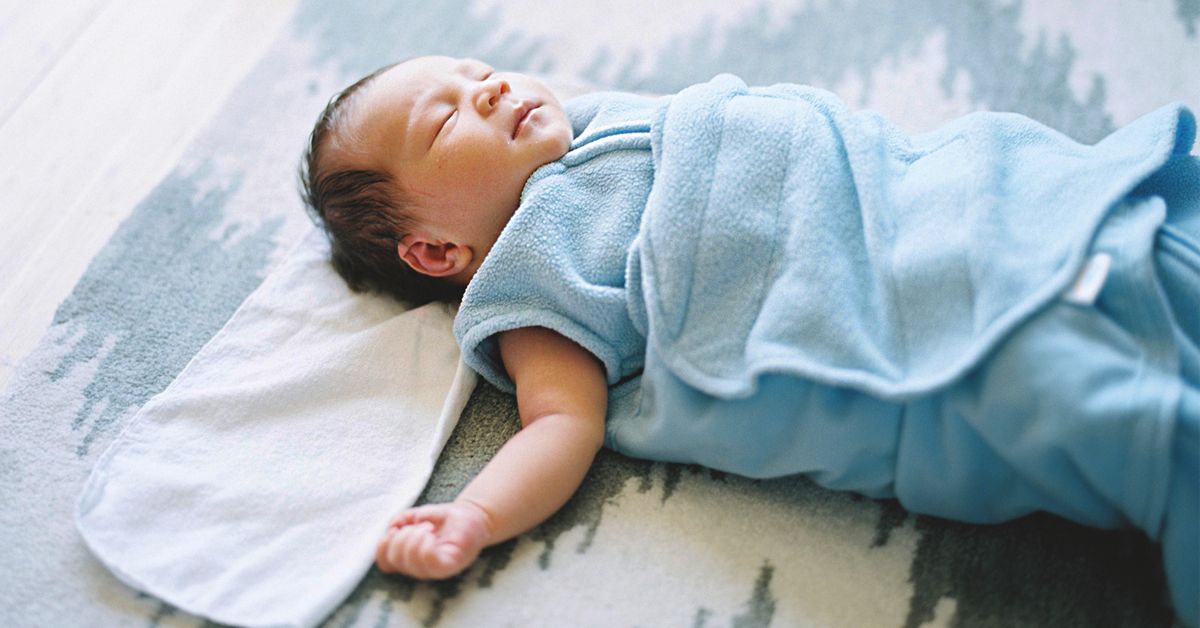
- Sleep sacks with arm openings. They allow arm movement while keeping the torso snug.
- Transitional swaddles that allow one or both arms out. Use single-arm first, then both arms free.
- Weighted or wearable blankets are not recommended for infants. Avoid them unless advised by a clinician.
- Tight pajamas layered with a sleep sack for extra security and warmth.
Choose a product with clear safety labeling. Look for sizes and weights designed for infants. Stop using any product once rolling begins.

How to transition away from swaddling step by step
Make a smooth change. Sudden stops can disrupt sleep. Try this plan.
- Start with naps. Begin by letting one nap a day be swaddle-free.
- Switch to one-arm out. Keep one arm free for a few nights.
- Move to both arms out. After baby adapts, stop wrapping arms.
- Use a sleep sack. Choose a well-fitted sack that allows arm movement.
- Keep bedtime routines consistent. Same feed, song, or white noise helps.
If sleep regresses, back up a step for a few nights. Progress slowly and predictably. That helps baby feel safe during transition.
Sleep safety rules when stopping swaddling
Safety matters most. These rules reduce sleep risks.
- Once rolling starts, stop swaddling immediately. Rolled babies can get trapped face-down.
- Always place babies on their backs to sleep. Continue until 1 year old.
- Keep the sleep area bare. No loose blankets, pillows, or soft toys.
- Use a firm, flat mattress in a fitted sheet. Avoid inclined sleepers.
- Dress baby to a proper sleep temperature. Overheating raises SIDS risk.
These rules help you decide when to stop swaddling baby with safety first.

Common problems and how to fix them
Transitions bring hiccups. Here are fixes that work in real life.
- Problem: Baby wakes more when arms are free.
- Fix: Offer a calm, brief settling routine and try white noise. Use single-arm method first.
- Problem: Baby breaks free and pulls the blanket over face.
- Fix: Stop swaddling and switch to a sleep sack.
- Problem: Cold hands and fussiness.
- Fix: Use warm sleepwear and a wearable blanket sized correctly.
Expect a few nights of unsettled sleep. That is normal. Keep routines and patience.

Personal experience and lessons learned
I helped a friend whose six-week-old slept better swaddled but began rolling at 12 weeks. We switched to a one-arm-out plan. It took three nights for full adaptation. She slept more after the transition.
Lessons I learned:
- Watch behavior not the clock. Milestones guide the decision.
- Plan transitions around naps. Small wins build confidence.
- Don’t be shy to try a different brand or style of sleep sack.
These practical tips come from hands-on experience. They make real life easier.
Signs to call your pediatrician
Some situations need medical input. Contact your pediatrician if:
- Baby suddenly won’t sleep or feed after swaddle removal.
- You see unusual breathing patterns or prolonged pauses.
- Baby shows extreme fussiness or lethargy.
A clinician can rule out reflux, sleep apnea, or other conditions.
PAA-style questions (quick answers inside content)
Q: Will stopping swaddling ruin my baby’s sleep?
A: Short-term sleep changes are common. With a calm routine and gradual steps, sleep usually stabilizes in days to weeks.
Q: Can I swaddle a baby older than 4 months?
A: Avoid swaddling if the baby can roll. Rolling increases the risk of suffocation when arms are restrained.
Q: Are there swaddles made for older babies?
A: Yes. Transitional swaddles and sleep sacks exist. Use designs that let arms move and that are labeled safe for the baby’s weight and age.
Frequently Asked Questions of when to stop swaddling baby
When exactly should I stop swaddling my newborn?
Stop swaddling once your baby can roll or shows frequent attempts to break free from the swaddle. For many babies this happens between 2 and 4 months.
Is it okay to swaddle at night but not for naps?
You can use that approach briefly, but be cautious. If rolling starts during naps, stop swaddling all sleep times immediately.
My baby seems to sleep worse when not swaddled. What should I do?
Try a gradual transition: single-arm out, then both arms out, then a sleep sack. Consistent routines and gentle settling help restore sleep.
Can cloth or muslin swaddles be unsafe?
They are safe when snug and monitored. They become unsafe if they come loose or if the baby can roll. Switch to a wearable alternative if that happens.
How do I choose a safe sleep sack?
Pick the right size for your baby’s weight and height. Choose a sack with arm openings if you need arms free, and ensure the neck and arm holes fit well to prevent slipping.
Conclusion
Stopping swaddling is a key step in your baby’s sleep development. Watch for rolling, frequent escapes, or signs of discomfort to know when to stop swaddling baby. Use gradual steps, choose safe sleep garments, and keep routines steady to ease the change. Take action tonight by checking your baby’s movements and planning a one-arm-out night to start the transition. If this guide helped, try a new sleep sack and share your experience or questions in the comments.