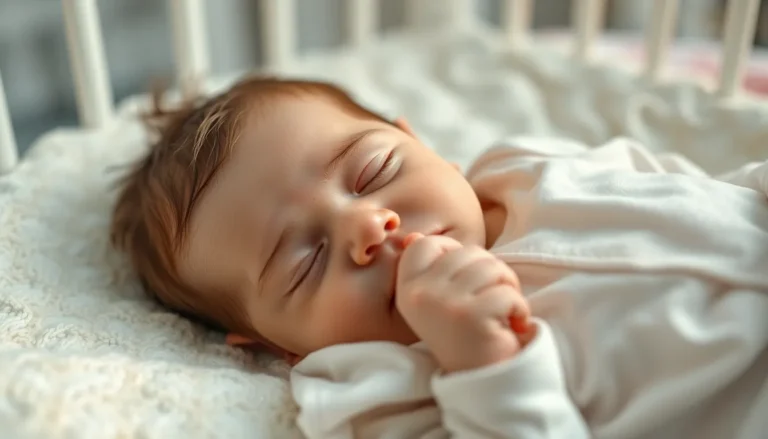
Dress baby in a snug sleeper with appropriate layers and no loose blankets.
I’ve helped many new parents learn how to dress baby for sleep safely and comfortably. This guide blends pediatric-safe rules, practical tips, and real-life experience so you can choose sleepwear, layers, and room setups that keep your baby cozy while lowering risk. Read on for clear, step-by-step guidance on how to dress baby for sleep by age, season, and temperature.

Why dressing your baby for sleep matters
How you dress your baby for sleep affects comfort, sleep quality, and safety. Babies can’t regulate body heat like adults. Overheating raises the risk of problems, while being too cold can wake them and stress their system. Learning how to dress baby for sleep helps you strike the right balance so your child sleeps longer and safer.
Key reasons to pay attention
- Safety: Proper sleepwear reduces the risk of loose bedding and overheating.
- Comfort: Right layers support longer stretches of sleep.
- Health: Stable temperature helps with breathing and metabolism.
How to choose sleepwear by age and season
Newborns need different choices than toddlers. The basics are the same: breathable fabrics, fitted clothing, and no loose blankets. Below are clear rules to help you decide how to dress baby for sleep at different stages and seasons.
Newborns (0–3 months)
- Use a fitted onesie or a footed sleeper. These hold close to the body and cut down on loose fabric.
- Consider a swaddle for very young infants who still startle and wake themselves. Stop swaddling once baby shows signs of rolling.
- Keep layers minimal indoors; one layer more than an adult would wear is a good rule.
Infants (3–12 months)
- Transition from swaddles to sleep sacks once rolling begins.
- Use sleepers or pajamas with zippers for easy diaper changes.
- Adjust fabric weight with the season. Lighter cotton for warm months; thicker, breathable blends for cool months.
Toddlers (1 year and up)
- Many toddlers can use pajamas and a light blanket if needed, but consider a wearable blanket for safe warmth.
- Encourage self-regulation by dressing them in layers they can tolerate.
Seasonal tips
- Warm months: Choose cotton or bamboo; aim for a single layer or a light sleeper.
- Cold months: Use a long-sleeve sleeper plus a sleep sack or a higher-TOG wearable blanket.
- Always check room temperature along with clothing choices.

How to layer, swaddle, and use sleep sacks safely
Layering is often the best strategy. It lets you add or remove warmth quickly without disturbing sleep. When you know how to dress baby for sleep with layers, you can respond to night sweats or chills fast.
Layering basics
- Start with a snug base layer such as a cotton onesie.
- Add a sleeper or pajama as the middle layer.
- Use a sleep sack as the outer layer instead of loose blankets.
Swaddling guidelines
- Use a proper swaddle that fits snugly around the chest but allows hip movement.
- Stop swaddling when baby shows signs of rolling. At that point, switch to a sleep sack.
- Never place a swaddled baby on their stomach.
Choosing a sleep sack
- Pick the right TOG rating for room temperature (see next section).
- Ensure the sack fits well at the neck and arms to prevent riding up.
- Choose a sleep sack with a zipper that opens for quick diaper changes.

Temperature, TOG ratings, and quick checks
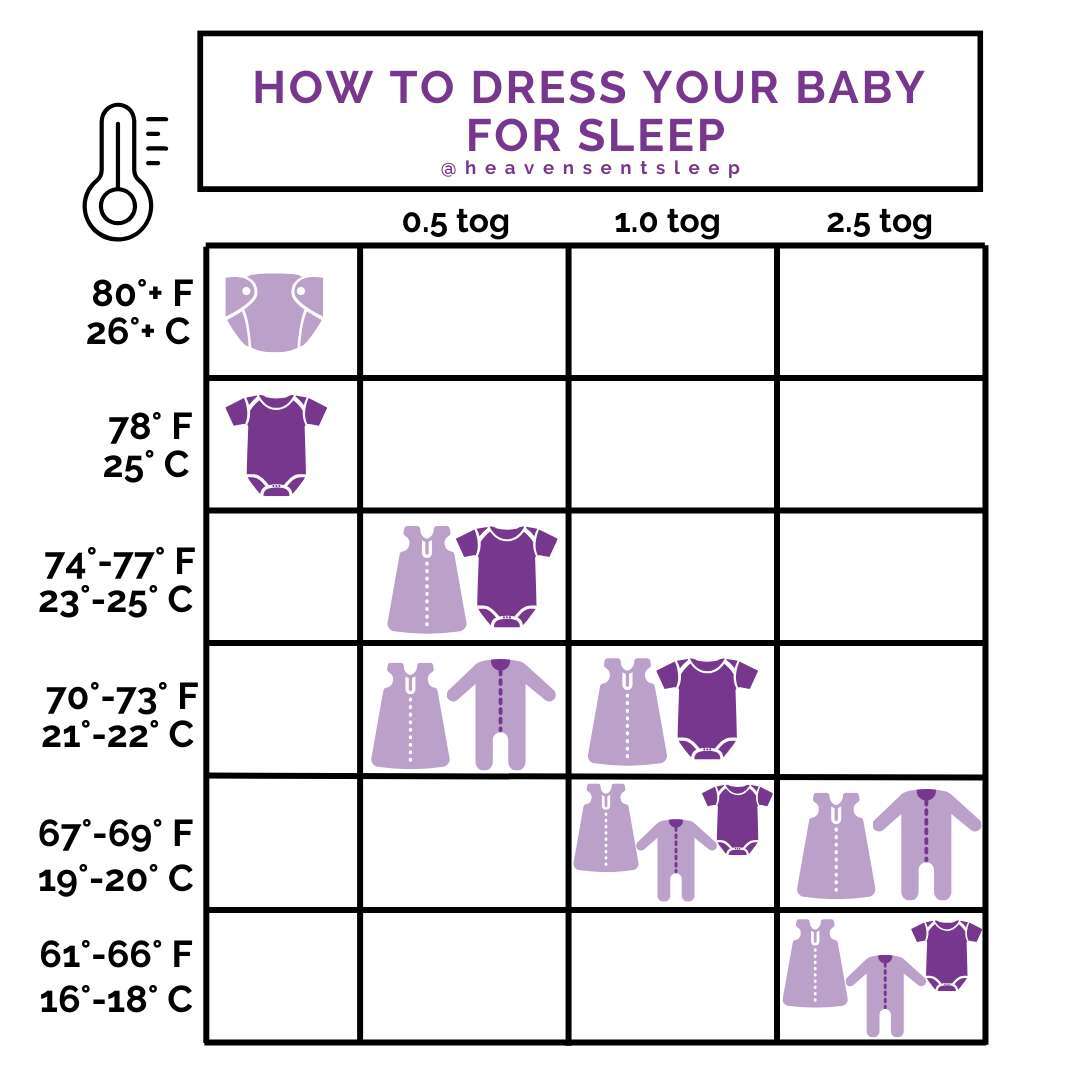
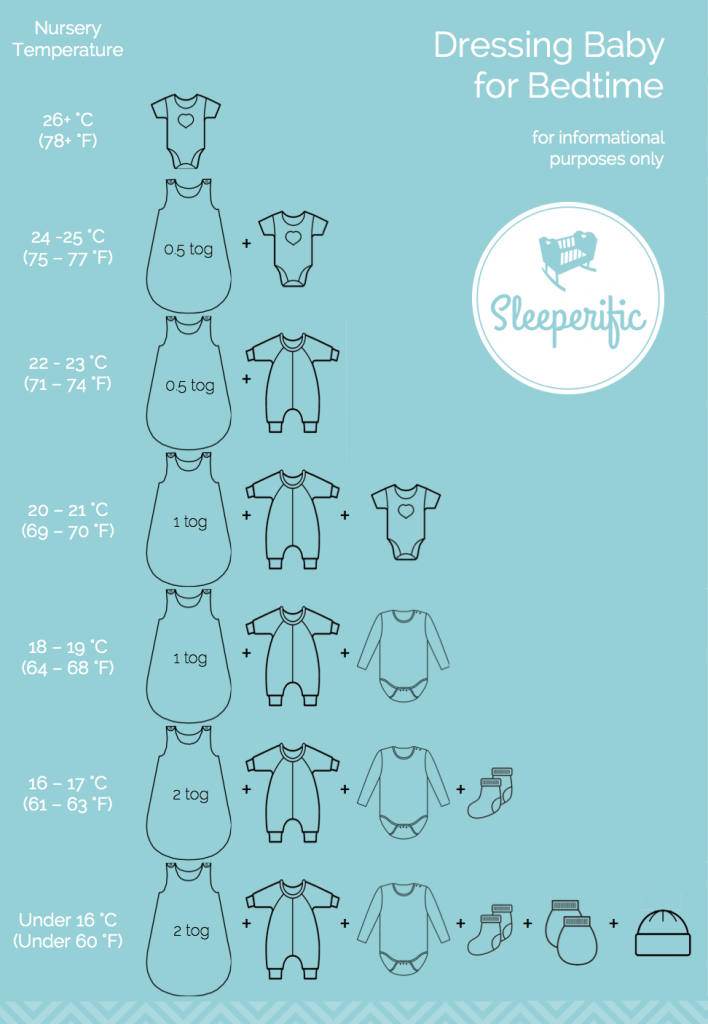
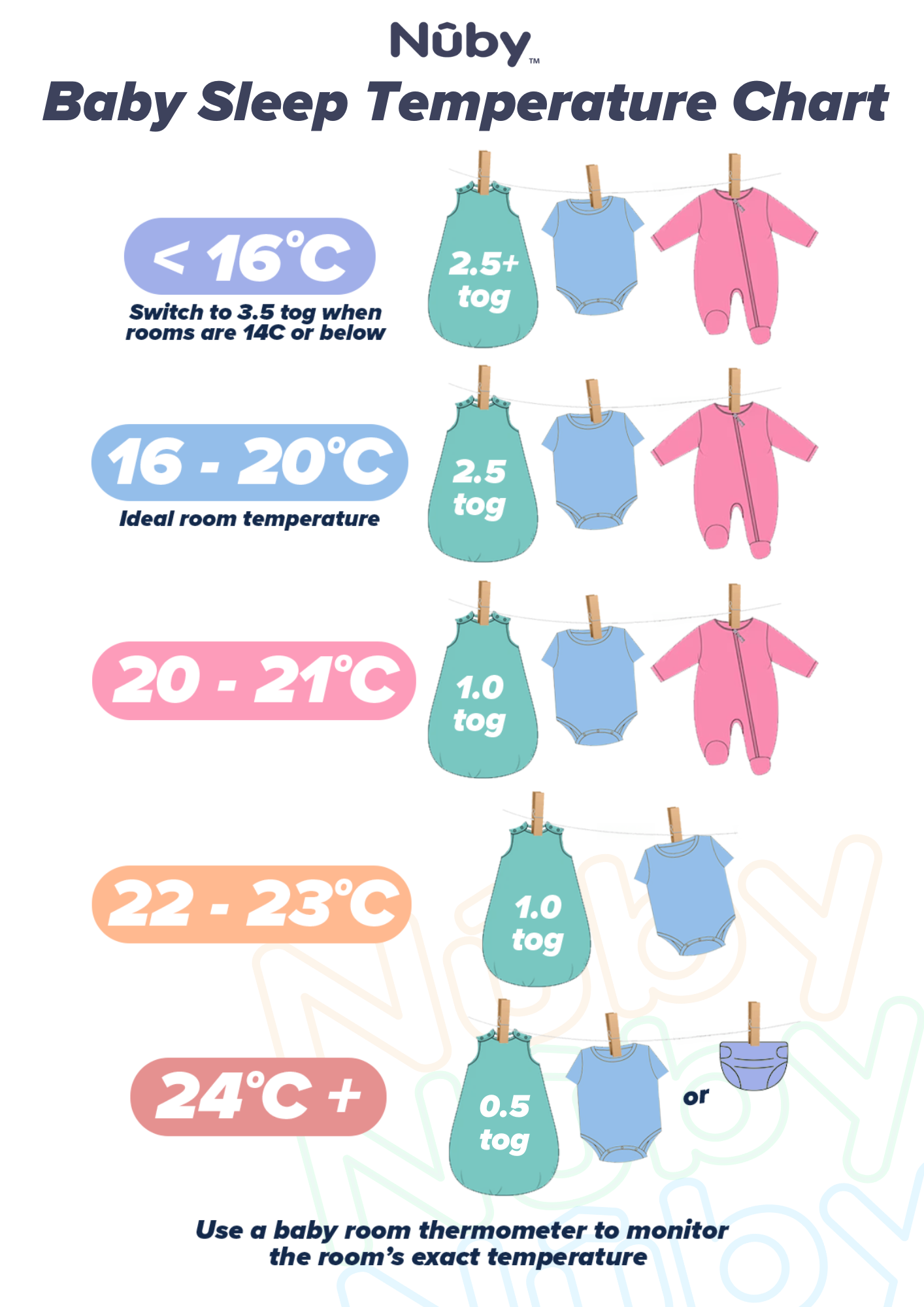
Room temperature guides which layers you choose. A room thermometer helps you decide how to dress baby for sleep. Use TOG ratings to match sleep sacks to temperature.
Simple temperature guide
- 68–72°F: Light sleeper or onesie with a 0.5–1.0 TOG sleep sack.
- 64–68°F: Long-sleeve sleeper plus a 1.0–2.5 TOG sleep sack.
- Below 64°F: Add layers or use a warmer sleep sack, but also raise the thermostat safely.
How TOG ratings work
- TOG measures thermal insulation for sleepwear.
- Higher TOG = warmer. Choose based on room temp not outside weather.
Quick checks to know if baby is comfortable
- Touch the chest or back of the neck. Hands and feet can be cooler and are poor temperature indicators.
- Baby should feel warm but not sweaty. Damp hair or flushed cheeks means they may be overheated.
- Watch sleep behavior: restless or fussy sleep can signal a temperature issue.

Safety tips and common mistakes to avoid
Safety is the non-negotiable part of how to dress baby for sleep. Small choices make a big difference. Follow these clear rules to lower risk.
Never use loose blankets
- Loose bedding can cover the face and cause suffocation risk.
- Use a sleep sack instead of a blanket for warmth.
Avoid overdressing
- Overdressing increases the chance of overheating. Stick to simple layers.
- If unsure, remove one thin layer rather than add one.
Watch zippers and strings
- Ensure zippers are covered and cannot scratch baby’s chin.
- Remove strings, hood ties, and decorative items that could tangle.
Follow safe sleep position
- Place baby on their back for all sleep times.
- A safe mattress and bare crib (no toys or pillows) matter as much as sleepwear.
Be cautious after illness
- If baby has a fever, dress them lightly and consult a pediatrician. Fever affects how you should dress them for sleep.
Personal experience, tips, and mistakes I’ve learned
I’ve helped families through nights and naps, and a few lessons stand out. These practical tips come from real trials and small wins.
What worked for us
- Using a room thermometer ended nightly guessing. It gave confidence about how to dress baby for sleep.
- Switching to zip sleepers reduced middle-of-night fuss during diaper changes.
- A mid-season sleep sack with a zip worked best when temps swung overnight.
Common mistakes to avoid
- Relying on hands and feet to judge warmth. Touch the chest instead.
- Keeping hats on during sleep; they trap heat and are unnecessary indoors.
- Swaddling too tight. Babies need hip room to move.
Quick hacks
- Keep a spare sleeper and sleep sack near the crib for quick swaps.
- Use breathable layers to handle fast temperature swings.
- If a baby wakes sweaty, change clothes and check room temp rather than piling on blankets.

Frequently Asked Questions of how to dress baby for sleep
What is the safest sleepwear for newborns?
Use a fitted onesie or footed sleeper and consider a swaddle for the earliest months. Avoid loose blankets and choose breathable fabrics.
Can I put a hat on my baby while they sleep?
No, hats can trap heat and raise the risk of overheating. Remove hats indoors during sleep and focus on layers instead.
How do I pick the right TOG for a sleep sack?
Match the TOG to the room temperature: lower TOG for warmer rooms, higher TOG for colder rooms. A room thermometer helps you choose accurately.
When should I stop swaddling and move to a sleep sack?
Stop swaddling when your baby shows rolling signs or can push up on hands. Transition to a sleep sack to maintain warmth safely.
Is it OK to use a blanket for toddlers?
Around age one, many toddlers can safely use a light blanket, but a wearable blanket is often safer and stays in place.
Conclusion
Dressing your baby for sleep is a simple skill that improves safety and sleep quality. Use snug, breathable layers, replace loose blankets with sleep sacks, and adjust by room temperature. Trust your checks: touch the chest, watch for sweat, and use a thermometer. Try these steps tonight and tweak as your baby grows and seasons change. Share your experiences, subscribe for more baby-sleep tips, or leave a comment with your questions.