
Most babies can sleep for as long as they need after vaccinations. You usually do not need to wake a healthy baby just because they received shots. Let your baby follow their normal sleep pattern, but check on them from time to time and offer feeds when they wake.
Some babies are sleepier than usual for the first day after vaccines. Mild soreness, fussiness, a low fever, or a change in appetite can also occur. These effects are usually short-lived. Your baby’s age, feeding needs, health history, and vaccine type may change what is safest, so follow the instructions from your child’s doctor or clinic.
This guide applies to babies in the United States and is based on guidance from the Centers for Disease Control and Prevention (CDC), the American Academy of Pediatrics (AAP), and the National Institutes of Health.


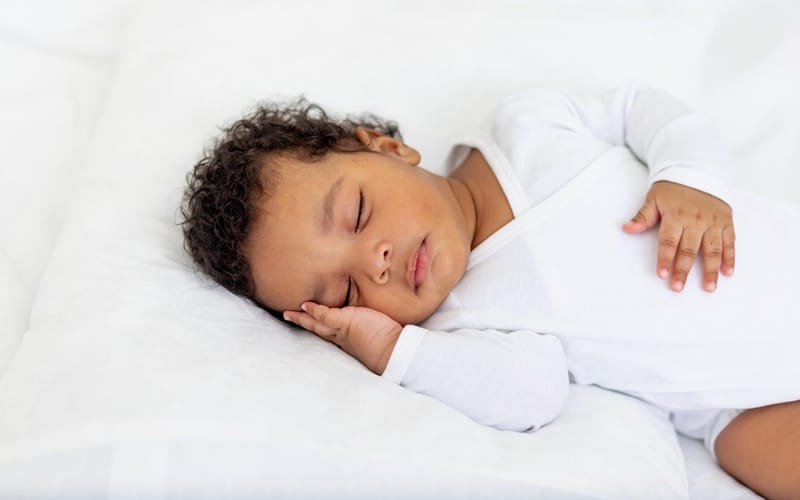
Should I wake my baby after vaccinations?
For most healthy babies, no. You do not need to wake your baby solely because they received vaccines. Sleep helps the body rest, and extra sleep for a short time can be normal after an appointment.
Before leaving the clinic, your baby may need to remain under observation for about 15 minutes. This is a standard safety step because rare allergic reactions are most likely to appear soon after vaccination. Once you are home, let your baby sleep in a safe position and place.
You should wake your baby for a feed if a doctor has told you to follow a timed feeding plan. This may apply to a newborn, a premature baby, a baby with poor weight gain, or a baby with a medical condition. Babies who normally need overnight feeds should continue that schedule unless their health care professional says otherwise.
Do not use sleep alone as proof that your baby is well. A sleeping baby should have normal skin color, regular breathing, and a normal response when gently touched. If your baby is very hard to wake, has trouble breathing, or looks blue, gray, or unusually pale, seek urgent medical care.

How long can a baby sleep after shots?
There is no fixed number of hours that every baby should sleep after vaccination. Some babies take a longer nap, while others sleep for about the same amount of time as usual.
A practical approach is:
- Let your baby sleep if breathing and color look normal.
- Check your baby periodically without repeatedly waking them.
- Offer breast milk or formula when your baby wakes.
- Keep track of wet diapers if your baby seems less interested in feeding.
- Follow the usual safe-sleep routine for every nap and nighttime sleep.
A sleepy baby may feed less for a short period. The main concern is not one missed feed. The concern is ongoing poor feeding, repeated vomiting, signs of dehydration, or unusual difficulty waking.
Call your baby’s doctor if your baby remains much sleepier than usual, refuses several feeds, has fewer wet diapers, or does not seem to improve by the next day. The timing can vary by vaccine and by child, so the clinician who knows your baby’s health history is the best source for personal advice.
What is normal after baby vaccinations?
Mild reactions are common and often show that the immune system is responding. They do not mean the vaccine caused the illness it is meant to prevent.
Possible short-term effects include:
- Sleepiness or extra naps
- Fussiness or crying
- Soreness, redness, or swelling where the shot was given
- A mild fever
- A temporary change in appetite
- A small lump at the injection site


These reactions often start within the first day or two and improve on their own. Some vaccines may have effects that appear later, so use the after-care sheet given by the clinic.
You can comfort your baby by holding them, offering feeds more often, and keeping clothing loose around a sore injection site. Ask the baby’s doctor before giving acetaminophen or another medicine. Do not give aspirin to a child, and do not use medicine to prevent vaccine side effects unless a clinician specifically recommends it.
A cool, damp cloth may help with local soreness. Do not rub the injection site hard. Never place ice directly on your baby’s skin.
How should my baby sleep after vaccinations?
Vaccinations do not change the rules for safe infant sleep. Put your baby:
- On their back for every nap and night
- On a firm, flat mattress
- In a crib, bassinet, or play yard made for infant sleep
- Without pillows, blankets, bumpers, stuffed toys, or positioners
Keep the sleep area in your room, but not in your bed. If your baby falls asleep in a car seat, stroller, swing, or other sitting device, move them to a firm, flat sleep surface as soon as practical.
Do not raise the mattress or use an inclined sleeper because your baby seems congested or uncomfortable. An incline can make breathing unsafe. Swaddling, if you use it, should be snug but not tight, and you should stop when your baby shows signs of trying to roll.
A baby who is tired after shots still needs the same safe sleep setup. Extra blankets, bed sharing, and sleep products that claim to prevent vaccine discomfort do not make sleep safer.
When should I call a doctor after my baby’s shots?
Call your baby’s health care professional if your baby has a reaction that concerns you, especially if the symptoms are getting worse or lasting longer than expected.
Contact the doctor promptly if your baby:
- Is difficult to wake or unusually weak
- Refuses repeated feeds
- Has much fewer wet diapers than normal
- Vomits repeatedly
- Has a fever that concerns you
- Has a seizure
- Cries continuously and cannot be comforted
- Develops worsening swelling or redness at the injection site
For a baby younger than 3 months, a rectal temperature of 100.4°F (38°C) or higher needs prompt medical advice. Call your pediatrician or seek urgent care right away rather than assuming the fever is only from the vaccine.
Ask how to measure your baby’s temperature. Rectal temperature is generally the most accurate method for young infants, but use the method your clinician recommends.
Call 911 for emergency symptoms
Call 911 in the United States if your baby has signs of a severe allergic reaction, such as:
- Trouble breathing
- Swelling of the face, lips, tongue, or throat
- Widespread hives
- Sudden extreme weakness
- Collapse or loss of consciousness


Severe allergic reactions are rare, but they require immediate treatment. Do not wait for your baby to wake up or for symptoms to pass.
Should I wake my baby to check for a fever?
Usually, you do not need to wake a comfortable baby on a fixed schedule just to take a temperature. Instead, check your baby when they wake or if they feel unusually warm, look unwell, or behave differently.
You can gently observe your baby while they sleep. Look for regular breathing and normal skin color. If you need to assess your baby, touch them gently and see whether they respond in their usual way.
Do not rely only on touching the forehead to judge a fever. A thermometer gives a better reading. Use the type and method recommended by your baby’s doctor, especially if your child is under 3 months old.
If your baby is sleeping longer than usual but wakes normally, feeds reasonably well, and has normal wet diapers, continued observation may be appropriate. If your baby is hard to wake or does not respond normally, seek medical help.
What if my baby will not sleep after vaccinations?
Some babies sleep more after shots. Others are fussy and sleep less because their arm or leg is sore.
Try simple comfort measures:
- Hold your baby close and speak softly.
- Offer breast milk or formula.
- Keep the room calm and avoid too much handling.
- Dress your baby in light, comfortable clothing.
- Use a cool, damp cloth on the sore area if needed.
- Keep placing your baby on their back in the normal sleep space.
Do not force sleep, and do not place your baby in your bed or on a couch because they are upset. If you feel tired while holding your baby, put them in their crib or bassinet before you fall asleep.
Call the doctor if your baby cannot be comforted, has signs of significant pain, stops feeding, has breathing problems, or develops another symptom that seems severe.
Does the type of vaccine change sleep advice?
The basic sleep advice is the same after routine infant vaccines: let a healthy baby rest, continue safe sleep practices, and watch feeding and behavior.
The expected effects can differ by vaccine. For example, a baby may have a sore leg after an injection. After an oral vaccine, such as rotavirus vaccine, mild digestive symptoms may occur. Follow the specific information provided by your clinic.
The number of vaccines given during one visit does not create a special sleep limit. Babies may receive several routine vaccines at the same appointment, and extra sleep can still be normal. However, a serious or unusual reaction should not be dismissed because multiple vaccines were given.
If your baby has a history of a severe allergic reaction, a weakened immune system, or another condition that affects vaccination, ask the pediatrician for a personalized after-care plan.
A simple after-vaccination checklist
Use this checklist when you get home:


- Confirm that your baby completed the clinic’s observation period.
- Ask what reactions are expected and when to call.
- Let your baby sleep in a safe sleep space.
- Continue the usual feeding plan unless the doctor says otherwise.
- Check breathing, color, feeding, and wet diapers.
- Measure a temperature if your baby seems warm or unwell.
- Ask before giving any fever or pain medicine.
- Keep the clinic’s phone number available.
The main decision is not how many hours your baby sleeps. It is whether your baby can breathe normally, wake and respond in the usual way, take enough fluid, and stay reasonably comfortable.
FAQs
Can vaccines make babies sleep all day?
Vaccines can make some babies sleepier for a short time, but sleeping all day with difficulty waking is not something to ignore. Try to wake your baby gently for a response and a feed. Call the doctor if your baby is unusually hard to wake, feeds poorly, or has other concerning symptoms.
Should I wake my newborn to breastfeed after vaccines?
If your newborn normally needs scheduled feeds, continue that plan unless the doctor changes it. A healthy older infant who feeds well and is growing normally usually does not need to be woken only because they received vaccines.
Can my baby sleep through the night after shots?
Yes. A healthy baby may sleep through the night after vaccination. Follow your usual feeding plan and any instructions from your pediatrician. Do not use extra blankets or unsafe sleep products to keep the baby comfortable.
How long do vaccine side effects last in babies?
Mild sleepiness, soreness, fussiness, or a low fever often improves within one to two days, although the exact timing depends on the vaccine and the child. Call the doctor if symptoms worsen, last longer than expected, or seem severe.
Can I give my baby Tylenol after vaccinations?
Ask your baby’s doctor before giving acetaminophen, including the correct dose based on your baby’s weight. Do not give aspirin. Medication should not be used to prevent vaccine reactions unless a clinician specifically advises it.
Bottom line
You generally do not need to wake a healthy baby just because they had vaccinations. Let your baby sleep, follow safe-sleep rules, and offer feeds when they wake. Keep a closer eye on breathing, color, feeding, wet diapers, and responsiveness than on the exact number of hours slept.
For a baby younger than 3 months with a temperature of 100.4°F (38°C) or higher, contact a health care professional promptly. Seek emergency help for breathing trouble, facial swelling, widespread hives, collapse, or a baby who is difficult to wake.
For the most accurate advice, use the after-care instructions from your child’s vaccination clinic and call the pediatrician when your baby’s behavior feels clearly outside their normal pattern.
