
At 14 weeks of pregnancy, your baby is inside the uterus, within the amniotic sac. The uterus is still low in the lower abdomen, near the pubic bone, but it is starting to rise out of the pelvis. In the United States, pregnancy weeks are usually counted from the first day of the last menstrual period, so “14 weeks pregnant” means about 12 weeks since conception.
Your baby may move, stretch, and turn often. However, there is no single “correct” position. The baby may face up, down, sideways, or toward your back. These positions can change many times in one day.

Where is the uterus at 14 weeks?
At 14 weeks, the uterus is usually just above the pubic bone or beginning to move higher into the lower abdomen. It is much larger than it was before pregnancy, but it may not yet reach the belly button.
The exact height can vary. It depends on:


- Your body shape
- Whether this is your first pregnancy
- The number of babies
- Your bladder fullness
- The accuracy of your pregnancy dates
- The position of the uterus
- Fibroids or other uterine changes
A health care professional may check the uterus during a prenatal visit. At this stage, a physical exam is often more useful than trying to feel the uterus yourself.
The uterus is a strong, muscular organ. It grows to make room for the baby, placenta, and amniotic fluid. The baby is not sitting directly against the skin or abdominal wall. The uterus, uterine muscle, amniotic sac, fluid, and other tissues provide layers of protection.
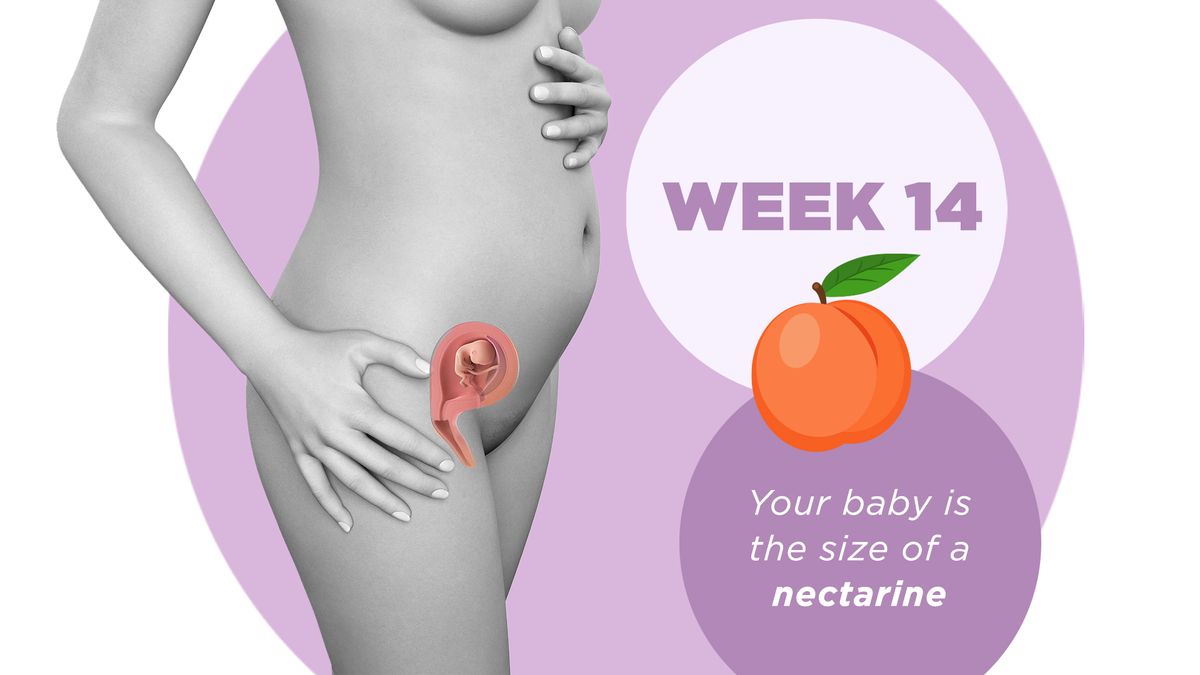
Where is the baby inside the uterus?
The baby is in the amniotic sac, which is inside the uterus. The sac contains amniotic fluid. This fluid cushions the baby and allows movement.
At 14 weeks, the baby can move the arms, legs, hands, and head. You may not feel these movements yet. Early movement is often too light to notice, especially during a first pregnancy.
The baby’s location can seem different from one scan to another. For example, the baby may be:
- Near the front wall of the uterus
- Near the back wall
- More toward the left or right side
- Curled into a small shape
- Stretched out
- Facing the spine or facing the abdomen
These positions are normal at 14 weeks. There is still plenty of room in the uterus, so the baby does not need to stay head-down.
The placenta is also inside the uterus. It may attach to the front, back, top, or side wall. A front placenta can cushion movement and may make early movement harder to feel. The placenta’s position does not usually tell you where the baby is at a given moment.
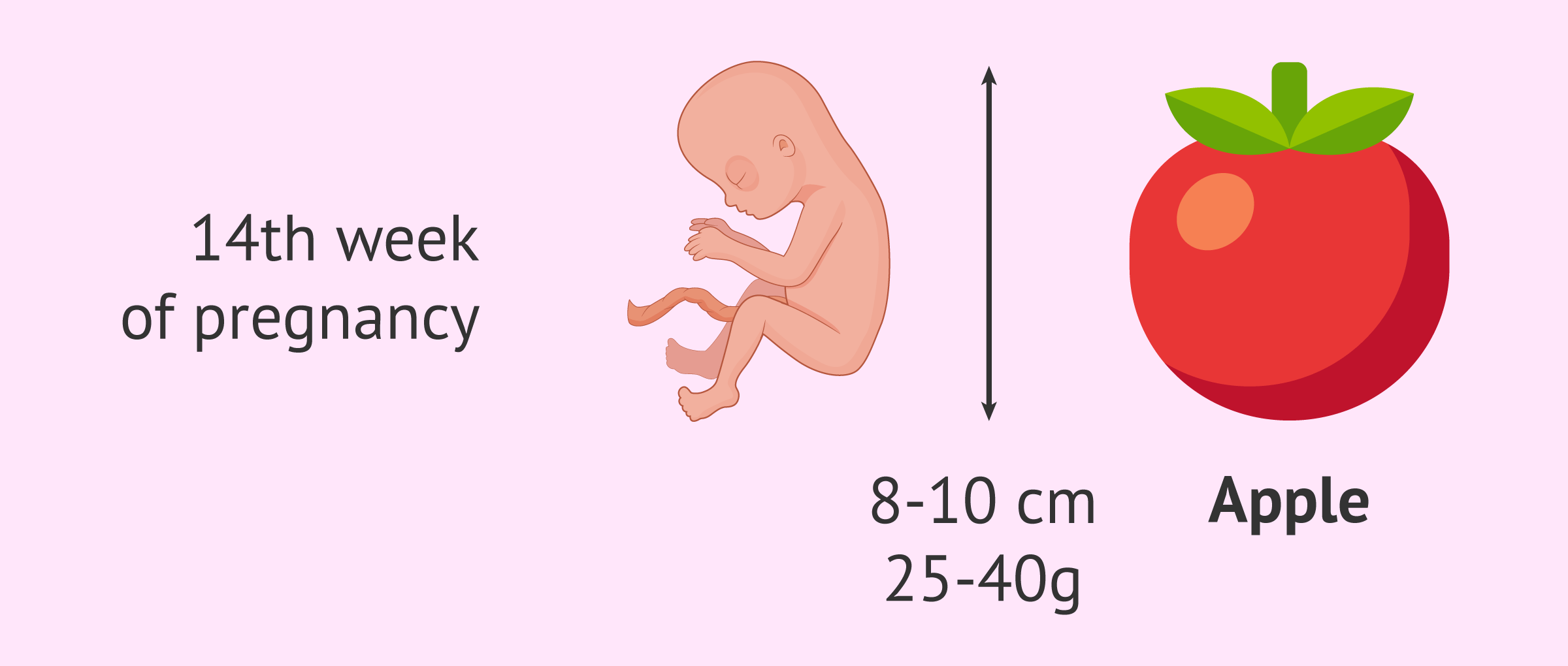
How big is the baby at 14 weeks?
At 14 weeks, the fetus is about the size of a lemon, though estimates differ. Measurements from an ultrasound are more useful than comparisons with fruit.
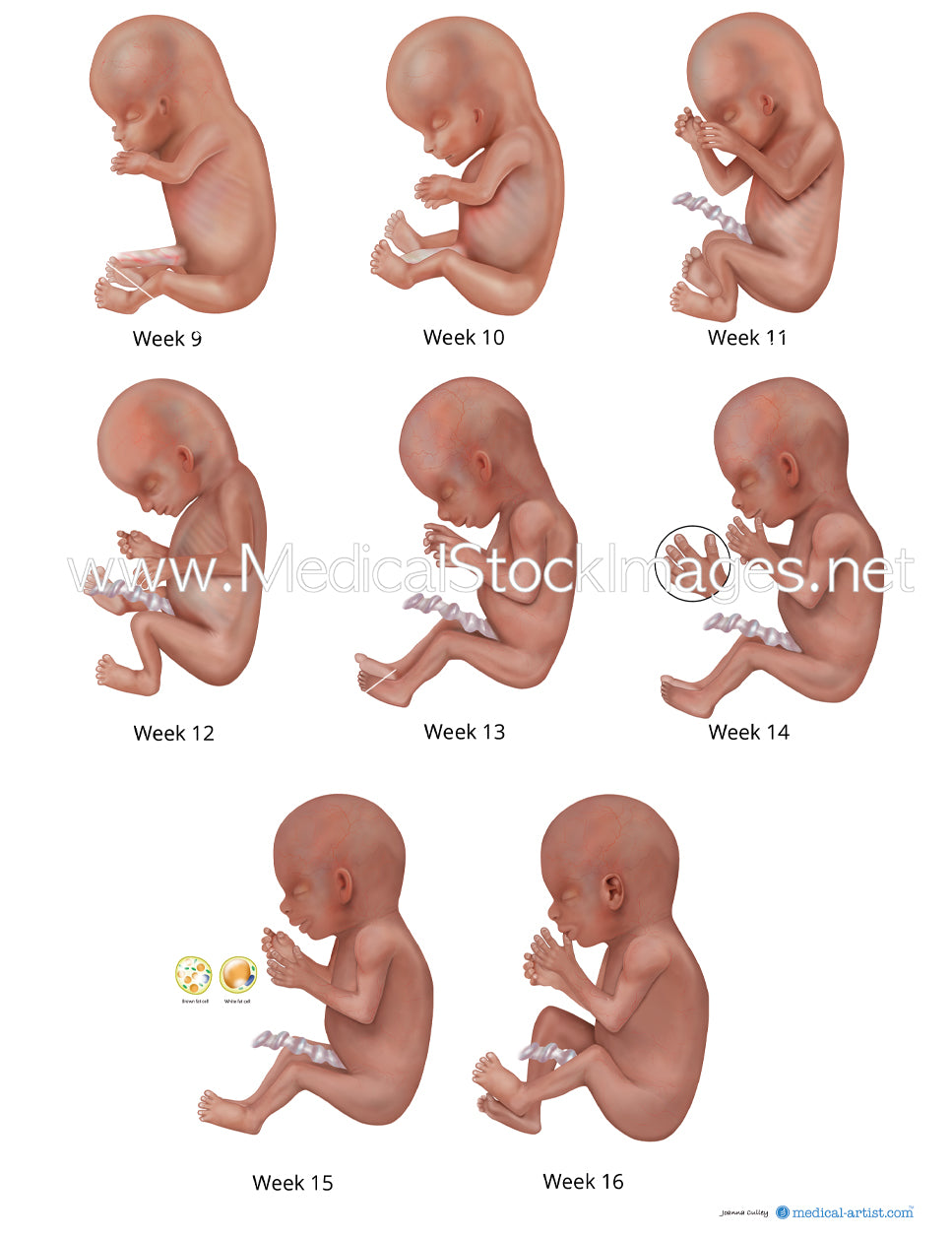
The baby’s body is developing quickly. At this stage:


- The neck is becoming more defined.
- The face is taking shape.
- The arms and legs can move.
- Facial muscles may produce small movements.
- The kidneys make urine.
- Fine hair, called lanugo, may begin to develop.
- The baby’s bones are becoming stronger.
The baby’s size does not determine whether you can feel movement. A person may feel movement later because of the placenta’s position, the location of the baby, or simply because early movements are very subtle.
Pregnancy dating also affects the estimate. A baby called “14 weeks” may measure a little ahead or behind without there being a problem. Your prenatal clinician will interpret the measurement along with your medical history and earlier scans.

Can you feel the baby at 14 weeks?
Most people do not feel clear fetal movement at 14 weeks. Some people notice light sensations, but gas, muscle movement, and normal stretching can feel similar.
When movement is felt early, it may seem like:
- A soft flutter
- Tiny taps
- Bubbles
- A faint rolling feeling
- A brief twitch
First movements are often called quickening. Many people feel them between 16 and 24 weeks. People who have been pregnant before may recognize movement sooner, but this is not true for everyone.
Not feeling movement at 14 weeks is usually expected. You should not use movement at this stage to check whether the pregnancy is healthy. Your clinician may use an ultrasound or a handheld Doppler during care, depending on the visit and the clinical need.
Do not use a home Doppler to replace prenatal care. It can be hard to identify the correct sound, and hearing a heartbeat does not rule out every pregnancy problem.

Can the baby be on the left or right side at 14 weeks?
Yes. The baby can be on the left, right, front, or back side of the uterus. The position may change often because the uterus has room and the baby is still small.
A sensation on one side of the abdomen does not prove that the baby is on that side. The feeling may come from:
- Gas
- Bowel movement
- Ligament stretching
- Uterine growth
- Muscle tension
- The baby’s movement
- The position of the uterus
The round ligaments support the uterus. As the uterus grows, these ligaments can stretch and cause a brief pulling or sharp feeling on one or both sides. This is often called round ligament pain.
A mild, short-lived ache may improve with rest or a change in position. Severe pain, pain that persists, or pain with bleeding should be checked by a health care professional.

Does the baby’s position matter at 14 weeks?
Usually, no. The baby’s position at 14 weeks does not predict the birth position later in pregnancy.


Many babies move into a head-down position near the end of pregnancy. At 14 weeks, it is normal for a baby to be:
- Head-up
- Head-down
- Sideways
- Curled
- Facing the front
- Facing the back
The baby’s position becomes more important later, especially near the third trimester. Even then, position can change. Your prenatal clinician will check the baby’s growth, heartbeat, movement, placenta, and other findings rather than focusing on one early position.
An early ultrasound may show the baby in a certain position. That image is a moment in time. It does not mean the baby will stay there.
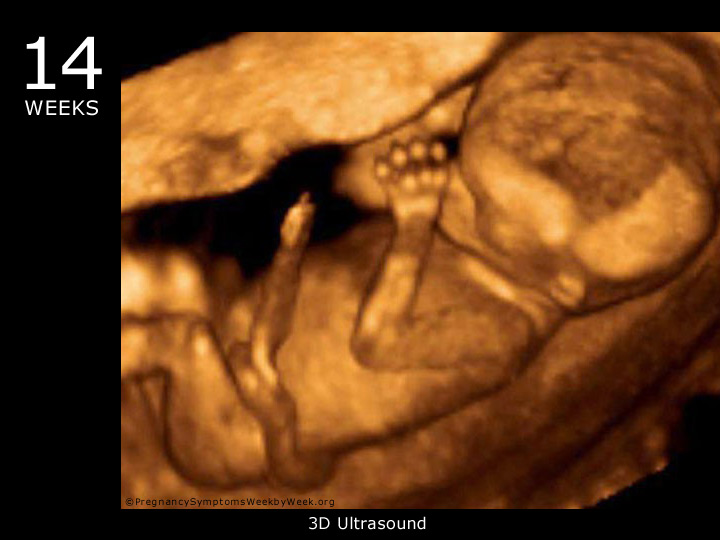
How can you tell where the baby is?
An ultrasound is the most reliable way to see where the baby is at 14 weeks. It can show the uterus, amniotic sac, fetus, placenta, and movement.
A trained clinician may also assess the uterus during a prenatal visit. However, it is not reliable to locate the baby by pressing on your abdomen at home. The baby is small, and the uterus contains fluid and soft tissue that make the position hard to identify by touch.
You should not press firmly on your abdomen to find the baby. Gentle contact is generally not a way to diagnose fetal position, and strong pressure can cause pain or worry without giving useful information.
If you have concerns, ask your obstetric clinician, certified nurse-midwife, or other prenatal care professional. They can decide whether an exam or ultrasound is needed.

What symptoms are common at 14 weeks?
Many people feel better during the second trimester, but symptoms can still vary. Common symptoms around 14 weeks include:
- Mild lower-abdominal stretching
- Round ligament discomfort
- Less nausea
- Increased appetite
- Breast tenderness
- Nasal congestion
- Constipation
- Heartburn
- Mild backache
- More vaginal discharge
Normal pregnancy discharge is often thin or milky white and should not have a strong bad smell. Hormone changes can also cause mild cramping.
Symptoms alone cannot show where the baby is. A growing uterus may cause pressure low in the abdomen, but this does not mean the baby is pressing against the cervix or sitting unusually low.

When should you call a health care professional?
Contact your prenatal care team if you have symptoms that concern you. Seek prompt medical advice for:
- Vaginal bleeding
- Severe or lasting abdominal pain
- One-sided pain that is strong or worsening
- Fluid leaking from the vagina
- Fever or chills
- Fainting or severe dizziness
- Pain with urination
- Foul-smelling vaginal discharge
- Repeated vomiting with trouble keeping fluids down
- Shoulder pain with abdominal pain or faintness
Call 911 in the United States for severe bleeding, severe pain, trouble breathing, loss of consciousness, or another emergency.


A small amount of spotting can have many causes, but it still deserves medical advice during pregnancy. Do not wait for fetal movement to decide whether symptoms are serious. At 14 weeks, movement is not a dependable safety check.

Common misunderstandings about baby position at 14 weeks
“The baby is under my belly button.”
Not usually. At 14 weeks, the uterus is generally still below or near the belly button. The baby is inside the uterus, but the exact fetal location cannot be mapped by the location of a bump or sensation.
“A bump on one side shows the baby’s head.”
A one-sided bump may come from the uterus, bowel, muscle, or body position. It does not reliably identify the baby’s head or limbs.
“I should feel the baby every day.”
Regular movement patterns usually develop later. At 14 weeks, many people feel nothing yet. Lack of movement at this stage is not, by itself, a sign of a problem.
“The baby must be head-down.”
There is no need for a head-down position this early. The baby has room to turn freely.
“A front placenta means something is wrong.”
A front placenta, also called an anterior placenta, is a common location. It may make movement harder to notice early, but it is not usually a problem by itself.

What happens at a typical U.S. prenatal visit around 14 weeks?
Your visit may include a review of symptoms, blood pressure, weight, urine testing, and questions about your health. Your clinician may check the uterus and fetal heartbeat, depending on the care plan.
Some people have an ultrasound around this time. Others have the scan earlier or later. Timing varies by practice, insurance coverage, risk factors, and the type of prenatal testing chosen.
You may also discuss:
- Genetic screening results
- The estimated due date
- Medicines and supplements
- Vaccines recommended during pregnancy
- Exercise and food safety
- Mental health
- Warning signs
- The next prenatal visit
Your own care plan matters more than a general week-by-week chart. If your clinician gives different guidance because of your health history, follow that advice.

Frequently asked questions
Is the baby in the pelvis at 14 weeks?
The uterus may still sit partly within the pelvis at 14 weeks, but it is beginning to rise into the lower abdomen. The baby is inside the uterus, not loose in the pelvic cavity.
Can the baby be behind the belly button at 14 weeks?
The uterus is usually below the belly button at this stage. The baby may be positioned toward the front or back wall of the uterus, but you cannot confirm that location by feeling your abdomen.
Can I hurt the baby by sleeping on my stomach at 14 weeks?
Most people can sleep in the position that feels comfortable at 14 weeks. The uterus and amniotic fluid protect the pregnancy. As the abdomen grows, stomach sleeping may become uncomfortable. Ask your clinician if pain or a medical condition affects your sleep position.
Does abdominal pain mean the baby is in the wrong place?
No. Mild stretching or brief round ligament pain can occur as the uterus grows. Severe, persistent, or one-sided pain needs medical assessment because pain has many possible causes.


When will I feel the baby move?
Many people feel movement between 16 and 24 weeks. Some feel it earlier, and some feel it later. A front placenta may soften early movements. At 14 weeks, not feeling movement is common.
Key takeaways
- At 14 weeks, the baby is inside the uterus and surrounded by amniotic fluid.
- The uterus is usually low in the abdomen, near or just above the pubic bone.
- The baby may face any direction and can change position often.
- Most people do not feel reliable movement yet.
- An ultrasound is the best way to see the baby’s position.
- Call your prenatal care team for bleeding, severe pain, fluid leakage, fever, fainting, or other concerning symptoms.
Conclusion
At 14 weeks, your baby is safely growing inside the uterus, which is still low in your abdomen but starting to rise. The baby may move from side to side and change direction often. A bump, twinge, or flutter cannot reliably show the baby’s exact location.
For a clear answer about your pregnancy, bring your question to your U.S. prenatal care team. Contact them promptly if you have bleeding, severe pain, fluid leakage, fever, faintness, or symptoms that feel unusual for you.
