
Most babies can sit upright in a stroller around six months, once they have steady head and trunk control.
Knowing what age can a baby sit in a stroller is important because stroller seats do not all offer the same support. Some strollers are safe from birth when fully reclined, while others are made only for babies who can sit without help. This guide explains the safest age, signs of readiness, stroller types, common mistakes, and expert-backed safety tips so you can choose with confidence.
What age can a baby sit in a stroller?
Most babies can use a stroller seat in an upright position at about 6 months old. This is also the age when many babies begin sitting with little or no support.
However, age is only a guide. The safest answer depends on your baby’s development and the stroller’s design. A baby should have strong head and neck control before sitting upright in a traditional stroller seat.
Look for these readiness signs:
• Your baby keeps their head steady without wobbling.
• Your baby can sit upright with little support.
• Your baby does not slump forward or slide down in the seat.
• Your baby has enough upper-body strength to stay centered.
• Your stroller has a snug, properly adjusted harness.
Some babies reach these milestones at 5 months. Others need 7 or 8 months. Development varies, so do not rush simply because another baby is already sitting in a stroller.
A stroller seat is not the same as a car seat. A car seat protects a baby during travel in a vehicle, while a stroller seat supports a baby during walks. Never assume that a stroller seat is safe for a newborn unless the manufacturer clearly says it is.

Can a newborn ride in a stroller?
Newborns can ride in some strollers, but only when the stroller is designed for newborn use. The seat must fully recline or work with an approved bassinet or newborn insert.
Young babies cannot hold up their heads well. Their airways can become blocked if their chin falls toward their chest. This is why a deeply reclined, flat surface is safer for a newborn than an upright seat.
Before using a stroller with a newborn, check the product manual for:
• The minimum age and weight.
• Whether the seat fully reclines.
• Whether a bassinet is included or approved.
• Whether a newborn insert is allowed.
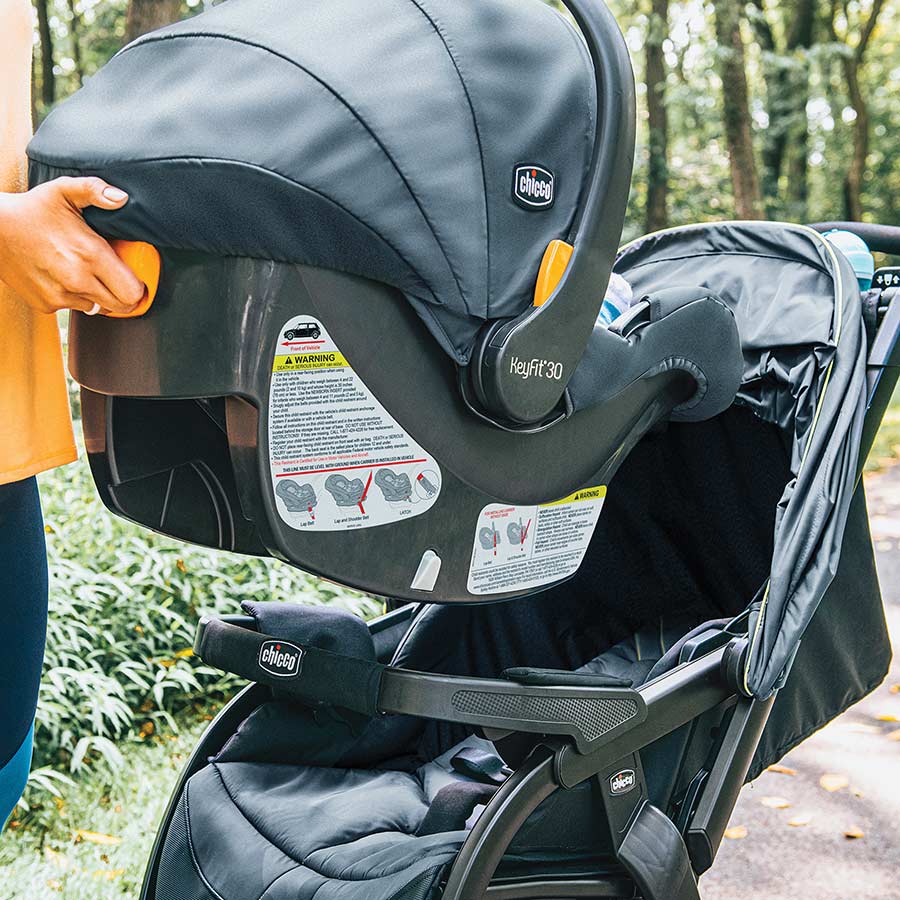
• Whether an infant car seat adapter is approved.
A travel system may be useful from birth if it includes a compatible infant car seat. Still, an infant car seat should not replace a flat sleep surface. Experts advise moving a sleeping baby from the car seat to a firm, flat sleep space as soon as practical.
Do not add pillows, blankets, or homemade padding to make an upright stroller safe for a newborn. These items can change the baby’s position and may increase the risk of suffocation.
When can a baby sit upright in a stroller?
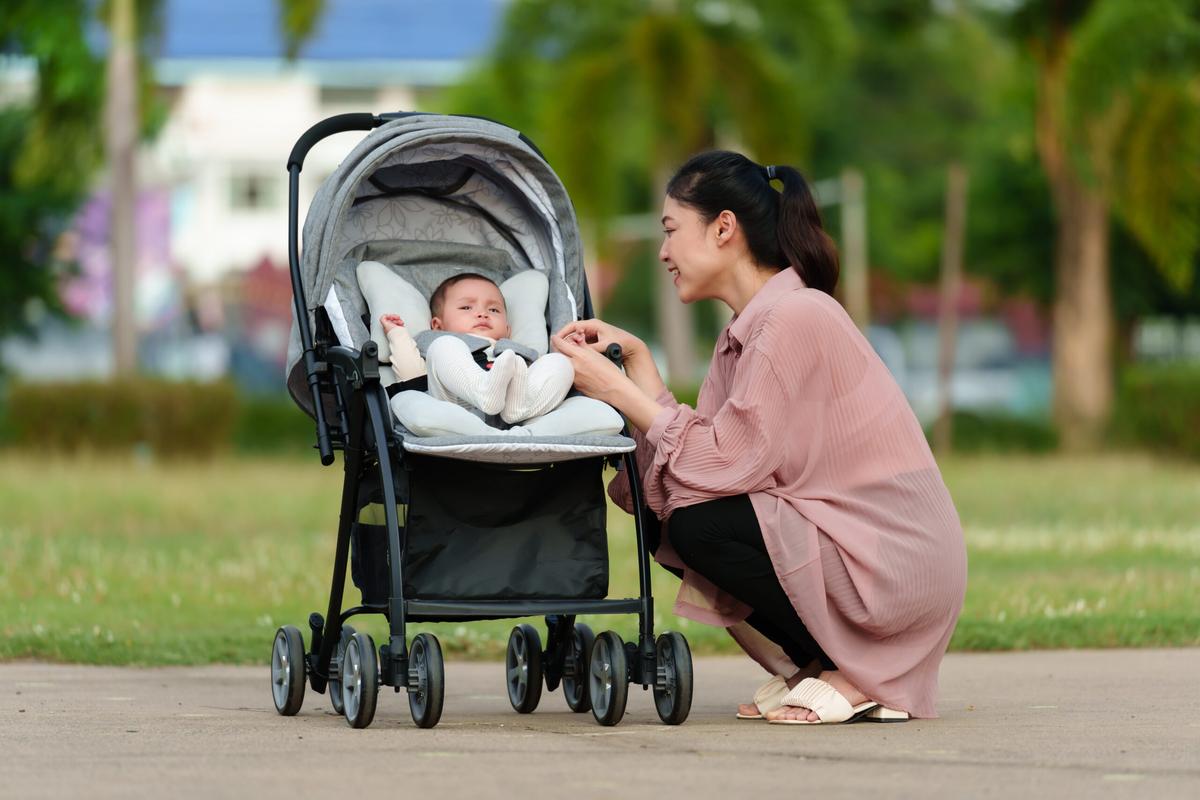
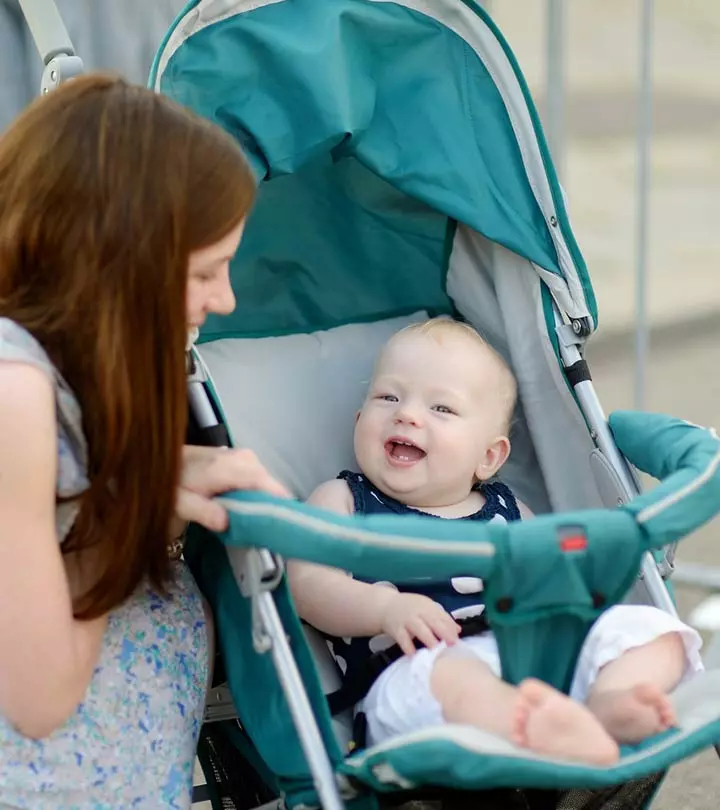
A baby can usually sit upright in a stroller at about 6 months, but the baby should first show good body control. The seat should also recline slightly if your baby still tires easily.
Think of the stroller seat as a small chair. Your baby should be able to sit in it without folding forward like a soft flower stem. If the baby’s head falls to one side or the body slumps, wait longer or use a more reclined setting.
The correct stroller position may change during the same walk. A baby may sit upright while alert and recline when tired. Check your baby often, especially during the first few outings.
Signs that your baby is not ready include:
• The head drops forward.
• The baby leans sharply to one side.
• The hips slide under the safety strap.
• The shoulders sit below the harness.
• The baby cries because the position is tiring.
• The baby cannot keep the airway open.
If you notice these signs, stop and recline the seat if the stroller allows it. Otherwise, return home and wait until your baby has more strength.
What does a stroller manufacturer’s age limit mean?
A manufacturer’s age limit is a safety instruction, not a rough suggestion. It reflects the stroller’s structure, harness system, recline angle, weight range, and intended use.
Some strollers are suitable from birth. Others are safe only for babies who can sit independently. A stroller may look comfortable but still be unsafe for a young baby if the seat angle is too upright.
Read the manual before the first use. Pay close attention to:
• Minimum age.
• Minimum and maximum weight.
• Maximum height.
• Recline positions.
• Harness instructions.
• Approved accessories.
• Warnings about running, uneven ground, or car seat use.
If the manual is missing, search for the model number on the manufacturer’s website. Do not rely only on advice from a store listing or social media post. Products can differ even when they look almost the same.
The same rule applies to a used stroller. Check for recalls, broken buckles, loose wheels, damaged fabric, and missing parts. A stroller that worked well for one family may not be safe if it has been stored in heat, used on rough ground, or altered with unapproved parts.
Stroller types and the right baby age
Different stroller styles support babies in different ways. Choosing the right type can make the answer to what age can a baby sit in a stroller much clearer.
Full-size stroller
A full-size stroller often has a deep seat, several recline settings, and a five-point harness. Some models are approved from birth, while others begin at around 6 months.
Check whether the seat reclines flat enough for a newborn. If it does not, use it only when your baby meets the sitting requirements.
Travel system
A travel system usually includes a stroller and a compatible infant car seat. It can help parents move a sleeping baby from a car to a stroller without lifting the baby.
Use only the car seat and adapter approved for that stroller. Keep trips short, supervise your baby, and move the baby to a flat sleep surface after arriving.
Bassinet stroller
A bassinet stroller provides a flat, enclosed space for a young baby. It may be suitable from birth if the manufacturer approves it.
Follow the weight and height limits. Stop using the bassinet when your baby can push up, roll, or reach the product’s stated limit.
Lightweight or umbrella stroller
Many lightweight strollers have limited recline and less support. They are often intended for babies who can sit independently, commonly around 6 months or older.
Do not use a lightweight stroller for a newborn unless the manual specifically approves it.
Jogging stroller
Jogging strollers are usually not meant for newborns. Many manufacturers recommend waiting until a baby is at least 6 months old for walking and closer to 8 to 12 months for jogging, depending on the model.
Running creates more movement than walking. Always follow the manufacturer’s instructions and your pediatrician’s advice.
How to place a baby safely in a stroller
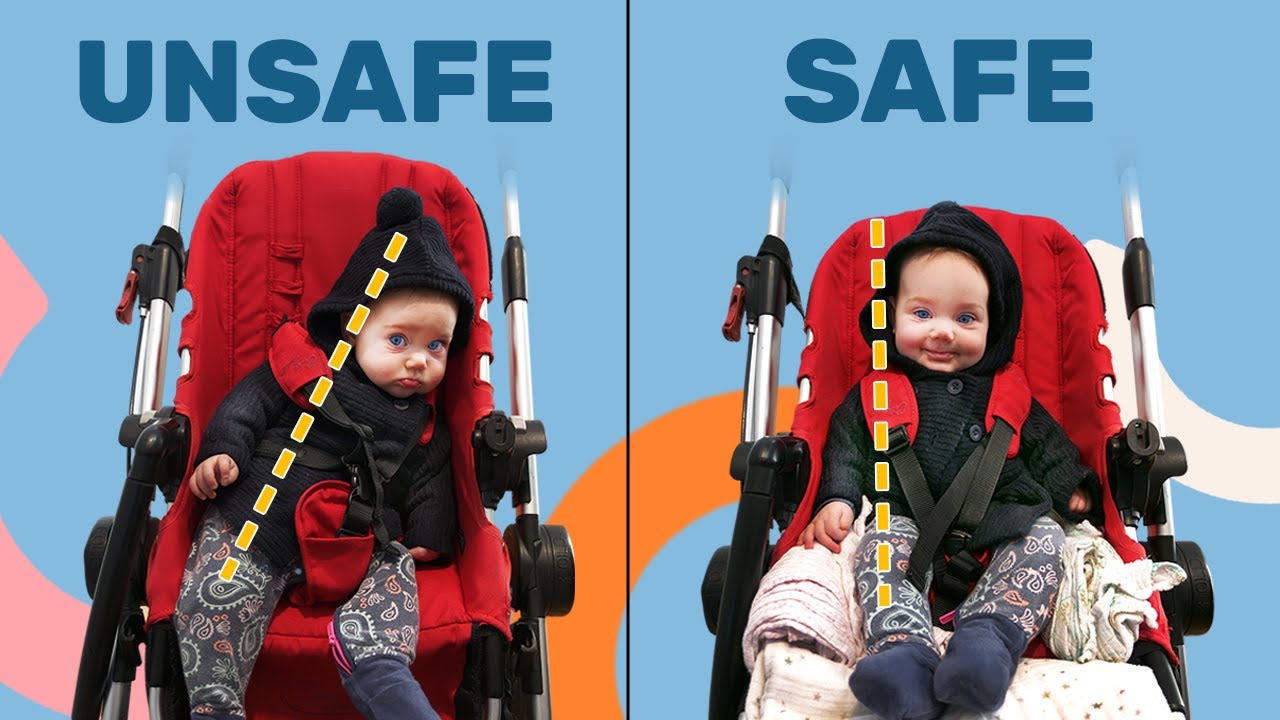
Correct positioning matters as much as the baby’s age. Even a developmentally ready baby can slide into an unsafe position if the harness is loose or the seat is poorly adjusted.
Use these steps:
Lock the stroller before placing your baby inside.
Place your baby’s bottom fully back in the seat.
Fasten the five-point harness.
Adjust the straps so they are snug but not tight.
Keep the shoulder straps at the correct height.
Check that your baby’s chin is not pressed to the chest.
Remove bulky coats before buckling the harness.
Keep the stroller within sight and reach.
A snug harness should not allow your baby to slide under the straps. You should be able to place a finger under the harness, but there should not be a large gap.
Never attach a blanket to the stroller canopy with clips. The blanket can cover the baby’s face or reduce airflow. Use the canopy for shade and dress your baby in light layers instead.
Avoid hanging heavy bags from the handles. Extra weight can make the stroller tip backward, especially when a child steps on the footrest.

Common stroller mistakes parents should avoid
Many stroller problems happen during busy moments. A rushed walk, a loose strap, or a quick stop at a café can lead to unsafe habits.
Avoid these common mistakes:
• Using an upright seat before the baby has head control.
• Leaving the baby unbuckled for a short trip.
• Covering the stroller with a blanket.
• Letting the baby sleep for a long time in a seated position.
• Using an unapproved car seat adapter.
• Putting a younger sibling or heavy bag on the footrest.
• Taking a baby jogging before the stroller is approved for running.
• Leaving the stroller near stairs, pools, driveways, or hot vehicles.
• Folding or unfolding the stroller while the baby is inside.
• Ignoring a recall because the stroller still appears to work.
One practical lesson many parents learn is that “almost ready” is not the same as ready. A baby who sits well on the floor may still slump in a moving stroller. Test the stroller at home first, while your baby is awake and calm.
Take a short walk on a smooth path. Watch the head, neck, hips, and breathing. This simple test can prevent discomfort and help you spot a poor fit early.

How long can a baby sit in a stroller?
There is no single time limit for every baby or stroller. A young baby may become uncomfortable within a short period, while an older baby may enjoy a longer walk.
Use your baby’s behavior as a guide. Take breaks, change positions when possible, and avoid long periods in a deeply reclined or seated position without movement.
Stop the walk if your baby:
• Slumps forward.
• Has trouble breathing.
• Looks pale, flushed, or unusually sleepy.
• Sweats heavily.
• Feels cold or hot.
• Cries in a way that does not settle.
• Has straps pressing into the skin.
A stroller is made for transport, not as a permanent seat. When you arrive home, move your baby to a safe, flat sleep surface if they have fallen asleep.
Hot weather needs extra care. A stroller canopy can block sun, but covering the entire stroller can trap heat. Use shade, light clothing, and frequent checks. Babies can overheat faster than adults.
How to choose the best stroller for your baby
The best stroller is not always the most expensive one. It is the one that matches your baby’s age, skills, size, and your daily routine.
Before buying, consider:
• A full recline or approved bassinet for newborn use.
• A five-point harness.
• A strong brake that is easy to use.
• A stable frame with a wide base.
• Adjustable foot support.
• A canopy that provides shade without blocking airflow.
• A seat that fits your baby’s current size.
• Wheels suited to sidewalks, parks, or rough paths.
• A manageable folded size for your car and home.
• Replacement parts and customer support.
If you plan to use public transit, test the folded stroller. If you walk on gravel, choose larger wheels. If you live in a small apartment, check the folded dimensions before buying.
Try the stroller with your baby if possible. Watch how the baby sits, not only how the stroller looks. A comfortable seat should support the back and hips without forcing the baby into a slouched position.

What pediatric safety guidance says
Pediatric safety guidance supports waiting until a baby has reliable head and neck control before using an upright stroller seat. This is usually around 6 months, but the exact timing varies.
The American Academy of Pediatrics emphasizes proper restraint, close supervision, and safe sleep practices. The U.S. Consumer Product Safety Commission also advises using stroller brakes, harnesses, and manufacturer instructions correctly.
These recommendations have limits. They cannot assess your baby’s individual development or every stroller model. If your baby was born early, has low muscle tone, or has a medical condition, ask a pediatrician or physical therapist for personalized advice.
Premature babies may reach sitting milestones based on corrected age rather than birth age. Your child’s health care provider can explain which age to use.
A simple readiness checklist
Use this checklist before placing your baby in an upright stroller seat:
• The stroller manual permits your baby’s age and weight.
• Your baby has steady head control.
• Your baby can sit with little support.
• Your baby stays upright without sliding down.
• The harness fits snugly.
• The seat offers enough back and hip support.
• The stroller brakes work.
• The wheels and frame are secure.
• The weather is comfortable.
• You can check your baby throughout the walk.
If one answer is no, use a more reclined option or wait. Safety is not a race. Your baby will have many chances to enjoy stroller walks.
Frequently Asked Questions About What Age Can a Baby Sit in a Stroller
Can a 3-month-old sit in a stroller?
A 3-month-old should not sit upright in a standard stroller seat unless the manufacturer specifically approves it and the seat provides proper newborn support. A fully reclined bassinet or approved newborn setup is usually more suitable.
Can a 4-month-old ride in a stroller?
A 4-month-old may ride in a stroller with a flat recline or approved infant configuration. Most babies are not ready for an upright seat at this age because head and trunk control may still be developing.
Is 6 months too late to use a stroller seat?
No. Six months is a common starting point for an upright stroller seat, but readiness matters more than the exact age. Wait longer if your baby still slumps or cannot hold their head steady.
Can a baby sleep in a stroller?
A baby may fall asleep during a walk, but a stroller is not a replacement for a safe sleep space. Move the baby to a firm, flat sleep surface as soon as practical, especially after arriving home.
Can I use an infant car seat on any stroller?
No. Use only an infant car seat and adapter approved for that stroller model. Mixing products can create a poor fit or cause the car seat to detach.
When can a baby ride in a jogging stroller?
Many jogging stroller makers recommend waiting until at least 6 months for walking and longer for jogging. Check the exact manual because some models require stronger sitting skills or a later age.
Conclusion
Most babies can sit in an upright stroller around 6 months, but steady head control, good trunk strength, and a proper harness matter more than the number alone. Newborns need a flat, approved stroller setup, while older babies need a supportive seat that matches their size and development.
Check the manual, test the fit at home, and watch your baby during every walk. When in doubt, choose the more supportive position and ask your pediatrician for guidance. Share this guide with another parent or explore your stroller’s safety manual before your next outing.