
Yes, airlines may be responsible for a damaged stroller when the stroller was checked for transport and the airline or its handling partner caused the damage. The airline may need to pay for repair or reimburse you for the stroller’s depreciated value, subject to federal limits and the airline’s rules.
The result depends on several facts:
- Whether you checked the stroller at the ticket counter or gate
- Whether the damage existed before the flight
- Whether the stroller was packed or protected as required
- Whether you reported the damage promptly
- Whether the stroller is a standard child stroller or a mobility device
- Whether the trip was within the United States or international
Do not assume that a gate-checked stroller is automatically excluded from protection. A gate tag is still a baggage record, and the airline may be responsible for damage that happens while the stroller is in its care.


What U.S. law says about damaged strollers
For flights within the United States, airlines generally must compensate passengers for damage to checked baggage caused while the baggage is under the airline’s control. The U.S. Department of Transportation includes strollers in its baggage guidance, but a standard stroller is usually treated as baggage rather than as a wheelchair or other protected mobility aid.
The airline’s responsibility usually covers the reasonable cost to repair the stroller. If repair is not practical, the airline may offer compensation based on the stroller’s value after depreciation. In other words, reimbursement may reflect the stroller’s age and condition rather than the price of a brand-new replacement.
Federal rules also limit the amount an airline must pay for lost, damaged, or delayed baggage. For domestic flights, the limit is adjusted over time. The current limit should be confirmed through the DOT or the airline’s contract of carriage before making a high-value claim.
Standard strollers are not usually treated like wheelchairs
Federal law gives wheelchairs and other mobility aids stronger protection than ordinary strollers. Under the Air Carrier Access Act, airlines generally must repair or replace a damaged wheelchair or mobility aid and may face broader liability for mishandling it.
A stroller used only to transport a child is normally not a mobility aid. That distinction matters. A pediatric mobility device, adaptive stroller, or specialized medical device may receive different treatment if it qualifies as a mobility aid under federal rules.
If your child uses an adaptive stroller because of a disability, describe its medical or mobility function clearly when you file the report. Do not assume the airline will recognize that status from the stroller’s appearance alone.
Gate-checked strollers can still qualify as checked baggage
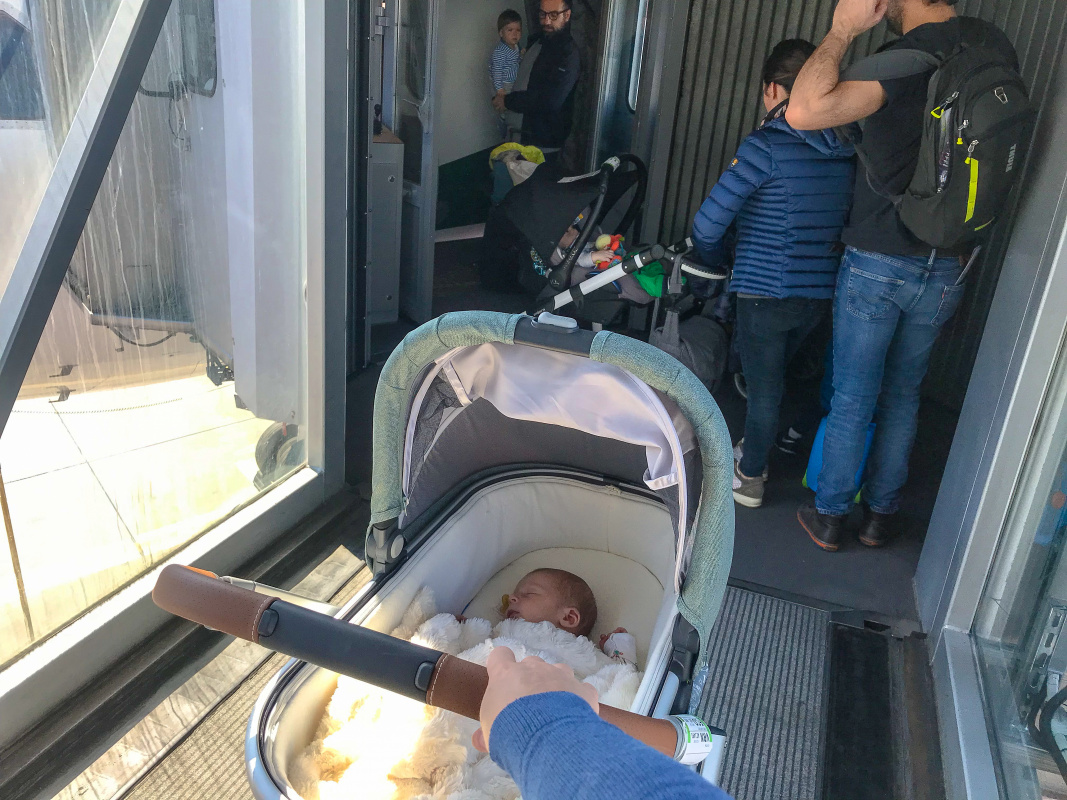
Many parents hand a stroller to airline staff at the gate. The stroller is then placed in the aircraft hold and returned at the jet bridge or baggage claim. This is commonly called gate checking.
The location where you handed over the stroller does not, by itself, decide the claim. The key question is whether the airline accepted and controlled it for transportation. Keep the gate-check tag because it helps prove that the airline took possession of the stroller.
Some airlines limit liability for fragile items, including certain stroller parts. Those limits may appear in the airline’s contract of carriage or baggage policy. However, a broad policy statement does not necessarily settle every claim. The airline still must apply its rule to the specific facts and explain why it is denying responsibility.
When is an airline responsible for a damaged stroller?
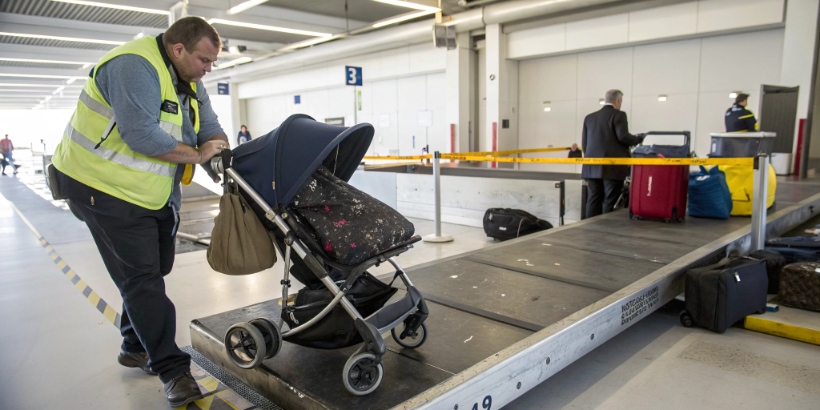
An airline is more likely to be responsible when the stroller was in its custody, the damage was not pre-existing, and you reported the problem within the required time.


The strongest claims usually have these features:
- You have a baggage tag, claim number, or gate-check receipt.
- You can show the stroller’s condition before the flight.
- You reported the damage at the airport or soon after arrival.
- You have clear photos of the damage.
- The damage affects safe use or requires a reasonable repair.
- You have a receipt, model number, or other proof of value.
Common examples include:
- A bent stroller frame
- A broken wheel or axle
- A cracked handle
- A torn canopy caused by rough handling
- A damaged folding mechanism
- Missing parts that were attached when the stroller was checked
- A stroller returned with crushing or impact damage
The airline may deny or reduce a claim if it believes the damage resulted from normal wear, a defect, poor packing, or a condition that existed before the trip.
Damage caused by normal handling may be disputed
Airlines often distinguish between accident damage and ordinary wear. Small scuffs, light dirt, and minor marks may be treated as normal results of baggage handling. A broken frame or wheel is more likely to support a claim.
The difference is not always obvious. Take photos of the entire stroller, not just the broken part. A close-up shows the injury, while a wider photo shows the stroller’s overall condition and helps establish that the damage is not merely cosmetic.
The airline may not pay for indirect losses
Baggage claims usually focus on the stroller itself. An airline may not pay for related costs such as:
- A rental stroller used during the trip
- Taxi costs caused by delays
- Missed activities
- Time spent filing the claim
- Other personal inconvenience
Some expenses may be recoverable under a separate travel insurance policy, credit card benefit, or consumer law theory. Do not include them in the airline claim without checking the applicable terms.

What to do if an airline damages your stroller
Act quickly. The best claim is usually made before you leave the airport, while the airline can inspect the stroller and confirm how it was handled.
1. Inspect the stroller before leaving the airport
If you gate-checked the stroller, inspect it at the jet bridge or the point where staff return it. If you checked it at the ticket counter, inspect it at baggage claim.
Look at:
- Wheels and brakes
- Frame and folding joints
- Handlebar
- Seat and harness
- Canopy
- Basket
- Cup holders and trays
- Car-seat adapters
- Any attached accessories
Test the folding system and wheels only if doing so is safe. Do not force a jammed hinge or ride the stroller with a cracked frame.
2. Report the damage to the airline
Go to the airline’s baggage service office before leaving the airport. Tell the agent that the stroller was damaged while in the airline’s care and ask for a written incident report.
The airline may create a mishandled baggage report, property irregularity report, or similar record. The name varies by carrier. Ask for:


- The report number
- The agent’s name or identification number
- A copy of the report
- Instructions for submitting photos and receipts
- The deadline for completing the claim
A report at the airport is not always the final claim. You may still need to submit an online form or written request.
3. Take detailed photographs
Photograph the stroller before cleaning it or attempting repairs. Take pictures of:
- Each damaged area
- The full stroller
- The baggage tag
- The gate-check tag
- The flight receipt or boarding pass
- Any torn wrapping or protective bag
- The baggage claim area, if useful
Keep the original files. Phone metadata may help show when the images were taken, although it is not always treated as conclusive proof.
4. Get a repair estimate
Ask an authorized repair shop, the stroller maker, or a qualified retailer for a written estimate. The estimate should state:
- The damaged parts
- Labor costs
- Whether the stroller can be safely repaired
- Whether replacement parts are available
- Whether repair would restore safe use
Do not repair the stroller before the airline has had a fair chance to inspect it unless a temporary repair is needed for safety. If you must repair it, keep every receipt and photograph the damage first.
5. Submit a written claim
Send the claim through the airline’s official baggage process. Include a short timeline and attach the available evidence.
A useful claim packet may contain:
- Passenger name and contact details
- Flight number and travel date
- Departure and arrival airports
- Baggage tag or gate-check number
- Incident report number
- Photos
- Proof of purchase or current value
- Repair estimate
- Requested remedy
State what you want: repair, reimbursement for a reasonable repair, or compensation for the stroller’s actual value if it cannot be repaired.
6. Keep the stroller and records
Do not discard the stroller until the airline resolves the claim. Keep all emails, forms, receipts, estimates, and notes about phone calls.
If the airline offers a settlement, ask whether acceptance ends the claim. A signed release may prevent you from seeking more money later.

How much will an airline pay for a damaged stroller?
The amount depends on the damage, the stroller’s age, the proof of value, and the airline’s liability rules.
A simple example:
- Original purchase price: $500
- Stroller age and condition reduce its current value to $300
- Reasonable repair estimate: $120


A repair payment of about $120 may be more likely than a payment of $500 if the stroller can be safely restored. If repair costs more than the stroller’s current value, the airline may assess the stroller as a total loss and offer its depreciated value instead.
This is only an example. The airline may use its own valuation method, ask for purchase records, or require an inspection.
Repair versus replacement
| Situation | Typical claim approach |
|---|---|
| Minor cosmetic damage | The airline may deny the claim as normal wear |
| One replaceable broken part | Request the reasonable repair cost |
| Structural damage | Ask for an inspection and replacement-value analysis |
| Unsafe stroller that cannot be repaired | Request compensation for its current value |
| Missing accessory | Claim the value of the missing part if it was checked with the stroller |
| New stroller with proof of purchase | Provide the purchase record and condition evidence |
The airline does not always have to provide a brand-new stroller. Depreciation can matter when the stroller is older or heavily used.
What if the airline offers travel credit?
You do not have to accept travel credit if you prefer a cash payment or reimbursement for the documented loss. Ask the airline to put the offer in writing and review any conditions before accepting it.
A credit may be useful, but it may also expire or limit your choices. Make sure you understand whether the offer is a full settlement.

What if the airline denies the stroller damage claim?
Ask for the denial in writing. A verbal statement at the airport is not enough to understand the airline’s position.
The denial may rely on one of these arguments:
- The damage was pre-existing
- The stroller was not properly packed
- The damage was ordinary wear
- The stroller was a fragile item
- The claim was filed too late
- The airline did not receive enough proof
- Another carrier handled the relevant part of the trip
- The stroller was not accepted for transportation
Respond with a focused appeal. Explain why the reason does not fit the facts, and attach the missing evidence. For example, if the airline says the wheel was already broken, provide a photo taken before departure or a dated video showing the stroller in working condition.
If the airline still refuses the claim, you can file a complaint with the U.S. Department of Transportation. The DOT can review whether the airline followed applicable consumer protection and disability access rules. It may not act as a private court or guarantee payment for an individual claim.
You can also review:
- Your travel insurance policy
- Credit card baggage protection
- The airline’s contract of carriage
- Small claims court rules in the relevant state
- A lawyer’s advice for a high-value or disputed claim
For a normal stroller claim, legal action may cost more time and money than the stroller is worth. Compare the likely recovery with filing fees, travel, and other costs.

Important exceptions and limits
The answer changes when the stroller is part of an international trip, when another airline handled the baggage, or when the stroller is a specialized mobility device.
International flights
International baggage claims are often governed by the Montreal Convention when the trip involves participating countries. The treaty sets liability rules and a monetary limit based on Special Drawing Rights, or SDRs. The limit can change, and the applicable amount depends on the date and facts of the trip.


International claim deadlines can also be strict. Notify the airline as soon as you find the damage and check the carrier’s instructions for written notice. Do not rely only on a domestic baggage rule.
Connecting flights
If several airlines operated the itinerary, identify which carrier had the stroller when the damage likely occurred. The airline that issued the ticket may not be the only relevant party.
Report the damage to the carrier that delivered the stroller and keep records for every airline on the itinerary. Codeshare arrangements can make responsibility unclear, so preserve the baggage tag and flight details.
Protective bags and packing
A travel bag may reduce scratches and loose-part damage, but it does not guarantee payment. Follow the airline’s instructions for packing and remove items that the airline prohibits inside the stroller.
Do not place valuable items, electronics, medication, or fragile personal property in the stroller unless the airline expressly permits it. Airlines often exclude those contents even when they accept the stroller itself.
Child safety
Do not use a stroller with a cracked frame, loose wheel, damaged brake, or broken restraint. A damaged stroller may fail without warning. If you need a temporary replacement, ask the airline whether it will reimburse a reasonable rental cost, but get that answer in writing first.

How to prevent stroller damage during air travel
You cannot remove all risk, but a few steps can make a claim easier and reduce avoidable damage.
Before leaving home:
- Photograph the stroller from several angles.
- Record the model, serial number, and condition.
- Remove detachable accessories.
- Secure loose straps and parts.
- Use a protective travel bag if appropriate.
- Keep proof of purchase or a current value estimate.
- Check the airline’s stroller and gate-check rules.
At the airport:
- Ask whether you may use the stroller to the gate.
- Confirm where staff will return it after landing.
- Attach your name and contact details.
- Keep the gate-check receipt.
- Inspect the stroller before leaving the airport.
A travel bag can protect fabric and prevent small parts from separating. It may also make the stroller easier to identify. However, do not assume a bag shifts all responsibility to you. The airline’s written policy and the facts of the damage still matter.

Key takeaways
- Airlines may be responsible for a damaged stroller that was checked and damaged while in their care.
- Gate-checked strollers are not automatically outside baggage protection.
- Standard strollers usually do not receive the same special treatment as wheelchairs or mobility aids.
- Report the damage before leaving the airport whenever possible.
- Take photos, keep the baggage tag, and request a written incident report.
- Ask for repair costs or the stroller’s current value, not automatically the original purchase price.
- Check international rules and deadlines when the trip crosses a border.
- Do not use a stroller with damage that could affect child safety.
Frequently asked questions
Are airlines responsible for gate-checked stroller damage?
They may be. A gate-checked stroller is normally accepted into the airline’s custody for transport. The airline’s responsibility depends on the cause of damage, its baggage policy, applicable law, and whether you reported the problem on time.
Can I get a new stroller if an airline breaks mine?
Not always. The airline may pay for a safe repair. If the stroller cannot be repaired, the airline may offer its current value after considering age and condition. A brand-new replacement is more likely when the stroller was new and you can prove its purchase and condition, but it is not automatic.
What should I do if I discover the damage after leaving the airport?
Contact the airline’s baggage department as soon as possible. Submit photos, the baggage tag, flight details, and a repair estimate. Explain why you could not report the damage at the airport. The airline may apply a notice deadline, so do not wait.
Does travel insurance cover a damaged stroller?
Some policies cover checked baggage, but exclusions and valuation rules vary. The policy may require you to seek payment from the airline first. Review the baggage, personal property, deductible, and documentation sections before filing.
Is a stroller treated like a wheelchair under U.S. law?
Usually not. A normal child stroller is generally baggage. A specialized stroller used as a mobility device may qualify for stronger protections if it meets the definition of a mobility aid. Describe its medical or accessibility function and provide supporting documents when appropriate.
Can an airline refuse a stroller damage claim because I did not use a protective bag?
It may argue that poor packing contributed to the damage, especially if its published rules required protection. But the absence of a bag does not automatically answer every claim. Ask the airline to identify the exact rule and explain how it applies to the damage.
Sources and official references
- U.S. Department of Transportation: Baggage and Wheelchair Rules
- U.S. Department of Transportation: Air Travel Consumer Reports and Complaints
- 14 CFR Part 254: Domestic Baggage Liability
- U.S. Department of Transportation: Air Carrier Access Act
- Montreal Convention baggage liability information from ICAO
Conclusion
Airlines can be responsible for damaged strollers, including some strollers that were gate checked. The strongest claim connects the damage to the time when the airline controlled the stroller and includes prompt reporting, clear photos, a baggage record, and a repair estimate.
Report the problem at the airport if you can. Keep the stroller, documents, and written communications until the airline completes its review. If the stroller is a specialized mobility device or the trip was international, use the rules that apply to those situations rather than relying only on standard domestic baggage guidance.
