
Baby bouncers are not automatically bad for babies. In the United States, a bouncer can be useful for short, supervised periods when a baby is awake and the seat sits on the floor. The main danger is using a bouncer as a sleep space, placing it on a table or bed, or leaving a baby alone in it.
The American Academy of Pediatrics (AAP) recommends that babies sleep on a firm, flat, level surface made for sleep, such as a crib, bassinet, or play yard. A bouncer does not meet those sleep requirements, even if a baby falls asleep in it.

What is a baby bouncer?
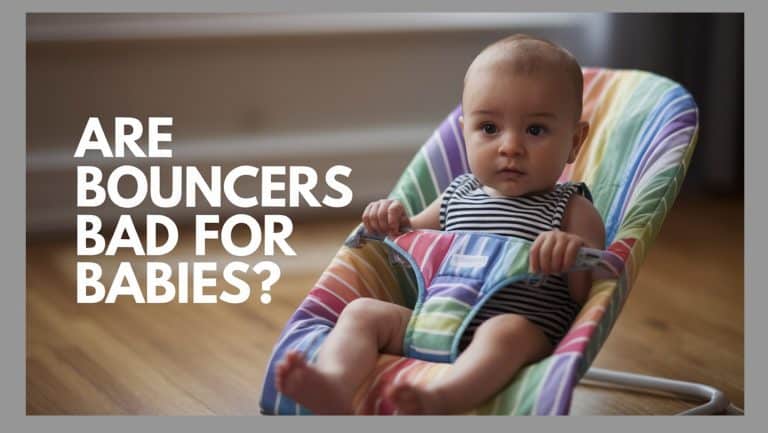
A baby bouncer is a small, reclined seat that moves when a baby kicks or when an adult gently rocks it. Some models vibrate or include toy bars. They are also called bouncer seats, infant bouncers, or baby rockers.
A bouncer is different from:
- A baby swing: Usually powered and designed to move from side to side or front to back.
- A rocker: May have a wider rocking base and may be intended for older babies, depending on the model.
- An inclined sleeper: A sleep product with a reclined surface. Some inclined sleepers have been recalled because of the risk of suffocation.
- A car seat: Designed for use in a vehicle. It is not a safe routine sleep space outside the car.
- A crib, bassinet, or play yard: Designed for infant sleep when used according to safety instructions.


The word “bouncer” covers many designs. Always check the product’s label and manual because age, weight, height, and developmental limits vary.
When can a bouncer be safe?
A bouncer is generally safest when a baby is awake, within the product’s limits, buckled correctly, and watched by an adult. The seat should be placed on a clear, stable floor away from stairs, pets, cords, heaters, windows, and other hazards.
A bouncer may help a caregiver take a short break to:
- Use the bathroom
- Prepare a bottle or meal
- Fold laundry nearby
- Talk with an older child
- Keep a baby close during a brief task
This does not mean a bouncer is risk-free. A baby can slump, slide, tip the seat, become trapped by straps, or fall if the bouncer is placed too high.
Safe-use checklist
Before placing a baby in a bouncer, check the following:
- The baby is awake.
- The baby fits the product’s stated age, size, and weight limits.
- The harness is fastened as directed.
- The baby’s head and neck remain in a safe position.
- The bouncer is on the floor, not on a counter, table, couch, bed, or chair.
- The surface is level and stable.
- No blankets, pillows, toys, or added padding are in the seat.
- The adult remains close enough to see and respond.
- The bouncer has not been recalled or damaged.
- The baby has not reached a developmental stage that makes the product unsafe.
Do not carry a bouncer with a baby inside it unless the manufacturer clearly designed it for carrying and provides instructions for doing so. Even then, carrying adds fall risk.

Why are bouncers dangerous for sleep?
The central risk is positional asphyxia. This can happen when a baby’s body position blocks breathing. In a reclined seat, a young baby may slump forward, with the chin pressed toward the chest. A baby may also turn the face into padding or become trapped against the side.
Babies have limited head and neck control. They may not be able to change position when breathing becomes difficult. A sleeping baby can therefore remain in a dangerous position without making enough noise to alert an adult.


The AAP’s safe-sleep guidance says babies should be moved to a firm, flat, non-inclined sleep surface if they fall asleep in a sitting device, including a bouncer, stroller, swing, or car seat. The AAP also recommends placing babies on their backs for every sleep.
A bouncer is not a nap spot
A bouncer may look comfortable, but comfort does not make it safe for sleep. The product’s reclined angle, harness, padding, and motion are not a substitute for a certified infant sleep surface.
Do not use a bouncer for:
- Overnight sleep
- Unsupervised naps
- Sleep while a caregiver is asleep
- Sleep in a separate room
- Routine sleep during travel or visits
- A makeshift bed inside a crib
If your baby falls asleep in a bouncer, move the baby to a crib, bassinet, or play yard as soon as practical. Place the baby on their back on a firm, flat mattress with only a fitted sheet.
Never cover the bouncer with a blanket to block light or noise. A cover can reduce airflow and increase the chance of overheating or suffocation.
Can a baby sleep in a bouncer for a few minutes?
No. The safest advice is to move a sleeping baby out of the bouncer, even if the baby has been asleep for only a few minutes.
Parents often face this situation when a baby finally settles after feeding or crying. Moving the baby may wake them, but allowing sleep to continue in the bouncer creates a preventable risk. If you need a safe place for a baby to sleep, use a crib, bassinet, or play yard that meets current U.S. safety standards.
A bouncer can be used while the baby is awake and supervised. It should not become the baby’s regular place to rest between naps.
When should a baby stop using a bouncer?
Stop using the bouncer when the manufacturer says to stop or when the baby reaches any listed limit. Also stop sooner if the baby can:
- Roll from the back to the stomach or stomach to the back
- Sit up without help
- Pull forward or push up strongly
- Lean far over the side
- Try to climb out
- Reach the product’s maximum weight or height
- Make the seat tip, shift, or rock in an unsafe way
Some bouncer manuals use a specific developmental warning, such as stopping when a baby can sit unaided. Others set a weight limit or prohibit use once a baby can roll. The manual controls because products differ.
Do not keep using a bouncer simply because the baby still fits by weight. Developmental movement can create a fall or tipping risk before the weight limit is reached.

How to use a baby bouncer more safely
Follow this practical sequence each time.
1. Inspect the bouncer
Look for:
- Loose or missing screws
- Torn fabric
- Cracked plastic
- Bent frame parts
- Frayed straps
- Broken buckles
- Missing warning labels
- Unstable legs or feet
- Unapproved replacement parts
Do not use a damaged bouncer. Contact the manufacturer for approved parts rather than making repairs with tape, string, or substitute hardware.


2. Check for recalls
In the United States, search the product name, model number, and manufacturer on the U.S. Consumer Product Safety Commission (CPSC) recall database. The model number may appear on a label under the seat or on the frame.
Do not assume a product is safe because it was given to you by a friend or family member. Older products may have been recalled, may lack current safety features, or may have missing instructions.
3. Set it on the floor
Use a flat floor in an area free of hazards. Never place a bouncer on:
- A kitchen counter
- A dining table
- A changing table
- A sofa
- An adult bed
- A countertop
- A washer or dryer
- A raised platform
- Stairs or a landing
Falls are one of the most common ways a raised bouncer can harm a baby. A floor-level bouncer may still tip, so keep it away from edges and heavy objects.
4. Secure the baby
Use every restraint required by the manual. The harness should be snug but not painfully tight. Check that the straps sit in the correct position and that the baby cannot slide under them.
Do not add a homemade insert, head support, pillow, blanket, or positioning device. Added items can change the baby’s position or cover the face.
5. Stay nearby
Supervision means more than being in the same house. Keep the baby within sight and hearing, and check the baby’s position often. A monitor does not make an unsafe sleep position safe.
If you need to leave the room, place the baby in a safe crib or play yard instead.
6. Stop when the baby shows distress
Remove the baby if you notice:
- Slumping
- A chin pressed to the chest
- Trouble breathing
- Blue, gray, or pale skin
- Repeated coughing or gagging
- Sweating or overheating
- A trapped arm or leg
- A loose or twisted harness
- Attempts to roll, sit, or climb
If a baby has trouble breathing or turns blue or gray, call 911 immediately.

Do bouncers affect development?
Short, supervised bouncer use is not known to harm normal development by itself. The concern is what the bouncer replaces.
Babies need frequent opportunities to move freely. Time on a firm floor while awake and watched lets babies practice kicking, reaching, turning, lifting the head, and pushing up. Long periods in a bouncer may limit this movement.
The AAP encourages supervised tummy time while a baby is awake. Tummy time supports muscle development and helps babies learn skills needed for rolling, sitting, and crawling.


A balanced routine can include:
- Short periods in a bouncer while the baby is awake
- Daily supervised tummy time
- Free movement on the floor
- Holding and talking with the baby
- Feeding and changing
- Safe sleep in a crib, bassinet, or play yard
There is no universal safe number of minutes for every baby. A useful rule is to treat the bouncer as a brief convenience, not as the main place where a baby spends awake time.
A baby who spends much of the day in containers such as swings, bouncers, car seats, and strollers may have fewer chances to move. Ask a pediatrician for guidance if you are concerned about muscle tone, head control, movement, or milestones.

Are vibrating bouncers bad for babies?
Vibration itself is not the main safety concern. The larger concerns are sleep, body position, falls, restraints, and prolonged use.
A vibrating bouncer can calm some babies while they are awake. However, vibration does not prevent positional asphyxia and does not turn the product into a safe sleep surface. If a baby falls asleep, move the baby to a crib, bassinet, or play yard.
Follow the manual for batteries, cleaning, weight limits, and use. Stop using the product if vibration causes the bouncer to move across the floor or if the frame becomes unstable.
Are bouncers bad for babies with reflux?
A bouncer may appear to help a baby with spit-up because the baby is upright. It should not, however, be used as a sleep solution for reflux.
The AAP recommends that babies with reflux sleep flat on their backs. Raising the head of a crib, using a wedge, or allowing a baby to sleep in a bouncer can increase sliding and breathing risks.
For frequent vomiting, poor weight gain, painful feeds, blood in vomit or stool, breathing problems, or signs of dehydration, contact the baby’s pediatrician. Do not use an inclined product as a treatment without medical advice.
Bouncer safety compared with other baby seats
The safest option depends on the task. A product designed for travel, feeding, play, or sleep may have different limits.
| Product | Main purpose | Safe for routine sleep? | Key caution |
|---|---|---|---|
| Bouncer | Short, supervised awake time | No | Use on the floor |
| Baby swing | Short, supervised awake time | No | Stop when limits or movement warnings apply |
| Car seat | Vehicle travel | No | Move baby after arriving |
| Stroller seat | Transport | No | Follow the stroller manual |
| High chair | Feeding | No | Use only when the baby is developmentally ready |
| Crib, bassinet, or play yard | Infant sleep | Yes, when properly used | Use a firm, flat surface and fitted sheet |
A car seat remains the right choice for a moving vehicle. It is not the right choice for routine sleep at home. The same principle applies to bouncers and swings: a product can be safe for one activity but unsafe for another.

Common bouncer safety mistakes
Using the bouncer on a raised surface
This turns a low-level fall risk into a serious fall hazard. Always use the bouncer on the floor unless the manufacturer gives a specific, approved alternative—which is uncommon for infant bouncers.
Letting a baby nap in the bouncer
A sleeping baby may look peaceful, but the body can gradually slump. Move the baby to a safe sleep space.
Leaving a baby unattended
A baby may shift position, become trapped, or pull the bouncer over. Stay close enough to intervene.
Adding blankets or pillows
These items can obstruct breathing or change the seat’s intended angle. Use only parts supplied or approved by the manufacturer.


Ignoring developmental changes
A bouncer that was suitable last week may become unsafe after a baby learns to roll or sit. Recheck the manual as your baby develops.
Buying a used bouncer without checking its history
Ask for the model number and instructions. Check the CPSC database, inspect the frame, and confirm that all parts are present.
Confusing a bouncer with an inclined sleeper
Some products look similar but have different designs and intended uses. Never rely on appearance alone. Read the label and manual, and check for recalls.

What does U.S. safety guidance say?
The AAP’s safe-sleep recommendations support three basic points:
- Babies should sleep on their backs.
- Babies should sleep on a firm, flat, non-inclined surface.
- Sitting devices, including bouncers and swings, should not be used for routine sleep.
The CPSC regulates infant products and publishes recalls and safety alerts. Federal rules and standards can change, and individual products may have additional instructions. The product manual is therefore part of the safety information, not optional reading.
The federal Safe Sleep for Babies Act addresses certain inclined sleepers and crib bumpers. It does not mean every bouncer is a sleep product or that every bouncer has the same risk. Parents still need to follow the product’s specific warnings and use it only for its intended purpose.
These guidelines do not eliminate every risk. They reduce avoidable risks when caregivers use the product as directed.

When should you call the pediatrician?
Contact your child’s pediatrician if you have questions about using a bouncer with a premature baby, a baby with low muscle tone, breathing problems, reflux, or a diagnosed medical condition.
Seek urgent medical help if your baby:
- Has trouble breathing
- Turns blue, gray, or very pale
- Becomes limp or difficult to wake
- Chokes and does not recover quickly
- Has a serious fall
- Shows unusual sleepiness after an injury
For a possible product injury, keep the product and note the model number. You can report a dangerous product or injury to the CPSC through SaferProducts.gov.
Frequently asked questions
Are baby bouncers safe for newborns?
Some bouncers are designed for newborns, but only when the baby meets the manufacturer’s minimum size and age requirements. Newborns need close supervision because they have limited head and neck control. Use the lowest approved recline and the full harness as directed.
How long can a baby stay in a bouncer?
There is no single time limit that applies to every model or baby. Keep sessions brief, vary the baby’s position, and give the baby plenty of supervised floor time. Remove the baby sooner if they slump, become uncomfortable, or try to roll or sit.
Can I put a bouncer inside the crib?
No. A bouncer does not belong inside a crib, bassinet, or play yard. Use the sleep space by itself with a firm mattress and a fitted sheet.
Is a bouncer safer than a swing?
Neither is a safe routine sleep space. The safer choice for awake use depends on the exact product, the baby’s developmental stage, and whether the caregiver follows the manual. Both should be used on a stable surface with supervision.
What should I do if my baby falls asleep in a bouncer?
Move the baby to a crib, bassinet, or play yard and place the baby on their back. Do not cover the bouncer or leave the baby sleeping there while you rest.
The bottom line
Bouncers are not inherently bad for babies. They can be useful for short, supervised awake time when placed on the floor and used within the manufacturer’s limits.
The firm rule is simple: a bouncer is for awake time, not sleep. Move a sleeping baby to a firm, flat sleep surface, stop using the bouncer when the baby reaches its limits or begins new movements, and check the product for recalls before use.
Sources and further reading
- American Academy of Pediatrics: How to Keep Your Sleeping Baby Safe
- American Academy of Pediatrics: Tummy Time
- U.S. Consumer Product Safety Commission: Recalls
- U.S. Consumer Product Safety Commission: Safe Sleep
- U.S. Consumer Product Safety Commission: Report a Product or Injury
Conclusion
A baby bouncer can be a helpful short-term tool, but it should never replace a crib, bassinet, or play yard for sleep. Keep the baby awake, buckled, visible, and on the floor. When in doubt, follow the manual and ask the child’s pediatrician about your baby’s specific needs.
