
A co-sleeper bassinet can be safe when it is a separate, flat, firm sleep space that meets U.S. safety rules and is used exactly as the manual says. It should sit near the adult bed, not in the adult bed.
The safest setup for most U.S. families is room sharing without bed sharing. The American Academy of Pediatrics (AAP) recommends placing the baby on their back on a firm, flat surface with only a fitted sheet. Keep the baby’s sleep space in the parents’ room, ideally for at least the first six months.
The term co-sleeper can mean two different products:


- A bedside sleeper sits next to the adult bed. It may have a side that lowers or a panel that opens.
- An in-bed sleeper rests on top of the adult mattress. This is not the same as a regulated bassinet or bedside sleeper and can expose a baby to adult bedding and soft surfaces.
This guide focuses on bedside bassinets and explains why some co-sleeper products are safer than others.
What Makes a Co-Sleeper Bassinet Safe?
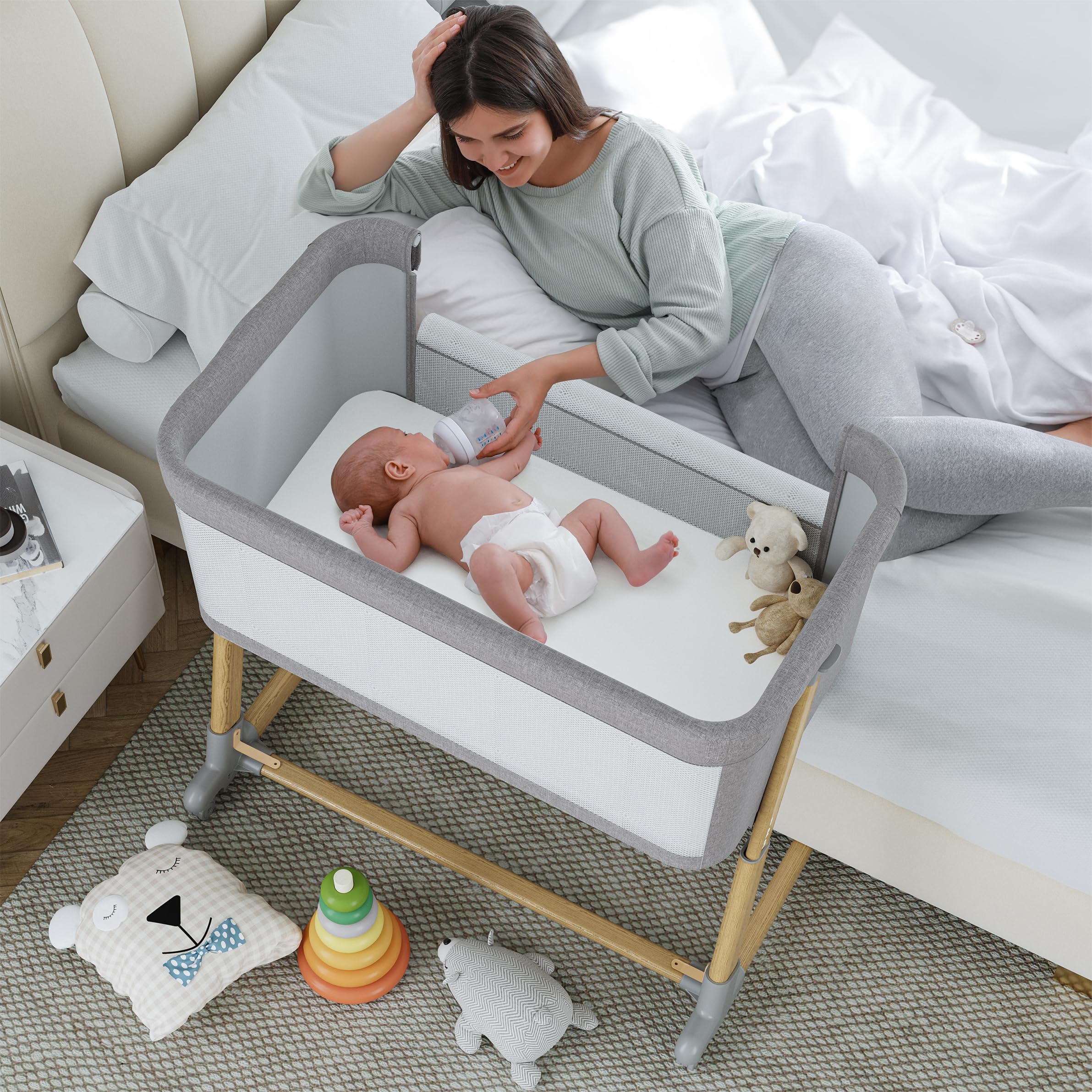
A safe co-sleeper bassinet gives the baby a separate sleep surface with a firm, level mattress and breathable sides. It should not create a gap between the bassinet and the adult bed.
In the United States, bassinets and bedside sleepers are covered by mandatory federal safety standards enforced by the U.S. Consumer Product Safety Commission (CPSC). These rules address features such as structural strength, side height, mattress fit, stability, and entrapment risks.
Look for these features:
- A flat, firm mattress that does not sag.
- A fitted sheet made for that exact model.
- A stable base that does not rock or tip during normal use.
- Mesh or other breathable side panels.
- A secure attachment system if the product connects to the adult bed.
- No large gap between the bassinet and the adult mattress.
- Clear instructions, model information, and warning labels.
- A product that has not been recalled.
Federal compliance is important, but it does not make unsafe use safe. A compliant bedside sleeper can still become dangerous if it is placed on a couch, used with extra padding, or attached incorrectly.
The product should also match your baby’s current stage. Most manuals say to stop use when the baby reaches a certain weight, height, or developmental milestone, such as rolling over, pushing up, or sitting. These limits vary by model, so follow the manual rather than a general age rule.

Bedside Sleeper vs. In-Bed Co-Sleeper
A bedside sleeper and an in-bed co-sleeper have different risk profiles. A bedside sleeper has its own base and sleep surface. An in-bed product places the baby on or inside the adult bed, where pillows, blankets, body weight, and mattress gaps can create hazards.
The AAP does not recommend bed sharing. Adult beds are not designed as infant sleep spaces. A baby may become trapped between the mattress and wall, covered by bedding, or pressed against an adult.
A safer arrangement is:
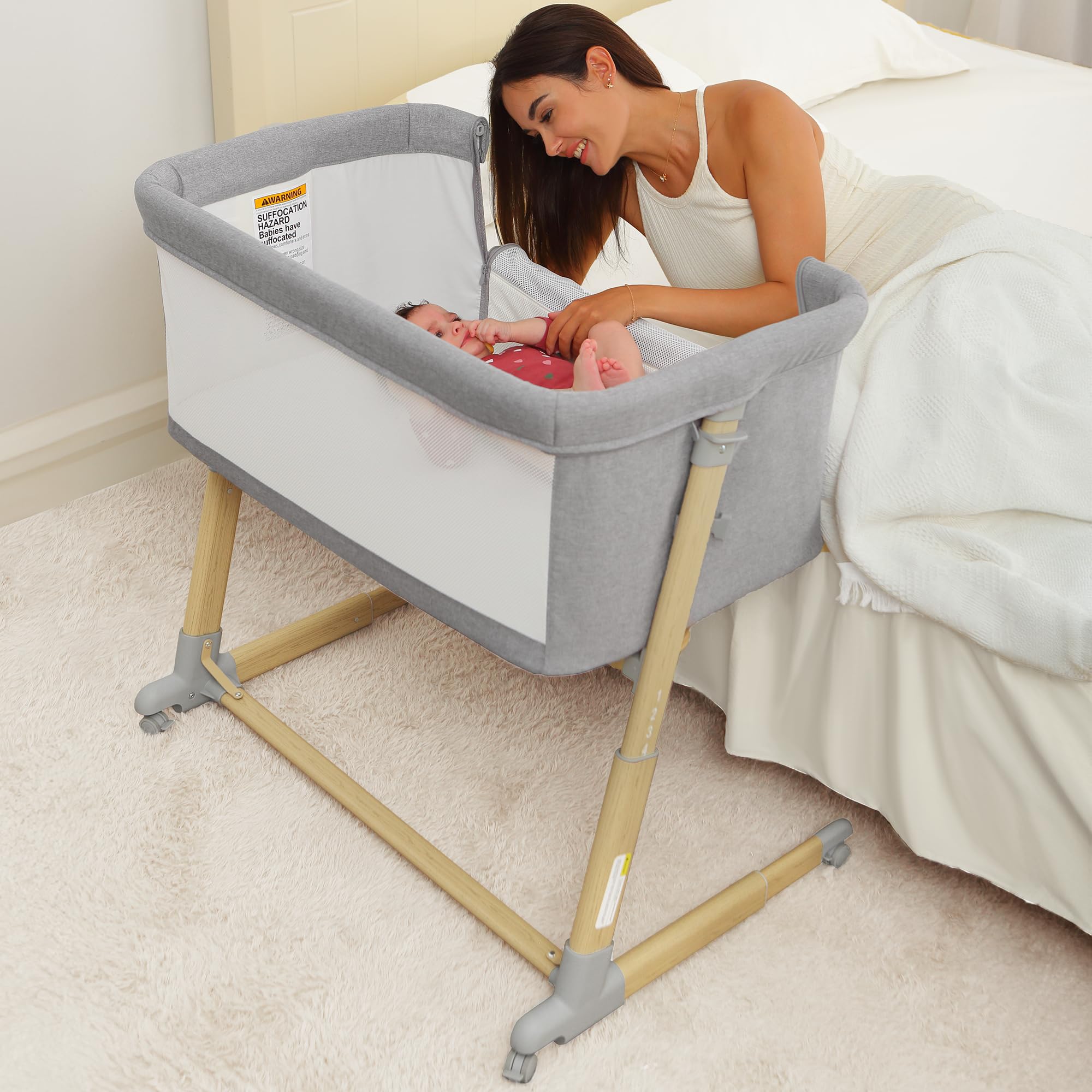
- Place the bassinet beside the adult bed.
- Keep the baby inside the bassinet for every sleep.
- Use only the mattress and sheet approved for that model.
- Keep pillows, comforters, phone chargers, and other items outside the bassinet.
- Return the baby to the bassinet after feeding or comforting.
Some bedside sleepers have a drop-down side or an open side that connects to the bed. This feature can make nighttime care easier, but it also creates a possible gap or entrapment point. Use the attachment straps and support parts exactly as directed.


If the bassinet moves away from the bed, the side does not lock, or the mattress sits lower than expected, stop using it until the problem is fixed.

How to Set Up a Co-Sleeper Bassinet Safely
Safe setup starts before the baby sleeps in the product. Read the manual, check every part, and use the bassinet only in the way the manufacturer describes.
1. Check the product before assembly
Confirm the model name and check the CPSC recalls database. You can also search the product on SaferProducts.gov.
Do not use a bassinet with:
- Missing or broken parts.
- A torn side panel.
- A loose or damaged mattress.
- A gap between the mattress and the frame.
- Bent rails or a weak base.
- Unapproved replacement parts.
- A modified or homemade attachment system.
Secondhand products need extra care. A used bassinet may be missing its manual or parts. It may also be subject to an old recall. If you cannot identify the exact model and confirm its condition, choose another sleep surface.
2. Assemble it on a stable floor
Place the bassinet on a firm, level floor. Do not use it on a bed, sofa, recliner, table, countertop, or soft rug that makes the base unstable.
Lock every wheel, leg, rail, and support. Test the frame with gentle pressure. It should not fold, twist, or shift in a way the manual does not permit.
3. Use only the original mattress and sheet
The mattress should fit tightly, with no space around its edges. Use only the sheet made for that mattress or one that the manual approves.
Do not add:
- Mattress toppers.
- Blankets under the baby.
- Pillows.
- Cushions.
- Positioners.
- Wedges.
- Rolled towels.
- Aftermarket “comfort” pads.
A mattress that feels soft to an adult may allow an infant’s face to sink into it. Firmness is a safety feature, not a comfort flaw.
4. Place the bassinet beside the bed
Keep the bassinet close enough to reach the baby, but do not place it where adult bedding can fall inside. If it attaches to the bed, fasten every required strap and support.
After setup, check the connection each time the bassinet is moved. A gap can appear when the bed frame shifts, the wheels are unlocked, or the straps loosen.
5. Put the baby down correctly
For every nap and nighttime sleep:
- Place the baby on their back.
- Use a clear bassinet with only a fitted sheet.
- Keep the baby’s head and face uncovered.
- Stop swaddling when the baby shows signs of rolling.
- Move the baby to a crib or other approved sleep space when the bassinet limits are reached.


These steps reflect guidance from the AAP safe-sleep recommendations.
Why a Flat, Empty Bassinet Matters
A baby’s airway can become blocked by soft items or by a body position that bends the neck. Infants have less strength than older children and may not be able to move away from a blanket, pillow, or side wall.
A flat sleep surface helps keep the baby’s head and neck in a neutral position. An inclined surface can allow the head to fall forward, which may make breathing harder. For this reason, do not use a car seat, swing, bouncer, lounger, or inclined sleeper as a routine sleep space unless the product is specifically designed and approved for that purpose.
The CPSC warns against inclined infant sleep products that allow a sleep surface to be more than 10 degrees from horizontal. A simple label such as “sleep-ready” does not replace checking the product’s design, instructions, and current safety status.
If a baby falls asleep in a stroller, swing, carrier, or car seat, move them to a firm, flat, separate sleep surface as soon as practical. A car seat should remain installed for travel, but it should not become the baby’s regular nap space outside the vehicle.
Is It Safe to Use a Co-Sleeper Bassinet at Night?
Yes, a bedside bassinet can be used at night if it remains a separate sleep space and meets the same safe-sleep conditions used for naps.
Nighttime brings extra risks because adults are tired and may fall asleep while feeding. A practical plan can reduce this risk:
- Feed the baby in a clear area away from couches and recliners when possible.
- Keep the bassinet within arm’s reach.
- Remove pillows and loose covers from the area before feeding in bed.
- Return the baby to the bassinet after feeding or soothing.
- Ask another adult to help if you feel too sleepy to stay awake.
The danger is especially high on a sofa or recliner. Soft cushions and gaps can trap a baby. If you doze while feeding, move the baby to the bassinet as soon as you wake.
Room sharing is different from bed sharing. The baby can be close enough for feeding and comfort without sharing the adult mattress. The AAP recommends room sharing without bed sharing because it may lower the risk of sleep-related infant death while keeping the baby nearby.

When Should You Stop Using a Co-Sleeper Bassinet?
Stop using the bassinet when the manual says to stop or when the baby reaches a listed weight, height, or developmental limit. Do not wait for the baby to look uncomfortable.
Common reasons to stop include:
- The baby starts rolling or trying to roll.
- The baby pushes up on their hands or knees.
- The baby can sit up.
- The baby reaches the product’s weight or height limit.
- The baby’s head or body reaches a position the manual warns against.
- The bassinet becomes unstable or damaged.
There is no single safe age for every bassinet. Some products are designed for young newborns only. Others have higher limits. The manufacturer’s instructions control the product’s use, but they do not override safe-sleep guidance.
When the baby outgrows the bassinet, move them to a full-size crib, portable crib, or play yard that meets current U.S. safety standards. Keep the same sleep rules: back sleeping, a firm flat surface, and no loose items.

Common Co-Sleeper Bassinet Mistakes
Most avoidable problems come from changes that seem small but alter the sleep surface or the space around it.


Adding a padded insert
An extra pad may create a softer or less level surface. Use only the mattress supplied with the product or an approved replacement.
Using a blanket to keep the baby warm
Loose blankets can cover the face. Dress the baby in a sleep sack or wearable blanket that fits well and does not cover the head. Avoid weighted sleep products unless your child’s clinician gives specific advice; the AAP advises against weighted blankets, swaddles, and sleep sacks for infants.
Leaving the bassinet attached with a gap
A small gap can become an entrapment space. Recheck the connection after moving the bed, adjusting the frame, or changing bedding.
Using a recalled product
Search the exact model, not just the brand name. Similar products may have different designs and recall notices.
Continuing after rolling begins
Swaddling and bassinet use often end around the same developmental change. Rolling can happen earlier than expected. Stop swaddling at the first signs of rolling and follow the bassinet’s transition rules.
Treating a monitor as a safety device
Breathing, heart-rate, and movement monitors cannot make an unsafe sleep setup safe. The U.S. Food and Drug Administration warns that infant monitors should not replace safe-sleep practices or supervision.

A Quick Safety Check
Use this short check before each sleep:
| Check | Safe condition |
|---|---|
| Location | On a stable floor beside the adult bed |
| Position | Baby is on their back |
| Surface | Firm, flat, and level |
| Bedding | Only a fitted sheet |
| Space | No pillows, blankets, toys, or padding |
| Bassinet | No damage, missing parts, or recall |
| Attachment | Secure, with no gap to the adult bed |
| Limits | Baby has not reached the manual’s weight or movement limit |
| Airway | Face and head are uncovered |
If any answer is “no,” correct the problem before using the bassinet. If you cannot correct it, use another approved sleep space.

Key Takeaways
- A bedside co-sleeper bassinet can be safe when used correctly.
- Keep the baby in a separate bassinet, not on the adult mattress.
- Choose a firm, flat, level sleep surface with only a fitted sheet.
- Place the baby on their back for every nap and night.
- Check for recalls, damage, missing parts, and gaps.
- Follow the exact weight, height, and developmental limits in the manual.
- Stop using the bassinet when the baby rolls, pushes up, sits, or reaches the listed limit.
- Never rely on an infant monitor to replace safe-sleep practices.
Frequently Asked Questions
Is a co-sleeper bassinet safer than a crib?
Not necessarily. A compliant bedside bassinet and a compliant crib can both provide a safe sleep space when used properly. A bassinet is smaller and keeps a newborn near the parent, but it usually has lower weight and movement limits. A crib lasts longer and gives more room as the baby grows.
Can a baby sleep in a bedside bassinet all night?
Yes, if the product is designed for infant sleep, the baby is within its limits, and the setup follows the manual. Keep the baby on their back on the bassinet’s firm, flat mattress with no loose items.
Can I use a co-sleeper bassinet inside my bed?
Do not place a bedside bassinet or other infant sleep product on the adult mattress unless its instructions specifically require that use and the product is designed and approved for it. In general, the safer choice is a separate bassinet beside the bed.
Are mesh-sided bassinets safe?
Mesh sides can improve airflow and visibility, but mesh alone does not prove that a product is safe. The bassinet still needs a stable frame, a firm mattress, secure construction, correct assembly, and proper use.
What should I do if my baby falls asleep while feeding?
Move the baby to the bassinet as soon as you wake or finish feeding. Avoid feeding on a sofa or recliner if you might fall asleep. If you are concerned about repeated nighttime sleep or feeding problems, speak with your baby’s pediatrician.


Can I use a fitted sheet from another brand?
Use the sheet supplied with the bassinet or one that the manufacturer specifically approves. A sheet that is too loose, too large, or made for a different mattress can bunch up and create a hazard.
Conclusion
A co-sleeper bassinet is not automatically safe just because it sits beside the bed. Safety depends on the product, the setup, and the baby’s stage of development.
For a safer choice in the United States, use a current, non-recalled bedside sleeper or bassinet with a firm, flat mattress. Keep it next to the adult bed, keep it empty except for the fitted sheet, and follow the manufacturer’s limits. When in doubt about a product’s design, damage, recall status, or use with your baby, contact the manufacturer or your child’s pediatrician before using it.
