
For most babies, try to burp for one to two minutes after a feeding or during a natural pause. Stop sooner if your baby seems relaxed and no longer needs to burp. There is no set time that every baby must burp.
Some babies burp within seconds. Others need a few gentle pats. Some do not burp at all, especially after breastfeeding. The goal is not to make a burp happen. The goal is to help your baby release swallowed air without causing stress or discomfort.
This guide follows general guidance used by U.S. pediatric organizations, including the American Academy of Pediatrics. If your baby has trouble breathing, repeated vomiting, poor feeding, or signs of illness, contact your child’s doctor.
How Long Should You Burp a Baby?
Try burping your baby for about one to two minutes. Use gentle pressure and slow movements. If no burp comes after a short attempt and your baby looks comfortable, you can stop.


A baby does not need to burp after every feeding. Babies swallow different amounts of air based on how they feed, their latch, the bottle and nipple flow, and their body position.
Use this simple guide:
| Situation | What to try |
|---|---|
| Baby is calm after feeding | Hold upright for a few minutes, then stop if comfortable |
| Baby squirms, arches, or cries | Pause the feed and try a gentle burp |
| Bottle-fed baby | Burp during a pause and again at the end |
| Breastfed baby | Try when changing breasts and after feeding |
| No burp after one to two minutes | Stop if the baby is calm |
| Baby spits up often | Keep the baby upright while awake and ask the child’s doctor for advice |
A burp may come quickly, or it may not come at all. A missing burp is not automatically a problem.
When Should You Burp a Baby?
Burp your baby when the baby shows signs of swallowed air, during a feeding pause, and after feeding. You do not always need to interrupt a calm, effective feeding.
During bottle-feeding
Bottle-fed babies may swallow more air, especially when the bottle nipple flow is too fast or the bottle is held in a way that leaves the nipple partly empty.
Try a burp:
- About halfway through the bottle
- When your baby pauses or turns away
- If your baby becomes fussy or squirms
- After the bottle is finished
Do not force your baby to finish the bottle. The CDC recommends watching for hunger and fullness cues, such as turning away, closing the mouth, or relaxing the hands.
During breastfeeding
A breastfed baby may need a burp when switching breasts or after nursing. Some breastfed babies swallow very little air and may not burp each time.
If your baby is feeding well and seems content, you usually do not need to stop often just to burp. If the baby pulls away, fusses, or arches the back, pause and try an upright position.
If your baby falls asleep
If your baby falls asleep while feeding, hold the baby upright for a short time and try a gentle burp. Do not shake, bounce, or pat hard.
Once you finish, place the baby on the back on a firm, flat sleep surface. The national Institutes of Health’s Safe to Sleep guidance advises against placing a baby to sleep on a couch, recliner, adult bed, or inclined surface.

How to Burp a Baby Safely
The safest method uses support, an upright position, and gentle pats or rubs. Keep one hand under the baby’s head and neck at all times.


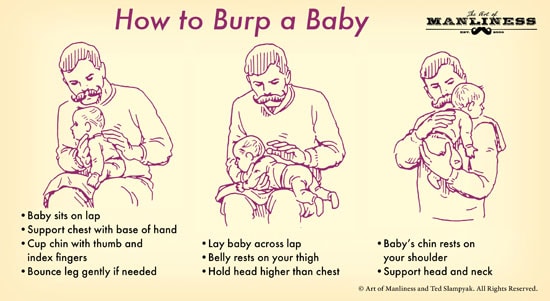
Method 1: Over your shoulder
- Place your baby upright against your chest.
- Rest the baby’s chin on your shoulder.
- Support the head and neck with one hand.
- Use the other hand to gently pat or rub the back.
- Continue for about one to two minutes.
Put a burp cloth over your shoulder. Babies often bring up a small amount of milk during or after a burp.
Method 2: Sitting on your lap
- Sit your baby on your lap, facing to the side or slightly away from you.
- Support the chest and chin with your hand.
- Keep your fingers away from the throat.
- Lean the baby slightly forward.
- Gently pat or rub the back.
This position may help babies who do not like being held over the shoulder.
Method 3: Face-down across your lap
- Place your baby face-down across your lap.
- Keep the head higher than the chest.
- Support the head and jaw.
- Use gentle pats or rubs on the back.
- Stop after a minute or two if no burp comes.
Never press on the neck or throat. Do not let the baby’s face become covered by clothing, blankets, or your body.
Use gentle pressure
A soft, cupped hand can make a light pat. You can also rub small circles up the back. A hard slap is not needed and may hurt.
If your baby cries more, arches strongly, turns red, or seems distressed, stop and change positions. A brief pause may work better than more patting.

What If Your Baby Does Not Burp?
If your baby does not burp after one to two minutes, stop trying when the baby is calm. Hold the baby upright for a few more minutes if that position seems soothing, then continue your normal routine.
Try these steps if the baby still seems uncomfortable:
- Check the feeding position.
- Make sure the baby has a deep latch during breastfeeding.
- Keep the bottle nipple filled with milk during bottle-feeding.
- Slow the feed if the baby gulps, coughs, or leaks milk.
- Take a short break before offering more milk.
- Try a different upright burping position.
- Ask the baby’s doctor or a lactation professional for help if the issue happens often.
Do not keep patting for a long time. More burping is not always better. Fussiness can also come from hunger, a wet diaper, tiredness, overheating, a fast milk flow, or illness.
Does a baby need to burp after every feeding?
No. Some babies rarely burp. If your baby feeds well, has a normal pattern of wet diapers, gains weight as expected, and seems comfortable, a missing burp is usually not a concern.
Burping may be more useful when a baby drinks quickly, swallows air, has a shallow latch, or becomes uncomfortable during feeds.
Can you burp a baby too hard?
Yes. Hard pats, shaking, bouncing, or pressing on the belly can cause pain or injury. Use a gentle touch and support the head and neck.


Never shake a baby, even if the baby is crying. If you feel overwhelmed, place the baby safely on the back in the crib and take a short break. In the United States, you can call or text 988 for crisis support if you feel at risk of harming yourself or someone else.
How Long Should You Keep a Baby Upright After Feeding?
There is no universal number of minutes for every baby. Hold your baby upright for about 10 to 15 minutes if the baby is prone to spit-up or seems more comfortable upright. This is a comfort measure, not a way to prevent every episode of reflux.
Do not use a car seat, swing, or inclined sleeper as a routine sleep space. Sitting in a semi-reclined position can allow a baby’s head to fall forward and affect breathing.
If your baby falls asleep in a car seat during travel, move the baby to a firm, flat sleep surface when you reach your destination. Always follow current safe-sleep guidance from the American Academy of Pediatrics.
Small spit-ups are common in young babies. The muscle between the stomach and esophagus is still developing, so milk can flow back up. Spitting up is different from forceful vomiting.
Contact your baby’s doctor if spit-up is frequent and painful, affects feeding, or comes with poor weight gain. Seek urgent medical care for green vomit, blood, repeated forceful vomiting, trouble breathing, blue or gray skin, unusual sleepiness, or signs of dehydration.

Burping by Baby Age
The best burping routine can change as your baby grows. Younger babies often need more support because they have less control of their head and trunk.
Newborns
Newborns may need a burp during and after feeds. Keep the baby’s head and neck supported. A short, gentle attempt is enough if the baby is calm.
Newborns can also tire during feeding. If a baby is hard to wake, feeds poorly, or has fewer wet diapers than expected, call the baby’s health care provider.
Babies around 1 to 3 months
Many babies become better at feeding and may need less help. Continue to burp when the baby seems gassy or unsettled, but do not treat burping as a required step after every feed.
Babies around 4 to 6 months
Some babies can sit with support and may release air more easily. You can still use an upright hold, but keep supporting the baby as needed.
At this age, a baby may also become more distracted during feeds. Feed in a calm setting if the baby gulps, pulls away, or swallows extra air.
Older babies
As babies gain control and begin to move more, they often need less help with burping. If an older baby seems comfortable after feeding, there is usually no reason to continue trying to produce a burp.

Signs That Your Baby May Need a Burp
A baby who needs a pause may:
- Squirm or wiggle
- Pull away from the breast or bottle
- Cry during a feed
- Arch the back
- Clench the fists
- Bring the knees toward the belly
- Gulp or swallow repeatedly
- Have milk leak from the mouth during bottle-feeding
- Seem full before finishing the feed


These signs do not prove that gas is the cause. Watch the pattern. If the same symptoms happen at most feeds, ask a pediatrician, nurse, or lactation consultant to assess feeding.
A fast-flow bottle nipple, poor latch, oversupply, or a feeding position that lets the baby swallow air may contribute to discomfort. Changing nipple flow or feeding technique should be done carefully, especially with a young or premature baby.

When to Call a Pediatrician
Call your baby’s doctor if you are worried about feeding, weight gain, or repeated discomfort. Ask for advice if your baby:
- Refuses several feeds
- Coughs, chokes, or turns blue during feeds
- Vomits often or forcefully
- Has blood or green fluid in the vomit
- Has fewer wet diapers than usual
- Seems unusually sleepy or weak
- Has a swollen or very firm belly
- Cries in pain during most feeds
- Does not gain weight as expected
Call 911 in the United States for trouble breathing, blue or gray skin, severe choking, unresponsiveness, or another emergency.
A pediatrician can check feeding technique, reflux, milk intolerance, infection, or another cause. Do not start gas drops, gripe water, thickened feeds, or formula changes without discussing them with the child’s clinician.

Common Burping Mistakes to Avoid
Avoid these common mistakes:
- Trying for too long: A one- to two-minute attempt is often enough.
- Patting too hard: Gentle pats or back rubs work without force.
- Forcing a burp: Not every baby needs one.
- Stopping a calm feed too often: Interrupt only when the baby shows signs of discomfort or needs a pause.
- Ignoring the latch or bottle flow: Feeding technique can affect swallowed air.
- Putting a baby to sleep upright: Upright holding is for comfort while awake and supervised, not routine sleep.
- Using an inclined sleeper: Inclined products do not replace a firm, flat sleep surface.
- Assuming every cry means gas: Babies cry for many reasons.

Frequently Asked Questions
How many minutes should I burp my baby?
Try for about one to two minutes. Stop earlier if your baby burps and relaxes. If no burp comes and the baby is comfortable, you can stop.
Should I burp my baby during or after feeding?
Either can be right. Bottle-fed babies often benefit from a pause halfway through and another attempt at the end. Breastfed babies may need a burp when changing breasts or after nursing.
What happens if I do not burp my baby?
Usually, nothing serious happens if a comfortable baby does not burp. The baby may pass the swallowed air later. If the baby becomes uncomfortable, try holding the baby upright and using a gentle back rub.
Is spit-up normal after burping?
Small amounts of spit-up are common in babies. Keep the baby upright while awake for a short time after feeding, but always place the baby on the back on a firm, flat surface for sleep. Call the doctor for forceful vomiting, green or bloody vomit, breathing problems, poor feeding, or poor weight gain.
Should I burp a sleeping baby?
You may gently try to burp a sleeping baby after feeding, especially if the baby often seems uncomfortable. Do not wake the baby fully or use rough movements. After feeding, place the baby on the back in a safe sleep space.
Conclusion
Most babies need only one to two minutes of gentle burping. Try during a natural feeding pause or after the feed. If your baby is calm and no burp comes, you can stop.
Burping supports comfort, but it is not a test that every baby must pass. Focus on safe feeding, a good latch or bottle position, your baby’s hunger and fullness cues, and signs that need medical care.


