
For babies in the United States, you should not raise one side of a bassinet for sleep unless the bassinet’s manufacturer specifically designed and approved that position. A baby’s sleep surface should be firm, flat, level, and free of soft items.
Tilting a bassinet with towels, books, pillows, wedges, or the mattress itself can let a baby slide into a position that blocks breathing. It can also increase the risk of the baby rolling onto the side or stomach.
The safest setup is a bassinet or crib that meets current U.S. safety rules and has a flat mattress with only a fitted sheet.

Why a Flat Bassinet Is Safer
A flat sleep surface helps keep a baby’s head, neck, and airway in a safe position. When one end is raised, gravity may pull the baby downward. The baby can then curl forward, press the face against the mattress, or slip into a corner.


The risk is greater for young babies because they have limited head and neck control. They may not be able to move away if their chin drops toward their chest or their face becomes covered.
The American Academy of Pediatrics recommends that babies sleep on a firm, flat, non-inclined surface. The surface should have a fitted sheet and no pillows, blankets, positioners, bumpers, or stuffed toys. This guidance applies to naps and nighttime sleep.
What does “flat” mean?
A flat bassinet has a sleep surface that does not slope from head to foot. It should also not dip, sag, or bend under the baby’s weight.
A small design feature, such as a curved edge around the bassinet, is not the same as tilting the sleep surface. The mattress itself should remain level.
The U.S. Consumer Product Safety Commission warns about infant sleep products that place babies at an incline. Products with a sleep surface greater than 10 degrees have been linked to dangerous body positions and are not appropriate for routine infant sleep.

Can You Elevate a Bassinet for Reflux or a Stuffy Nose?
No. Elevating the bassinet is not a proven or safe way to treat reflux, congestion, or a cold. Babies with reflux should still sleep flat on their backs.
A raised head may seem helpful because adults often sleep with extra pillows when they have heartburn or congestion. Babies are different. A baby can slide down an incline, and the position may narrow the airway.
The AAP does not recommend using wedges, sleep positioners, or inclined products to treat reflux during sleep. Reflux usually improves as a baby grows. In most cases, safe sleep is safer than changing the sleep angle.
For a stuffy nose, ask your child’s clinician what care is suitable. A clinician may suggest options such as saline drops and gentle suction before feeds or sleep. Do not place a pillow under the baby or raise the bassinet legs unless the product instructions clearly allow it and a qualified clinician tells you to do so.
Call a health professional if your baby has poor weight gain, repeated forceful vomiting, breathing trouble, blue or gray skin, blood in vomit or stool, fever in a young infant, or signs of dehydration.

How to Set Up a Safe bassinet
use this checklist before placing your baby down:


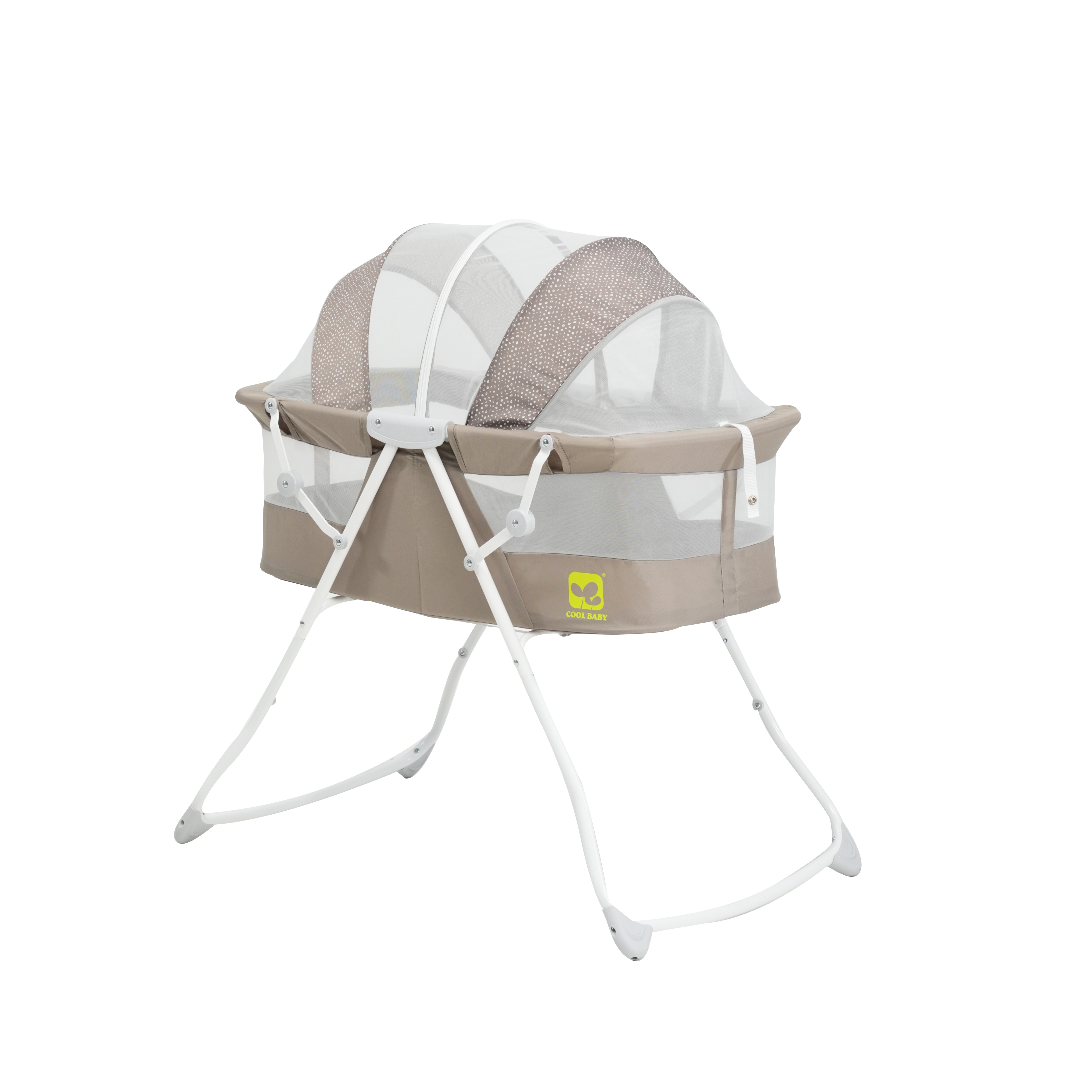
- Use a bassinet, crib, or play yard intended for infant sleep. Check the product label and instructions.
- Place it on a firm, level floor. Do not put it on a bed, sofa, table, counter, or other raised surface.
- Keep the mattress flat and secure. It should fit the product without gaps at the sides.
- Use only the fitted sheet made for that mattress. Do not add a second pad or extra layer.
- Put the baby on their back for every sleep. This includes naps.
- Keep the sleep area empty. Remove pillows, blankets, toys, bumper pads, wedges, and positioners.
- Keep the bassinet close to your bed, but not in your bed. Room sharing is safer than bed sharing.
- Check the bassinet before each use. Look for loose parts, broken supports, missing hardware, tears, or a mattress that shifts.
- Follow the product’s limits. Stop using the bassinet when the baby reaches the listed weight, height, age, or developmental limit.
A baby may wear a wearable blanket or sleep sack if it fits well and does not weigh the baby down. Weighted sleep products are not recommended for infant sleep.

What If the Bassinet Mattress Looks Slanted?
First, stop using it for sleep until you find the cause. A slant may come from an uneven floor, a frame that is not fully open, a loose support, a bent base, or a mattress that is not seated correctly.
Check the manufacturer’s instructions for assembly. Confirm that every leg and locking point is fully engaged. Make sure the bassinet stands on a level surface and that the mattress lies flat.
Do not fix the slope with household items. Towels, cardboard, books, foam, and folded blankets can shift or create a soft spot. Do not cut, fold, bend, or replace the mattress with an item that the manufacturer has not approved.
Contact the manufacturer if the bassinet remains uneven or if the product instructions are unclear. Ask whether the model is intended for a level sleep surface. If the company cannot confirm that the setup is safe, use another approved sleep space.
You can also search for recalls through the U.S. Consumer Product Safety Commission recall database.

When Is an Inclined Position Allowed?
An inclined position may be allowed only when it is part of a product’s intended function and the product is not being used for unsupervised sleep. For example, some baby seats or swings are made for awake, supervised use. They are not substitutes for a bassinet or crib.
Always follow the exact instructions for the product. A seat that allows a baby to recline does not mean a bassinet can be tilted. A mattress that fits one model may not be safe in another.
If a clinician recommends a special sleep position because of a medical condition, ask for clear instructions about the exact equipment and level of supervision. Do not assume that a home wedge or raised bassinet meets the recommendation.
For most babies, a medical concern does not change the basic safe-sleep rule: back, alone, and flat on a firm surface.

Can You Raise One Side While Watching the Baby?
Supervision does not remove the danger of an inclined sleep surface. A caregiver may look away, fall asleep, or fail to notice that the baby has slid into a risky position.
If the baby falls asleep in a swing, bouncer, stroller, carrier, or car seat, move the baby to a firm, flat sleep surface as soon as practical. Keep the baby’s airway clear while making the transfer.
Holding a baby upright after a feed can sometimes help with spit-up, but that is different from putting the baby to sleep on an incline. Keep the baby awake and watched during upright holding. When it is time to sleep, place the baby flat on their back.

Common Mistakes to Avoid
These changes can make a bassinet unsafe:


- Placing a rolled towel under the mattress
- Putting a pillow beneath the baby’s head
- Raising only the head end of the bassinet
- Using a reflux wedge or sleep positioner
- Adding an after-market mattress topper
- Using a product with a sagging or soft mattress
- Letting the baby sleep in a sitting device
- Using a bassinet after the baby can roll, push up, sit, or reach its product limit
- Covering the bassinet with a blanket to block light
- Moving the bassinet onto a couch or adult bed
A fitted sheet is not the same as a loose sheet. It should stay tight on the mattress and should not bunch under the baby.
What to Do If Your Baby Slides or Rolls
If you see your baby sliding down, turning sideways, or ending up with the chin pressed toward the chest, move the baby to a flat, approved sleep surface.
Then inspect the setup:
- Is the mattress level?
- Is it the correct mattress for the bassinet?
- Is the fitted sheet tight and properly sized?
- Is the bassinet past its use limit?
- Is the frame locked and fully opened?
- Is the floor level?
- Did anyone add a pad, wedge, or other item?
If the problem continues, stop using that bassinet and contact the manufacturer. Do not try to solve the problem by increasing the incline or adding support around the baby.
If your baby is difficult to wake, has trouble breathing, turns blue or gray, or cannot be moved safely, call 911 in the United States.

Bassinet Safety Decision Table
| Situation | Safe action |
|---|---|
| The bassinet is level and the mattress is firm | Use it as directed |
| You want to help reflux | Keep the baby flat; ask the baby’s clinician about symptoms |
| The baby has a stuffy nose | Ask a clinician about suitable care; do not raise the bassinet |
| The mattress slopes because of assembly | Reassemble it according to the manual |
| The bassinet remains tilted | Stop using it and contact the manufacturer |
| The baby falls asleep in a swing or bouncer | Move the baby to a firm, flat sleep surface |
| The manufacturer designed an adjustable position | Follow the manual and confirm whether that position is approved for sleep |
| A clinician suggests elevation | Ask which approved product and supervision plan to use |
The key decision is not whether the tilt looks small. The key question is whether the product was designed, tested, and labeled for that position during infant sleep.

Frequently Asked Questions
Is a slight incline in a bassinet dangerous?
A slight incline can still allow a baby to slide or move into an unsafe position. Do not add an incline yourself. Use the bassinet only in the position allowed by its instructions.
Can I put a towel under one end of the bassinet?
No. A towel can shift, create an uneven surface, or make the mattress less stable. It is not a safe way to raise a bassinet.
Should babies with GERD sleep on an incline?
Usually, no. Babies with gastroesophageal reflux disease should generally sleep flat on their backs unless a qualified clinician gives specific instructions for a different medical setup. Ask what product and monitoring plan the clinician means.
Is it safe to elevate one side of a mini crib?
Not unless the mini crib’s manufacturer specifically permits that position. A mini crib still needs a firm, flat, level sleep surface.
What is safer than elevating the bassinet?
Use a level bassinet with a firm mattress and an empty sleep area. For reflux, congestion, or other symptoms, address the medical issue with a pediatric health professional rather than changing the sleep surface.
Key Takeaways
- Do not elevate one side of a bassinet for routine sleep.
- Keep the baby’s sleep surface firm, flat, level, and empty.
- Do not use towels, pillows, wedges, books, or mattress toppers.
- Reflux and congestion do not make an inclined bassinet safe.
- Check the product manual and contact the manufacturer if the bassinet is uneven.
- Call a health professional for concerning symptoms or breathing problems.
Conclusion
For most infants in the United States, elevating one side of a bassinet is not safe. A flat, firm, level surface gives the baby the best chance of keeping the head and airway in a safe position.
If the bassinet is uneven, fix the assembly problem or stop using it. If you are trying to manage reflux, congestion, or another health issue, speak with the baby’s clinician instead of adding an incline.


