
Introduction
You do not always need a rain cover for a stroller, but it can be very useful in steady rain, strong wind, or wet snow. A stroller canopy protects from light sun and a few drops. It usually does not keep a child dry during a real storm.
A rain cover is worth considering if you walk often, live in a wet U.S. climate, or need to run errands in changing weather. It is less useful if you mainly drive, use a baby carrier in bad weather, or can stay indoors when rain starts.
The key is safe use. A stroller rain cover must fit the stroller, allow fresh air to enter, and never cover the child without close supervision.
What Is a Stroller Rain Cover?
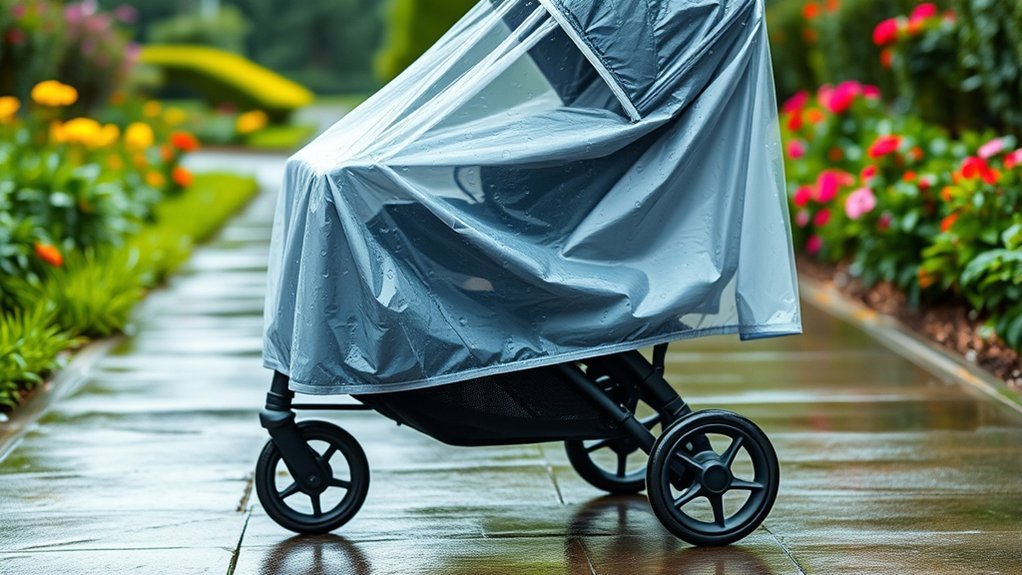
A stroller rain cover is a clear or partly clear shield that fits over the stroller seat. It helps block rain, wind, and light snow while allowing the caregiver to see the child.


Rain covers are also called:
- Stroller rain shields
- Stroller weather covers
- Weather shields
- Rain canopies
- Plastic stroller covers
A rain cover is not the same as a built-in stroller canopy. The built-in canopy usually gives shade and limited protection from light rain. A full rain shield covers more of the stroller and helps stop water from reaching the child’s clothes and seat.
Most covers fit one of these stroller types:
- Full-size single strollers
- Travel strollers
- Jogging strollers
- Double strollers
- Bassinet-style strollers
- Infant car seat stroller frames
A cover made for one stroller may not fit another. Even two strollers from the same brand may use different shapes and attachment points.
Rain cover versus stroller canopy
| Feature | Built-in canopy | Rain cover |
|---|---|---|
| Main job | Shade and light weather protection | Block rain and wind |
| Airflow | Usually open on the sides | Varies by design |
| Coverage | Top and part of the sides | Often front, sides, and top |
| Best use | Sun and light drizzle | Ongoing rain or wet wind |
| Need for supervision | Always required | Especially important |
A cover can keep water out, but it can also trap heat. That trade-off makes correct use more important than full coverage.

When Do You Need a Rain Cover for a Stroller?
You may need a rain cover when rain is likely to last longer than a few minutes or when wind blows water into the stroller. A cover is most helpful when the stroller is your main way to travel.
A rain cover is useful when:
- You walk to work, school, stores, or public transit.
- The forecast calls for steady rain.
- Wind pushes rain under the stroller canopy.
- You live in a rainy area such as the Pacific Northwest.
- You need to walk during a short storm.
- Your child must stay dry during a nap or outing.
- You use a stroller for errands and cannot quickly return home.
- Wet snow or cold rain is likely.
You may not need one when:
- You rarely use a stroller outdoors.
- You drive for most trips.
- You can wait inside until the rain ends.
- Your stroller has a large canopy and the weather is only lightly damp.
- You usually carry your child in a weather-protected baby carrier.
- You live in a dry region and only see rare rain.
The answer depends less on the child’s age and more on your routine. A family that walks daily may use a rain cover often. A family that drives may never need one.
Is a Rain Cover Necessary for a Newborn?
A rain cover is not automatically necessary for every newborn, but newborns need extra care in wet and cold weather. Young babies do not control body temperature as well as older children. They also spend more time lying still in a stroller.


If your stroller has a manufacturer-approved bassinet cover or weather shield, use that system as directed. Do not place a loose blanket, towel, or sheet over the stroller opening. Loose fabric can reduce airflow or fall over the baby’s face.
For a newborn:
- Confirm that the stroller is approved for the baby’s age and size.
- Use the stroller’s correct bassinet or newborn insert.
- Choose a rain cover made for that exact stroller or approved stroller type.
- Keep ventilation openings clear.
- Check the baby often for signs of heat, cold, or discomfort.
- Remove the cover as soon as you move indoors or the weather clears.
A rain cover protects from water. It does not replace proper clothing, a safe sleep surface, or close supervision.
How to Choose the Right Stroller Rain Cover
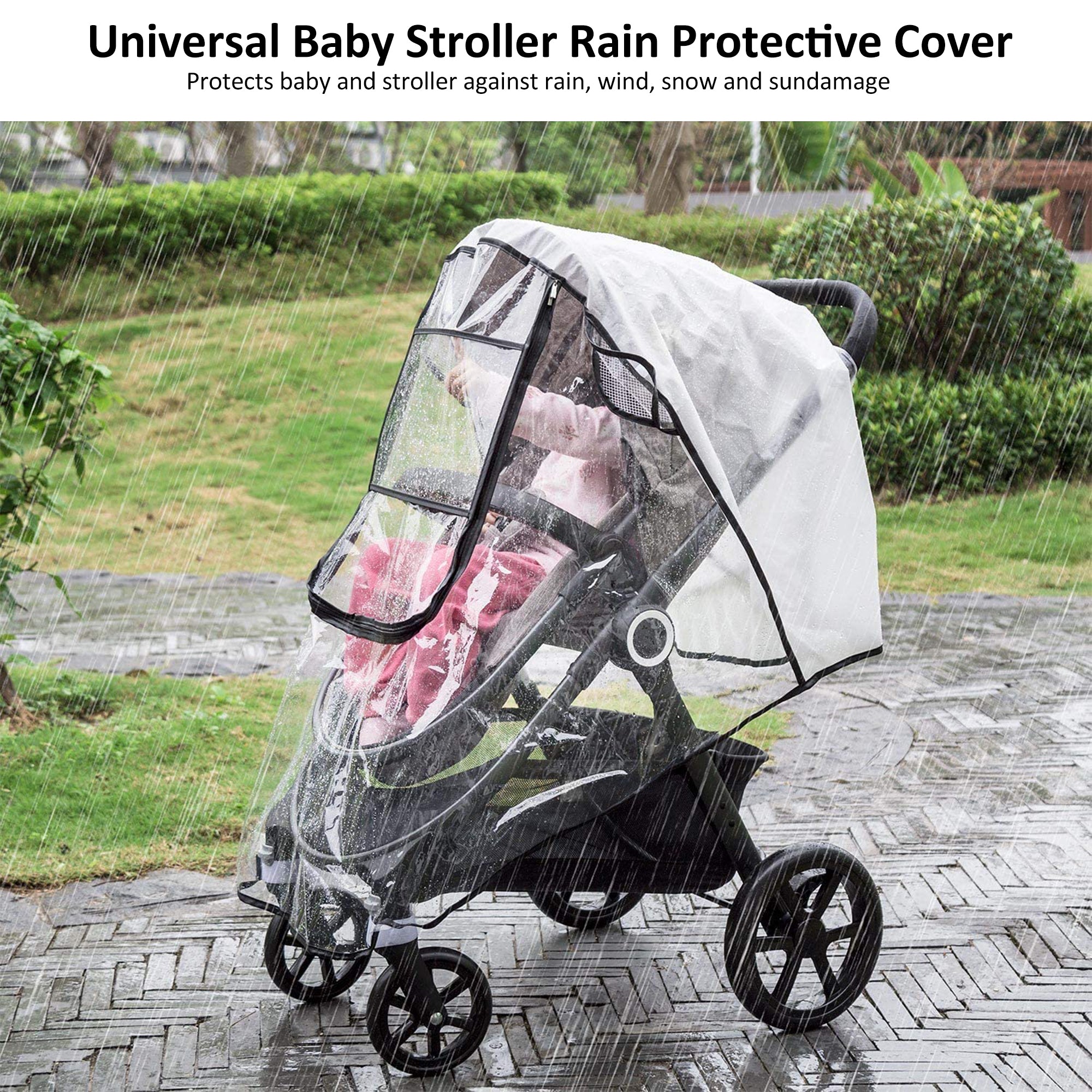
The best rain cover is the one that fits your stroller without blocking airflow or access to the child. A universal cover may work, but “universal” does not mean it fits every stroller safely.
Check these points before buying.
1. Match the cover to the stroller
Look for the exact stroller model in the product description or manual. Check whether the cover fits:
- Seat strollers
- Reversible seats
- Bassinets
- Car seat frames
- Double stroller seats
- Jogging stroller frames
- Travel strollers
A cover that is too small may leave gaps. One that is too large may hang near the wheels or drag on the ground.
2. Check ventilation
Choose a cover with large mesh panels, vents, or open areas designed for airflow. Do not cover those openings with a bag, blanket, or other item.
Avoid a cover that seals the stroller like a closed plastic box. Rain protection is not useful if it creates a hot, poorly ventilated space.
3. Check wheel and brake clearance
The cover should stay above the wheels and away from the brakes. Walk the stroller slowly after fitting the cover. Turn it left and right. Apply the brake and confirm that the cover does not interfere.
4. Check access to the child
You should be able to reach the child quickly. A zippered front panel can help with access, but it should not remain closed indoors or in warm weather.
5. Check visibility
Clear material lets you see the child and lets the child see out. But clear plastic can fog up. Good airflow helps reduce fogging.
6. Check material and cleaning needs
A cover should be:
- Water-resistant or waterproof
- Flexible enough to fit without sharp folds
- Free from strong chemical odor
- Easy to wipe clean
- Large enough to protect the foot area
- Strong at its seams and fasteners
Do not treat a low price as proof of poor quality. Fit, ventilation, and safe attachment matter more than brand name.


How to Use a Stroller Rain Cover Safely
Use the cover only when the child is in the stroller and you are nearby. A rain cover is a weather accessory, not a storage cover or a way to leave a child unattended.
Safe-use steps
Read the stroller and cover instructions.
The stroller manual may list approved accessories and limits.Fit the cover before the rain begins.
Make sure it sits over the canopy, seat, and foot area as intended.Keep vents open.
Never cover mesh panels or air gaps.Check the wheels and brake.
Make sure the cover does not touch moving parts.Watch the child during use.
Look for sweating, flushed skin, unusual sleepiness, shivering, or discomfort.Remove the cover indoors.
Indoor spaces, cars, stores, and heated buildings can become too warm.Dry the cover after use.
Fold it only when dry to reduce odor, mold, and cloudy plastic.
Signs the cover is working properly
- The child remains dry.
- The child’s face stays clear of the material.
- Air can move through the vents.
- The cover does not touch the wheels.
- The stroller folds or rolls as the manual allows.
- You can see and reach the child.
- The child’s clothing and skin remain at a comfortable temperature.
Stop using the cover if:
- The child becomes sweaty or flushed.
- The cover fogs heavily and stays wet inside.
- The cover touches the wheels.
- The stroller becomes hard to steer.
- A strap or fastener breaks.
- The cover blocks your view.
- The child pulls the material toward the face.
- The cover does not fit securely.
Can a Baby Overheat Under a Stroller Rain Cover?
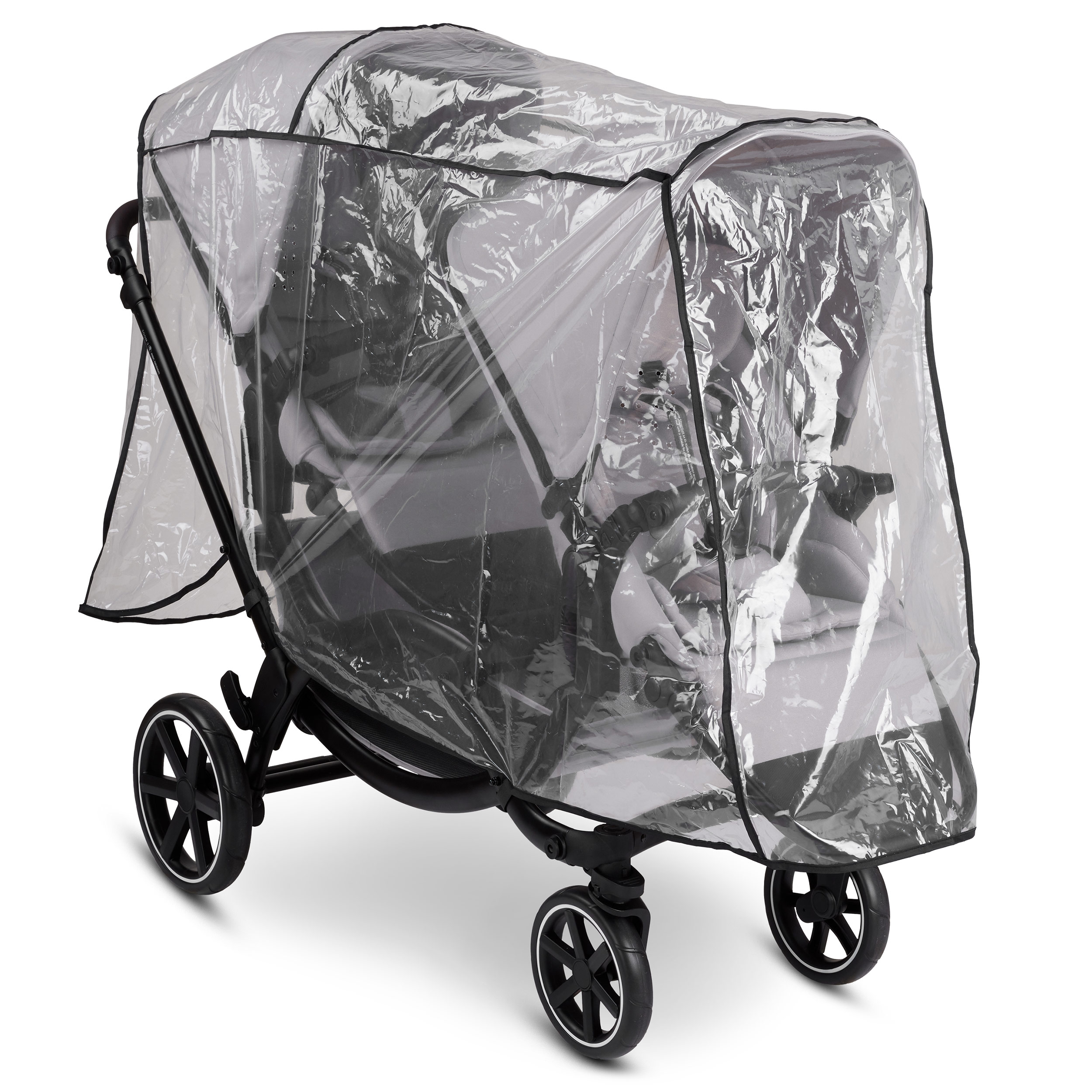
Yes. A stroller rain cover can contribute to overheating if it blocks airflow or stays on in warm conditions. Clear plastic does not mean the cover is well ventilated.
Heat can build up when:
- The cover has few or small vents.
- The stroller sits in direct sun.
- The child wears several thick layers.
- The cover stays on after the rain stops.
- The stroller is pushed into a warm indoor space.
- The child is asleep and is not checked often.
The American Academy of Pediatrics advises parents to watch babies closely in hot weather and avoid overheating. Its safe-sleep guidance also warns against loose coverings around infants. These principles matter when using stroller weather gear.
Do not use a rain cover as a sun shield. Use the stroller canopy for shade, seek a shaded route, and remove the rain cover when it is no longer needed.
How to check your child
Check the child’s neck, chest, or back rather than relying only on hands and feet. Hands and feet may feel cool even when the child is comfortable.
Remove extra layers and the rain cover if the child feels hot, sweaty, or unusually tired. If the child has trouble breathing, is difficult to wake, or shows signs of serious heat illness, seek urgent medical help.

Can You Use a Rain Cover in Snow or Cold Weather?
A stroller rain cover may help block wet snow and wind, but it is not a complete cold-weather system. It does not tell you how many layers your child needs or whether outdoor conditions are safe.
For cold weather:
- Use warm clothing that does not interfere with the harness.
- Keep the child’s face uncovered.
- Check for wet clothing.
- Watch fingers, toes, and exposed skin.
- Avoid long outdoor trips in severe cold.
- Remove wet layers as soon as possible.
- Follow local weather alerts and pediatric advice.
Do not place a thick blanket over the harness or tuck bulky material under the child. Bulky coats can affect harness fit. Instead, secure the harness first, then use approved layers or a stroller accessory designed for that stroller.
A cover can reduce wind chill inside the stroller, but it may also reduce airflow. Check the child often.
Can You Use a Stroller Rain Cover on an Airplane or in a Car?
A rain cover is not a car seat safety device. Never use it as a substitute for a properly installed child restraint in a vehicle.


For air travel, a rain cover may protect the stroller while it is checked or moved through an airport. Remove it when airline staff request access to the stroller. Policies differ by airline and airport, so check the current rules before travel.
If you gate-check a stroller, use a travel bag when appropriate. A rain cover may not protect against rough handling, conveyor belts, or deep scratches.
What Should You Use Instead of a Rain Cover?
The best alternative depends on the weather and your travel method.
| Situation | Better option |
|---|---|
| Light drizzle | Built-in stroller canopy |
| Strong rain | Model-specific rain cover |
| Hot sun | Canopy, shade, and a cooler route |
| Cold wind | Proper clothing and an approved weather accessory |
| Short indoor trip | Remove the cover |
| Walking without a stroller | Baby carrier with its approved weather cover |
| Stroller storage | A dry storage bag, not a wet rain shield |
A loose plastic sheet, shower curtain, or trash bag is not a safe replacement. It may cover vents, fall near the child’s face, catch in the wheels, or make it hard to see the child.
If you need a temporary solution, it is safer to move indoors, delay the trip, or use a weather system designed for your carrier or stroller.
Common Stroller Rain Cover Mistakes
Many problems come from treating a rain cover as a simple piece of plastic. It is part of the stroller setup and needs the same care as other accessories.
Mistake 1: Using a loose plastic sheet
Loose plastic can block airflow and shift without warning. Use a fitted product made for the stroller instead.
Mistake 2: Leaving the cover on indoors
A store, bus, or car can be warmer than the street. Remove the cover when rain protection is no longer needed.
Mistake 3: Covering the vents
Do not add blankets, towels, bags, or clothing over ventilation panels.
Mistake 4: Ignoring the stroller manual
The manual may warn against certain accessories or show the correct attachment points. Follow the stroller maker’s instructions.
Mistake 5: Using the wrong size
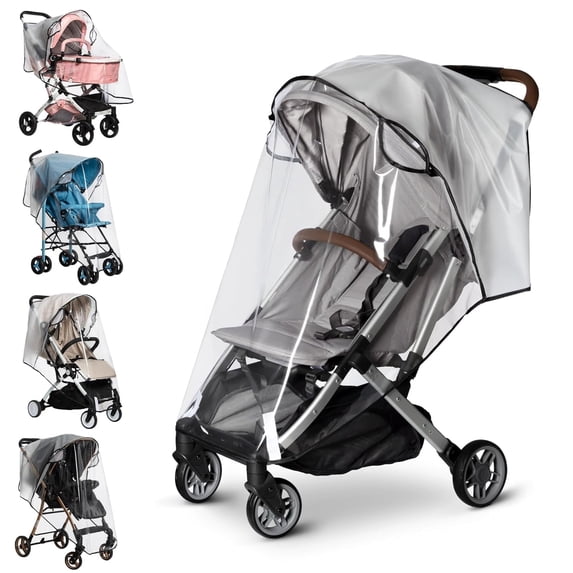
A cover that fits a single stroller may not fit a double stroller, jogging stroller, or bassinet.
Mistake 6: Storing it while wet
Dry the cover fully before storage. Clean it according to the product instructions.
Mistake 7: Treating it as a sleep product
A rain cover helps with weather. It is not designed to create a safe sleep environment. If the child falls asleep during a walk, keep watching the child and follow safe-sleep guidance when you reach a suitable sleep space.
How to Clean and Store a Stroller Rain Cover
Clean the cover after muddy or salty weather. Most covers can be wiped with mild soap and water, but care instructions vary.
Use this basic routine:
- Remove the cover from the stroller.
- Wipe away dirt with a soft cloth.
- Use mild soap if needed.
- Rinse away soap residue.
- Let the cover air-dry fully.
- Store it in a dry, cool place.
- Keep it away from sharp objects and heat.


Do not use harsh chemicals unless the manufacturer approves them. Some cleaners can make clear plastic cloudy or brittle.
Replace the cover if you see cracks, torn seams, broken fasteners, sharp edges, or material that no longer stays in place.

Stroller Rain Cover Decision Guide
Use this simple guide:
- You walk often in rain: Buy a fitted rain cover.
- You live in a wet or windy area: Keep one in the stroller or entryway.
- You mostly drive: You may not need one.
- You have a newborn: Use an approved cover, watch airflow, and check the baby often.
- You use a double or jogging stroller: Check the exact model and dimensions.
- You expect hot weather: Choose ventilation over maximum enclosure.
- You want a cover for storage: Buy a storage bag instead.
- You want protection from sun: Use the canopy or a shade accessory, not a rain cover.
The simplest rule is this: If rain can reach your child during a trip, and you cannot quickly get indoors, a properly fitted stroller rain cover is useful. If the weather is warm or dry, remove it.
FAQs About Stroller Rain Covers
Do all strollers need a rain cover?
No. A rain cover is an optional accessory for most strollers. It becomes more useful when you walk often in rain, wind, or wet snow.
Can I put a blanket over my stroller instead?
Avoid covering the stroller with a loose blanket. It can reduce airflow, shift toward the child’s face, and make it harder to see the child. Use an accessory designed for the stroller.
Should a rain cover touch the stroller seat?
It may rest over the stroller structure as designed, but it should not press against the child’s face or block ventilation. Follow the cover’s fitting instructions.
Can I leave a rain cover on while the stroller is parked?
No. Remove it when the child is not in the stroller, especially indoors or in warm weather. A cover is not meant to replace supervision.
Are universal stroller rain covers safe?
They can be safe when they fit securely, provide airflow, and do not interfere with wheels, brakes, or the harness. Check the size and return policy before buying.
Do stroller rain covers expire?
They may not have a fixed expiration date, but plastic and elastic can weaken over time. Replace the cover when it becomes cracked, brittle, cloudy, torn, or loose.
Final Answer: Do You Need a Rain Cover for Your Stroller?
You need a stroller rain cover only if your routine puts you and your child outside in rain or wet wind. It is not required for every family, but it can keep a stroller ride more comfortable and protect clothing, blankets, and the seat from getting soaked.
Choose a cover made for your stroller. Keep all vents clear. Check the child often. Remove the cover indoors, in warm weather, and as soon as the rain ends.
Before buying, check your stroller manual and the cover’s fit guide. For U.S. safety information, review guidance from the U.S. Consumer Product Safety Commission and the American Academy of Pediatrics’ HealthyChildren.org.
