
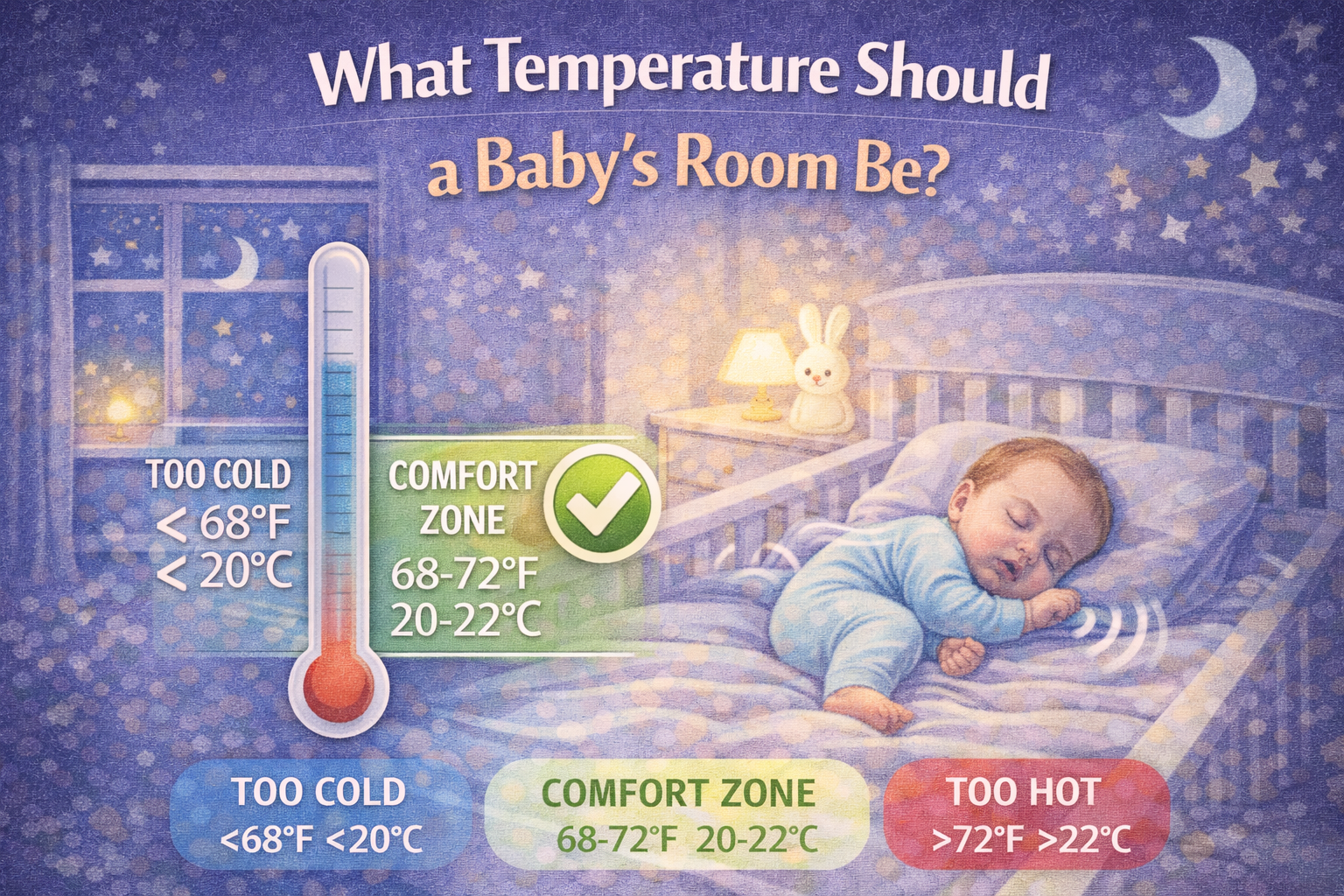
For most babies, aim for a room temperature of 68–72°F (20–22°C). This range is a practical starting point for sleep, but it is not a strict medical rule. The safest goal is to keep your baby comfortably warm without overheating.
The American Academy of Pediatrics (AAP) focuses on preventing overheating during sleep rather than setting one exact room temperature. The AAP’s safe sleep guidance advises parents to dress babies in no more than one extra layer than an adult would wear in the same room.
A baby’s sleep space should also be:
- Free of loose blankets, pillows, bumpers, and stuffed toys
- Smoke-free
- Comfortable for the caregiver in light clothing
- Away from direct heat, drafts, and direct sunlight
- Set up with the baby on their back on a firm, flat sleep surface


The best baby room temperature: 68–72°F
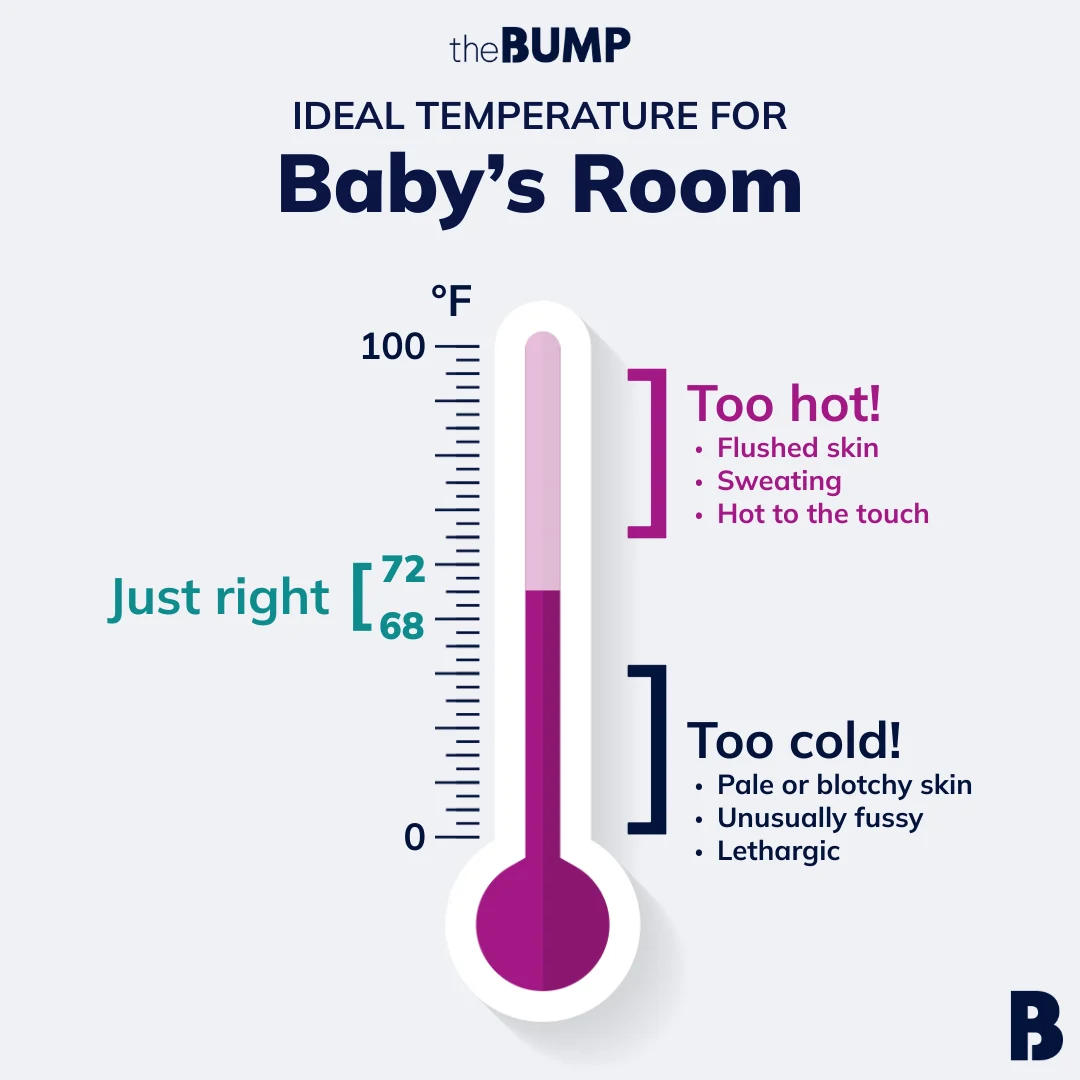
A room temperature of 68–72°F works well for many babies because it reduces the chance of both overheating and getting too cold. Still, babies differ. A premature baby, a baby with a health condition, or a baby wearing several layers may need a different setup.
Use the temperature as a guide, not as the only test. Your baby’s chest or back gives a better clue than their hands and feet.
A baby’s hands and feet may feel cool even when their body temperature is normal. Check the:
- Chest
- Upper back
- Back of the neck
Your baby should feel warm, not hot, sweaty, or clammy.
The National Institutes of Health Safe to Sleep program does not require one exact room temperature. Its guidance is to avoid overheating and to dress the baby appropriately for the room.
A simple temperature guide
| Room temperature | Practical approach |
|---|---|
| Below 65°F (18°C) | Add a safe clothing layer if your baby’s chest feels cool. Do not use loose blankets in the crib. |
| 65–67°F (18–19°C) | Use season-appropriate sleep clothing and check your baby’s chest. |
| 68–72°F (20–22°C) | A comfortable starting range for many babies. |
| 73–75°F (23–24°C) | Use lighter sleep clothing and watch for sweating or flushed skin. |
| Above 75°F (24°C) | Cool the room safely if possible. Remove extra layers and check for signs of overheating. |
These ranges are practical guidance, not a diagnosis or a substitute for your pediatrician’s advice.
Why overheating is a bigger sleep concern
Overheating can make a baby uncomfortable and may increase the risk of sleep-related infant death. The AAP recommends avoiding excessive clothing, blankets, and high room temperatures during sleep.
A baby cannot regulate body temperature as well as an older child or adult. A young baby may also be unable to move away from a hot area or remove extra clothing.
Overheating can happen when several small factors add up:
- A warm room
- Heavy pajamas
- A thick swaddle
- A hat worn indoors
- A blanket placed over the baby
- Direct sunlight
- A crib near a radiator, vent, fireplace, or space heater


The safest approach is to control the room when you can, then use light, fitted sleep clothing. Never cover a sleeping baby’s face or head.
Signs your baby may be too hot
check your baby’s chest, upper back, or neck. Possible signs of overheating include:
- Sweating
- Damp hair
- Hot or flushed skin
- A red face
- Rapid breathing
- Restlessness
- A heat rash
- Skin that feels hot to the touch
Remove one layer and move the baby away from heat. Recheck the room and your baby after a short time.
If your baby has trouble breathing, is unusually sleepy, is difficult to wake, has a seizure, or seems seriously ill, call 911. For a baby younger than 3 months, a rectal temperature of 100.4°F (38°C) or higher needs urgent medical advice. Follow your pediatrician’s instructions for checking temperature.

How to dress a baby for sleep
Dress your baby in light layers that match the room. A common rule is to use one more light layer than an adult would wear comfortably, but avoid treating this as a fixed formula.
Good sleep clothing may include:
- A fitted sleeper
- A lightweight sleep sack
- A short-sleeve or long-sleeve bodysuit under a sleep sack
- A swaddle for a young baby who is not yet showing signs of rolling
Do not use a hat for routine indoor sleep. Hats can trap heat and may slip over a baby’s face.
Do not place loose blankets in the crib. If your baby needs an extra layer, use properly sized sleep clothing or a wearable blanket that fits according to the manufacturer’s instructions.
Swaddling and room temperature
Swaddling can reduce a baby’s ability to move their arms. It may also add warmth. Use a light swaddle and avoid tight wrapping around the chest or hips.
Stop swaddling as soon as your baby shows signs of trying to roll. At that point, use an ordinary sleep sack with the arms free. The AAP advises stopping swaddling when a baby looks like they may roll.
A weighted swaddle or weighted sleep sack is not recommended for infant sleep. The AAP warns against weighted sleep products because they may make it harder for a baby to move or breathe.

How to check whether the room is too hot or cold
A room thermometer can help, but your baby’s body is the key check. Thermostats often measure air near a wall or return vent, which may not match the temperature near the crib.
Follow these steps:
- Place a digital room thermometer near the crib, but outside the baby’s reach.
- Keep it away from a vent, window, radiator, or direct sunlight.
- Check the temperature at bedtime and during very hot or cold weather.
- Feel your baby’s chest or upper back.
- Remove or add one light layer if your baby feels hot or cool.
- Recheck after a short period.
Do not rely only on your baby’s hands or feet. Those areas often feel cool because blood flow changes naturally.


You also do not need to wake a sleeping baby just to take their temperature if they look well and feel comfortable. Check them when you naturally go in to feed or change them.
Thermostat versus room thermometer
Your home thermostat may read 70°F while the nursery is warmer or cooler. This can happen because of:
- Sunlight through a window
- Poor air circulation
- An exterior wall
- A room above a garage
- A closed vent
- A ceiling fan or portable fan
- Different floor levels
A thermometer near the sleep area gives a more useful reading. Keep cords and devices away from the crib.
What to do in summer
In hot weather, keep the room cool with air conditioning, safe ventilation, or a fan placed well away from the crib. A fan should not blow directly into your baby’s face.
Dress your baby in light sleep clothing. In a warm room, a diaper and a lightweight, fitted sleep garment may be enough. Avoid adding layers simply because your baby’s feet feel cool.
Never leave a baby alone in a parked car, even for a short time. Car temperatures can rise quickly, and opening a window does not make the situation safe.
If your home becomes dangerously hot and you cannot cool the room, move the baby to a cooler safe area. Contact your pediatrician if your baby appears overheated or unwell.

What to do in winter
In cold weather, warm the room before bedtime and keep the crib away from windows, exterior doors, and drafts. Use fitted sleep clothing rather than loose blankets.
A safe winter setup may include:
- A fitted sleeper
- A properly sized sleep sack
- A light base layer if the room is cool
- A firm mattress with a fitted sheet only
Do not use a space heater close to the crib. If you use one, follow the manufacturer’s safety directions, keep it well away from bedding and furniture, and turn it off when it is not needed. The U.S. Consumer Product Safety Commission advises keeping portable heaters at least 3 feet from flammable items.
Do not place a hot water bottle, heating pad, electric blanket, or heated mattress under or near a baby. These products can cause burns and may overheat the sleep area.

Is 75°F too warm for a baby’s room?
75°F is not automatically dangerous, but it is warmer than the commonly used 68–72°F range. At 75°F, use fewer layers and check your baby’s chest or back for warmth, sweat, or dampness.
If your baby feels hot, remove a layer and cool the room safely. Do not respond by placing a fan directly on the baby or by putting cold water on the skin.
The room temperature matters less than the full combination of:


- Air temperature
- Clothing
- Swaddling
- Bedding
- Humidity
- Direct heat
- Your baby’s health and age
A lightly dressed baby in a 75°F room may be comfortable. A heavily swaddled baby in the same room may become too hot.

Does humidity affect a baby’s room?
Humidity can affect comfort, especially when heating or air conditioning dries the air. The Environmental Protection Agency recommends keeping indoor humidity between 30% and 50% to help limit excess moisture, mold, and some indoor air problems.
A humidifier may help if the air is very dry, but it needs careful cleaning. Dirty humidifiers can release germs and minerals into the air. Follow the device instructions, empty standing water, and clean it as directed.
Avoid making the room very humid. High humidity can encourage mold and dust mites. A simple hygrometer can show the room’s humidity level.
Humidity does not replace safe sleep practices. Keep the crib clear and avoid adding blankets or thick clothing to solve a dry-air problem.

When a baby may need different temperature advice
Some babies need individualized advice. Ask your pediatrician about room temperature and clothing if your baby:
- Was born premature
- Has a low birth weight
- Has a heart or lung condition
- Has trouble gaining weight
- Has a fever or infection
- Has trouble controlling body temperature
- Is recovering from an illness
- Has special medical equipment
A newborn may need close monitoring after leaving the hospital, but do not assume that a warmer room is always better. Ask the medical team what clothing and room conditions they want you to use.
Seek urgent medical care if your baby is hard to wake, has breathing trouble, looks blue or gray, has a seizure, or feels unusually hot or cold and does not improve after you adjust the environment.

Common mistakes to avoid
Parents often focus on the thermostat and miss the layers around the baby. These mistakes can make a normal room too warm:
- Placing a blanket over a sleeping baby
- Leaving a hat on indoors
- Using a thick comforter or quilt
- Putting the crib near a heater
- Dressing the baby based only on cool hands
- Using a weighted sleep product
- Trusting the thermostat without checking the crib area
- Adding layers without checking the chest or back
- Using a heating pad or hot water bottle
- Letting an infant sleep on a couch, adult bed, or recliner
The safest sleep space is simple: a firm, flat crib, bassinet, or play yard with a fitted sheet and no loose items.

Quick checklist for a comfortable baby room
Before bedtime, check the following:


- Set the room near 68–72°F when practical.
- Use a room thermometer near the crib.
- Dress the baby in light, fitted layers.
- Use a sleep sack instead of a loose blanket.
- Keep the baby’s head uncovered.
- Feel the chest, back, or neck.
- Remove a layer if the baby is sweaty or hot.
- Keep heaters, vents, windows, and direct sun away from the crib.
- Place the baby on their back for every sleep.
- Keep the sleep surface firm, flat, and empty.
The next useful step is to check your baby’s room at bedtime tonight, then adjust clothing based on both the thermometer and how your baby’s chest feels.

Frequently asked questions
Should a newborn sleep in a warmer room?
Not necessarily. A newborn should sleep in a comfortable room and wear suitable layers, but extra heat can increase overheating risk. Follow your pediatrician’s instructions if your newborn was premature or has a medical condition.
Can a baby sleep with a fan on?
Yes, a fan can be used for air circulation, but do not aim it directly at the baby. Keep the fan and its cord far from the crib and out of reach.
Should a baby wear socks to bed?
Socks are not usually needed if your baby wears a fitted sleeper. If you use socks, make sure they fit well and do not restrict circulation. Cool feet alone do not mean your baby is too cold.
How can I tell if my baby is cold at night?
Feel the baby’s chest, upper back, or neck. If the skin feels cool, add one light layer and check again. Do not use a loose blanket in the crib.
What should a baby wear in a 70°F room?
Many babies are comfortable in a fitted sleeper or a light bodysuit with a properly sized sleep sack. Check the baby’s chest or back and adjust one layer at a time.
Final answer
The best starting temperature for a baby’s room is 68–72°F (20–22°C). More important than reaching an exact number is preventing overheating, using light fitted sleep clothing, keeping the baby’s head uncovered, and following safe sleep guidance.
Check your baby’s chest or upper back rather than relying on cold hands or feet. If your baby has a medical condition, was born premature, or seems unusually hot, cold, sleepy, or unwell, contact a pediatrician promptly.
