
The safest way to take a baby’s temperature depends on age, thermometer type, and the reading you get.
Knowing how to take a baby's temperature can help you act calmly when your little one feels warm. The right method matters because babies cannot explain how they feel, and small technique errors can change the result. This guide explains which thermometer to use, where to place it, how to read it, and when to call a health care professional.
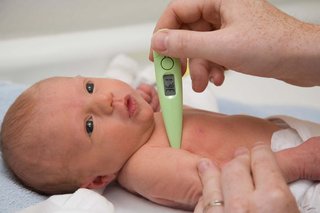
Why accurate temperature checks matter
A fever is not an illness by itself. It is usually a sign that the body is responding to an infection or another health problem. In young babies, even a small fever can need prompt medical advice.
Learning how to take a baby's temperature gives you useful information. However, the number is only one part of the picture. Your baby’s age, breathing, feeding, alertness, wet diapers, and overall behavior also matter.
For babies younger than 3 months, a rectal temperature of 100.4°F (38°C) or higher is a medical concern. Call your baby’s health care professional promptly rather than waiting to see whether the fever goes away.
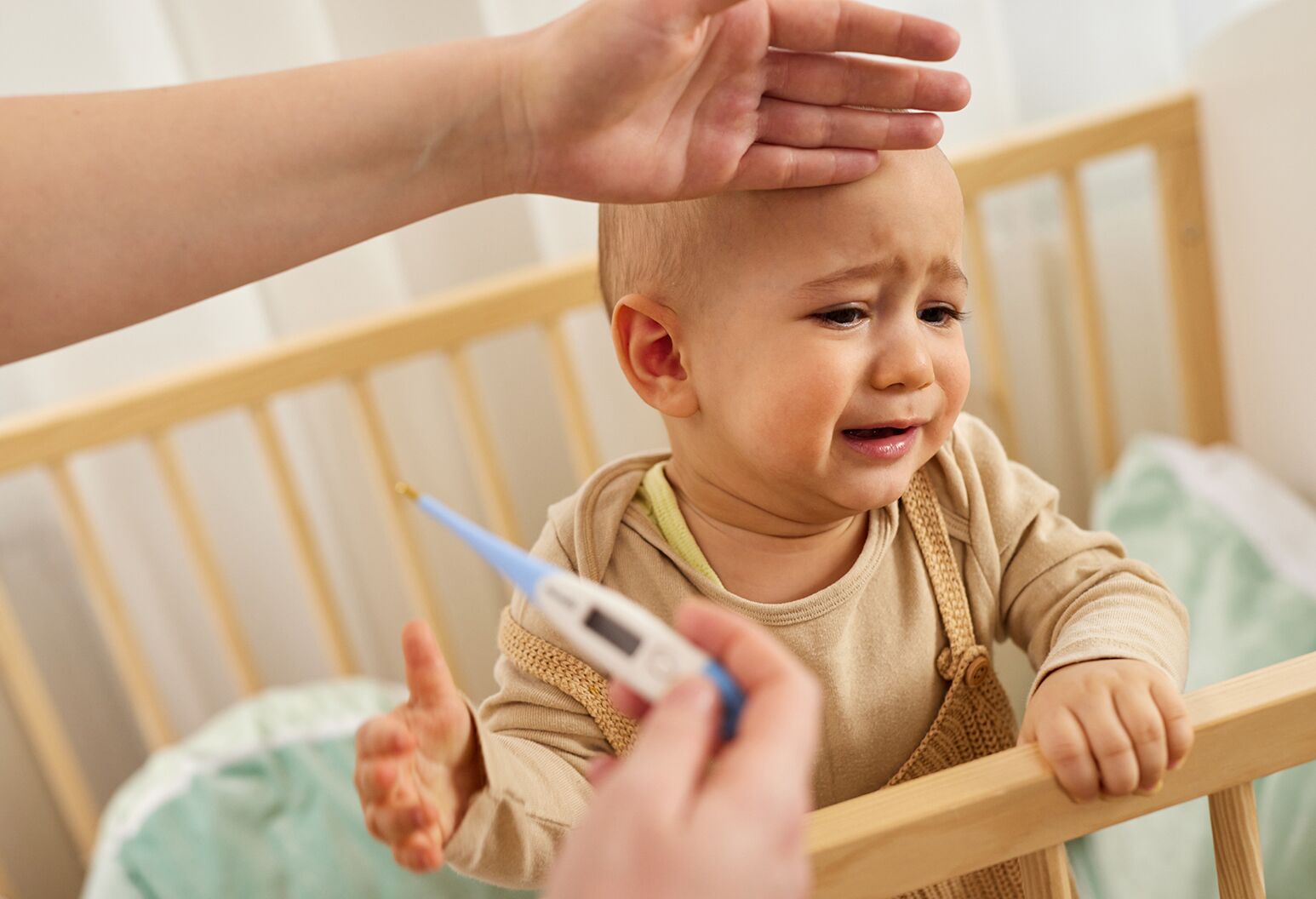
A warm forehead does not always mean fever. Babies can feel warm after crying, feeding, being bundled, or sitting in a hot room. A thermometer gives a better answer than touch alone.
Choose the right thermometer
A digital thermometer is the best general choice for home use. It is quick, widely available, and easier to clean than older glass thermometers.
When learning how to take a baby's temperature, choose a thermometer that:
• Has a clear digital display
• Gives a reading within a reasonable time
• Can be cleaned according to the product instructions
• Is designed for the body site you plan to use
• Has fresh batteries and an intact tip
Here is how common thermometer types compare:
| Thermometer type | Main use | Important limits |
|---|---|---|
| Rectal digital thermometer | Most accurate for young infants | Requires careful technique |
| Armpit thermometer | Simple screening check | Less accurate; may need confirmation |
| Forehead or temporal thermometer | Quick and noninvasive | Technique and room temperature can affect results |
| Ear thermometer | Often useful for babies 6 months and older | Poor fit in very small ear canals |
| Oral thermometer | Usually for older children | Not safe or practical for most babies |
| Mercury glass thermometer | Not recommended | Breakage creates a toxic exposure risk |
Do not use fever strips placed on the skin. They measure skin temperature, not core body temperature, and can miss a true fever.
How to take a baby’s temperature rectally
A rectal temperature is often the most accurate method for babies, especially those younger than 3 months. It measures temperature close to the body’s core.
Many parents feel nervous the first time. That is normal. Move slowly, use plenty of lubricant, and never force the thermometer.
What you need
• A digital rectal thermometer
• Water-based lubricant
• A clean tissue or cloth
• Soap and water or an approved disinfectant
Use a thermometer labeled for rectal use. To prevent accidental use in the mouth later, store it separately and label it clearly.
Step-by-step instructions
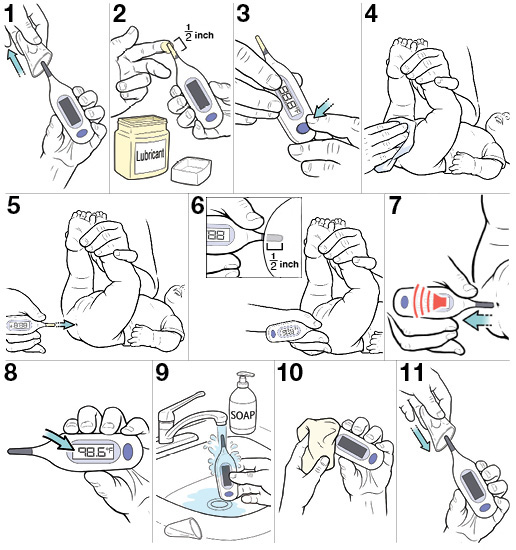
- Wash your hands and clean the thermometer.
- Turn the thermometer on and check that it is ready.
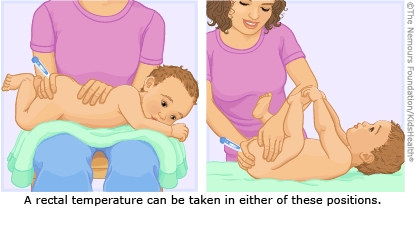
- Place your baby on their back with the legs gently lifted, or place the baby belly-down across your lap.
- Apply a small amount of water-based lubricant to the tip.
- Gently insert only about ½ inch in a young infant, or follow the thermometer instructions. Never push against resistance.
- Hold the thermometer in place the entire time. Keep one hand on your baby.
- Wait for the signal before removing it.
- Remove the thermometer gently and read the number.
- Clean it well and wash your hands again.
Never leave your baby alone during a rectal temperature check. Stop if your baby moves suddenly, cries intensely, or the thermometer does not slide in easily.
This is the key safety lesson when learning how to take a baby's temperature: the thermometer should never be forced or inserted deeply. A rectal thermometer is a measuring tool, not something to leave in place.
How to take a baby’s temperature in the armpit
The armpit, or axillary site, is convenient and does not require insertion into the body. It is a good first check when you want a simple, low-stress method.
An armpit reading can be less accurate than a rectal reading. If it shows a high temperature, or if your baby seems sick, contact a health care professional for advice about confirming the result.
Follow these steps
- Remove extra clothing from one arm.
- Turn on the digital thermometer.
- Place the tip high in the center of the dry armpit.
- Hold your baby’s arm snugly against the chest.
- Keep the thermometer still until it beeps.
- Read the result and clean the thermometer.
Do not place the thermometer over clothing. Sweat, loose placement, or an arm that is not held close to the body can affect the reading.
When parents ask how to take a baby's temperature without using a rectal method, the armpit is often the easiest place to start. Still, it may not provide enough certainty when a young baby has symptoms or a borderline reading.

How to take a baby’s temperature with a forehead thermometer
Temporal artery thermometers scan heat from the forehead. They are fast and comfortable, which can be helpful when a baby is sleeping or upset.
Read the instructions for your exact model. Some devices scan across the forehead, while others touch one spot. Keep the thermometer away from hats, blankets, sweat, and direct sunlight for a more reliable result.
Tips for a better forehead reading
• Let your baby adjust to the room for a few minutes
• Keep the forehead dry and uncovered
• Follow the correct distance and scanning path
• Avoid checking right after a bath or outdoor exposure
• Take a second reading if the number seems unusual
Forehead thermometers can be useful, but a result that does not match your baby’s symptoms deserves caution. If your baby feels very ill or has a concerning age-related fever, call a clinician even if the reading seems normal.

How to take a baby’s temperature with an ear thermometer
Ear thermometers measure heat near the eardrum. They are usually more useful after 6 months of age, when the ear canal is large enough for a better fit.
A poor angle, earwax, or a small ear canal can make the reading less reliable. Always follow the device instructions and use a clean cover if the model requires one.
Do not use an ear thermometer if your baby has ear drainage, significant ear pain, or recent ear surgery unless a health care professional says it is appropriate.
For very young babies, rectal or armpit checks are usually more practical. The best answer to how to take a baby's temperature depends on both the child’s age and the thermometer available.

What temperature counts as a fever?
For infants and children, a rectal temperature of 100.4°F (38°C) or higher is generally considered a fever. The meaning can vary slightly by measurement site, so tell the clinician how and where you measured it.
Temperature ranges change during the day. Activity, crying, clothing, room temperature, and recent bathing can also affect a reading.
Write down the following details:
• The temperature and time
• The measurement site
• The thermometer type
• Your baby’s age
• Symptoms such as cough, vomiting, rash, or poor feeding
• Wet diaper patterns and alertness
This record can make a phone call with a pediatric office clearer and faster. It also helps you notice whether the temperature is rising, falling, or staying the same.
When to call a health care professional
Call your baby’s health care professional promptly if a baby younger than 3 months has a rectal temperature of 100.4°F (38°C) or higher. Do not give fever medicine to a very young baby unless a clinician tells you to do so.
Seek urgent medical care or call 911 if your baby has:
• Trouble breathing, pauses in breathing, or blue lips
• Extreme sleepiness, limpness, or difficulty waking
• A seizure
• A stiff neck
• A purple or rapidly spreading rash
• Signs of severe dehydration
• Repeated vomiting
• A weak cry or unusual difficulty feeding
For older babies, call for advice when a fever lasts, returns, or comes with concerning symptoms. Trust your instincts. If your baby looks seriously ill, do not wait for a perfect temperature reading.
A useful lesson about how to take a baby's temperature is that a normal number does not always rule out illness. Babies can become unwell without a fever, so behavior and breathing remain important.
Common mistakes to avoid
Small mistakes can lead to misleading readings or injury. Keep these points in mind:
• Do not rely on your hand or lips to judge fever
• Do not use a glass mercury thermometer
• Do not take a temperature right after a hot bath
• Do not place an armpit thermometer over clothing
• Do not force a rectal thermometer
• Do not leave a thermometer in your baby
• Do not use the same unclean thermometer for different body sites
• Do not add or subtract degrees unless the manufacturer or clinician directs you
• Do not give aspirin to a child
• Do not give acetaminophen or ibuprofen without checking the correct dose
If your baby is under 6 months, ask a health care professional before using ibuprofen. Use weight-based dosing and the measuring device that comes with the medicine.
One common mistake is taking several readings in a row and becoming more anxious with each small change. If the method was correct, record the result and focus on your baby’s symptoms.
How to make temperature checks easier
A calm routine can make the process less stressful for both of you. Keep the thermometer, lubricant, tissues, and cleaning supplies together in a small container.
Try these practical tips:
- Check the thermometer battery before your baby becomes ill.
- Practice reading the instructions before you need them.
- Have another adult comfort or hold your baby when possible.
- Use a quiet voice and gentle touch.
- Record readings in your phone or a notebook.
- Tell the clinician the exact method you used.
- Replace the thermometer if the display, tip, or battery compartment is damaged.
In everyday caregiving, preparation often matters more than speed. Parents who know how to take a baby's temperature before a stressful night usually feel more confident when the baby becomes warm or unsettled.
Frequently asked questions about how to take a baby's temperature
What is the most accurate way to take a baby’s temperature?
For many infants, a properly taken rectal temperature is the most accurate home method. Use a digital thermometer, lubricate the tip, insert it gently, and never force it.
Can I take my baby’s temperature under the arm?
Yes. An armpit temperature is safe and simple, but it may be less accurate than a rectal reading. Contact a clinician if the result is high or your baby appears unwell.
Is 100.4°F a fever for a baby?
A rectal temperature of 100.4°F (38°C) or higher is considered a fever. In a baby younger than 3 months, call a health care professional promptly.
Are forehead thermometers accurate for babies?
Forehead thermometers can provide useful readings when used exactly as directed. Sweat, hats, room temperature, and poor positioning can affect the result, so repeat an unusual reading or ask a clinician for advice.
Can I use an ear thermometer on a newborn?
Ear thermometers may be less reliable in newborns because their ear canals are small. For young infants, ask a health care professional which method is best, and use a rectal or armpit check according to guidance.
Should I wake a sleeping baby to take a temperature?
If your baby feels warm or has concerning symptoms, you may need to check the temperature. Do it gently, and seek medical advice based on your baby’s age, symptoms, and the reading.
Should I add a degree to an armpit temperature?
No. Do not add or subtract a fixed amount unless your health care professional or thermometer instructions specifically tell you to. Report the exact reading and measurement site.
Conclusion
Knowing how to take a baby's temperature helps you replace guesswork with clear information. Use a digital thermometer, choose a method suited to your baby’s age, follow the instructions closely, and record the reading with the measurement site.
For babies younger than 3 months, a rectal temperature of 100.4°F (38°C) or higher needs prompt medical advice. At any age, breathing trouble, poor alertness, dehydration, seizures, or a rapidly spreading rash require urgent care.
Keep a working thermometer at home and review the steps before you need them. Share this guide with another caregiver, and speak with your baby’s health care professional if you are unsure which method to use.