
Introduction
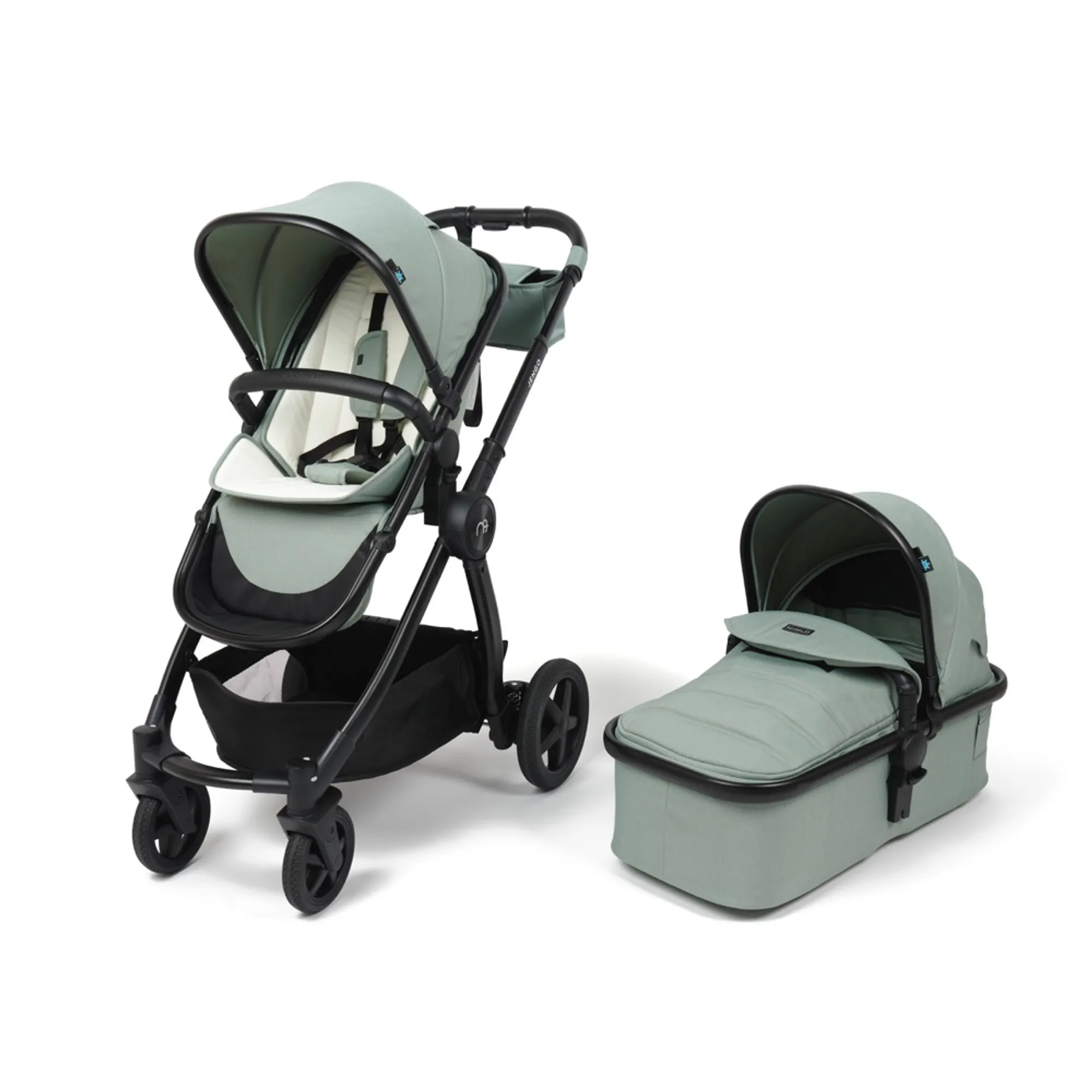
For parents in the United States, a pram bassinet is a flat, padded bed that attaches to a stroller frame. It lets a newborn lie down while a caregiver pushes the stroller. You may also see it called a stroller bassinet, carrycot, or pram carrycot.
A pram bassinet is not the same as a regular stroller seat. A stroller seat usually places a child in a sitting or reclined position. A bassinet gives a young baby a flat space for short trips and supervised rest.
The key detail is safety: not every stroller bassinet is approved for unsupervised sleep. Always read the product manual and check whether the maker allows sleep in that bassinet. For routine sleep at home, the American Academy of Pediatrics recommends a firm, flat, separate sleep space made for infants.

What Is a Pram Bassinet?
A pram bassinet is a removable stroller bed designed to carry a young baby in a mostly flat position. It normally has a rigid or semi-rigid base, soft sides, a mattress pad, a hood, and attachment points for a stroller frame.


The bassinet may be:
- Built into a traditional pram
- A removable part of a modular stroller system
- A separate accessory that clips onto a stroller frame
- Designed for newborns before they can sit without help
“Pram” is a common term in the United Kingdom and other countries. In the United States, retailers often use bassinet stroller, carrycot stroller, or newborn stroller bassinet instead.
What does a pram bassinet do?
A pram bassinet gives a newborn a more level place to ride than a typical upright stroller seat. This can support a baby who is not ready to sit or hold up their head.
Most models also offer:
- A sun canopy
- A cover or apron for cooler weather
- A mattress pad
- Carry handles
- A release button for removing the bassinet
- Adapters for a specific stroller frame
The exact features differ by brand and model. A soft insert, padded lining, or large canopy does not by itself make a bassinet safe for overnight sleep.
Pram Bassinet vs. Regular Stroller Seat
The main difference is the baby’s position and the age range the product supports. A bassinet is made for a baby who needs to lie down. A regular stroller seat is made for a child who can sit with support and control their head.
| Feature | Pram bassinet | Regular stroller seat |
|---|---|---|
| Main position | Flat or near-flat | Reclined, semi-upright, or upright |
| Typical use | Newborn walks and transport | Older infants and toddlers |
| Restraint | Often no harness inside the bassinet | Usually a five-point harness |
| Weight limit | Depends on the model | Depends on the model |
| Use after sitting begins | Often limited | Usually better suited |
| Sleep approval | Must be confirmed in the manual | Usually not intended for routine sleep |
A bassinet may feel like a small crib, but appearance is not proof of its intended use. A product can provide a flat ride while still being intended only for transportation.
Is a pram bassinet the same as a baby bassinet?
No. The words can describe different products.
A baby bassinet is usually a small sleep space for use in a home or other stationary setting. A pram bassinet attaches to a stroller and is made for transport. Some stroller bassinets meet separate safety requirements for sleep, but you must confirm that claim for the exact model.
Do not assume that a stroller bassinet can replace a crib, bedside bassinet, or play yard. Check the product label, manual, and safety instructions.

How Long Can a Baby Use a Pram Bassinet?
A baby can use a pram bassinet only while the child remains within the maker’s age, weight, height, and development limits. Many bassinets are intended for newborn use until a baby can push up, roll, sit, or reach the product’s stated limit. The exact stopping point varies.


Stop using the bassinet when any of these apply:
- The manual says the child has reached the limit.
- The baby can roll or push up if the manual sets that limit.
- The baby can sit without help.
- The baby’s head or body reaches an unsafe position.
- The child exceeds the weight or height limit.
- The bassinet no longer attaches firmly to the stroller.
Do not rely on age alone. A 4-month-old and a 4-month-old may have very different movement skills. Development can change the safe use of the product before the listed maximum age.
Can a newborn use a regular stroller seat?
Only if the stroller maker says the seat is suitable for a newborn. Some seats recline fully and include newborn support. Others require a baby to have strong head and trunk control.
A deep recline does not always create a safe newborn position. Read the instructions for the exact stroller. If the manual lists a minimum age, weight, or developmental skill, follow that limit.
Is a Pram Bassinet Safe for Sleep?
A pram bassinet is safe for sleep only when the manufacturer clearly designs and approves that specific model for sleep and the product is used exactly as directed. Even then, follow safe-sleep rules and use the bassinet on a stable, level surface.
The American Academy of Pediatrics recommends that infants sleep:
- On their backs
- On a firm, flat, non-inclined surface
- In their own sleep space
- Without pillows, blankets, bumpers, toys, or loose items
A stroller bassinet may not meet all the requirements for a routine sleep space. It may also become unstable when placed on a bed, couch, table, or other raised surface.
Safe sleep checks
Before allowing a baby to sleep in a stroller bassinet, check:
- The manual: Look for clear language about sleep, not only words such as “flat” or “newborn.”
- The surface: Make sure the mattress is firm, flat, and made for that bassinet.
- The fit: Use only the original mattress or a replacement approved by the maker.
- The position: Keep the bassinet level unless the manual gives a specific safe setting.
- The surroundings: Remove pillows, loose blankets, toys, and added padding.
- The location: Follow the maker’s instructions about whether the bassinet may be removed from the stroller frame.
- The condition: Do not use a damaged, altered, recalled, or poorly fitted bassinet.
Do not add a sleep positioner, cushion, head support, aftermarket mattress, or thick liner. Added padding can create gaps or allow a baby’s face to press into a soft surface.
What if the baby falls asleep during a walk?
If the bassinet is approved for sleep, follow its instructions. If it is not approved for sleep, move the baby to a safe sleep space when practical.
For an infant who falls asleep in a stroller seat or another sitting device, the safest approach is to move the baby to a firm, flat sleep surface as soon as possible. Never leave a sleeping baby unattended in a stroller, especially on a slope, near stairs, or in a hot vehicle.
The Consumer Product Safety Commission and the American Academy of Pediatrics provide current U.S. guidance on infant sleep products and sleep environments. Product instructions still matter because models differ.


How to Choose a Pram Bassinet in the United States
Choose a pram bassinet by checking fit, safety instructions, daily use, and maintenance. A stylish bassinet that does not fit your stroller or living routine can become a costly and unsafe purchase.
1. Confirm stroller compatibility
Check that the bassinet is made for your exact stroller frame. A bassinet from the same brand may not fit every model or model year.
Look for:
- The exact stroller model name
- The model year, if listed
- Included adapters
- A secure attachment indicator
- Weight and height limits
- Whether the bassinet faces the parent or the road
Do not force an attachment or use a homemade adapter. If the bassinet does not click into place as described, stop using it.
2. Check the bottom and mattress
The bottom should stay firm and level during normal use. The mattress should fit without wide gaps around the sides.
Avoid products with:
- A soft, sagging base
- An unapproved replacement mattress
- Large spaces between the mattress and side walls
- A mattress that folds or bends during use
- Loose fabric near the baby’s face
A firm surface may feel less plush than an adult bed. That is a safety feature, not a flaw.
3. Read the sleep instructions
Search the manual for clear terms such as:
- “Approved for overnight sleep”
- “Not intended for sleep”
- “Do not use as a crib”
- “Use only while supervised”
- “Remove from the frame before sleep”
If the instructions are unclear, contact the manufacturer before using the product for sleep. Do not treat a sales photo or product review as proof of sleep approval.
4. Check the harness and restraint design
Some bassinets do not use a harness because the baby lies flat. Others include a restraint system. Use the system only as the manual directs.
Never add straps to a bassinet that was not designed for them. Loose or poorly placed straps can create a hazard.
5. Consider your daily routine
A bassinet may help if you take frequent walks with a newborn. It may be less useful if you often use a car seat, travel on narrow paths, or need a small folded stroller.
Ask:
- Will it fit through your doors and elevator?
- Does it fold with the stroller?
- Can you carry it safely?
- Is the cover suitable for your climate?
- Can the fabric be removed and washed?
- Will you need a separate stroller seat later?
- Does the bassinet add weight to the stroller?
A bassinet is for stroller travel. It is not a substitute for an infant car seat. For car travel, use a federally compliant car seat installed according to its manual.


How to Use a Pram Bassinet Safely
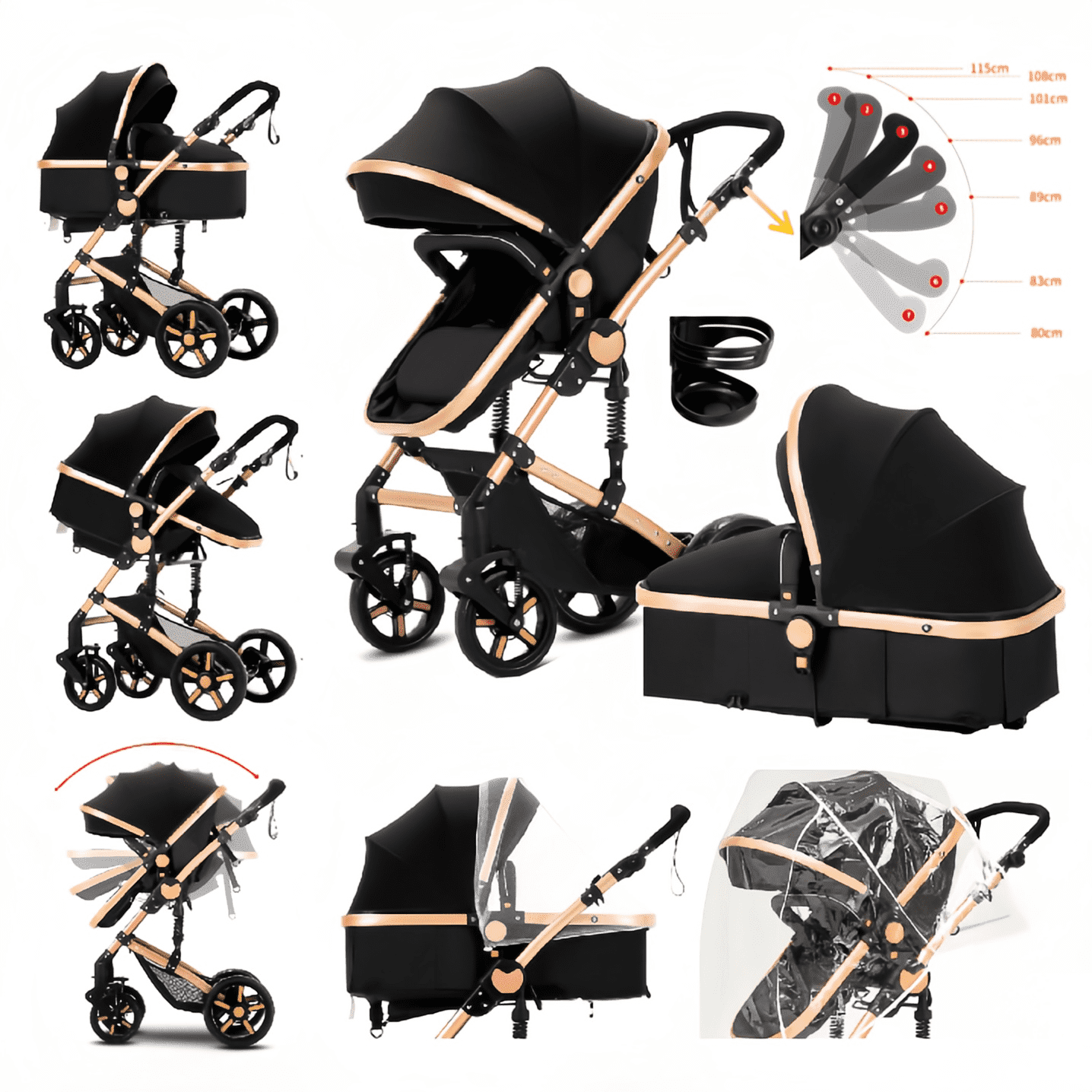
Use the bassinet on a level path, lock the stroller when stopped, and follow the product instructions every time. Small checks can prevent falls and tip-overs.
Before each use
Inspect:
- Frame locks
- Bassinet attachment points
- Handle and canopy joints
- Mattress and lining
- Wheels and brakes
- Snaps, zippers, and fasteners
- Signs of cracks, tears, or loose parts
Place the baby on their back unless a medical professional gives you different instructions for a specific medical reason. Keep the baby’s face and airway clear.
During a walk
Keep the stroller within sight and reach. Use the brake whenever the stroller is stopped. Do not hang heavy bags from the handle unless the manual allows it, because extra weight can increase the risk of tipping.
Keep the canopy open enough for airflow. Do not cover the stroller with a blanket, towel, or plastic sheet to block the sun. This can reduce ventilation and raise the temperature inside.
In hot or cold weather
Babies can overheat more easily than adults. Check the baby’s chest or back rather than relying only on hands and feet, which may feel cool.
Use clothing that suits the weather and follow medical advice for newborns. Do not place a hot water bottle, heating pad, or thick loose blanket in the bassinet.
In cold weather, use only accessories approved for the stroller. A loose cover can shift toward the baby’s face or interfere with the harness and canopy.

Common Pram Bassinet Mistakes
The most common mistakes involve assuming that all flat stroller bassinets have the same purpose. They do not.
Mistake 1: Treating every bassinet as a crib
A flat design does not automatically mean overnight sleep approval. Check the manual and product label.
Mistake 2: Adding a softer mattress
A thicker or softer mattress can create gaps and change the baby’s position. Use only the mattress supplied or specifically approved by the manufacturer.
Mistake 3: Using the bassinet after the baby becomes mobile
Rolling, pushing up, and sitting can change the risk. Follow the earliest limit in the manual, even if the baby still fits by weight.
Mistake 4: Using an unapproved accessory
Aftermarket liners, head supports, cup holders, boards, covers, and adapters may affect fit or stability. Use accessories listed for the exact model.
Mistake 5: Carrying the bassinet with the baby inside
Some bassinets have carry handles. Others have handles meant only for removing the empty unit. Read the instructions before lifting the bassinet with a baby inside.
Mistake 6: Forgetting recalls
Before buying a used stroller bassinet, search the product name and model number on the U.S. Consumer Product Safety Commission recall database. Ask for the manual and proof that all required parts are included.


Pram Bassinet Buying Checklist
Use this short checklist before you buy or use one:
- The bassinet fits the exact stroller model.
- The attachment locks as shown in the manual.
- The mattress is firm and fits closely.
- The product has clear age, weight, height, and development limits.
- The maker states whether sleep is allowed.
- The stroller has working brakes and frame locks.
- The product has no recall or serious damage.
- No unapproved padding or accessories are added.
- The canopy allows good airflow.
- The bassinet will not be used in a vehicle.
- A separate safe sleep space is available at home.
If you buy secondhand, confirm the model number, check recalls, inspect every part, and obtain the current manual from the manufacturer.
Frequently Asked Questions
Is a pram bassinet worth it?
It can be useful for families who want to walk with a newborn before the baby is ready for a standard stroller seat. Its value depends on the cost, storage space, compatibility, and how often you will use it. It may not be worth buying if your stroller already supports newborn use or if you rarely walk with the baby.
Can a baby sleep in a pram bassinet overnight?
Only if the manufacturer clearly approves that exact bassinet for sleep and you follow the instructions. If the manual says the bassinet is for transport or supervised use only, do not use it for overnight sleep.
Can I use a pram bassinet in a car?
No. A stroller bassinet is not a replacement for a car seat unless the product is specifically certified and labeled for vehicle use. Use a car seat that meets U.S. federal requirements and follow its installation instructions.
Does a pram bassinet need a harness?
Some models use a harness, while others do not. Follow the manual. Do not add a harness, strap, or restraint that was not designed for the product.
What is the difference between a carrycot and a bassinet?
In stroller terms, the words often describe a similar flat carry unit. “Carrycot” is more common in some countries, while “bassinet” is common in the United States. The product’s instructions matter more than the name.
Sources and U.S. Safety Guidance
This guide is based on U.S. consumer and pediatric safety guidance, including:
- American Academy of Pediatrics: Safe Sleep
- U.S. Consumer Product Safety Commission: Safe Sleep
- U.S. Consumer Product Safety Commission: Recalls
- National Highway Traffic Safety Administration: Car Seats and Booster Seats
These sources explain broad safety principles. The stroller maker’s manual controls the model-specific limits, attachment instructions, and approved uses.

Conclusion
A pram bassinet is a flat stroller attachment made for carrying a young baby. It can offer a comfortable travel position before a child is ready for a regular stroller seat.
The most important question is not whether the bassinet looks like a crib. It is whether the manufacturer approves it for the use you have in mind. Check the manual, follow the age and development limits, use the original mattress and parts, and keep a separate approved sleep space available at home.
