
For most babies in the United States, you can use safe tap water or bottled water to mix powdered infant formula. The water should come from a safe source and match the formula label’s instructions. Do not use plain water as a drink for young babies, and never add extra water to formula.
If your baby is younger than 2 months, was born prematurely, or has a weakened immune system, ask a pediatrician about using ready-to-feed liquid formula. Powdered formula is not sterile. When you do use powder, extra care with water temperature and clean preparation can lower the risk of germs.
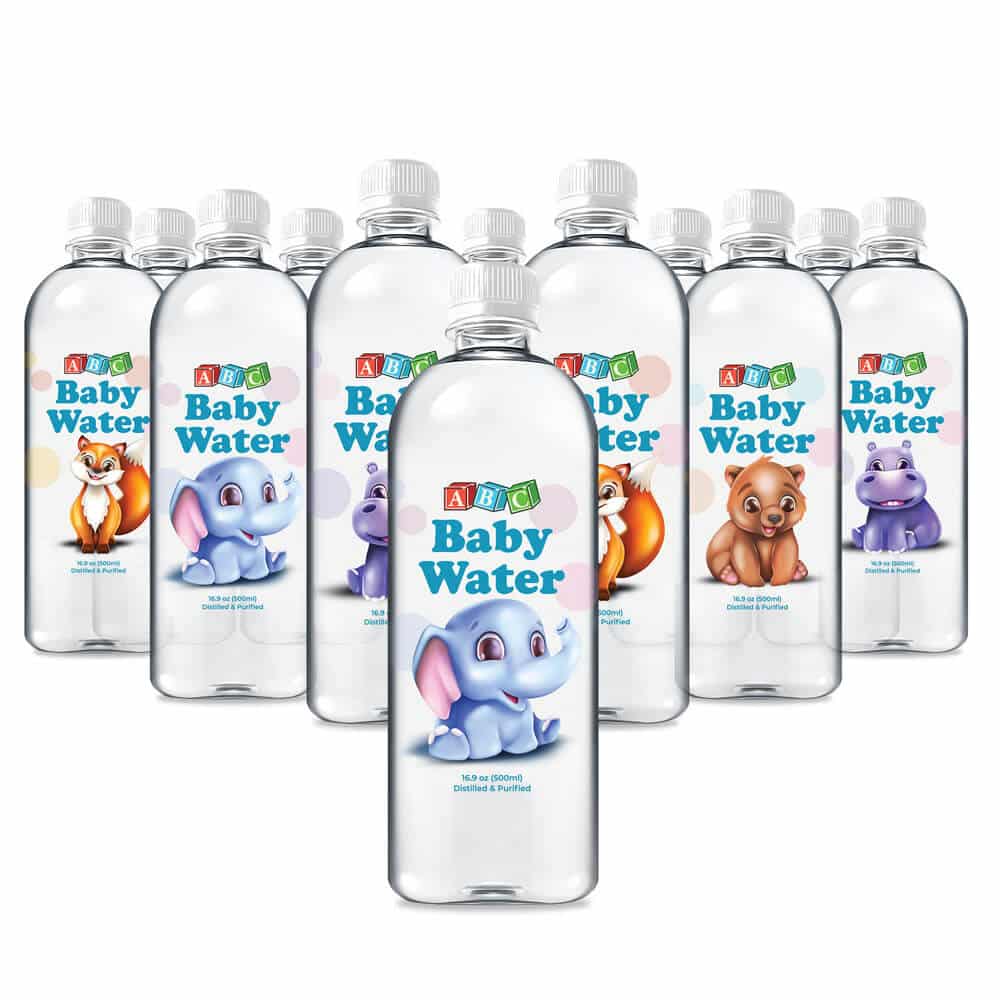
The best water for baby formula
The best water for formula is safe drinking water that contains no known harmful germs or chemicals. In the U.S., this usually means:
- Cold tap water from a regulated public water system
- Bottled water labeled for drinking
- Well water that has been tested and shown to be safe
- Distilled or purified water, when it is safe and practical to use


The water does not need to say “nursery water.” That label does not mean the water is safer than regular bottled water. Bottled water also is not automatically safer than tap water.
The right choice depends on your local water quality and your baby’s health. If your water has a boil-water notice, chemical warning, flood exposure, or uncertain well-water test, use a safe alternative and contact your local health department.
Can you use tap water for baby formula?
Yes. Safe cold tap water is usually suitable for infant formula in the United States. Public water systems must meet federal drinking-water standards, although local problems can still occur.
Use cold water from the tap. Let it run briefly if the faucet has not been used for several hours. This can help flush water that has been sitting in household pipes.
Do not use hot tap water to prepare formula. Hot water may pick up more lead or other metals from plumbing. Heat cold tap water separately if your pediatrician or local health department recommends warm water for powdered formula.
You can check your local water quality in several ways:
- Look for your water supplier’s annual Consumer Confidence Report.
- Check your city, county, or state health department website.
- Follow any current boil-water or do-not-drink notice.
- Ask about lead testing if your home has old plumbing.
- Use a certified water test for private well water.
A home water filter may improve taste, but it does not always remove every germ or chemical. Check the filter’s certification and replace it on schedule.
Is bottled water better than tap water?
Not usually. Bottled water is an option, not a requirement. It may be useful when tap water is unsafe, unavailable, or under an advisory.
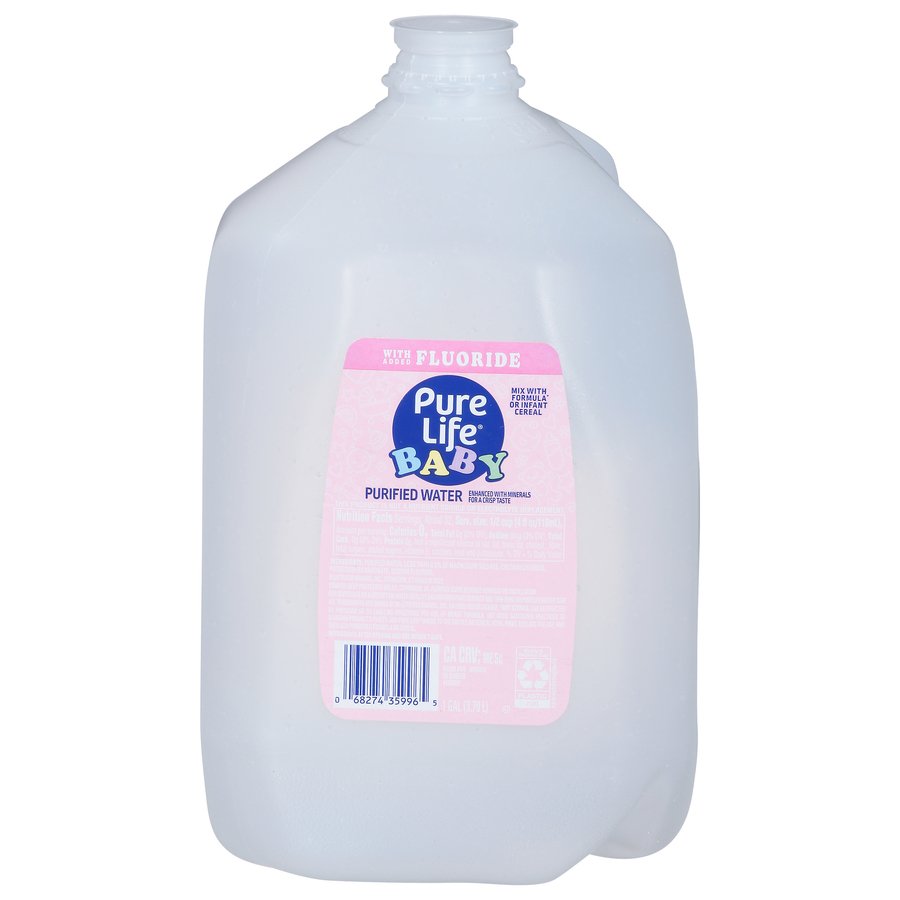
Bottled water can vary in mineral content. Some brands contain fluoride, sodium, or other minerals. Read the label when your baby drinks formula often, especially if your pediatrician has advised you to limit fluoride or another mineral.
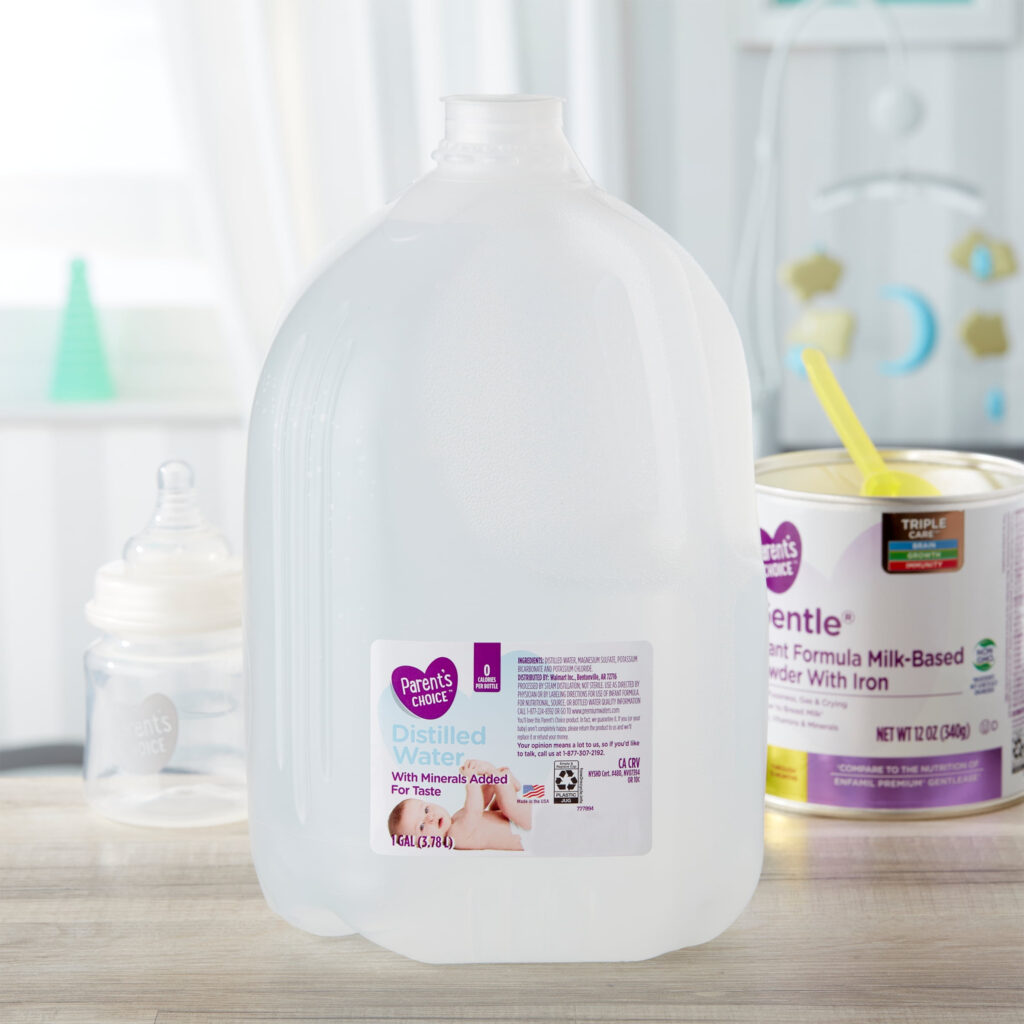
“Nursery water” is often just bottled water marketed for babies. It may be plain water, purified water, or water with added fluoride. The name alone does not prove that it is safer.


If you use bottled water:
- Choose water from a sealed container.
- Check the expiration or “best by” date.
- Store it in a cool, clean place.
- Avoid bottles that are damaged or leaking.
- Do not assume bottled water is sterile.
- Follow the formula label’s mixing directions exactly.
Bottled water does not remove the need for clean hands, clean bottles, and safe formula storage.

Is distilled water safe for baby formula?
Yes. Distilled water is generally safe for mixing infant formula. Distillation removes many minerals, including fluoride.
That can be useful if your baby gets too much fluoride from several sources. However, babies need the right amount of fluoride over time to help protect their teeth. The American Dental Association and the American Academy of Pediatrics advise discussing fluoride exposure with a health professional.
Do not add fluoride drops to formula unless a qualified health professional tells you to do so. Also, do not switch between several water types without considering your baby’s total fluoride intake.
The main point is simple: distilled water is not automatically better than safe tap water. It is one suitable option, but the best choice depends on your local water and your child’s health needs.
What water should you use for powdered formula?
For healthy babies older than 2 months, safe tap water or bottled water can usually be used with powdered formula. Follow the formula container first, because some products may have specific directions.
For babies at higher risk from infection, the CDC advises discussing feeding choices with a health professional. Ready-to-feed liquid formula is sterile until opened and may be preferred for some babies.
If you use powdered formula and need extra germ control, CDC guidance recommends preparing it with water that reaches at least 158°F (70°C). This heat can reduce harmful germs in the powder. Let boiled water cool for about 5 minutes before mixing, so it is still hot but not at a rolling boil.
Be careful with this method:
- Some specialty formulas can lose nutrients or change texture when mixed with very hot water.
- Check the formula maker’s instructions.
- Ask your pediatrician before using hot-water preparation for a premature or medically fragile baby.
- Cool the prepared formula before feeding it.
- Test a few drops on the inside of your wrist.
Powdered formula is not sterile, even when the water is safe. Safe water helps, but it is only one part of safe formula preparation.

How to prepare baby formula safely
Use this basic method unless your formula label or pediatrician gives different instructions.
1. Wash your hands
Wash your hands with soap and water before preparing formula. Clean the counter and gather a clean bottle, nipple, cap, water, and formula.
2. Start with a clean bottle
Use a clean bottle and nipple. For babies younger than 2 months, babies born prematurely, or babies with weakened immune systems, ask your healthcare provider how to clean and sanitize feeding equipment.
3. Measure the water first
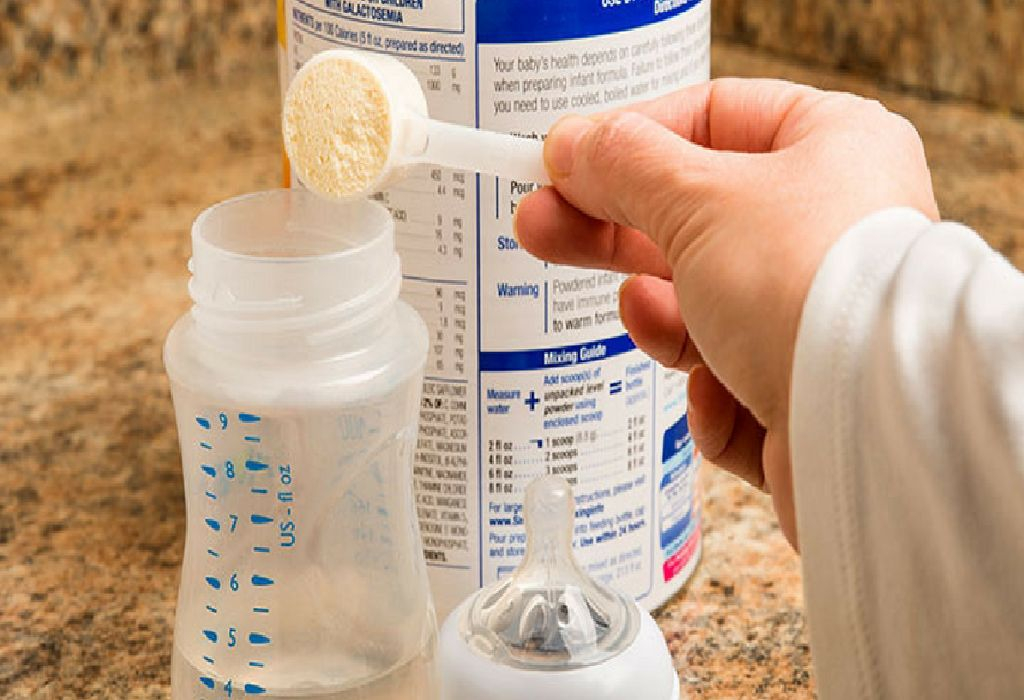
Pour the correct amount of water into the bottle before adding powder. Measuring water first helps prevent an overly strong mixture.


Use the bottle markings or a clean measuring container. Do not estimate.
4. Add the exact amount of powder
Use the scoop that comes with the formula. Level each scoop as directed. Do not pack the powder down, add extra powder, or use a scoop from another product.
5. Mix well
Close the bottle and shake it until the powder dissolves. Do not add cereal, vitamins, or other ingredients unless your baby’s clinician specifically prescribes them.
6. Cool and feed
If the formula is warm, cool the bottle under running water or in a bowl of cool water. Keep water away from the nipple and bottle opening.
Feed the formula soon after preparation. Discard formula left in the bottle after a feeding because saliva can allow bacteria to grow.
7. Store leftovers correctly
According to CDC guidance, prepared formula that has not been used should be refrigerated and used within 24 hours. Formula left at room temperature for more than 2 hours should be discarded. If feeding has started, discard unused formula after 1 hour.
Always check the product label. Its instructions may be more restrictive.

When should you boil water for baby formula?
Boil water when a public health agency issues a boil-water advisory or when your healthcare provider recommends it. Boiling can kill many germs in water.
Boiling does not remove lead, nitrates, fuel, pesticides, or other chemicals. In fact, boiling can make some chemicals more concentrated as water evaporates. If your water has a chemical warning, use bottled water from a safe source instead of boiling it.
For normal household use, do not boil water repeatedly just because it is being used for formula. If your local water is safe, follow the formula label and your pediatrician’s advice.
During a boil-water advisory:
- Bring water to a rolling boil.
- Boil it for 1 minute.
- Let it cool in a covered container.
- Use it within the time advised by your local health department.
- Follow the formula maker’s instructions for mixing.
A boil-water notice may not address every chemical problem. Read the exact notice, since “boil water,” “do not drink,” and “do not use” have different meanings.

Can you use well water for baby formula?
You can use well water only after testing confirms that it is safe. Private wells are not regulated like public water systems, and the owner is responsible for testing them.
The U.S. Environmental Protection Agency recommends regular well-water testing. Testing is especially important after flooding, changes in taste or smell, repairs, or nearby construction.
Ask a certified laboratory or local health department about testing for:


- Nitrates and nitrites
- Coliform bacteria
- Lead
- Arsenic
- Pesticides, when relevant
- Other local contaminants
Nitrates deserve special attention because infants can become seriously ill from high nitrate levels. Boiling does not make nitrate-contaminated water safe.
Do not use untreated well water for formula until testing shows that it meets applicable safety standards. If a test result is unclear, use safe bottled water and ask your healthcare provider or health department what to do next.
What about fluoride in water and baby formula?
Fluoride in water can help protect teeth, but too much fluoride during tooth development can cause mild dental fluorosis. Dental fluorosis often appears as faint white marks on the teeth.
Community water systems commonly adjust fluoride to about 0.7 milligrams per liter, also written as 0.7 parts per million. The correct choice for your baby depends on all fluoride sources, including:
- Tap water
- Bottled water
- Fluoride toothpaste
- Fluoride supplements
- Certain foods and drinks
- Formula prepared with fluoridated water
The CDC states that using fluoridated water to prepare infant formula is safe. If your baby drinks formula made with fluoridated water as the main food source, ask your pediatrician or dentist whether a lower-fluoride water is appropriate.
Do not make a long-term water change solely because of a label claim. First find out the fluoride level in your tap water and discuss your baby’s total exposure with a professional.
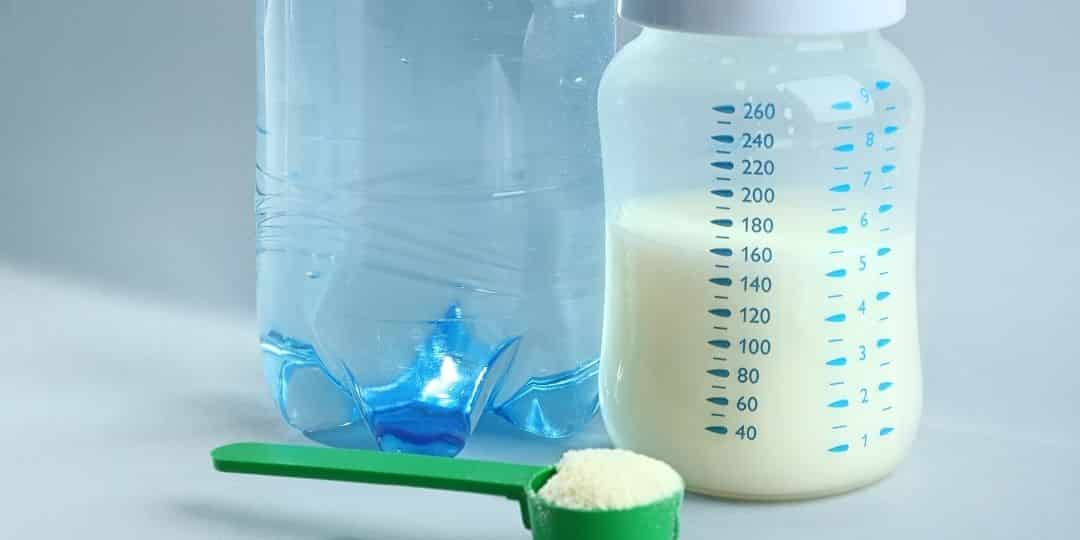
Water to avoid when making baby formula
Do not use these options unless a qualified healthcare professional or public health agency specifically directs you to:
- Water under a “do not drink” warning
- Untested private well water
- Water from a stream, lake, river, or spring
- Softened water with high sodium
- Sparkling or carbonated water
- Flavored water
- Sports drinks or electrolyte drinks
- Juice
- Homemade formula mixtures
- Water from a hot-water tap
- Water that has been boiled to treat chemical contamination
Never dilute formula to make it last longer. Too much water can deprive a baby of needed calories and salts. Too little water can cause dehydration and place stress on the kidneys.
Young babies should not be given plain water unless their pediatrician recommends it. Breast milk and properly mixed formula provide the fluid babies need in early infancy.

Quick decision guide
| Your situation | Usually appropriate action |
|---|---|
| Safe public tap water | Use cold tap water and follow the formula label |
| Tap water has a boil-water advisory | Boil as directed by local officials or use safe bottled water |
| Tap water has a “do not drink” notice | Do not use it; use a verified safe source |
| Private well water | Test it before using it for formula |
| Baby is younger than 2 months | Ask the pediatrician about liquid formula and powder preparation |
| Baby was premature or has low immunity | Ask the pediatrician about the safest formula type and water method |
| You want to reduce fluoride exposure | Check the water’s fluoride level and ask a pediatrician or dentist |
| You are unsure about the water | Use a safe alternative while contacting your local health department |
The deciding factor is not whether water is tap or bottled. It is whether the water is safe, appropriate for your baby’s situation, and used in the correct formula-to-water ratio.
Common mistakes to avoid
The most serious formula mistakes involve the mixture, not the brand of water.
Avoid these errors:
- Adding powder before measuring water
- Using extra water to stretch a can of formula
- Using extra powder to make a stronger bottle
- Using hot tap water
- Reusing formula left after a feeding
- Keeping prepared formula at room temperature too long
- Assuming “nursery water” is sterile
- Assuming bottled water has no fluoride
- Boiling water that contains chemical contaminants
- Using a water filter without changing its cartridge
- Sharing formula preparation tools without washing them
- Using an old or damaged formula container


If you accidentally make formula too strong or too weak, do not guess how to correct it. Call your pediatrician, poison control center, or local health service for advice. If your baby seems very ill, has trouble breathing, is unusually sleepy, vomits repeatedly, or has signs of dehydration, seek urgent medical care.
Key takeaways
- Safe tap water is usually fine for baby formula in the U.S.
- Bottled, distilled, and purified water are also options when the source is safe.
- “Nursery water” is not automatically safer or sterile.
- Test private well water before using it for formula.
- Boiling kills germs but does not remove chemicals or nitrates.
- Use the exact water-to-powder ratio on the formula label.
- Ask a pediatrician about liquid formula for babies younger than 2 months, babies born prematurely, or babies with weakened immune systems.
- Check fluoride levels if your baby drinks formula as the main food source.
Frequently asked questions
Is purified water or distilled water better for baby formula?
Neither is automatically better. Both can be suitable if the product comes from a safe source. Distilled water has little or no fluoride, while purified water may contain varying levels depending on how it was treated. Choose based on local water quality and your baby’s total fluoride exposure.
Can I use filtered tap water for formula?
Yes, if the filter is designed to address the contaminant you are concerned about and is maintained correctly. Check the filter certification and replacement schedule. Filtering does not make unsafe water safe in every situation.
Should I use warm water or cold water for formula?
Use cold tap water as your starting water. Warm it separately if needed. Do not use hot water directly from the faucet. For certain high-risk infants, a pediatrician may recommend mixing powdered formula with water at least 158°F (70°C).
Can babies drink bottled water instead of formula?
No. Bottled water does not replace breast milk or infant formula for young babies. Babies should not routinely drink plain water unless their healthcare provider recommends it.
What should I do if my water is temporarily unsafe?
Follow the exact public health notice. Use safe bottled water or another approved source. If the notice concerns chemicals, do not assume boiling will help. Contact your local health department if the instructions are unclear.
Conclusion
For most families in the United States, safe cold tap water is the simplest choice for baby formula. Bottled, purified, or distilled water can also work, but the label “nursery water” does not guarantee extra safety.
Check local water notices, test private well water, use the correct formula ratio, and ask your pediatrician about added precautions for young, premature, or medically fragile babies. When in doubt, use a verified safe water source and get advice from your child’s healthcare provider.
