Bottle refusal is common, especially when a breastfed baby first tries a bottle. The best way to avoid it is to start slowly, offer the bottle before your baby is very hungry, use a calm caregiver, and let your baby control the pace. Never force the nipple into your baby’s mouth or pressure them to finish.
For families in the United States, bottle refusal may affect plans for child care, work, travel, or shared feeding. It does not always mean that a baby dislikes bottles. The cause may be the nipple flow, milk temperature, feeding position, timing, or a strong preference for nursing.
This guide explains how to introduce a bottle, what to do when a baby refuses it, and when to call a pediatrician or feeding specialist.

Why Do Babies Refuse a Bottle?
Babies may refuse a bottle because it feels different from nursing. The nipple has a different shape, texture, smell, and flow. A bottle may also change how a baby must suck, pause, and breathe.
Some babies also link feeding with a certain person. A breastfed baby may expect to nurse when near the lactating parent. The baby may accept a bottle more easily from another trusted caregiver.
Common reasons for bottle refusal include:
- The baby is not used to the bottle nipple.
- The milk flows too fast or too slowly.
- The milk is too warm or too cool for the baby’s preference.
- The baby is very hungry, tired, sick, or upset.
- The bottle is offered in the usual nursing position.
- The baby dislikes the smell of milk on the lactating parent.
- The baby has reflux, oral pain, nasal congestion, or another feeding problem.
- A caregiver pressures the baby to suck or finish.
Bottle refusal can also happen after a baby has had a painful feeding experience. Thrush, teething pain, ear pain, tongue movement problems, or a fast nipple flow may make feeding uncomfortable.
A baby who refuses one bottle may accept another. However, switching products again and again can make the process harder to understand. Change one factor at a time when possible.
When Should You Introduce a Bottle?
If you plan to use bottles, begin offering one before the first separation from your baby. The exact age depends on your family’s needs, but a calm practice period gives your baby time to learn.
Many families begin once breastfeeding is going well. For some babies, this may be around 3 to 6 weeks. A pediatrician or lactation consultant can help if feeding is painful, milk supply is uncertain, or your baby is not gaining weight well.
You do not need to give a full bottle at the first practice. Start with a small amount of expressed breast milk or prepared infant formula. The goal is to learn the skill, not replace a full feeding right away.
Try these conditions:
- Your baby is calm and alert.
- Your baby shows early hunger cues but is not crying hard.
- The room is quiet and free from strong distractions.
- A trusted caregiver offers the bottle.
- You have enough time to stop and try again later.
Early hunger cues can include hand-to-mouth movements, lip smacking, rooting, and increased alertness. Crying is a late hunger cue. A crying baby may have trouble learning a new feeding method.
If you need your baby to take a bottle soon for child care or work, begin practice several weeks ahead when possible. This allows time to solve problems without turning each feed into a struggle.
How to Introduce a Bottle Without Causing Refusal
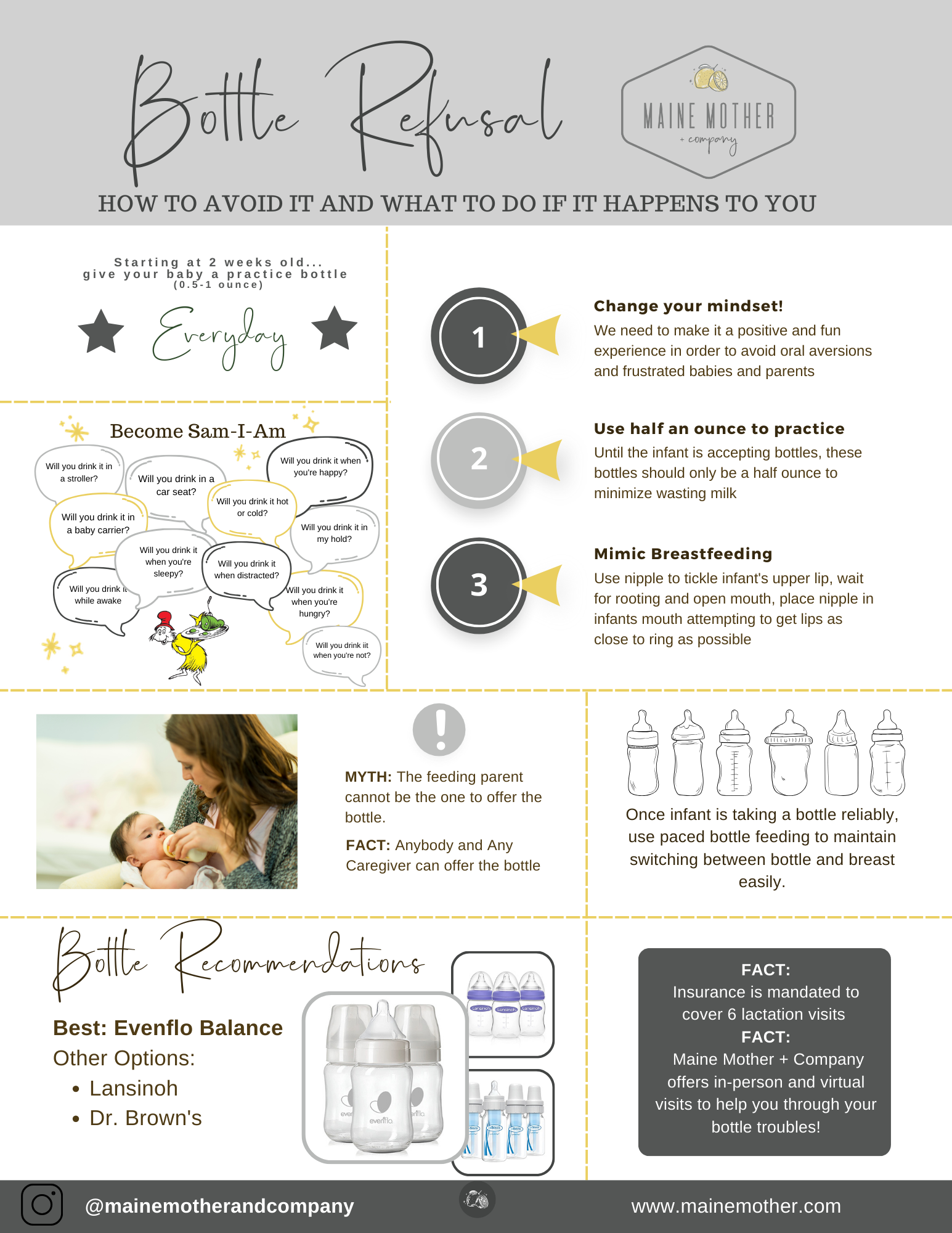
Use short, low-pressure practice sessions. Most babies need repeated exposure before the bottle feels normal.
1. Choose a calm time
Offer the bottle when your baby is slightly hungry but not desperate for food. A baby who is very hungry may become upset when the bottle feels unfamiliar.
If your baby becomes angry, stop. Comfort your baby and feed them in the usual way if needed. Try again later.
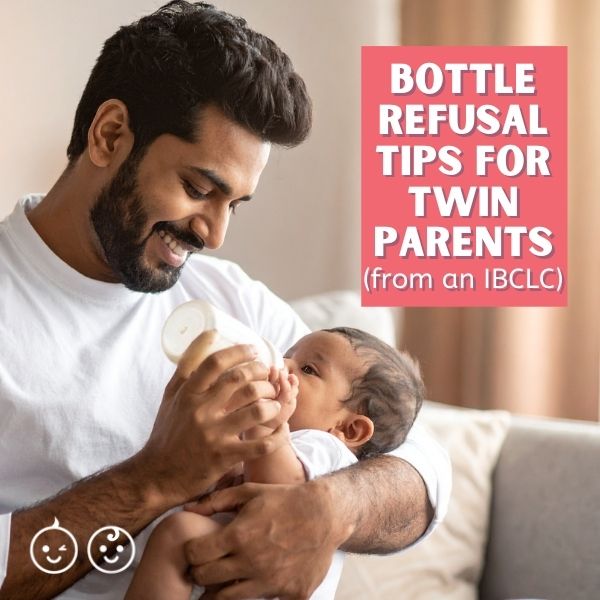
2. Let another caregiver offer it
A non-nursing caregiver may have better results because the baby does not expect that person to breastfeed. The lactating parent can leave the room for a few minutes if that helps the baby focus.
The caregiver should hold the baby close and speak softly. The baby should feel supported, not trapped.
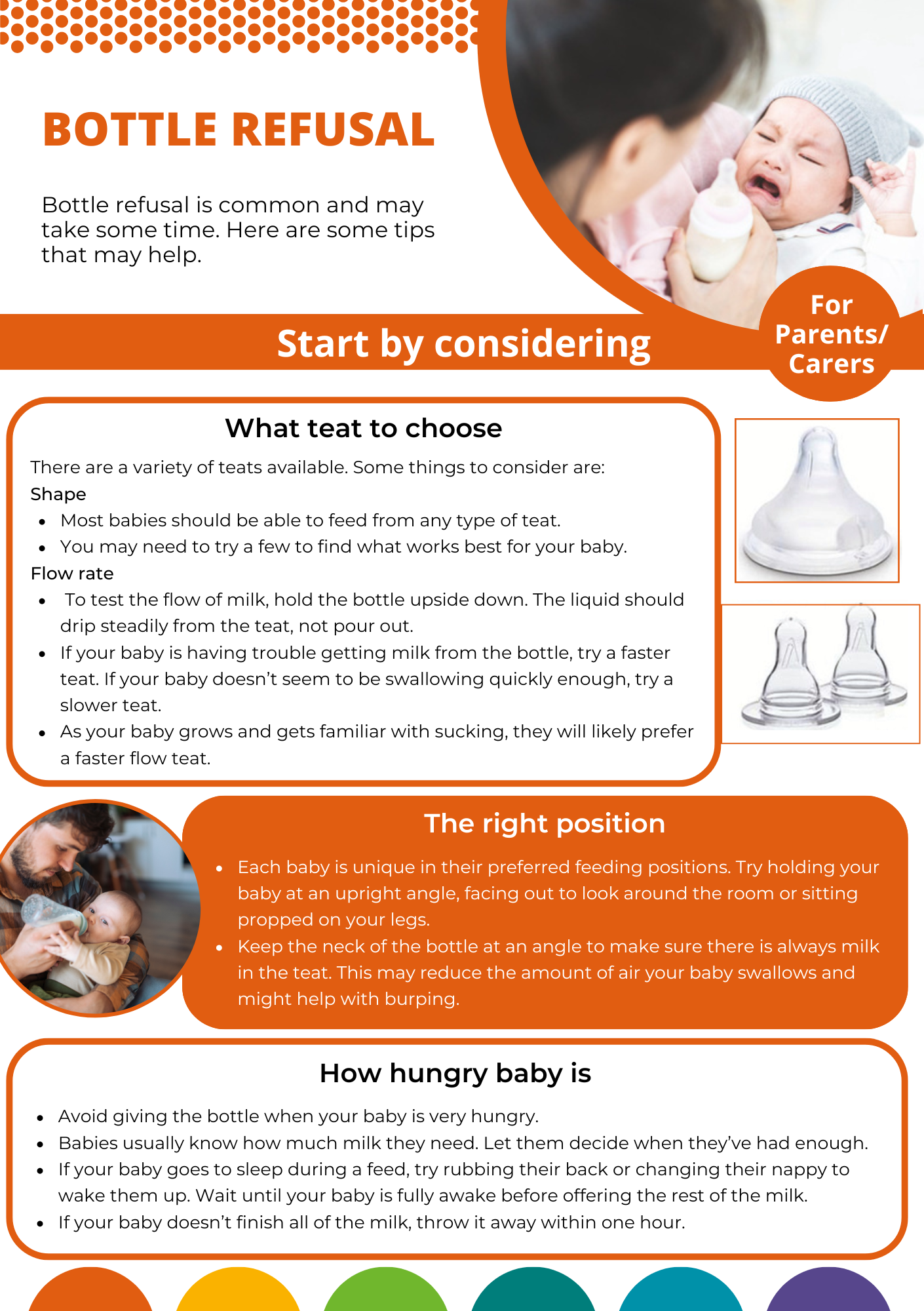
3. Use a slow-flow nipple
A slow-flow nipple may help a breastfed baby manage the milk more comfortably. But “slow flow” is not a universal speed rating. Flow can vary by brand, nipple shape, nipple age, and even the way the nipple is made.
Watch the baby rather than relying only on the label. Signs of flow that is too fast may include:
- Coughing or choking
- Gulping
- Milk leaking from the mouth
- Pulling away
- Wide eyes or panic
- Refusing after only a few sucks
Signs of flow that is too slow may include:
- Falling asleep soon after starting
- Working hard without much milk transfer
- Becoming frustrated
- Taking much longer than usual to feed
Do not enlarge a nipple hole with a needle or scissors. An altered nipple can release milk too quickly and may break apart.
4. Touch the nipple to the lips
Hold the bottle nearly horizontal. Touch the nipple to your baby’s upper lip and wait for your baby to open their mouth. Let your baby draw the nipple in.
Do not push the nipple into the mouth. This can create stress and may teach the baby to resist the bottle.
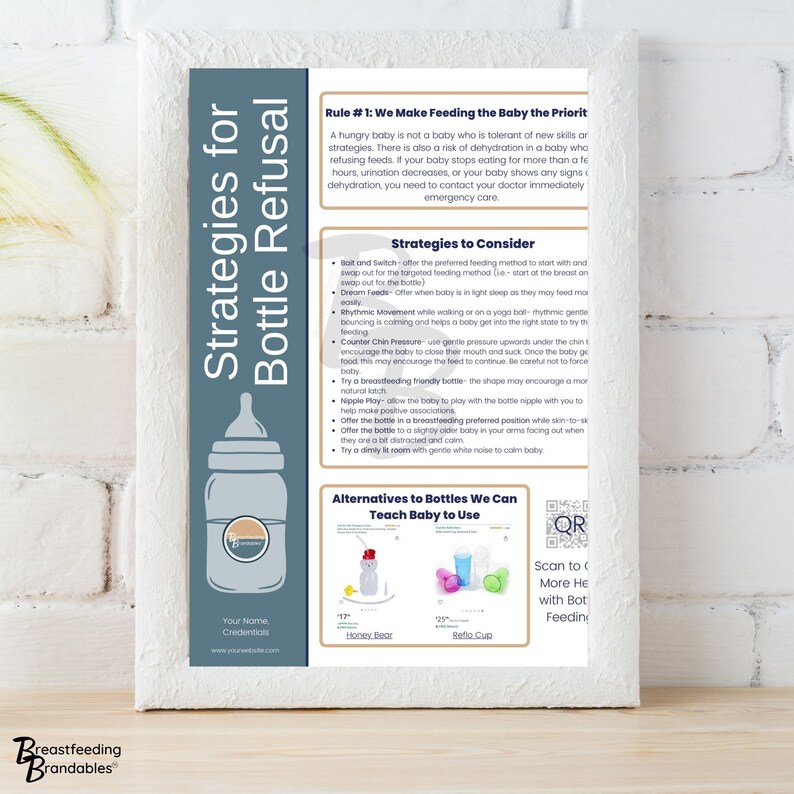
5. Use paced bottle-feeding
Paced bottle-feeding slows the feed and gives the baby control. Keep the bottle more level instead of tipping it steeply downward. Pause when your baby pauses.
A baby may need breaks to breathe, rest, burp, or decide whether to continue. The American Academy of Pediatrics supports responsive feeding, which means caregivers watch hunger and fullness cues rather than forcing a set amount.
6. Stop at signs of fullness
A baby may be full if they:
- Turn the head away
- Close the mouth
- Relax their hands
- Stop sucking
- Push the bottle away
- Fall asleep in a relaxed way
Do not pressure your baby to finish the bottle. Forced feeding can make refusal worse and may interfere with the baby’s ability to respond to hunger and fullness.
A Simple Bottle-Practice Plan
A gradual plan can reduce stress for both baby and caregiver.
| Practice period | What to try | Goal |
|---|---|---|
| First attempts | Offer the empty nipple during a calm time | Let the baby explore the texture |
| Next attempts | Offer a small amount of milk | Build a positive link with the bottle |
| Later attempts | Offer the bottle before a usual feed | Practice when the baby is ready to eat |
| Ongoing practice | Repeat every few days | Keep the skill familiar |
This table is a general plan, not a medical schedule. Some babies move quickly, while others need more time.
Keep practice sessions short. Five to ten calm minutes may be more useful than a long session filled with crying. End the attempt before your baby becomes overwhelmed.
Use the same basic approach each time:
- Offer the bottle calmly.
- Wait for your baby to accept the nipple.
- Keep the bottle level.
- Follow your baby’s pauses.
- Stop if your baby resists.
- Try again during another calm feed.
If a baby takes only a small amount, that still counts as practice. You can slowly increase the amount as the baby becomes more comfortable.

How to Troubleshoot Bottle Refusal
First, look for a pattern. Does your baby refuse every bottle, one nipple type, one caregiver, or only bottles offered at a certain time? The pattern can point to the cause.
Your baby refuses the bottle but seems willing to eat
Try a different caregiver, room, position, or nipple flow. Keep the baby slightly upright rather than lying flat. Some babies accept the bottle while being held facing outward, held against the caregiver’s chest, or seated safely with support.
Do not copy a nursing position if it causes the baby to search for the breast.
Your baby sucks but cries or pulls away
The milk may be too fast, too slow, too warm, or too cool. Check the nipple flow first. Then test the milk temperature on your wrist. Milk should feel warm or neutral, not hot.
If the baby coughs, gags, arches, or seems uncomfortable during several feeds, stop and contact the child’s pediatrician.
Your baby chews the nipple
Chewing may mean that the baby is exploring the nipple, not feeding yet. It can also happen with teething or poor latch. Let the baby explore briefly, but do not force the nipple deeper into the mouth.
A lactation consultant or infant feeding therapist can assess oral movement and latch.
Your baby accepts the bottle from someone else but not from you
This is common. Your baby may smell breast milk and expect to nurse. Try having another caregiver lead practice while you remain out of sight.
You can return once the baby is comfortable with the bottle. This does not mean your baby is rejecting you.
Your baby used to take a bottle but now refuses
A sudden change deserves attention. Check for:
- Illness
- Stuffy nose
- Ear pain
- Mouth sores
- Thrush
- Teething pain
- A nipple that has changed or collapsed
- Milk that tastes different
- A stressful feeding event
Replace worn nipples and follow the bottle maker’s instructions. If refusal lasts or your baby seems in pain, ask the pediatrician for advice.

What to Do If Your Baby Refuses Every Bottle
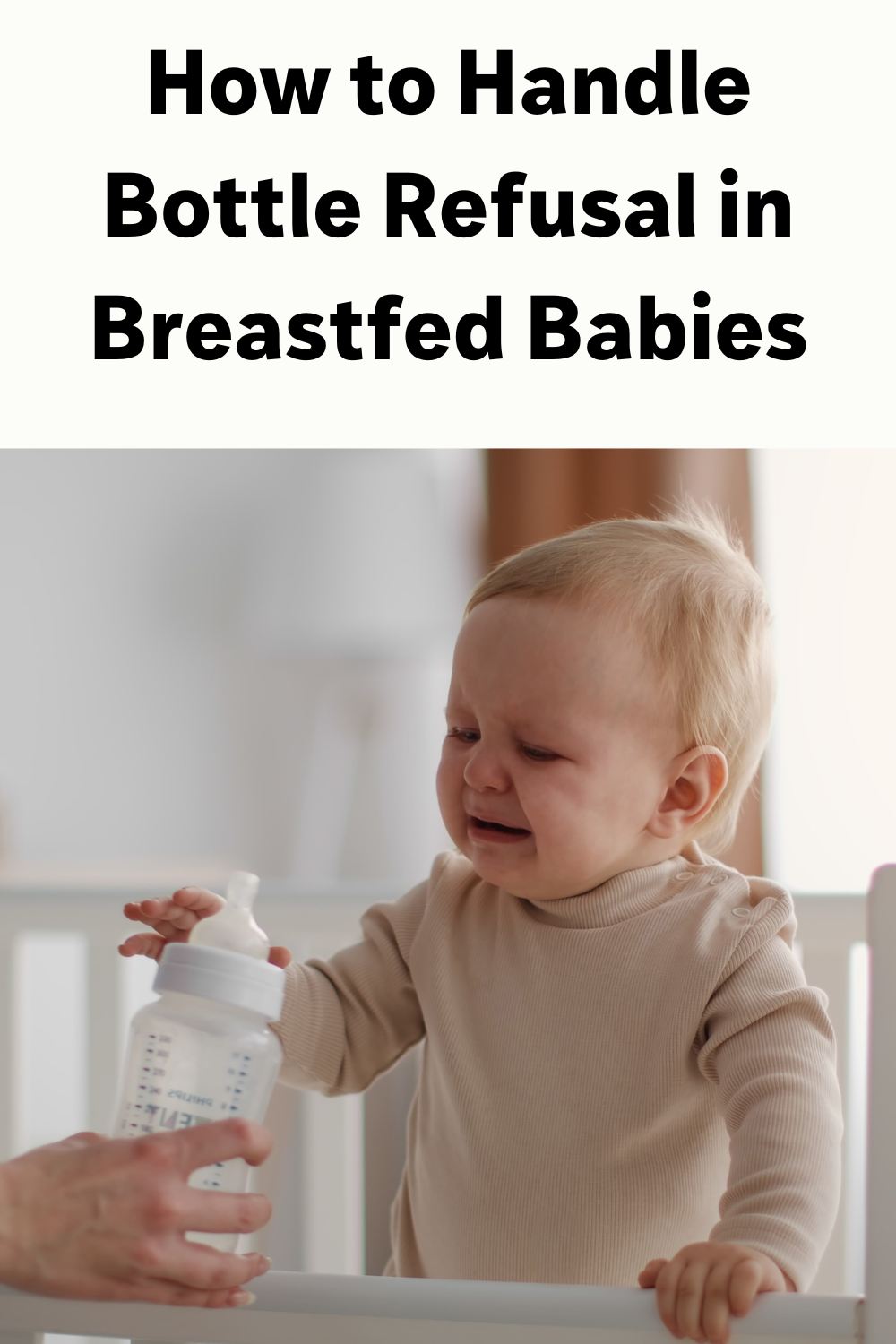
Do not keep pushing the bottle through a crying spell. Take a break for a day or two, then restart with a low-pressure attempt.
While you work on bottle practice, ask your pediatrician about other feeding methods if your baby is old enough and developmentally ready. Depending on age and skill, a clinician may discuss a small open cup, spoon, syringe, or another method. Each method has its own safety rules.
Do not offer water, juice, cereal, or other foods to replace breast milk or infant formula unless your child’s healthcare professional recommends it. Babies under 12 months generally need breast milk or iron-fortified infant formula as their main milk source.
If your baby will soon attend child care, share a written feeding plan with the caregiver. Include:
- The type of milk
- How much milk to offer
- How to pace the feed
- Hunger and fullness cues
- Safe storage instructions
- What to do if the baby refuses
- Who to call with concerns
A feeding plan should never require a caregiver to force a bottle.
Bottle Safety for Breast Milk and Formula
Bottle refusal should not lead to unsafe feeding practices. Follow U.S. Centers for Disease Control and Prevention guidance for breast milk handling, infant formula preparation, and cleaning.
For expressed breast milk:
- Use clean containers made for human milk storage.
- Label milk with the date it was expressed.
- Thaw frozen milk safely in the refrigerator or in warm water.
- Do not microwave breast milk.
- Swirl breast milk gently to mix separated fat.
- Discard leftover milk according to current CDC guidance.
For infant formula:
- Follow the product label exactly.
- Measure water first, then add the correct amount of powder or liquid concentrate.
- Do not dilute formula or add extra powder.
- Do not save unfinished formula for a later feed unless the product instructions and healthcare provider say it is safe.
- Use prepared formula within the time limits on the label and current CDC guidance.
Clean bottles, nipples, rings, and caps after each use. The CDC gives extra cleaning guidance for babies under 2 months, babies born prematurely, and babies with weakened immune systems.
Never prop a bottle or leave a baby alone with one. Bottle propping raises the risk of choking, ear infections, tooth decay, and missed hunger cues.
When to Call a Pediatrician or Feeding Specialist
Call your baby’s pediatrician if bottle refusal affects the amount of milk your baby drinks, especially if you notice fewer wet diapers, poor weight gain, repeated vomiting, unusual sleepiness, or signs of pain.
Seek prompt medical advice if your baby:
- Has trouble breathing while feeding
- Turns blue, gray, or very pale
- Chokes often
- Cannot keep feeds down
- Has signs of dehydration
- Is difficult to wake
- Refuses both breast and bottle
- Has a fever, especially if very young
For a baby younger than 3 months with a rectal temperature of 100.4°F (38°C) or higher, contact a healthcare professional right away, as advised by the AAP.
A lactation consultant, pediatrician, speech-language pathologist, or occupational therapist with infant feeding training may help. The right professional depends on the cause. A feeding specialist can watch the baby feed and assess sucking, swallowing, breathing, positioning, and nipple flow.
Common Mistakes That Make Bottle Refusal Worse
Avoid these approaches:
Waiting until the first day of child care
A baby may need several practice sessions or several weeks to accept a new feeding method. Start before the first separation when possible.
Offering the bottle only when the baby is starving
Hunger does not always make learning easier. A very hungry baby may become upset before they can try the nipple.
Trying many changes at once
If you change the bottle, nipple, milk temperature, caregiver, and room at the same time, you may not know what helped. Change one or two factors, then watch the response.
Forcing the nipple
Pressure can create a negative feeding association. Let the baby accept the nipple voluntarily.
Assuming the most expensive bottle will work
No bottle works for every baby. A simple bottle with a suitable nipple flow may work as well as a specialized design. Choose based on the baby’s response, safe use, and ease of cleaning.
Ignoring pain
Refusal that begins suddenly may be a health issue, not a behavior problem. Look for illness, mouth pain, congestion, or ear pain.
Focusing only on the amount
A calm, partial feed can be progress. The baby is learning a new skill. Watch comfort, breathing, swallowing, and fullness cues as well as volume.
Key Takeaways
- Start bottle practice before you urgently need it.
- Offer the bottle when your baby is calm and mildly hungry.
- Let another trusted caregiver try.
- Use a slow-flow nipple, but watch your baby’s cues.
- Practice paced bottle-feeding.
- Never force the nipple or make your baby finish.
- Change one factor at a time.
- Ask for help if refusal is sudden, painful, or affects hydration or weight gain.
Frequently Asked Questions
Can a breastfed baby suddenly refuse a bottle?
Yes. A baby may refuse a bottle after previously accepting it. Possible reasons include illness, teething, a changed nipple, a different milk taste, or a negative feeding experience. Review recent changes and contact the pediatrician if the refusal continues or affects milk intake.
Should I give a bottle to a baby who is crying from hunger?
Try to calm the baby first. Hold the baby close, reduce noise, and offer the bottle once the baby can focus. If the baby remains very upset, feed them using the usual safe method and try bottle practice later.
How long does it take to stop bottle refusal?
There is no fixed timeline. Some babies accept a bottle after a few calm attempts. Others need days or weeks of gentle practice. Progress is more likely when caregivers avoid pressure and respond to the baby’s cues.
What if my baby refuses both breast milk and formula in a bottle?
Check the nipple flow, milk temperature, caregiver, and feeding position. If the baby refuses all feeds, has fewer wet diapers, seems ill, or shows pain, contact the pediatrician promptly.
Can I use a cup instead of a bottle?
Some babies can use a small open cup or another feeding method when developmentally ready. Ask your pediatrician or feeding specialist before using an alternative, especially for a young infant or a baby who has swallowing concerns.
Conclusion
The best way to avoid bottle refusal is to make the bottle a calm, gradual experience. Start early enough to allow practice, use responsive feeding, and let your baby control the pace.
If your baby resists, pause instead of forcing. Check the caregiver, nipple flow, milk temperature, position, and signs of pain. When refusal affects hydration, growth, or feeding safety, contact your baby’s pediatrician or a qualified infant feeding professional.