
Baby teeth usually erupt from lower central incisors to second molars between six months and three years.
Knowing what order do baby teeth come in can make each new smile easier to understand. Baby teeth often appear in a steady pattern, but the exact timing may differ from child to child. This guide explains the usual eruption order, signs to expect, ways to ease discomfort, and when to call a pediatric dentist.
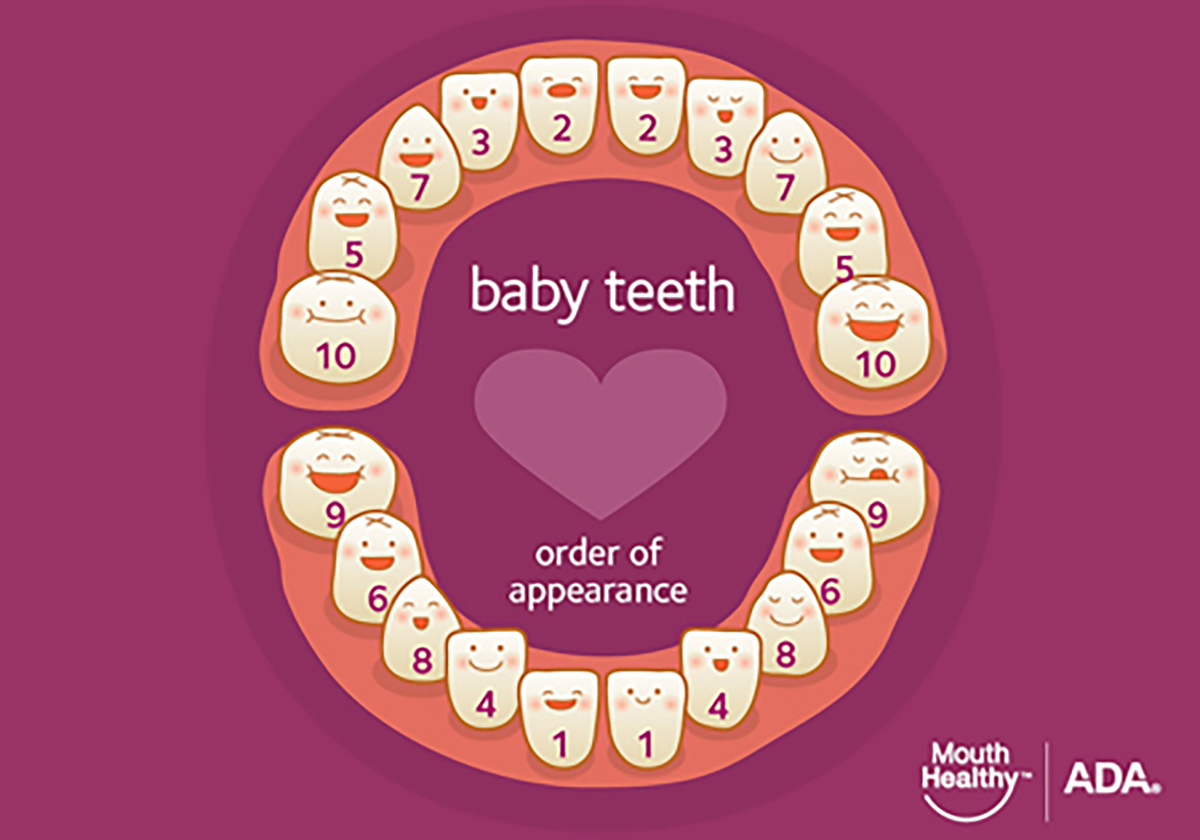
What order do baby teeth come in?
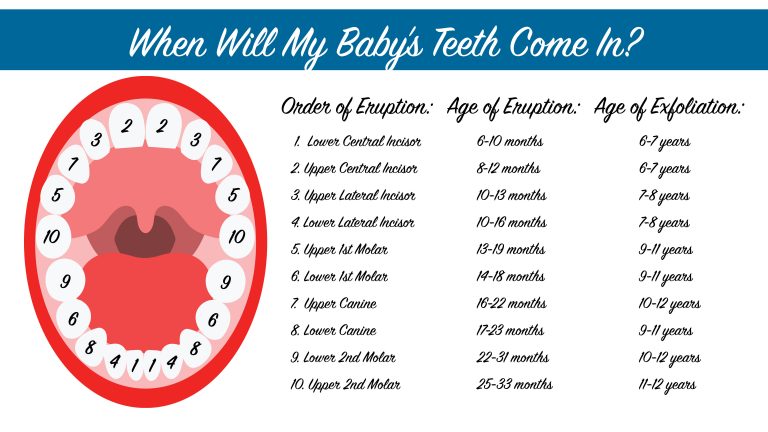
Most children get 20 primary teeth. These are also called baby teeth, milk teeth, or primary teeth. They usually come in pairs, with the matching tooth on the other side appearing soon after the first.
The usual pattern is:
- Lower central incisors
- Upper central incisors
- Upper lateral incisors
- Lower lateral incisors
- First molars
- Canines
- Second molars
This pattern answers the common question, “What order do baby teeth come in?” However, it is a guide, not a strict rule. A baby may get an upper tooth before a lower tooth and still have normal dental development.
Baby teeth help children chew food, form clear sounds, and keep space for adult teeth. They are small, but they play a big role in healthy growth.

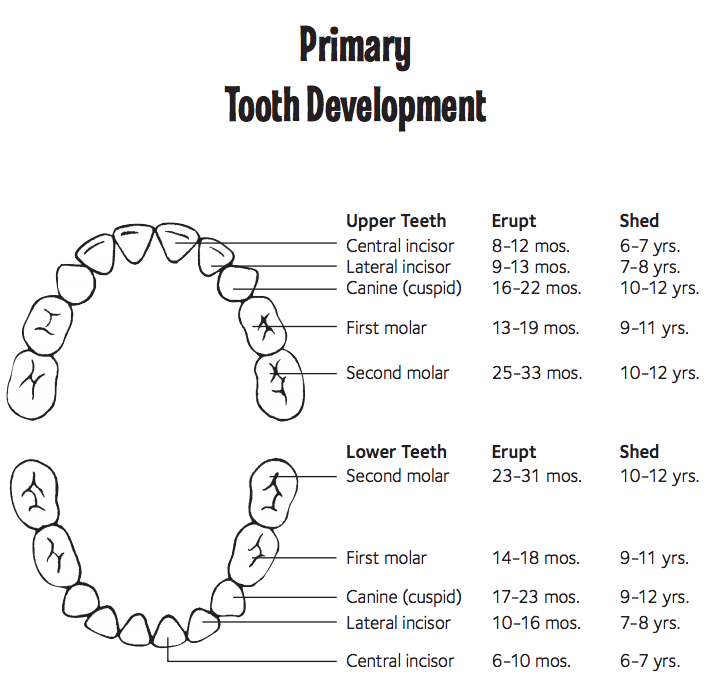
Baby teeth eruption chart
The chart below shows the average age range for each type of primary tooth. The lower teeth are in the jawbone closest to the tongue. The upper teeth are in the jawbone closest to the nose.
| Baby tooth | Lower jaw | Upper jaw |
|---|---|---|
| Central incisors | 6 to 10 months | 8 to 12 months |
| Lateral incisors | 10 to 16 months | 9 to 13 months |
| First molars | 14 to 18 months | 13 to 19 months |
| Canines | 17 to 23 months | 16 to 22 months |
| Second molars | 23 to 31 months | 25 to 33 months |
The lower central incisors are often the first teeth to appear. They are the two small teeth in the center of the bottom gum. The upper central incisors often follow and create the familiar front-tooth smile.
The first molars usually arrive after the incisors. These broad teeth help children chew soft foods and more textured foods. Canines then appear beside the incisors, followed by the second molars near the back of the mouth.
When parents ask what order do baby teeth come in, they often expect every child to follow the chart exactly. In reality, some children erupt teeth earlier, later, or in a slightly different order. Healthy children can have normal differences of several months.
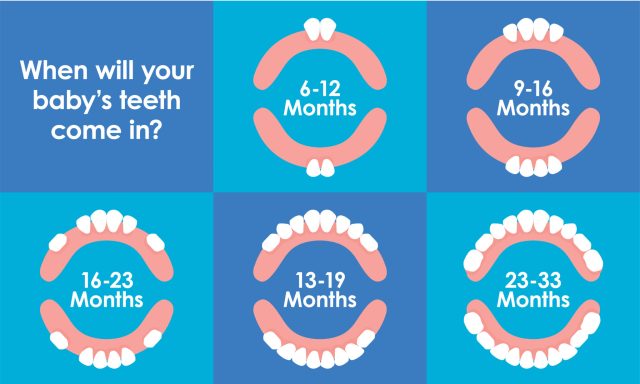
A simple timeline from birth to age 3
Birth to 6 months
Most babies do not have visible teeth at birth. Their gums may look smooth, although some babies are born with a tooth or develop one during the first month.
During this stage, babies may chew on their fingers, drool more, or become interested in cold objects. These signs do not always mean a tooth is about to erupt. Babies also explore the world with their mouths at this age.
6 to 12 months
The lower central incisors often appear first. The upper central incisors may follow within a few months.
Many parents notice:
• More drooling
• A need to chew
• Mild gum swelling
• Fussiness
• Changes in sleep
• A small white edge at the gum
Teething may cause mild discomfort, but it should not cause a high fever, severe diarrhea, breathing trouble, or extreme sleepiness.
9 to 16 months
The lateral incisors usually arrive during this period. These teeth sit next to the front central incisors.
By the end of this stage, many children have a growing row of front teeth. Some children may also begin to use their teeth to bite soft foods, but they still need close supervision while eating.
13 to 19 months
The first molars often erupt next. These teeth are larger and may cause more gum pressure than the front teeth.
A child may seem more irritable during molar eruption. Chewing on a chilled teething ring may help. Never give a child a frozen object, as it can hurt the gums.
16 to 23 months
The canines appear beside the incisors. They are sometimes called cuspids because they have a pointed shape.
The canines help tear food. They also complete much of the front section of the primary dentition.
23 to 33 months
The second molars are usually the last baby teeth to erupt. They sit behind the first molars and help grind food.
By about age 3, many children have all 20 primary teeth. Some healthy children reach this milestone earlier or later.
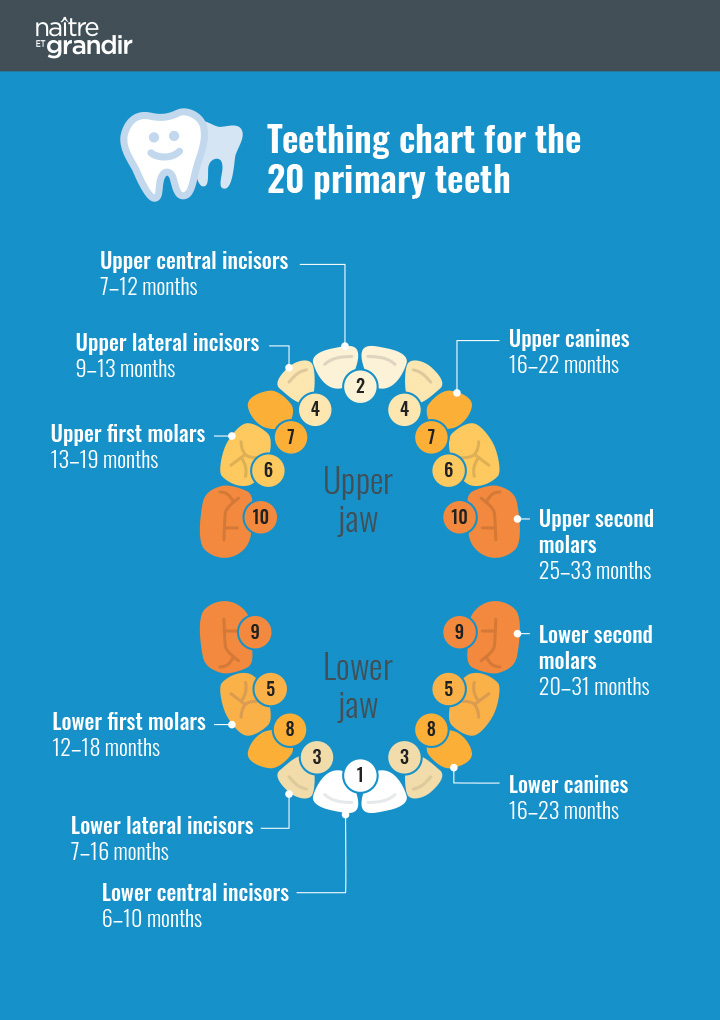
What order do baby teeth come in by location?
Looking at the mouth by location can make the process easier to follow. Think of the teeth as five pairs in the upper jaw and five pairs in the lower jaw.
The usual upper-jaw order is:
• Central incisors
• Lateral incisors
• First molars
• Canines
• Second molars
The usual lower-jaw order is:
• Central incisors
• Lateral incisors
• First molars
• Canines
• Second molars
The timing is not identical between the upper and lower jaws. For example, upper lateral incisors often appear before lower lateral incisors. Upper first molars may also erupt slightly before lower first molars.
The most useful way to remember what order do baby teeth come in is to follow the general path from the center outward and then toward the back. The pattern resembles a small team filling in a row, one section at a time.
Common signs of teething
Teething symptoms can be mild and short-lived. They may begin several days before a tooth breaks through the gum.
Common signs include:
• Tender or swollen gums
• Drooling
• Chewing on toys or fingers
• Mild fussiness
• A desire for cooler foods
• Slight changes in sleep
• Rubbing the cheeks or ears
Some children show very few signs. Others become uncomfortable for a few days with each new tooth.
A slightly raised temperature can happen during teething, but a true fever is not considered a normal teething symptom. A fever of 100.4°F or higher in a baby younger than 3 months needs prompt medical advice.
Call a health professional if your child has:
• A high or lasting fever
• Vomiting or frequent watery stools
• A widespread rash
• Trouble breathing or swallowing
• Poor drinking or fewer wet diapers
• Severe pain or unusual weakness
These signs may point to an illness rather than teething.

How to help a teething baby
Parents often want safe, simple ways to ease gum discomfort. Start with gentle methods and watch your child closely.
Try these options:
• Offer a firm rubber teething ring that is cool, not frozen.
• Rub the gums with a clean finger.
• Give chilled, soft foods if your child is ready for solid food.
• Wipe drool from the face to reduce skin irritation.
• Use a clean washcloth for gentle chewing.
• Ask a pediatrician about the correct dose of an approved pain reliever.
Avoid amber teething necklaces, bracelets, and anklets. They can cause choking or strangulation. Avoid numbing gels that contain benzocaine unless a health professional specifically advises their use. Some teething products can be unsafe for infants.
A practical lesson is to avoid putting a whole piece of ice in a baby’s mouth. A chilled teething ring gives a similar cooling effect without the same risk of injury or choking.
Caring for baby teeth from the first tooth
Dental care should begin when the first tooth appears. Use a soft, small toothbrush and a tiny smear of fluoride toothpaste, about the size of a grain of rice.
Brush twice each day. The most important brushing time is often before bed, because milk, juice, or food left on the teeth can feed harmful bacteria during sleep.
Additional habits help protect the first teeth:
• Do not put a baby to bed with a bottle of milk, juice, or sweet drink.
• Offer water between meals when appropriate.
• Avoid frequent sipping of sugary drinks.
• Do not share spoons or clean pacifiers with your mouth.
• Lift the baby’s lip sometimes to check for white or brown spots.
• Schedule the first dental visit by the first birthday or within six months of the first tooth.
The first dental visit is usually simple. The dentist checks the mouth, discusses fluoride, reviews feeding habits, and answers questions about what order do baby teeth come in.
Baby teeth can develop cavities even when they will later fall out. Untreated decay can cause pain, infection, trouble eating, and damage to the adult teeth developing below.

When should you contact a pediatric dentist?
Most eruption differences are harmless. Still, a dental check can provide peace of mind when something seems unusual.
Contact a dentist if:
• No tooth has appeared by about 18 months.
• A tooth erupts in a very unusual position.
• One side has teeth while the matching side remains delayed for a long time.
• A tooth is gray, brown, or damaged.
• The gums bleed often or look infected.
• Your child has swelling, pus, or facial pain.
• Teeth show white, chalky, or brown marks.
There is no exact date when every baby must have a first tooth. Family patterns, birth history, nutrition, health conditions, and normal variation can affect timing.
Premature babies may have a different eruption schedule than babies born at full term. Certain medical conditions can also affect tooth development. A pediatric dentist can assess the whole picture instead of judging one tooth by itself.

Common mistakes parents make during teething
Teething can be stressful, especially during a rough night. A few common mistakes are easy to avoid.
First, do not assume every fever or loose stool is caused by teething. This belief can delay care for an infection. Watch the whole pattern and contact a doctor when symptoms are strong or persistent.
Second, do not wait until all 20 teeth appear before starting oral care. Early brushing protects the teeth that are already exposed.
Third, do not compare siblings too closely. One child may have four teeth at 9 months, while another may have only one. Both can still develop healthy smiles.
Finally, do not use adult toothpaste amounts for a baby. A rice-sized smear is enough for children under age 3. Children ages 3 to 6 generally use a pea-sized amount, with adult supervision to help them spit.
Why the order of baby teeth matters
The eruption pattern gives dentists useful information about oral development. It can help them notice delayed eruption, missing teeth, crowding, or other concerns.
Baby teeth also guide the adult teeth. They hold space in the jaw until permanent teeth are ready to appear. If a baby tooth is lost too early because of decay or injury, nearby teeth may move into that space.
This movement can lead to crowding or make it harder for an adult tooth to come in correctly. In some cases, a dentist may recommend a space maintainer.
The order is helpful, but it is not the only measure of dental health. Tooth color, gum health, jaw growth, bite, and hygiene also matter.
Frequently Asked Questions About What Order Do Baby Teeth Come In
What tooth usually comes in first?
The lower central incisors usually come in first. They often appear between 6 and 10 months, but normal timing can vary.
What order do baby teeth come in after the front teeth?
After the central and lateral incisors, the first molars usually appear. Canines come next, followed by the second molars.
Can baby teeth come in out of order?
Yes. A slightly different order is often normal, especially when the child has no pain, swelling, or other concerns. A pediatric dentist can check the eruption pattern if a tooth seems very delayed or misplaced.
When do babies get their first tooth?
Many babies get their first tooth between 6 and 12 months. Some get one earlier, while others do not have a visible tooth until after their first birthday.
How many baby teeth should a child have?
Children usually have 20 primary teeth. Most have a complete set by about age 3.
Does teething cause a fever?
Teething may cause mild gum discomfort and fussiness, but it should not cause a true fever. A temperature of 100.4°F or higher, especially in a young baby, should be discussed with a health professional.
Should I brush a baby’s first tooth?
Yes. Brush the first tooth twice daily with a soft toothbrush and a rice-sized smear of fluoride toothpaste. An early dental visit also helps you learn the best brushing method for your child.
When should a child see a dentist?
A child should see a dentist by the first birthday or within six months after the first tooth appears. Earlier care is important if there is pain, swelling, trauma, or visible tooth decay.
Conclusion
Baby teeth usually come in from the center of the mouth toward the back. The lower central incisors often appear first, followed by the upper incisors, first molars, canines, and second molars. Most children have all 20 primary teeth by about age 3, but a different schedule can still be healthy.
Use the typical eruption chart as a guide, not a deadline. Brush from the first tooth, avoid unsafe teething products, and contact a pediatric dentist when symptoms or timing seem unusual. Save this guide for future milestones, and share your child’s teething experience in the comments.