
Yes. Most babies can have a small amount of cinnamon once they are ready for solid foods, usually around 6 months of age. Cinnamon is not one of the major food allergens listed by the US Food and Drug Administration (FDA), and US feeding guidance does not require parents to avoid it.
The safest way to offer cinnamon is to mix a small amount into a soft food, such as oatmeal, applesauce, yogurt, or mashed sweet potato. Do not give babies dry cinnamon to eat or let them inhale the powder. Also avoid cinnamon supplements, essential oils, and drinks that contain honey before 12 months.
This guide explains when babies can have cinnamon, how to serve it, possible risks, and when to call a doctor.
When Can Babies Have Cinnamon?
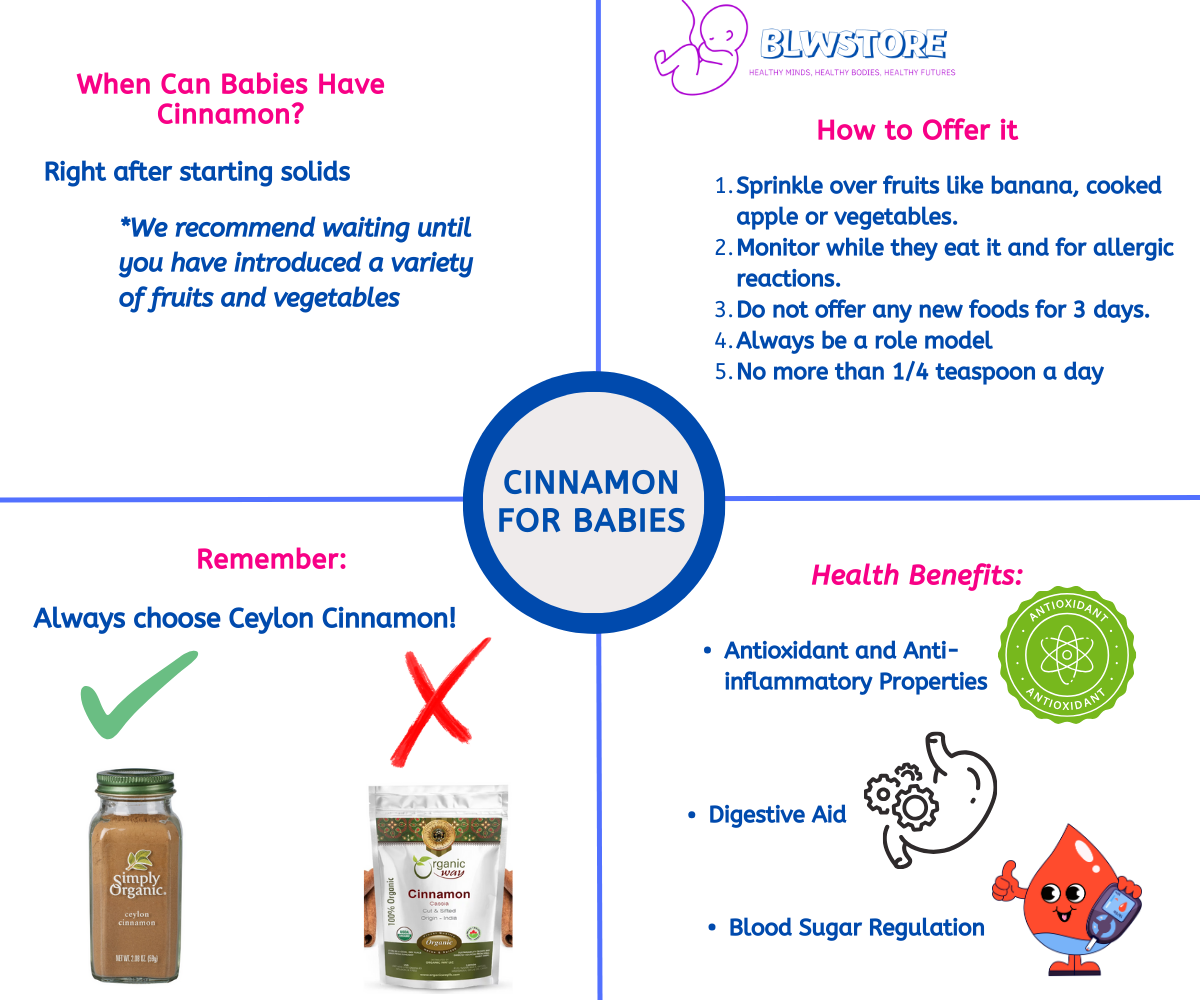
Babies can usually try cinnamon when they are ready for solids, often at about 6 months. Readiness matters more than a specific birthday.


According to the US Centers for Disease Control and Prevention (CDC), most babies can start solid foods at around 6 months. A baby may be ready when they can:
- Sit upright with good head control
- Open their mouth for food
- Move food from the front of the mouth to the back
- Swallow food instead of pushing it out
- Show interest in food
Cinnamon does not need to be delayed after a baby begins solids. The American Academy of Pediatrics supports offering babies a wide range of flavors and textures as they begin eating solid foods.
What matters most?
Cinnamon should be treated as a spice added to food, not as a food to serve by itself. A small amount mixed into a safe texture is easier for a baby to swallow.
There is no well-established US infant serving size for cinnamon. Start with a tiny amount, such as a light pinch mixed into a full serving of food. The goal is to add flavor, not to make cinnamon the main ingredient.

Is Cinnamon Safe for Babies?
Cinnamon is generally safe for babies in small culinary amounts. However, the form, dose, and food it is added to all matter.
Safe ways to offer cinnamon
Try mixing a small pinch into:
- Plain oatmeal
- Mashed banana
- Unsweetened applesauce
- Mashed sweet potato
- Plain whole-milk yogurt, if dairy has already been introduced
- A soft puree made from pear or apple
- Soft pancakes or muffins made without honey, if your baby already manages finger foods
Always serve the food in a texture that matches your baby’s feeding skills. Cinnamon does not make a hard or dry food safe to eat.
Avoid giving dry cinnamon
Do not place dry cinnamon on a spoon for a baby to swallow. Fine powder can be hard to control and may cause coughing or breathing trouble if inhaled.
This is different from a small amount stirred into moist food. Moist food helps bind the spice and lowers the chance of a loose cloud of powder.


Cinnamon is not a major US food allergen
The FDA lists nine major food allergens in the United States: milk, eggs, fish, crustacean shellfish, tree nuts, peanuts, wheat, soy, and sesame. Cinnamon is not on that list.
Still, any food can cause a reaction in an individual child. Stop serving cinnamon and seek medical advice if your baby develops hives, repeated vomiting, swelling, wheezing, or trouble breathing after eating it. Call 911 for severe breathing trouble, swelling of the tongue or throat, faintness, or signs of a serious allergic reaction.

How Much Cinnamon Can a Baby Have?
Use only a small culinary amount. There is no standard teaspoon amount that applies to every baby.
A practical approach is:
- Start with a tiny pinch mixed into a food your baby already tolerates.
- Offer only a small portion.
- Watch your baby during and after the meal.
- Stop if the food causes coughing, rash, vomiting, diarrhea, or other concerning symptoms.
- Increase variety slowly rather than adding large amounts of cinnamon.
Cinnamon has a strong taste. A little is enough for most baby foods.
Why portion size matters
Cinnamon contains natural compounds that vary by type. Cassia cinnamon generally contains more coumarin than Ceylon cinnamon. Coumarin can affect the liver when consumed in high amounts over time. This concern mainly relates to frequent, larger exposures, not the small amount normally used to flavor baby food.
Because products vary and there is no simple infant dose limit for home use, avoid giving a baby large amounts of cinnamon every day. Do not use cinnamon as a supplement or as a home remedy.
A small sprinkle in oatmeal is very different from several spoonfuls of cinnamon or a concentrated cinnamon product.

Cassia vs. Ceylon Cinnamon for Babies
Both cassia and Ceylon cinnamon are used in food, but they are not the same plant type.
| Type | Common features | Practical point for parents |
|---|---|---|
| Cassia cinnamon | Strong, common, and often less expensive | May contain more coumarin |
| Ceylon cinnamon | Milder and sometimes called “true cinnamon” | Usually contains less coumarin |
For occasional use in baby food, the type is unlikely to be the main safety issue. The bigger concerns are large amounts, daily use, and concentrated products.
If your family uses cinnamon often, choosing a product labeled Ceylon cinnamon may reduce coumarin exposure. However, the label is not a guarantee of exact coumarin content, and Ceylon cinnamon is not required for a baby to safely enjoy an occasional pinch.
Parents of babies with liver disease should ask the child’s pediatrician before using cinnamon often.

How to Introduce Cinnamon Safely
Introduce cinnamon in a food your baby already knows. This makes it easier to tell whether the baby reacts to the spice or to another new ingredient.
A simple introduction method
- Choose a soft food your baby has eaten safely before.
- Mix in a very small pinch of cinnamon.
- Offer the food when your baby is well and alert.
- Keep the baby seated upright.
- Watch the baby while they eat.
- Avoid introducing several new foods at the same meal.


You do not need to give cinnamon by itself. Mixing it into a familiar food is usually more practical and may be easier for your baby to accept.
Signs that the introduction is going well
Your baby should be able to:
- Swallow the food without repeated coughing
- Breathe normally
- Stay comfortable during the meal
- Have no unusual rash, swelling, vomiting, or diarrhea afterward
Some babies may dislike the strong taste. That does not mean they are allergic. You can stop and try again another time without pressure.

Can Babies Have Cinnamon Applesauce or Cinnamon Oatmeal?
Yes, babies can usually have cinnamon applesauce or cinnamon oatmeal if the texture is safe and the ingredients are appropriate.
Choose:
- Unsweetened applesauce
- Plain oatmeal
- Soft, smooth textures for new eaters
- Products without honey for babies under 12 months
- Foods with little or no added sugar
The CDC advises against honey before a baby’s first birthday because honey can contain spores that cause infant botulism. The risk comes from the honey, not from cinnamon.
Check labels on store-bought oatmeal, applesauce, cereal, granola, baked goods, and flavored yogurt. A food labeled “cinnamon” may also contain added sugar, honey, syrups, or choking hazards such as nuts.
Simple serving examples
For a baby beginning solids:
- Stir a pinch of cinnamon into plain oatmeal.
- Add a pinch to mashed banana.
- Mix cinnamon into unsweetened applesauce.
- Add a little cinnamon to mashed sweet potato.
For an older baby who manages soft finger foods, cinnamon may be used in a soft muffin or pancake made without honey and without hard pieces.

Cinnamon Products to Avoid for Babies
Avoid concentrated cinnamon products. They are not the same as the small amount of ground spice used in food.
Do not give babies:
- Cinnamon essential oil
- Cinnamon oil capsules
- Cinnamon supplements
- Cinnamon extract
- Cinnamon tea or “detox” drinks
- Dry cinnamon by the spoonful
- Candies or gum containing cinnamon
- Cinnamon-flavored products with honey before 12 months
- Hard foods coated in cinnamon powder
Essential oils are highly concentrated. They can irritate the mouth and skin and may be harmful if swallowed or inhaled. The American Association of Poison Control Centers advises people to contact Poison Control for guidance after a possible poisoning. In the US, call 1-800-222-1222 to reach Poison Control.


If a baby swallows cinnamon oil or another concentrated product, do not induce vomiting. Call Poison Control or seek emergency care based on the product and symptoms.

Can Cinnamon Cause an Allergic Reaction?
Cinnamon can cause a reaction, although true cinnamon allergy appears to be uncommon. Cinnamon may also irritate the mouth or skin without causing a true allergy.
Possible signs include:
- Redness around the mouth
- Itchy rash
- Hives
- Swelling of the lips, face, or tongue
- Vomiting
- Coughing or wheezing
- Trouble breathing
A mild red area around the mouth may result from contact with a strong spice or acidic food. Gently wash the area and watch your baby. Do not assume every rash is an allergy, but tell your child’s health care provider if it returns or spreads.
For breathing problems, facial swelling, repeated vomiting, unusual sleepiness, or collapse, call 911. For a less severe but concerning reaction, contact your pediatrician promptly.
If your baby has eczema, known food allergies, or a prior reaction to a food, ask the pediatrician how to introduce new foods. Some babies need a planned approach or supervised food introduction.

Common Mistakes When Giving Babies Cinnamon
The most common mistakes involve the form of cinnamon or the food served with it.
Giving cinnamon as a remedy
Cinnamon is sometimes promoted for colds, teething, digestion, blood sugar, or infections. There is not enough evidence to use cinnamon as a treatment for babies. Do not replace medical care with cinnamon water, oil, tea, or supplements.
Adding too much
More cinnamon is not better. Large amounts can irritate the mouth and stomach and may increase exposure to coumarin, especially when cassia cinnamon is used often.
Serving dry powder
Dry powder may be inhaled. Always mix cinnamon into moist food.
Forgetting the other ingredients
A cinnamon food may also contain honey, sugar, cow’s milk, nuts, eggs, or wheat. Check the complete recipe and use textures that fit your baby’s stage.
Offering cinnamon in a hard food
Cinnamon does not remove choking risk. Avoid hard candies, chunks of apple, nuts, dry cereal clusters, and firm baked pieces for babies who cannot safely chew them.
The CDC’s choking prevention guidance recommends avoiding foods that are hard, sticky, gummy, or difficult to chew.

When Should You Ask a Pediatrician?
Ask your baby’s pediatrician before using cinnamon regularly if your child has:
- Liver disease
- A known food allergy
- Severe eczema
- Feeding or swallowing problems
- Poor weight gain
- A history of serious reactions
- A need for a medically restricted diet


Seek urgent help after a possible allergic reaction that affects breathing, swallowing, alertness, or circulation.
If your child eats a large amount of dry cinnamon, cinnamon oil, or a supplement, contact Poison Control at 1-800-222-1222 in the United States. Have the product container available if possible.
Frequently Asked Questions
Can a 6-month-old have cinnamon?
Usually, yes. If the baby is ready for solid foods, a small pinch mixed into a soft food is generally reasonable. Avoid dry powder, essential oils, and foods with honey before 12 months.
Can babies have cinnamon every day?
An occasional small amount is usually not a concern. Daily use of large amounts is not advised because cinnamon products vary and cassia cinnamon can contain more coumarin. Use cinnamon as a flavor, not as a supplement.
Is cinnamon a choking hazard?
Dry cinnamon powder can be inhaled and may cause coughing or breathing trouble. Cinnamon itself is not a hard chunk, but foods coated with it may still be choking hazards. Serve it mixed into a moist food with a safe texture.
Can babies have cinnamon and honey?
Babies under 12 months should not have honey, whether it is mixed with cinnamon or served separately. The concern is infant botulism from honey.
Is Ceylon cinnamon safer than cassia cinnamon for babies?
Ceylon cinnamon usually contains less coumarin than cassia cinnamon. For the small amount used in occasional baby food, portion size matters most. Avoid large or concentrated servings of either type.
The Bottom Line
Most babies can have a small amount of cinnamon when they are ready for solid foods, often around 6 months. Mix a tiny pinch into soft, moist food, and use recipes without honey for children under 12 months.
Do not give babies dry cinnamon, cinnamon oil, supplements, or large amounts. If your baby has a medical condition or reacts after eating cinnamon, contact the pediatrician.
