A healthy 10-month-old will usually eat three solid-food meals each day, with breast milk or infant formula still offered several times daily. Many babies also need one or two small snacks, especially when there is a long gap between meals.
At this age, food adds energy and practice, but breast milk or iron-fortified infant formula remains an important source of nutrition. Let your baby’s hunger and fullness cues guide how much they eat. Do not force a certain amount.
This guide applies to babies in the United States who are growing well and have no special feeding needs. Your child’s pediatrician may suggest a different plan for a premature baby, a baby with poor weight gain, food allergies, swallowing problems, or another health concern.

How Many Times a Day Should a 10-Month-Old Eat?
Most 10-month-olds eat or drink five to seven times in 24 hours:
- Three solid-food meals
- Two to four breast milk or formula feeds
- One or two snacks, if needed
Some babies nurse more often. Others take larger bottles and need fewer milk feeds. Both patterns can be normal.
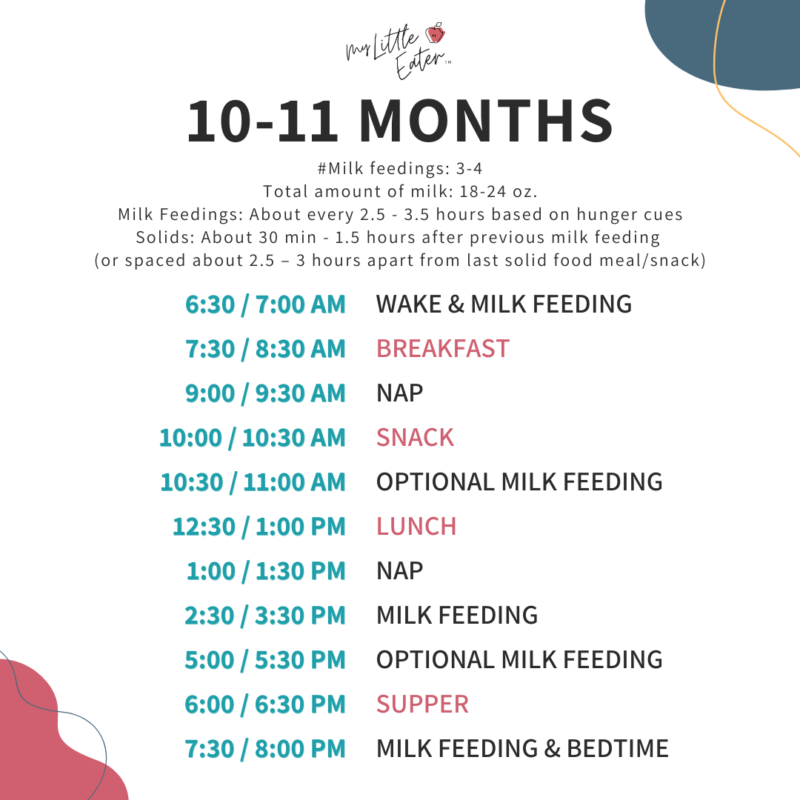
A useful rhythm is to offer food every two to three hours while your baby is awake. This does not mean your baby must eat at every scheduled time. A schedule gives structure, while hunger cues decide whether your baby eats.
A sample feeding schedule
| Time | What you might offer |
|---|---|
| 7:00 a.m. | Breast milk or infant formula |
| 8:30 a.m. | Breakfast and a few sips of water |
| 11:00 a.m. | Breast milk or infant formula |
| 12:30 p.m. | Lunch |
| 3:00 p.m. | Breast milk, formula, or a small snack |
| 5:30 p.m. | Dinner and water |
| 7:00 p.m. | Breast milk or infant formula |
This is only an example. A baby who wakes later, naps at different times, or breastfeeds on demand may follow a different pattern.
The American Academy of Pediatrics recommends watching your child’s signals instead of using a strict feeding clock. A schedule should support family routines, not override your baby’s needs.

How Much Breast Milk or Formula Does a 10-Month-Old Need?
Most 10-month-olds still need regular breast milk or infant formula. A common total for formula-fed babies is about 24 to 32 fluid ounces per day, but needs vary by baby.
Breastfed babies may nurse for different lengths of time and at different intervals. There is no reliable way to measure breast milk intake from nursing time alone. Your baby’s growth, wet diapers, energy, and feeding behavior give more useful clues.
Offer breast milk or formula:
- When your baby shows hunger signs
- Before or after solid foods, based on what works for your baby
- As part of the morning and bedtime routine
- During the night if your baby still wakes and needs to feed
Some babies become so interested in finger foods that they drink less milk. That can happen, but breast milk or formula should not be pushed aside too early. At 10 months, solids are still becoming a larger part of the diet.
Do not replace infant formula with cow’s milk yet. The Centers for Disease Control and prevention recommends waiting until 12 months to offer cow’s milk as a drink. Before then, cow’s milk does not provide the right balance of nutrients and may contribute to iron deficiency when given in large amounts.

Should a 10-Month-Old Eat Three Meals a Day?
Yes. Three meals a day is a good goal for most 10-month-olds. Each meal can include a mix of foods from different groups, such as:
- A soft vegetable or fruit
- A grain or starchy food
- A protein-rich food
- A source of healthy fat
You do not need to serve every food group at every meal. Aim for variety across the day.
Breakfast ideas
- Oatmeal with mashed banana
- Scrambled egg with soft toast strips
- Plain whole-milk yogurt with soft fruit
- Avocado on a strip of toast
Lunch ideas
- Soft beans with mashed sweet potato
- Shredded chicken with tender vegetables
- Pasta with finely chopped vegetables
- Cottage cheese with soft pear pieces
Dinner ideas
- Flaked salmon with peas and soft rice
- Ground turkey with mashed potatoes
- Lentils with cooked carrots
- Tofu strips with soft broccoli
Serve foods in a texture your baby can manage. A 10-month-old may eat mashed foods, thick purées, soft lumps, and soft pieces they can pick up. Many babies are learning to chew by moving food around with their gums, even before they have many teeth.

Does a 10-Month-Old Need Snacks?
A 10-month-old may need one or two snacks, but snacks are not required for every baby. Add a snack when your baby seems hungry between meals or when meals are spaced far apart.
Good snack options include:
- Soft banana pieces
- Plain yogurt
- Soft-cooked vegetables
- Thin strips of toast
- Very soft fruit
- Small pieces of ripe avocado
- Shredded cheese
- Unsweetened applesauce
Keep snacks small. A snack should support the next meal, not replace breast milk, formula, or a full meal.
Avoid grazing all day. Constant eating can make it hard to notice hunger and fullness cues. It may also reduce interest in meals.
If your baby refuses a snack but is alert and growing well, you do not need to make them eat. Offer the next planned meal or milk feed.

How Much Solid Food Should a 10-Month-Old Eat?
There is no single correct portion for a 10-month-old. Start with small amounts and offer more if your baby still seems hungry.
A practical starting point is:
- 1 to 2 tablespoons of a new food
- A few soft finger-food pieces
- Up to about ¼ cup of familiar foods, depending on the food and your baby’s appetite
These amounts are estimates, not rules. Some babies eat only a few bites. Others eat much more at one meal and less at the next.
Signs your baby may still be hungry
Your baby may:
- Reach for food
- Open their mouth when food approaches
- Lean toward food
- Make excited sounds
- Look for more after swallowing
Signs your baby is full
Your baby may:
- Turn their head away
- Close their mouth
- Push food away
- Slow down or stop eating
- Drop or play with food
- Become distracted
Stop when your baby shows fullness. The goal is to help your child trust their own hunger signals.

When Should You Offer Milk and Solid Food?
You can offer breast milk or formula before or after solids. The best order depends on your baby’s appetite and feeding pattern.
If your baby is very hungry, offer milk first. A very hungry baby may become upset and have trouble trying a new food.
If your baby drinks so much milk that they refuse all solids, try offering a small amount of solid food first at one meal. Then provide breast milk or formula. Avoid cutting milk feeds sharply without guidance from your pediatrician.
A simple approach is:
- Offer breast milk or formula at the usual time.
- Offer a solid meal when your baby is calm and alert.
- Give a few sips of water with the meal.
- Stop when your baby shows fullness.
Feeding works best when your baby sits upright and is calm. Avoid offering food when your baby is very tired, crying hard, or lying down.
How Much Water Can a 10-Month-Old Drink?
A 10-month-old can usually have small amounts of plain water with meals. Water helps your baby practice using a cup and can support hydration as solid food intake grows.
The American Academy of Pediatrics advises that babies ages 6 to 12 months may have about 4 to 8 fluid ounces of water per day, including water offered in a cup. This is in addition to breast milk or formula.
Do not use water to replace milk feeds. Also avoid juice. The American Academy of Pediatrics recommends no juice for children younger than 12 months unless a medical professional advises it for a specific reason.
Offer water in:
- An open cup
- A small training cup
- A straw cup
A 10-month-old does not need a bottle of water in bed. It may increase the risk of tooth decay if the child falls asleep while drinking.

What Foods Should a 10-Month-Old Eat?
Offer a wide range of foods, including foods rich in iron. Iron is especially important during infancy because babies need it for healthy growth and brain development.
Good iron-rich choices include:
- Meat, poultry, and fish
- Eggs
- Beans and lentils
- Tofu
- Iron-fortified infant cereal
- Nut or seed butter spread thinly on toast or mixed into oatmeal
Pair plant-based iron sources with foods rich in vitamin C, such as strawberries, broccoli, tomatoes, or oranges. Vitamin C helps the body absorb iron from plant foods.
Continue offering common allergens in safe forms once your baby is ready for them. Common allergens include peanut, egg, dairy, wheat, soy, sesame, fish, and tree nuts. Never give whole nuts or thick spoonfuls of nut butter. Use smooth nut butter thinned with water or mixed into another food.
If your baby has severe eczema or an existing food allergy, ask the pediatrician about the safest way to introduce peanut and other allergens.

Foods and Drinks to Avoid at 10 Months
Some foods are unsafe because they can cause choking. Others are poor choices because they contain too much sugar, salt, or added caffeine.
Avoid or limit:
- Whole grapes
- Whole nuts
- Popcorn
- Hot dog rounds
- Raw carrots
- Hard chunks of apple
- Large pieces of meat or cheese
- Sticky spoonfuls of nut butter
- Hard candy
- Marshmallows
- Unpasteurized milk or juice
- Honey before 12 months
- Cow’s milk as a main drink before 12 months
- Juice before 12 months
Cut food into safe shapes and cook it until soft. Round foods such as grapes and cherry tomatoes should be cut into small pieces. Hot dogs should be cut lengthwise and then into small pieces, not served as round coins.
Always supervise your baby while eating. Keep your baby seated upright in a high chair. Do not feed while your child is walking, playing, or riding in a car seat.
The CDC and U.S. Food and Drug Administration provide current guidance on choking hazards, food safety, and foods to avoid.

What If a 10-Month-Old Refuses Food?
Food refusal is common at this age. A baby may reject a food because of its taste, texture, temperature, smell, or simply because they are not hungry.
Try these steps:
- Offer the food again on another day.
- Change the texture or serving shape.
- Serve a familiar food with a less familiar food.
- Eat the same food so your baby can watch you.
- Keep meals calm and brief.
- Avoid forcing, bargaining, or chasing your baby with a spoon.
Some babies need many exposures before they accept a new food. A rejected food does not always mean a dislike.
Contact your child’s pediatrician if your baby regularly coughs, chokes, gags hard, vomits, has trouble swallowing, refuses nearly all textures, or is not gaining weight as expected. These signs may need assessment by a pediatric feeding specialist.

A Simple Feeding Plan for a 10-Month-Old
Use this plan as a flexible guide:
- Offer breast milk or infant formula several times each day.
- Serve three small meals at regular times.
- Add one or two snacks if your baby seems hungry.
- Offer small sips of water with meals.
- Include iron-rich foods often.
- Offer safe textures and allow your baby to self-feed.
- Watch for hunger and fullness cues.
- Keep your baby upright and supervised during every meal.
- Keep breast milk or formula as a major source of nutrition until 12 months.
The schedule may change during teething, illness, travel, growth spurts, or changes in nap times. A healthy feeding pattern is measured over days and weeks, not by one small meal.
FAQs About Feeding a 10-Month-Old
How long can a 10-month-old go without eating?
Many babies eat or drink every two to four hours while awake. A longer sleep period may be normal at night for a baby who is growing well. If your baby refuses several feeds, has fewer wet diapers, seems unusually sleepy, or cannot keep fluids down, contact the pediatrician.
Should I feed my 10-month-old at night?
Some 10-month-olds still breastfeed or take formula at night. Others sleep through without a feed. There is no need to wake a healthy, growing baby for routine night feeds unless your pediatrician has advised it.
Can a 10-month-old eat table food?
Yes, a 10-month-old can often eat many family foods if they are soft, cut safely, and low in added salt and sugar. Set aside the baby’s portion before adding extra salt, spicy sauces, or other ingredients that may not be suitable.
How much formula should a 10-month-old drink per feeding?
Many formula-fed babies drink about 6 to 8 fluid ounces per bottle, but some take less or more. Follow your baby’s fullness cues and the formula label’s preparation directions. Never dilute formula with extra water.
When should a baby stop using a bottle?
The American Academy of Pediatrics recommends moving children from bottles to cups during the second half of infancy and completing the transition around 12 to 18 months. Begin practicing with a cup now, but do not rush the change if your baby is still learning.
Can a 10-month-old eat honey?
No. Avoid honey until after 12 months because it can cause infant botulism, a rare but serious illness.
The Bottom Line
Most 10-month-olds do well with three solid meals, several breast milk or formula feeds, and optional small snacks. Offer a variety of soft, iron-rich foods, provide small amounts of water, and let your baby decide how much to eat.
Start with a flexible routine rather than a strict clock. If feeding causes choking, repeated vomiting, major distress, or poor growth, call your pediatrician.
Sources
- Centers for Disease Control and Prevention: Foods and Drinks for 6 to 24-Month-Olds
- American Academy of Pediatrics: How Much and How Often to Feed Infant Formula
- American Academy of Pediatrics: Amount and Schedule of Baby Formula Feedings
- American Academy of Pediatrics: Recommended Drinks for Children Age 5 and Younger
- U.S. Food and Drug Administration: Food Safety for Babies and Toddlers
- U.S. Department of Agriculture: Infant and Toddler Nutrition