
Introduction
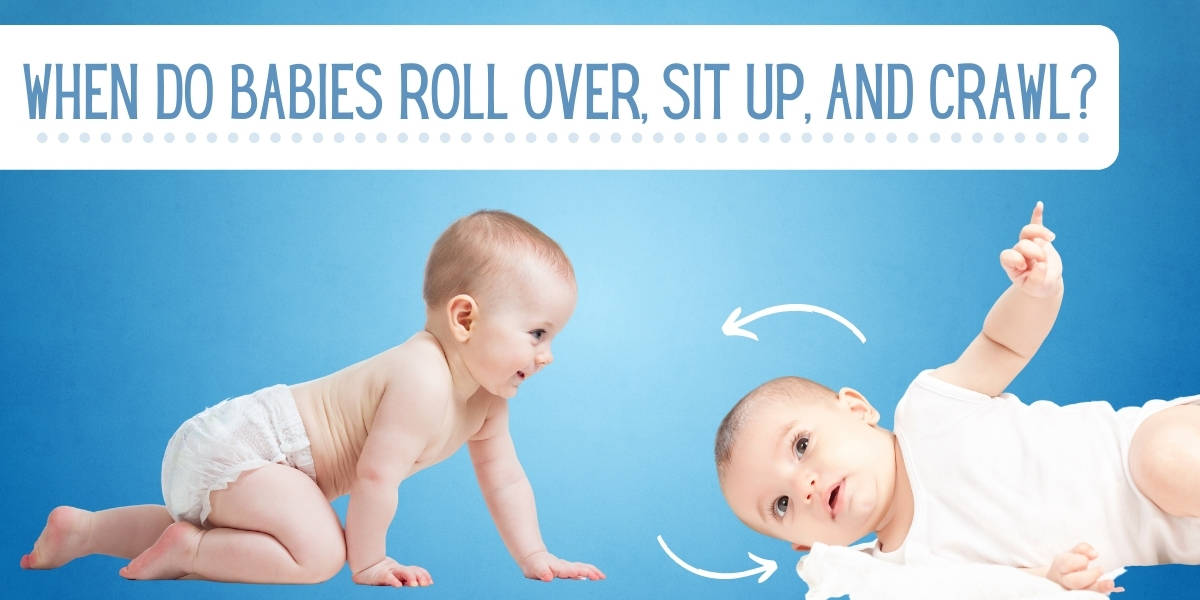
Most babies roll from their stomach to their back between 4 and 6 months. Some roll a little earlier, while others take more time. The CDC lists rolling from tummy to back as a 6-month movement milestone for babies in the United States.
Rolling is a range, not a race. Your baby may roll from stomach to back first, back to stomach first, or practice one side for weeks before the movement feels easy. Premature babies may reach this skill based on their corrected age, not only their birth date.

When Do Babies Usually Roll From Stomach to Back?
Babies often learn to roll from stomach to back at about 4 to 6 months of age. Many babies first roll by accident during tummy time. They may lift their head, push with an arm, shift their weight, and tip onto their back.
The movement can look simple, but it needs several skills:


- Strong neck and upper-back muscles
- Better head control
- More arm strength
- The ability to shift weight from one side to the other
- Improved awareness of the body
- Practice while awake and supervised
Some babies roll from stomach to back before they roll from back to stomach. Others do the reverse. Both patterns can be normal.
The CDC’s 6-month milestones say most babies can roll from tummy to back by that age. “Most” means about 75% or more of children in the CDC’s milestone system. It does not mean every healthy baby must roll on the same day.
A simple age guide
| Age | What you may see |
|---|---|
| Birth to 2 months | Brief head lifting and early reflex movements |
| 2 to 4 months | Better head control and stronger pushing during tummy time |
| 4 to 6 months | Many babies begin rolling from stomach to back |
| Around 6 months | Rolling from tummy to back is a common movement milestone |
| 6 to 8 months | Many babies work on rolling both ways and changing direction |
These ranges are guides, not deadlines. A baby who rolls at 4 months is not automatically more advanced than a baby who rolls at 6 months.
Signs Your Baby Is Ready to Roll
Your baby may be close to rolling when they show better control during floor play. Look for signs such as:
- Holding the head steady during tummy time
- Pushing up on the forearms or hands
- Lifting the chest from the floor
- Kicking the legs with more force
- Turning the head toward a toy
- Reaching to one side
- Shifting weight onto one arm
- Moving from the side and almost reaching the back
- Repeatedly rocking from side to side
A baby may roll once and then not repeat it for several days. That is common. New skills often appear in bursts.
Some babies also roll because their head is heavy or because they kick hard. An early roll may be partly accidental. Over time, the movement becomes more controlled.

How to Help Your Baby Learn to Roll
You do not need special equipment to help your baby practice. A clear floor space, a firm play mat, and your attention are enough.
1. Offer daily tummy time
Place your baby on their stomach while they are awake and you are watching. Start with short sessions and add time as your baby becomes more comfortable.
The American Academy of Pediatrics recommends regular tummy time while babies are awake. Tummy time helps build the muscles needed for head control, pushing, reaching, and rolling.


If your baby dislikes the floor, try:
- Lying on your chest while you are awake
- Placing your baby across your lap
- Using a firm play mat
- Putting a toy just within reach
- Getting down face-to-face with your baby
Stop if your baby is tired, hungry, or upset. Try again later.
2. Place an interesting toy to one side
A toy placed slightly to the side can encourage your baby to turn the head and reach across the body. Keep the toy close enough to see, but not so close that it rests in the baby’s face.
Move the toy from one side to the other. This can help your baby practice using both sides of the body.
3. Give your baby room to move
Let your baby play on a firm, open surface. Tight clothing, sleep sacks made for movement, or too much time in seats may limit practice.
This does not mean you must avoid all baby seats. It means floor play should be part of the daily routine when your baby is awake and supervised.
4. Help only when needed
You can place a hand near your baby’s hip or shoulder to guide attention toward one side. Do not force the body through a roll.
The goal is for your baby to build the movement. A forced roll does not teach the same balance and control.
5. Practice on both sides
If your baby always turns to the right, place toys on the left at times. You can also position yourself on the less-used side to encourage your baby to look toward you.
A clear preference is common while a baby learns. However, strong or constant one-sided movement deserves a conversation with the child’s doctor.

Tummy Time and Safe Sleep Are Different
Tummy time is for awake, watched play. Sleep time is different.
Place your baby on their back for every sleep, including naps and nighttime sleep. This advice applies even after your baby can roll. The American Academy of Pediatrics recommends a firm, flat, non-inclined sleep surface with only a fitted sheet.
Keep the sleep space free of:
- Pillows
- Blankets
- Quilts
- Bumper pads
- Stuffed toys
- Sleep positioners
- Wedges
- Loungers
- Products that claim to prevent rolling
Once your baby can roll from back to stomach and from stomach to back, you do not need to keep turning the baby back each time. Still, always begin sleep by placing the baby on their back. Keep the crib clear and let the baby find a safe position on their own.


Do not use a positioner to keep a baby on the back. The FDA warns that infant sleep positioners can cause suffocation and should not be used.
What about swaddling?
Stop swaddling when your baby shows signs of trying to roll. Rolling while swaddled can make it harder for a baby to use their arms and change position.
Switch to regular sleep clothing or a properly fitted wearable blanket that does not restrict the arms. Weighted swaddles and weighted sleep products are not recommended for infants.

What If Your Baby Rolls During Sleep?
If your baby rolls during sleep, stay calm and check the sleep space. Make sure:
- Your baby started on their back.
- The mattress is firm and flat.
- The crib, bassinet, or play yard meets current U.S. safety standards.
- The sleep surface has only a fitted sheet.
- Swaddling has stopped.
- No pillows, blankets, toys, or positioners are present.
If your baby can roll both ways, you do not need to repeatedly reposition them. If your baby can roll only one way, you may gently turn them onto their back when you notice them on their stomach. Do not prop them in place or add products to the crib.
Never let a baby sleep on an adult bed, couch, recliner, or padded chair. These surfaces can raise the risk of suffocation and entrapment.
If you are unsure whether your sleep setup is safe, ask your baby’s pediatrician or review the safe-sleep guidance from the American Academy of Pediatrics and the Consumer Product Safety Commission.
When Should You Call the Pediatrician?
A single late milestone does not always signal a problem. Babies develop at different rates, and some need more time to build strength and confidence.
Talk with your baby’s pediatrician if your baby:
- Is not rolling from tummy to back by about 6 months
- Shows no progress in head control
- Seems very stiff or very floppy
- Uses one side much more than the other
- Always keeps one hand tightly closed
- Has trouble lifting the head during tummy time
- Loses a skill they once had
- Seems unable to move one arm or leg normally
- Does not bear weight through the arms during tummy time
The CDC advises parents to act early when a child misses milestones, loses skills, or causes concern. You do not need to wait for the next well-child visit.
A pediatrician may check muscle tone, strength, movement, vision, and overall development. They may also refer your baby to an early intervention program or pediatric physical therapist.
Premature babies
If your baby was born more than three weeks early, ask the doctor whether to use corrected age when thinking about milestones. Corrected age adjusts for the weeks your baby was born early.
For example, a baby born eight weeks early at a chronological age of 6 months may have a corrected age of about 4 months. Your baby’s care team can explain which age to use and for how long.



Common Questions About Rolling
Is rolling from stomach to back easier than rolling from back to stomach?
It often is. Gravity can help a baby move from the stomach onto the back. A baby still needs head, neck, arm, and trunk control to complete the movement.
This order is not required. Some babies roll back to stomach first, and some learn both movements close together.
Can a baby roll at 2 months?
A baby may tip or roll by accident at 2 months, especially from a side position. Purposeful rolling is less common at that age.
An early roll does not always mean a baby is ready for every other movement. Continue to use safe sleep practices and ask the pediatrician if the movement looks unusual or one-sided.
Should I teach my baby to roll?
You can support practice, but you do not need to teach the full motion. Give your baby safe floor time, place toys to the side, and allow movement without forcing it.
Avoid pulling a baby by the arms or legs. Do not use rolling devices or sleep products that claim to train the skill.
Does tummy time help babies roll?
Yes. Tummy time helps build the muscles used for rolling. It also supports head control, reaching, pushing, and turning.
Tummy time must happen when your baby is awake and watched. Do not place a baby on the stomach for sleep.
Does rolling mean I should stop using a swaddle?
Yes. Stop swaddling as soon as your baby shows signs of trying to roll. A baby needs free arm movement to help change position.
A loose blanket should not replace a swaddle in the crib. Use suitable sleep clothing instead, and keep the sleep space clear.

Key Takeaways
- Most babies roll from stomach to back between 4 and 6 months.
- The CDC includes tummy-to-back rolling as a common 6-month milestone.
- Some babies roll earlier or later, and the order of rolling can vary.
- Give your baby daily, supervised tummy time while awake.
- Always place your baby on their back for sleep.
- Stop swaddling when your baby shows signs of rolling.
- Ask the pediatrician about missed skills, lost skills, strong one-sided movement, or concerns about muscle tone.
Sources
- Centers for Disease Control and Prevention: Milestones by 6 Months
- American Academy of Pediatrics: How to Keep Your Sleeping Baby Safe
- American Academy of Pediatrics: Back to Sleep, Tummy to Play
- U.S. Food and Drug Administration: Do Not Use Infant Sleep Positioners
- Consumer Product Safety Commission: Safe Sleep

Conclusion
Babies commonly roll from stomach to back between 4 and 6 months, but normal development has a wide range. Focus on safe, supervised practice rather than a strict date.


Give your baby room for tummy time, keep sleep on the back, and stop swaddling when rolling begins. If your baby is not making progress by around 6 months or you notice stiffness, floppiness, one-sided movement, or a lost skill, contact the pediatrician.
