
A bassinet costs about $50 to $500 or more in the United States, depending on its type, materials, features, and brand. Most families spend $100 to $250 on a new bassinet for a newborn.
A simple bedside bassinet may cost less than $150. A bassinet with wheels, folding parts, vibration, lights, or smart features may cost $300 to $500 or more. You should also budget for fitted sheets, a waterproof pad if approved by the manufacturer, delivery, and possible replacement parts.
The lowest price is not the most important factor. A safe bassinet should have a firm, flat sleep surface and meet current U.S. safety rules.

Bassinet Cost by Type
The type of bassinet has the biggest effect on its price. A basic stationary model costs far less than a smart bedside sleeper with electronic controls.


| Bassinet type | Typical U.S. price | What you usually get |
|---|---|---|
| Basic stationary bassinet | $50–$150 | Simple frame, mattress, and fabric sides |
| Portable or folding bassinet | $70–$200 | Lightweight frame for moving around the home or travel |
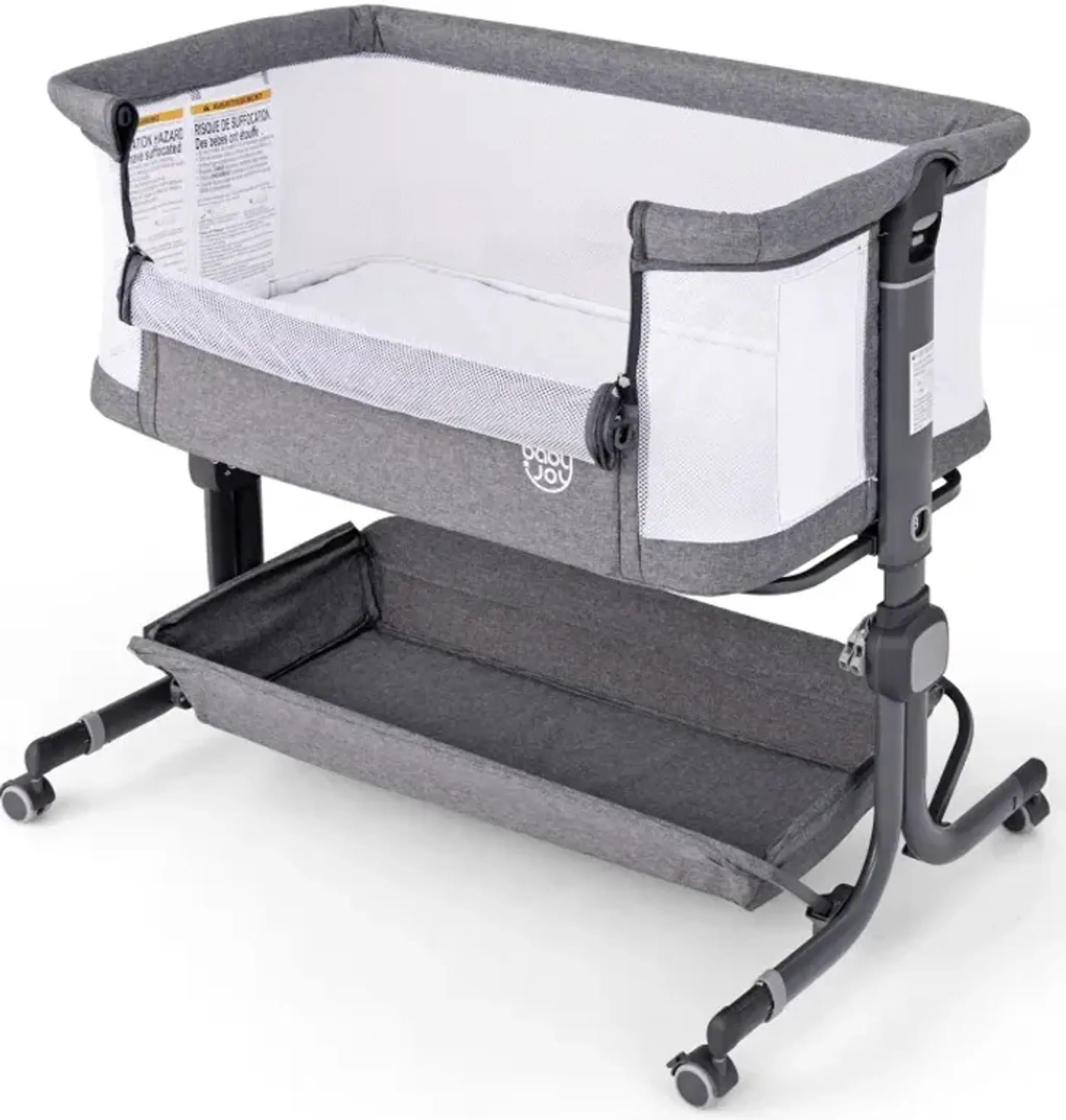
| Bedside bassinet | $100–$300 | Short legs, a close-to-bed design, and sometimes a drop-down side |
| Rocking or vibrating bassinet | $150–$350 | Manual rocking or powered soothing features |
| Smart bassinet | $300–$2,000+ | Motion, sound, app controls, or subscription-based features |
| Moses basket or basket-style sleeper | $50–$200 | Lightweight basket with a separate stand or floor base |
| Used bassinet | $20–$150 | Lower price, but condition and recall checks matter |
These are planning ranges, not fixed prices. Sales, shipping fees, brand changes, and seasonal demand can move the final price. A product sold as a “newborn lounger,” “napper,” or “co-sleeper” may not be approved for unsupervised sleep, so the product name alone does not tell you whether it is a bassinet.
A smart bassinet can cost several times more than a basic model. That extra cost usually pays for convenience features rather than a longer useful life. Most bassinets are used only during the first few months, so a high purchase price may be difficult to justify if you want the lowest cost per month.
What Is Included in the Price?
Most new bassinets include the frame, sleeping area, and one mattress or pad. Some include a fitted sheet, canopy, storage basket, wheels, or a carry bag. Others require you to buy these items separately.
Before you compare prices, check the product page or manual for these details:
- Mattress or sleep pad
- Fitted sheet
- Waterproof cover
- Carry bag
- Wheels or locking casters
- batteries or power adapter
- Remote control
- Replacement parts
- Warranty
- Shipping and assembly fees
A bassinet priced at $100 may need $30 in sheets and accessories. Another priced at $140 may include those items. The lower sticker price is not always the lower total cost.
Typical extra costs
| Extra item | Approximate U.S. cost |
|---|---|
| Extra fitted bassinet sheet | $10–$30 |
| Replacement mattress or pad | $30–$100+ |
| Waterproof cover approved by the maker | $10–$30 |
| Replacement frame part | Varies widely |
| Batteries | $5–$20 |
| Delivery | Free to $100+ |
| Assembly service | $0–$100+ |
Use only sheets and mattress pads that fit the exact bassinet model. Loose bedding, pillows, blankets, and padded inserts can create a suffocation risk. The American Academy of Pediatrics recommends a firm, flat sleep surface with only a fitted sheet for infant sleep. See the AAP safe sleep recommendations.

How Much Should You Budget for a Bassinet?
For most U.S. families, a realistic total budget is $120 to $300 for a new bassinet and basic supplies.
Here are three sample budgets:
Low-cost setup: about $80 to $150
This may include:
- A basic stationary bassinet
- One included mattress
- One or two fitted sheets
- Free or low-cost shipping


This setup may work well if you do not need wheels, folding parts, or electronic features.
Mid-range setup: about $150 to $350
This may include:
- A bedside bassinet
- A second fitted sheet
- A replacement or waterproof cover approved for the model
- Shipping or local delivery
This range often gives you more flexibility, such as adjustable height, wheels, or folding storage.
Premium setup: $350 to $2,000 or more
This may include:
- A powered or smart bassinet
- Motion and sound controls
- App features
- A subscription service
- Replacement sheets and accessories
Check whether the bassinet requires an ongoing subscription. A monthly fee can change the long-term cost. For example, a $400 bassinet with a $20 monthly subscription used for six months has a basic purchase-and-service cost of $520, before tax and accessories.

What Makes One Bassinet More Expensive Than Another?
A bassinet costs more when it uses more materials, has more complex parts, or includes powered features. Price alone does not prove that one bassinet is safer or better for every family.
Main price factors
Bedside design: Bassinets made to sit beside an adult bed may have adjustable legs, locking wheels, or a side panel. These features can raise the price.
Portability: Folding frames and carry bags add convenience. They can be useful if you move the bassinet between rooms or travel by car.
Motion and sound: Some models rock, vibrate, play sounds, or respond to movement. These features require motors, sensors, batteries, or electrical parts.
Materials: Wood, metal, woven baskets, and premium fabrics can affect the price. Materials should not replace a check of the sleep surface, stability, and safety instructions.
Brand and testing: Some brands charge more for design, customer service, warranty coverage, or documented compliance with safety standards. A higher price is not, by itself, proof of superior safety.
Replacement support: A product with available sheets, mattresses, and hardware may cost less over its full use if a part wears out.

Is a Cheap Bassinet Safe?
A low-cost bassinet can be safe if it is intended for infant sleep, meets current U.S. requirements, and is used exactly as directed. A higher price does not remove the need for safety checks.


Before buying, confirm that:
- The product is marketed for infant sleep, not only lounging or play.
- The mattress is firm and fits tightly.
- The sleep surface is flat when the baby is placed down.
- The bassinet has no large gaps around the mattress.
- The frame does not wobble or tip during normal use.
- The sides are secure and do not collapse unexpectedly.
- The product includes clear assembly and use instructions.
- The manufacturer provides a model name, date information, and contact details.
- The product is not listed in a U.S. recall database.
The U.S. Consumer Product Safety Commission has federal rules for bassinets and cradles. You can review current requirements and safety information on the CPSC bassinet and cradle page.
For sleep, place the baby on their back on a firm, flat surface. Keep the bassinet free of pillows, quilts, bumpers, stuffed toys, and positioners. Do not use a bassinet that has been recalled or that has missing structural parts.
Should You Buy a New or Used Bassinet?
A used bassinet may reduce the purchase price, but it requires more checking. New products usually make it easier to confirm the model, instructions, parts, and recall status.
A used bassinet may be reasonable when you can verify all of the following:
- The exact brand and model are known.
- The product has not been recalled.
- The mattress and frame are original or manufacturer-approved parts.
- The mattress is firm, clean, and free from damage.
- The frame, locks, wheels, and sides work as intended.
- The owner provides the instructions.
- No homemade repairs or unapproved modifications were made.
Avoid a used bassinet if the seller cannot identify the model or if the bassinet has a sagging mattress, broken fasteners, loose fabric, missing hardware, or a strong smoke or mold odor. Do not assume that a free bassinet is safe simply because it looks clean.
Check recalls through the CPSC recall search tool and review the manufacturer’s support page. Some products have similar names but different model numbers, dates, or safety notices.
Bassinet vs. Crib: Which Costs Less?
A bassinet usually costs less at first, but a crib may provide more months or years of use. The right choice depends on your space, budget, and plans for the nursery.
A bassinet is often:
- Smaller
- Easier to place beside an adult bed
- Easier to move from room to room
- Designed for early infancy only
A full-size crib is often:
- More expensive at purchase
- Larger and harder to move
- Usable for a longer period
- Able to convert into a toddler bed on some models
A low-cost bassinet may be a practical short-term option if you already plan to buy a crib. If you want one sleep space to last longer, compare the total cost of a crib, mattress, and fitted sheets rather than comparing only the first purchase price.
Do not use a crib mattress inside a bassinet unless the bassinet maker specifically approves it. Mattresses are not interchangeable just because they appear to be the same size.
How Long Will a Baby Use a Bassinet?
Most babies use a bassinet for only the first few months. The exact limit depends on the model and the baby’s development.
Stop using the bassinet when the manufacturer says to stop. Common limits include:


- Reaching the stated weight limit
- Rolling over
- Pushing up on hands and knees
- Sitting up
- Climbing or pulling on the sides
- Reaching the maximum height or size limit
A baby may reach a developmental limit before reaching the listed weight limit. Read the bassinet manual before birth so you know the changeover signs. If the baby begins rolling or pushing up, move them to an appropriate sleep space that meets current safety guidance.
Because the use period can be short, divide the total cost by the expected months of use. A hypothetical $180 bassinet used for four months costs $45 per month. A $60 bassinet used for the same period costs $15 per month, before sheets and other supplies.
How to Lower the Cost of a Bassinet
You can reduce the cost without cutting basic safety checks.
- Compare the full price, including shipping and required accessories.
- Look for sales from authorized U.S. retailers.
- Choose a simple model if you do not need motion or app controls.
- Borrow only when you can verify the model and condition.
- Buy replacement sheets made for the exact model.
- Check whether a warranty covers the parts most likely to fail.
- Avoid buying accessories that the manufacturer does not approve.
- Compare a bassinet with a crib if you need a longer-use sleep space.
Do not save money by adding a used mattress, extra padding, sleep positioners, or loose blankets. These items may create safety risks even when they are sold as comfort accessories.
Common Bassinet Buying Mistakes
The most common mistake is treating a bassinet as a small piece of nursery furniture rather than a regulated infant sleep product. A product can look soft and comfortable but still be unsuitable for sleep.
Avoid these errors:
Buying by appearance alone
A thick, plush interior may look cozy. Infant sleep guidance calls for a firm, flat surface with no loose items.
Ignoring the manual
The manual states the weight limit, setup rules, cleaning method, and point at which use must end. Keep it after assembly.
Using the wrong sheet
A loose sheet can bunch up. Use the sheet made for that mattress and bassinet model.
Confusing a lounger with a bassinet
Many loungers and soft nests are not intended for unsupervised sleep. Check the intended use, warning labels, and instructions.
Forgetting power and subscription costs
A powered bassinet may need batteries, an outlet, an app, or a paid service. Add those costs before deciding.
Failing to check recalls
Search the exact model, not just the brand name. Similar products can have different safety notices.
Frequently Asked Questions
What is the average price of a bassinet in the U.S.?
A typical new bassinet costs about $100 to $250. Basic models may cost $50 to $150, while premium smart bassinets can cost $300 to more than $2,000.
Is a $50 bassinet worth buying?
It can be worth buying if it is designed for infant sleep, has a firm flat surface, fits together securely, and has no recall or missing parts. Review the instructions and safety information before use.


Do bassinets come with mattresses?
Most new bassinets include a mattress or sleep pad. The pad may be thin by design. Do not replace it with a softer mattress unless the manufacturer approves the replacement.
Do I need a bassinet if I already have a crib?
No. A crib can provide a safe sleep space from the start when it meets current U.S. requirements and is set up correctly. Families often choose a bassinet because it is smaller or easier to keep near the adult bed.
Are smart bassinets worth the extra cost?
That depends on your budget and whether you value motion, sound, app controls, or other convenience features. Smart features do not replace safe sleep practices, and subscription fees can increase the total cost.
Bottom Line
Plan to spend $100 to $250 for most new bassinets in the United States, or about $120 to $300 after basic sheets and other supplies. Basic models cost less, while bedside, powered, and smart models can cost much more.
Choose the bassinet based on its approved use, firm sleep surface, fit, stability, recall status, and stated limits. Then compare the full cost—not just the price on the box—and stop using it when the manual or your baby’s development says it is time to move on.
