
Most babies stand with support between 6 and 9 months and stand alone around 9 to 15 months.
Knowing when do babies stand can ease worry and help you support your child safely. Developmental timing varies widely, so one baby may pull up early while another needs more time. This guide explains the usual standing milestones, signs of readiness, safe ways to help, and when to speak with a pediatrician.
When do babies stand?
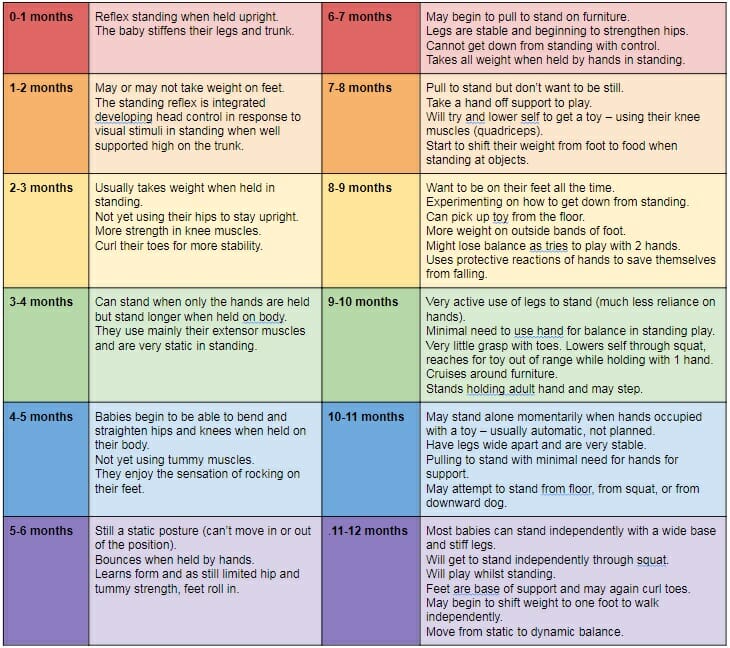
Most babies begin standing with support between 6 and 9 months. They may hold a couch, table, or your hands while they practice balance and leg strength.
Many babies pull themselves to standing between 8 and 12 months. Some stand alone for a few seconds between 9 and 15 months. Others may not stand independently until closer to 16 or 17 months and still develop normally.
When do babies stand depends on many factors, including muscle strength, balance, personality, practice, and whether the baby was born early. Milestones are ranges, not strict deadlines.
A baby may follow this general path:
- Around 4 to 6 months: Pushes down with the feet when held upright
- Around 6 to 9 months: Bears weight on the legs with support
- Around 8 to 12 months: Pulls up on furniture
- Around 9 to 15 months: Stands alone for a short time
- Around 12 to 18 months: Takes early steps and walks more steadily
These ranges come from common pediatric development patterns. Your baby does not need to match every age exactly.

Signs your baby is ready to stand
Before standing, babies usually build strength in the legs, hips, back, and stomach. They also develop the balance and body control needed to stay upright.
Look for these signs of readiness:
- Your baby sits without help
- Your baby moves from sitting to hands and knees
- Your baby bears weight when you hold them upright
- Your baby bounces while standing with support
- Your baby reaches for furniture
- Your baby pulls up using a couch or low table
- Your baby lowers back down with some control
- Your baby moves sideways while holding furniture
Pulling up is often a major step. It shows that your baby wants to explore the world from a new view. At first, your baby may stand stiffly with locked knees. Over time, the knees bend, the feet adjust, and balance improves.
A common lesson from pediatric development guidance is that control matters more than speed. A baby who stands later but moves both sides of the body well may be progressing better than a baby who stands early but uses only one side.
Why babies stand at different ages
There is no single age when all babies stand. Each child follows a personal development pattern.
Several factors can affect when do babies stand:
Strength and coordination
Standing requires more than strong legs. A baby must coordinate the feet, ankles, knees, hips, back, and arms. Balance also depends on the brain learning how to respond when the body starts to lean.
Temperament
Some babies are eager to move and take risks. Others prefer to watch, crawl, or sit until they feel sure. A cautious baby may stand later but become confident quickly once ready.
Opportunity to move
Babies need safe floor time to practice. Long periods in swings, loungers, or seats may reduce chances to crawl, reach, pull up, and shift weight.
Premature birth
If your baby was born more than three weeks early, ask your pediatrician about corrected age. Doctors often use corrected age during the first two years to assess development in premature babies.
Health and muscle tone
Low muscle tone, joint problems, vision concerns, or other health conditions can affect standing. This does not mean a delay always signals a problem, but it makes regular developmental checks important.
How to help your baby learn to stand
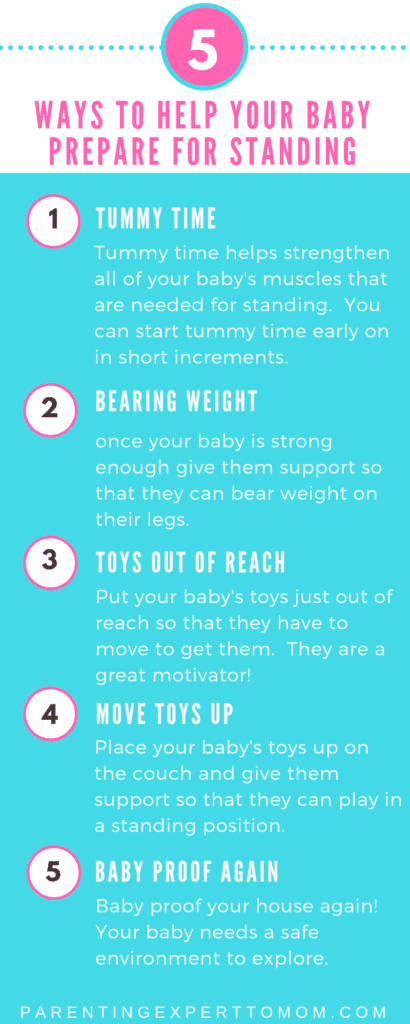
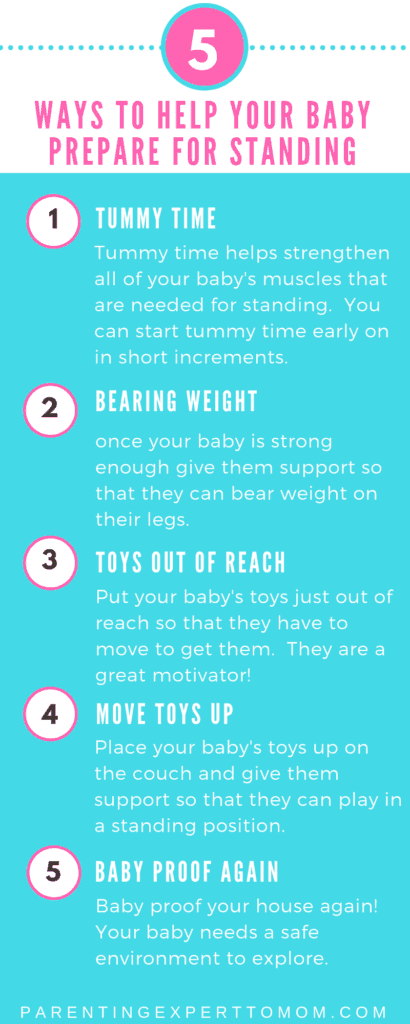
You do not need special equipment to help your baby prepare for standing. Simple play on the floor is often the best practice.
Try these safe activities:
- Place sturdy toys on a low surface so your baby can reach up.
- Sit close while your baby pulls up on a stable couch.
- Put toys slightly to the side to encourage weight shifting.
- Offer your hands for balance without pulling your baby upward.
- Practice moving from standing back to sitting.
- Give plenty of supervised floor time each day.
- Let your baby play barefoot indoors on a safe surface.
Bare feet can help babies feel the floor and adjust their balance. If your home is cold or the floor is rough, use socks with grips or soft shoes that allow the feet to move.
Do not force standing. If your baby bends the knees, sits down, or crawls away, follow that signal. The goal is to offer practice, not pressure.
One practical mistake families often make is lifting a baby into a standing position again and again. This can make the activity tiring and frustrating. It is usually better to place an interesting toy nearby and let the baby choose when to pull up.
Is standing in a baby walker safe?
Traditional seated baby walkers with wheels are not recommended by many child safety experts. They can move quickly, allow babies to reach dangerous objects, and increase the risk of falls down stairs.
A walker also does not teach the same balance skills as natural floor movement. Babies learn standing through pushing, pulling, shifting weight, and controlling their bodies.
Safer options include:
- A stationary activity center used with supervision
- A heavy push toy that does not roll too fast
- A stable couch or secured play table
- A large play yard with a firm floor
- An open, baby-proofed room
A push toy should be heavy enough that it does not slide away when your baby leans on it. Stay close during use, especially at first.

Baby standing milestones by age
Age ranges can help you understand development, but they should not become a daily test.
Around 6 to 9 months
Many babies begin to bear weight on their legs when held. They may bounce, straighten their knees, or enjoy standing while you support their trunk.
Some babies pull up near the end of this period. Others focus on crawling or sitting first.
Around 9 to 12 months
Pulling to stand becomes more common. Your baby may move along furniture by taking small side steps. This movement is called cruising.
Your baby may also drop to the floor often. Learning how to get down safely takes practice and is just as important as standing up.
Around 12 to 15 months
Many babies stand alone for a few seconds and may take one or two steps. Some begin walking during this period, while others continue cruising.
Falling is normal as long as the area is safe. Babies often gain skill through many short attempts.
Around 15 to 18 months
Most children take independent steps by this stage, although walking skill may still look unsteady. A wide stance, frequent falls, and short steps are common at first.
Talk with your child’s doctor if your baby is not showing progress, seems very stiff or floppy, or avoids bearing weight.

Standing safely at home
Once your baby pulls up, the entire room becomes a climbing area. Baby-proofing should happen before standing begins, not after the first fall.
Use this safety checklist:
- Anchor dressers, bookcases, and televisions to the wall.
- Remove tablecloths that your baby can pull.
- Move cords, hot drinks, and sharp items out of reach.
- Install safety gates at the top and bottom of stairs.
- Cover electrical outlets.
- Lock drawers and cabinets with unsafe items.
- Keep small objects off the floor.
- Check that furniture has no sharp or unstable edges.
- Keep hot appliances and pan handles away from the edge.
- Never leave your baby alone on a bed, sofa, or changing table.
A new stander can fall without warning. Stay within reach when your baby practices near furniture or on a hard surface.
Shoes are not needed indoors for learning to stand. When shoes are necessary outdoors, choose flexible shoes with a wide toe area and a firm, non-slip sole.

When should you worry about standing delays?
A later standing age does not automatically mean a developmental problem. Some healthy babies crawl for months, bottom-scoot, or move in other ways before standing.
Still, contact your pediatrician if you notice any of these signs:
- Your baby does not bear weight on the legs by about 9 months
- Your baby does not try to pull up by around 12 months
- Your baby uses one side of the body much more than the other
- Your baby’s legs seem very stiff or unusually floppy
- Your baby cannot sit without support by around 9 months
- Your baby loses a skill they previously had
- Your baby seems to feel pain when standing
- Your baby is not making progress over several months
- Your baby is not walking independently by about 18 months
These are reasons to seek advice, not reasons to panic. A pediatrician may watch your baby move, check muscle tone and reflexes, and recommend an early intervention evaluation if needed.
Early support can include physical therapy and home exercises. It does not mean you caused the delay. It simply gives your child more tools for safe movement.
Standing, cruising, and walking: What is the difference?
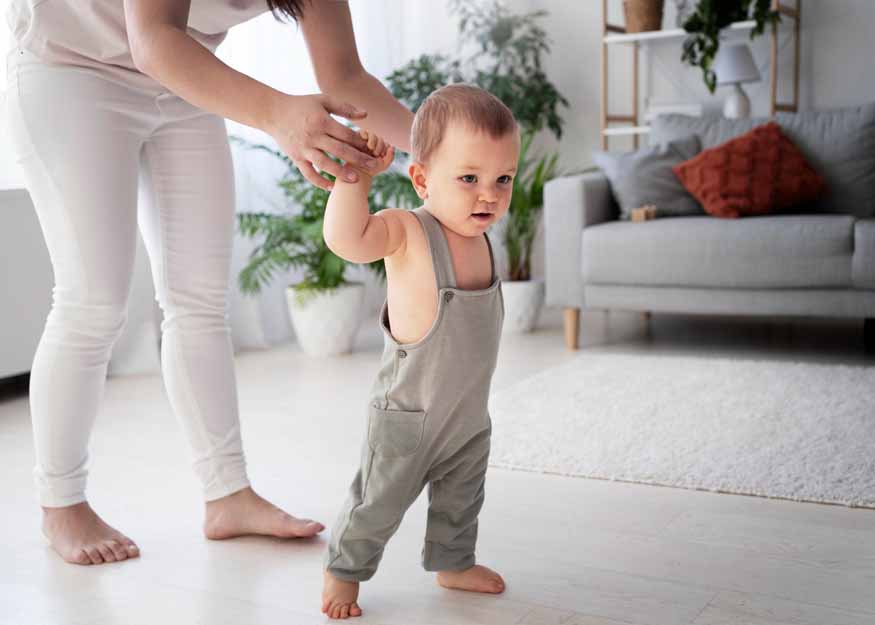
Standing means your baby can support the body in an upright position. This may happen with help from furniture, your hands, or no support.
Cruising means moving sideways while holding furniture. It helps your baby practice weight shifting, balance, and foot placement.
Walking means taking steps without holding onto furniture or another person. A baby may stand alone before taking a step, or may move quickly from cruising to walking.
These skills overlap. For example, a baby may pull up, cruise, sit down, crawl, and then repeat the sequence many times. That pattern is normal learning, not a setback.
When do babies stand and when do babies walk are related questions, but they have different answers. Standing alone often comes before walking, yet the gap may be days, weeks, or several months.

Common mistakes parents should avoid
Parents often feel pressure when they compare milestones. Social media can make it seem as if every baby stands early, but online examples do not show the full range of normal development.
Avoid these common mistakes:
- Comparing your baby with a sibling or friend’s baby
- Forcing your baby to stand when they are tired
- Holding your baby upright for long periods
- Using rolling walkers near stairs
- Buying stiff shoes for indoor practice
- Ignoring repeated signs of pain or weakness
- Treating one late milestone as a diagnosis
- Waiting too long after a clear loss of skills
A helpful approach is to track progress every few weeks. Write down new movements, such as pulling up, cruising, or standing briefly. This gives your pediatrician useful information and helps you notice gradual gains.
Frequently Asked Questions About When Do Babies Stand
When do babies stand without support?
Many babies stand without support between 9 and 15 months. Some stand earlier, while others need more time and may still develop normally.
When do babies pull themselves to stand?
Babies often pull to stand between 8 and 12 months. Your baby may first pull up on a couch, your legs, or a sturdy table.
Is it normal for a baby to stand at 7 months?
Yes, standing with support at 7 months can be normal if your baby is comfortable and moving both sides of the body. Independent standing at this age is less common, but early milestones are not automatically harmful.
Should I worry if my baby is not standing at 12 months?
Not always. Some babies stand later, especially if they were born early or prefer crawling, but discuss your concerns with the pediatrician if your baby is not bearing weight or trying to pull up.
Do babies stand before they walk?
Most babies stand with support before they walk alone. However, the time between these skills varies, and some babies begin taking steps soon after their first independent stand.
Do baby walkers help babies stand sooner?
Traditional wheeled walkers do not reliably help babies stand or walk sooner and can increase injury risks. Safe floor play and stable furniture offer better practice for balance and movement.
When should a baby start wearing shoes?
Babies usually do not need shoes indoors while learning to stand. Use flexible, well-fitting shoes outdoors to protect the feet while allowing natural movement.
Conclusion
Most babies stand with support between 6 and 9 months and stand alone between 9 and 15 months. Pulling up, cruising, and brief independent standing are useful signs of growing strength and balance.
Give your baby safe floor time, stable furniture, and plenty of encouragement without pressure. If your baby is not bearing weight, loses skills, seems unusually stiff or floppy, or shows little progress, contact a pediatrician. Keep tracking small gains, trust your observations, and explore reliable child development resources for continued support.