
In the United States, babies should not sleep with a pillow before age 1. For many children, the safer choice is to wait until about age 2, when they sleep on a toddler bed or regular bed and can move freely if the pillow covers their face.
The American Academy of Pediatrics (AAP) advises keeping pillows, blankets, bumpers, stuffed toys, and other soft items out of an infant’s sleep space. These items can raise the risk of suffocation and sleep-related death.
A pillow may be reasonable for an older toddler who is ready for one. The right time depends on age, sleep space, development, and your child’s health—not on a specific pillow product.
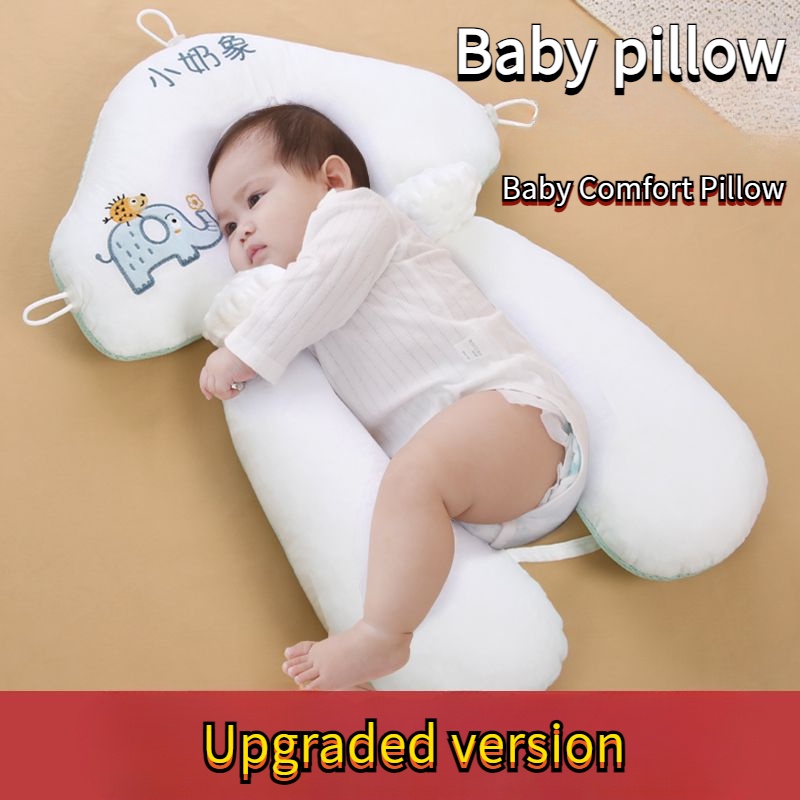
The short answer: Wait until at least age 1, and preferably closer to age 2
The safest rule is simple:


- Under 12 months: Do not use a pillow during sleep.
- 12 to 24 months: A pillow is usually not needed. Waiting is safer, especially while your child still sleeps in a crib.
- Around age 2 and older: A small, firm toddler pillow may be suitable if your child sleeps in a toddler bed or regular bed.
- Any age with a medical condition: Ask your child’s pediatrician before adding a pillow or changing the sleep position.
The Consumer Product Safety Commission (CPSC) warns families to keep pillows and other soft bedding out of an infant’s sleep area. The AAP also recommends a firm, flat sleep surface with no loose items.
These rules apply to naps and nighttime sleep. A pillow that seems harmless during a short nap can still shift over a baby’s face.

Why pillows are unsafe for babies
Babies have small airways, limited strength, and less control over their head and body. If a pillow presses against a baby’s nose or mouth, the baby may not be able to move away.
A pillow can also:
- Block the airway
- Cause overheating
- Create a gap between the baby and the mattress
- Push the baby into an unsafe sleep position
- Increase the risk of suffocation or entrapment
- Encourage side or stomach sleeping before the baby is ready
A soft pillow may look comfortable to an adult. For an infant, it can act like a soft wall around the face.
The risk is not limited to adult-size pillows. Small pillows, travel pillows, nursing pillows, and decorative pillows can also be unsafe inside a crib, bassinet, or play yard.
Why an inclined or “anti-reflux” pillow is not a safe fix
Many products claim to help with reflux, congestion, or sleep. Raising the baby’s head with a pillow or wedge does not make routine sleep safer.
The AAP recommends that babies sleep flat on their backs. Even babies with reflux should usually sleep on a firm, flat surface unless a medical professional gives different instructions for a specific condition.
Do not place a pillow under the mattress, under the baby, or inside a sleep positioner. These changes can create sliding, folding, or breathing risks.

What a safe infant sleep space looks like
For babies under 12 months, use the following setup:


- Place the baby on their back for every sleep.
- Use a firm, flat mattress that fits the crib, bassinet, or play yard.
- Cover the mattress with only a fitted sheet made for that sleep surface.
- Keep pillows, quilts, comforters, loose blankets, toys, and crib bumpers out of the sleep area.
- Keep the baby’s face and head uncovered.
- Keep the baby’s sleep space in the caregiver’s room, but not in the adult bed, when possible.
- Stop using a swaddle when the baby shows signs of trying to roll.
A wearable blanket can help keep a baby warm without adding loose bedding. It should fit correctly and should not weigh down the baby or restrict movement.
What if the baby rolls onto a pillow?
If a baby under 1 year moves onto a pillow, calmly remove the pillow and return the baby to a clear, flat sleep space. Do not use pillows or positioners to stop rolling.
Once a baby can roll both ways, caregivers do not need to keep turning the baby back all night. However, the crib should remain free of soft objects and loose bedding.
When is a toddler ready for a pillow?
Age matters, but it is not the only factor. A toddler may be ready for a pillow when all of these points are true:
- The child is at least 2 years old, or their pediatrician has advised its use sooner.
- The child sleeps in a toddler bed or regular bed, not a crib.
- The child can move their head and body freely.
- The child can push away or move around a pillow.
- The child does not use the pillow to climb out of bed.
- The pillow is small, firm, and made for a young child.
- The pillow does not cover the child’s face when they lie down.
Moving from a crib to a bed is often a better milestone than age alone. A child who still sleeps in a crib usually does not need a pillow. Adding one to the crib can introduce a risk without offering a clear benefit.
Some children sleep well without a pillow for years. There is no health need to teach a toddler to use one.
Signs your toddler may not need a pillow
Your child may not need a pillow if they:
- Sleep comfortably without one
- Move the pillow away
- Use it as a toy
- Put their face into it
- Sweat or seem hot
- Wake more often after you add it
- Try to stand on it or throw it from the bed
If the pillow causes problems, remove it and try again later.
How to choose a first pillow for a toddler
Choose safety and fit over softness. A toddler pillow should be:
- Small: It should not take up much of the bed.
- Firm: The child’s head should not sink deeply into it.
- Thin: A low profile helps keep the neck in a neutral position.
- Breathable: Avoid dense, deep, or overly plush designs.
- Washable: Accidents and spills are common.
- Free of loose parts: Avoid ties, cords, beads, buttons, and decorative pieces.
- Appropriate for the child’s age: Follow the maker’s age guidance, but do not treat a product label as a substitute for safe-sleep guidance.
Avoid adult pillows, memory-foam pillows with a deep contour, feather pillows, novelty pillows, and pillows with loose filling. “Organic,” “natural,” or “hypoallergenic” does not automatically mean safe for infant sleep.
A pillowcase should fit tightly and stay attached to the pillow. Do not use a pillowcase with ribbons, strings, or other loose pieces.


Do not use a nursing pillow as a sleep pillow
Nursing pillows are designed to support feeding while an awake adult watches the baby. They are not designed for unsupervised sleep.
Never place a sleeping baby inside a nursing pillow or use one as a crib cushion. If the baby falls asleep while feeding, move them to a firm, flat sleep surface on their back as soon as practical.
What about babies with reflux, congestion, or a flat head?
A pillow is not a routine treatment for these concerns.
Reflux
Babies with reflux should still be placed on their backs on a firm, flat surface. Elevating the crib mattress or using a sleep wedge can cause the baby to slide into an unsafe position.
Contact your pediatrician if your baby has poor weight gain, painful feeding, repeated choking, breathing problems, green or bloody vomit, or forceful vomiting. These symptoms need medical assessment rather than a pillow.
Nasal congestion
A pillow does not safely open a baby’s airway. Ask a pediatrician about age-appropriate ways to manage congestion. Seek urgent help if the baby has struggling, fast, or noisy breathing; blue or gray lips; pauses in breathing; or unusual difficulty waking.
Flat head shape
Some babies develop a flat area on the back or side of the head. This does not mean they should sleep on a pillow or on their stomach.
Continue back sleeping. Discuss the head shape with the child’s pediatrician, who may suggest supervised tummy time, changes in how you hold the baby, or other care.
Common mistakes parents make
The most common mistake is assuming that a soft item is safe because it feels comfortable. Adult comfort does not predict infant safety.
Avoid these practices:
- Putting a pillow under an infant’s head
- Placing a pillow under the crib mattress
- Using a wedge or sleep positioner
- Leaving a baby to sleep on a nursing pillow
- Using a pillow to prevent rolling
- Adding a pillow because the baby has a cold or reflux
- Using a large adult pillow for a toddler
- Leaving stuffed toys or blankets in the crib
- Letting a baby sleep unsupervised on a couch, chair, or adult bed
- Assuming a product is safe because it says “breathable” or “approved”
The safest sleep space is usually the simplest one: a firm, flat surface, a fitted sheet, and the baby.
A simple decision guide
Use this guide when deciding whether to introduce a pillow:
| Child’s age and sleep space | Pillow recommendation |
|---|---|
| Under 12 months in a crib, bassinet, or play yard | Do not use a pillow |
| 12–24 months in a crib | Continue without a pillow |
| Under 2 years in a toddler bed | Ask the pediatrician if there is a medical reason; otherwise, waiting is reasonable |
| About 2 years or older in a toddler bed | A small, firm toddler pillow may be considered |
| Any age with breathing, reflux, or neck concerns | Ask the pediatrician before using a pillow |
| Any age using a pillow to climb | Remove the pillow |
This table is general information, not a personal medical order. A child with special medical needs may need an individualized plan.
How to introduce a pillow safely
When your child is old enough and ready, introduce the pillow during a supervised rest period first.
- Choose a small, firm toddler pillow.
- Place it at the head of the bed.
- Watch how your child uses it.
- Check that the pillow does not cover the face or push the neck forward.
- Remove it if your child uses it to climb, hides their face in it, or seems uncomfortable.
- Wash the pillow and case as directed.
- Recheck the pillow after illness, travel, bed changes, or a change in sleep habits.


You do not need to force a toddler to use a pillow. If the child moves it away, leave it out.
When to ask a pediatrician
Ask your child’s pediatrician before using a pillow if you are considering it to treat:
- Reflux or frequent vomiting
- Snoring or suspected sleep apnea
- Breathing problems
- A flat head or neck issue
- Pain or limited movement
- A neurological or muscular condition
- A medical device or special sleep position
Seek urgent medical help for severe breathing trouble, blue or gray skin, unresponsiveness, or choking.
For routine questions, your pediatrician can help you weigh the child’s age, development, sleep surface, and medical history.
Key takeaways
- Babies should not sleep with pillows before 12 months.
- A clear crib is safer than one with pillows, blankets, toys, or bumpers.
- Many families can wait until about age 2, especially while a child still sleeps in a crib.
- A toddler pillow should be small, firm, thin, and free of loose parts.
- Do not use pillows or wedges to treat reflux, congestion, rolling, or a flat head.
- Ask a pediatrician when a medical condition affects sleep.
Frequently asked questions
Can a 1-year-old sleep with a pillow?
A 1-year-old may be old enough under some guidance, but a pillow is usually not necessary. If the child still sleeps in a crib, waiting is the safer and simpler choice. Ask the pediatrician if you are considering a pillow for a medical reason.
Can babies sleep with a pillow under their head?
No. Do not place a pillow under an infant’s head. Babies should sleep on a firm, flat surface with no pillow.
When can a baby sleep with a blanket?
The AAP recommends keeping loose blankets and other loose bedding out of the infant sleep area. A wearable blanket is a safer way to provide warmth. Ask your pediatrician when your child is ready for loose bedding based on age and development.
Is a toddler pillow safer than a regular pillow?
A small, firm toddler pillow may reduce the amount of material around a child’s face compared with a large adult pillow. It is still not appropriate for infants, and the child should be ready for a pillow before using one.
Should a baby sleep on a pillow for reflux?
No. Routine elevation with a pillow, wedge, or inclined sleeper is not recommended for infant sleep. Place the baby flat on their back and ask a pediatrician about reflux symptoms.
What should I do if my baby falls asleep on a pillow?
Move the baby to a firm, flat, clear sleep surface on their back as soon as you can. Do not leave the baby sleeping on a couch, adult bed, nursing pillow, or other soft surface.
Sources and guidance
This article is based on current U.S. safe-sleep guidance and consumer safety information from:
- American Academy of Pediatrics: HealthyChildren.org safe sleep recommendations
- American Academy of Pediatrics: 2022 safe-sleep policy statement
- U.S. Consumer Product Safety Commission: Safe sleep and nursery product safety
- National Institutes of Health Safe to Sleep campaign
Guidance can change. For a child with a medical condition or unusual sleep concern, use the child’s pediatrician as the final source for personal advice.


Conclusion
The safest answer to “when can babies sleep with a pillow?” is not before age 1, and often closer to age 2. Most babies do not need a pillow at all. Keep the infant sleep space clear, wait until your child is developmentally ready, and ask a pediatrician before using a pillow to address a health concern.
