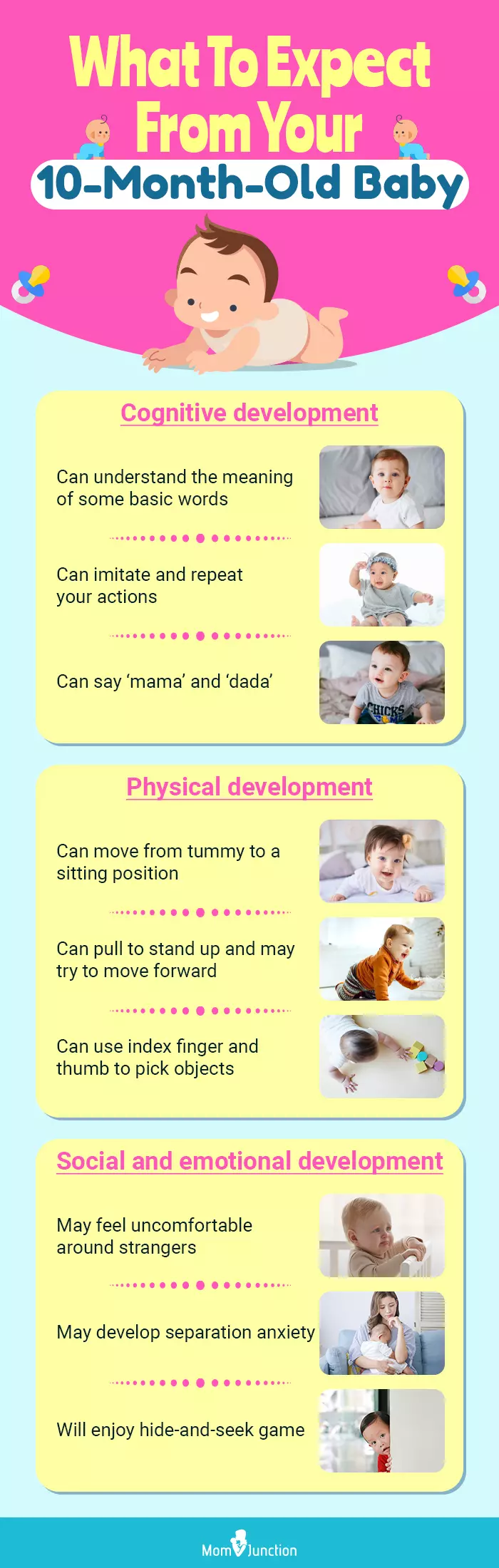
Most 10-month-old babies do not need formal walking lessons. They need safe floor time, chances to pull up, and a calm place to move at their own pace. In the United States, the CDC lists pulling to stand and walking while holding furniture as common 12-month milestones. Some babies walk earlier, while others walk later and remain within the normal range.
Your goal is not to make your baby walk on a set schedule. Your goal is to build strength, balance, confidence, and interest in moving. Short, playful practice works better than pressure.

What Is Normal at 10 Months?
At 10 months, babies can be at very different stages. One baby may crawl quickly, pull up, and cruise along the couch. Another may roll, scoot, crawl backward, or focus more on sitting and reaching.
Walking alone is not expected from every 10-month-old. The CDC’s 12-month milestone list includes:
- Pulling up to stand
- Walking while holding furniture
- Moving from sitting to standing
- Picking up small items with the thumb and finger
The CDC’s 15-month milestones include taking a few steps alone. By 18 months, most children can walk without holding on. These milestones are guides, not deadlines.
A baby’s birth history also matters. Babies born early may reach milestones based on adjusted age. Ask your child’s pediatrician how to track development if your baby was born prematurely.
Early walking does not predict intelligence, athletic skill, or long-term development. A later walker may still have healthy development, especially if they are gaining skills in other areas.

10 Ways to Encourage Walking Safely
The best way to encourage walking is to give your baby many safe chances to move. Use play, not force.
1. Give plenty of floor time
Place your baby on a clean, open floor several times each day. Floor play lets your baby practice:
- Rolling
- Crawling
- Sitting
- Reaching
- Turning
- Moving from one position to another
These skills help build the muscles and body control needed for standing and walking.
Limit long periods in swings, bouncers, infant seats, and other devices that restrict movement. These items can be useful for short periods, but they should not replace active floor play.
2. Put toys just out of reach
Place a favorite toy on a low, stable surface. Your baby may crawl toward it, pull up, or shift weight from one foot to the other.
Move the toy only a small amount. If it is too far away, your baby may become frustrated. The activity should feel like a fun challenge, not a test.
Try placing toys:
- On a firm sofa cushion
- On a low activity table
- Along the edge of a heavy ottoman
- On the floor near a stable piece of furniture
Check every surface first. It must not slide, tip, or have sharp edges.
3. Make a safe cruising path
Cruising means walking sideways while holding furniture. Create a short path between stable objects, such as a couch and a firmly anchored activity table.
Keep the gap small enough that your baby can move with support. Stay close during the activity. Babies can lose balance quickly when they turn or reach.
Do not use light chairs, folding tables, rolling carts, or small stools as walking supports. They may move suddenly and cause a fall.
4. Practice standing at your lap
Sit on the floor with your baby facing you. Hold your hands low and let your baby pull up using your legs or hands.
Try not to lift your baby into a standing position each time. Pulling up helps your baby learn how to shift weight and control the body.
You can also sit a toy on your knees. Let your baby reach up, stand, and play for a few seconds before sitting down.
5. Use push toys with care
A sturdy push toy may give some babies a chance to practice stepping. Choose one with:
- A wide, stable base
- A handle that does not move freely
- Strong weight and balance
- No small parts
- No sharp edges
Use a push toy only on a flat, open surface. Stay within arm’s reach. A push toy can roll faster than your baby can move.
Avoid toys that encourage your baby to lean far forward. If the toy slides away, it is not a safe walking aid.
6. Let your baby go barefoot indoors
Bare feet help babies feel the floor and adjust their balance. In a warm, safe home, your baby usually does not need shoes for early standing and walking practice.
When shoes are needed outdoors, choose a pair that is:
- Flexible
- Lightweight
- Wide enough for the toes
- Securely fastened
- Made with a nonslip sole
Hard, stiff shoes may make it harder for a new walker to feel the ground. Shoes also do not make a baby walk sooner.
7. Encourage reaching and turning
Place toys to the side rather than directly in front of your standing baby. Reaching sideways encourages your baby to shift weight from one leg to the other.
You can also place a toy slightly behind your baby. This may encourage a careful turn while holding the furniture.
Keep the movement small. Your baby should be able to regain balance by sitting down or holding the support.
8. Play music and move together
Stand near your baby and clap, sing, or sway. Your baby may try to move toward you or copy your movements.
Keep your hands nearby without pulling your baby forward. If your baby takes a step, respond with encouragement rather than surprise or pressure.
Simple praise can help:
- “You stood up!”
- “You moved to the table.”
- “You took one step.”
- “You kept your balance.”
9. Give siblings and pets a separate play area
Older children, dogs, and cats can make early walking practice unsafe. A baby may fall while trying to avoid them or may pull on a pet for support.
Use a baby gate or a clear floor area when needed. Teach older children not to pull, push, or call the baby from across the room.
10. Stop when your baby is tired
Practice should end when your baby shows signs of fatigue or frustration. Common signs include:
- Crying
- Dropping to the floor
- Rubbing the eyes
- Turning away
- Stiffening the body
- Refusing to engage
Several short play sessions are usually better than one long session. Rest, feeding, and sleep also support normal development.

How to Set Up a Safe Walking Space
A safe room matters more than special equipment. Start at your baby’s height. Crawl around the room and look for anything your baby could pull, swallow, or trip over.
Use this quick safety check:
| Area | What to check |
|---|---|
| Furniture | Anchor dressers, bookcases, and televisions to the wall |
| Stairs | Install hardware-mounted safety gates at the top and bottom |
| Cords | Secure blind cords, lamp cords, and charging cables |
| Floors | Remove small objects, loose rugs, and pet toys |
| Edges | Cover sharp corners and move hard objects away |
| Tables | Remove hot drinks, medicines, and choking hazards |
| Doors | Use door guards where needed |
| Windows | Install working window guards above the first floor |
A baby who can pull to stand can reach much higher than before. Move cleaners, medicines, knives, batteries, and small objects out of reach.
The American Academy of Pediatrics advises against wheeled baby walkers. They can move quickly, give babies access to hazards, and cause falls down stairs. A stationary activity center does not teach walking, but it may be a safer short-term option when used according to its instructions and with supervision.
What Not to Do
Avoid trying to speed up walking by holding your baby’s hands and pulling them forward for long periods. This can place your baby in a position they cannot control well. It may also cause you to miss signs that your baby needs a break.
Do not compare your baby with a sibling, neighbor, or social media baby. Normal development has a wide range.
Avoid these common mistakes:
- Forcing standing when your baby resists
- Holding your baby upright for long practice sessions
- Using a rolling chair or light table as support
- Letting your baby practice near stairs
- Leaving a standing baby alone on a bed or sofa
- Buying stiff shoes for indoor practice
- Using a wheeled baby walker
- Treating early walking as proof of advanced development
A baby who crawls well may choose crawling because it is faster. That choice does not mean your baby lacks the strength to walk.
Some babies also skip crawling. They may move from sitting to standing, cruise, and then walk. The pattern matters less than steady progress, use of both sides of the body, and the ability to move in different ways.

When Should You Call the Pediatrician?
Contact your child’s pediatrician if you are worried about movement, balance, muscle tone, or loss of skills. You do not need to wait for a certain age when something feels wrong.
Ask for medical guidance if your baby:
- Stops using a skill they previously had
- Uses one side of the body much more than the other
- Drags one leg
- Seems very stiff or very floppy
- Cannot bear weight on the legs when supported
- Does not move around in any way
- Appears to have pain when standing or moving
- Falls in an unusual way or cannot protect the head
- Has a foot or leg position that concerns you
The CDC recommends acting early when a child misses milestones, loses skills, or concerns persist. Your pediatrician may perform a developmental screening or refer your baby to an early intervention program or pediatric physical therapist.
In the United States, parents can contact their state’s early intervention program for children under age 3. A referral may not require a confirmed diagnosis. The program can explain local eligibility rules and services.
A baby who is not walking independently at 10 months is usually not a concern by itself. If your baby is otherwise developing and making progress, simple practice and routine monitoring may be all that is needed.

A Simple Daily Walking Practice Plan
You can support walking without creating a formal workout. Try this sample plan during normal play:
- Morning: Give your baby 10 to 15 minutes of open floor play.
- After a nap: Place a toy on a stable surface for reaching and pulling up.
- During family play: Sit nearby and encourage your baby to move between you and a couch.
- Later in the day: Offer a short cruising activity along anchored furniture.
- Before bedtime: Stop active practice and use calm floor play instead.
The exact time does not matter. Follow your baby’s mood and energy.
Signs of progress may include:
- Pulling up more often
- Standing for longer
- Lowering down with better control
- Moving sideways while holding furniture
- Reaching without falling
- Standing briefly without support
- Taking one or two independent steps
Progress is not always steady. A baby may stand one day and return to crawling the next. That pattern is common while balance and confidence develop.

Frequently Asked Questions
Should I teach my 10-month-old to walk?
You can encourage walking through play, but you do not need to teach it directly. Give your baby safe floor time, stable furniture, and chances to pull up and cruise. Avoid forcing steps or holding your baby upright for long periods.
Is it normal for a 10-month-old not to stand?
Yes. Babies develop at different rates. Some 10-month-olds stand or cruise, while others focus on crawling, sitting, or pulling up. Talk with your pediatrician if your baby is not making progress, seems unusually stiff or floppy, does not bear weight, or has lost a skill.
Do baby walkers help babies walk sooner?
Wheeled baby walkers are not recommended for walking practice. They can increase injury risk and do not provide the same balance practice as standing and moving on the floor. Use supervised floor play and stable furniture instead.
Are shoes necessary for a 10-month-old learning to walk?
Usually not indoors. Bare feet help your baby feel the floor while standing and moving. Use flexible, well-fitting shoes outdoors or when needed for warmth and protection.
Should I worry if my baby skips crawling?
Not always. Some babies use other ways to move, such as scooting, rolling, or moving from sitting to standing. The key concerns are loss of skills, pain, marked stiffness or floppiness, strong one-sided movement, or a lack of overall progress.
When do most babies walk independently?
The timing varies. The CDC lists taking a few steps alone as a 15-month milestone and walking without holding on as an 18-month milestone. These are guidelines, not exact deadlines. Your pediatrician can consider your baby’s full development and medical history.
Key Takeaways
- A 10-month-old does not need to walk independently yet.
- Use daily floor play, stable furniture, and toys placed within easy reach.
- Let your baby practice barefoot indoors when the floor is safe.
- Avoid wheeled baby walkers and unstable furniture.
- Do not force standing or walking.
- Call the pediatrician about regression, pain, unusual stiffness, floppiness, strong side preference, or stalled progress.
- Focus on steady development, not a specific walking date.
Conclusion
To encourage walking in a 10-month-old, make movement safe, fun, and easy to repeat. Give your baby room to crawl, pull up, cruise, reach, and rest. Most babies find walking through everyday play rather than formal training.
If you have concerns, contact your child’s pediatrician or your state’s early intervention program. Early advice can provide reassurance and support without putting pressure on your baby.