At 10 months, many babies are not saying clear words yet. That is often normal. In the United States, most babies this age are busy building the skills that come before words: babbling, copying sounds, using gestures, watching faces, and taking turns during play.
You can help by talking, singing, reading, and responding to your baby throughout the day. Keep it fun and low pressure. If your baby does not babble, respond to sounds, use gestures, or react to voices, talk with your child’s pediatrician. A hearing check or speech and language evaluation may help find the right support.
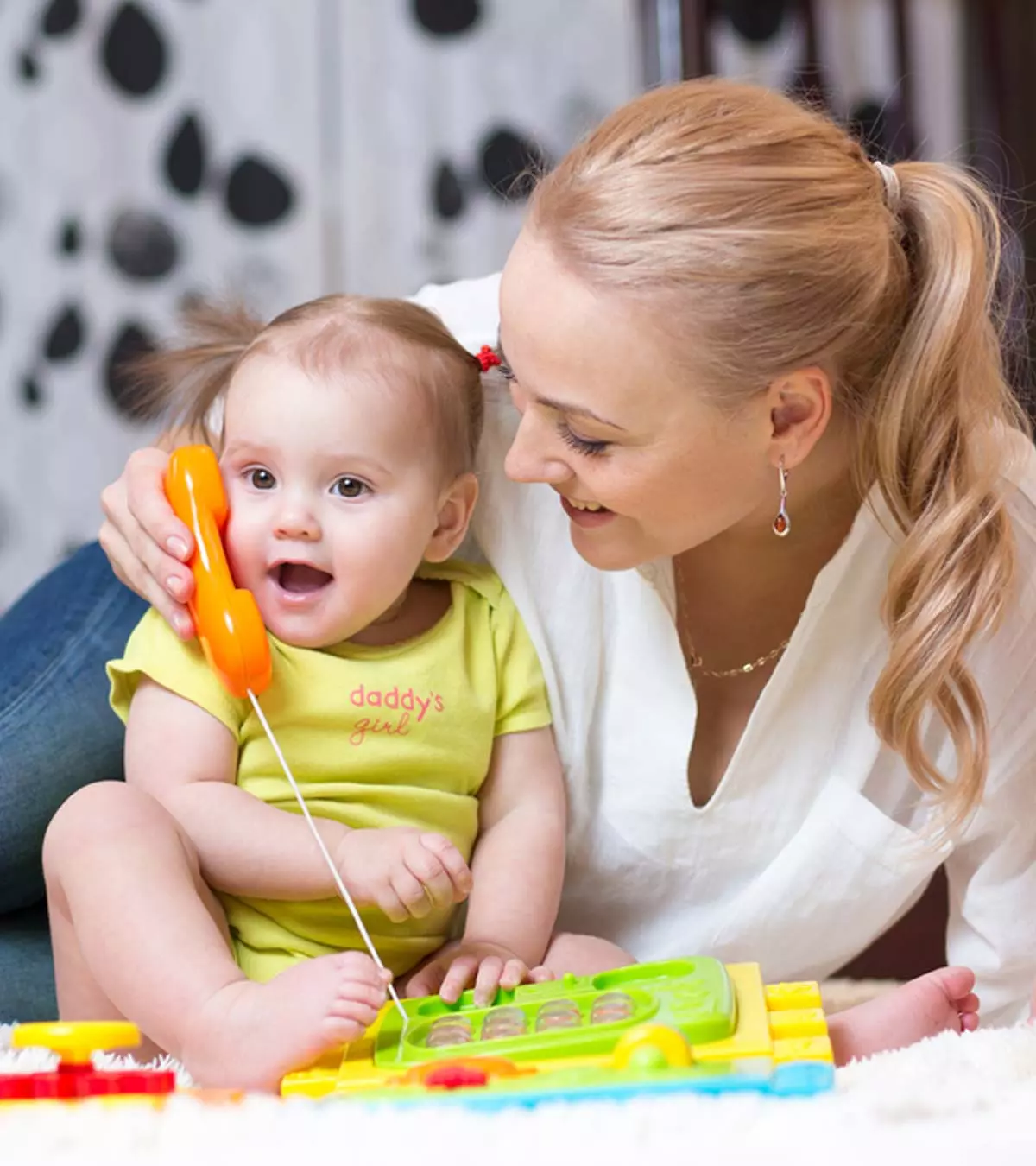
What Should a 10-Month-Old Be Saying?
A 10-month-old may babble strings such as “ba-ba,” “da-da,” or “ma-ma.” Some babies use these sounds as early words, while others are still practicing them without a clear meaning.
Language skills vary widely at this age. The Centers for Disease Control and Prevention (CDC) lists milestones that many children reach by a certain age, but milestones are not a test that every child must pass on the same day.
At around 9 months, many babies:
- Make different sounds, such as “mamamama” or “babababa”
- Lift their arms to be picked up
- Look when their name is called
- Smile or laugh during social games
- Use sounds, facial expressions, or movements to get attention
By 12 months, many babies may wave, use gestures, copy sounds, or say one or more words. Some children reach these skills earlier, and some need more time.
The goal at 10 months is not to make your baby say a certain number of words. The goal is to create many warm chances for your baby to hear language, respond, and take part.
12 Ways to Encourage Your 10-Month-Old to Talk
The best way to encourage early speech is to make daily activities into short, two-way conversations. Try these methods.
1. Talk through everyday routines
Use simple words during meals, diaper changes, baths, and dressing.
Say:
- “Here is your spoon.”
- “Up goes your arm.”
- “We are washing hands.”
- “More banana?”
- “The water is warm.”
Your baby may not understand every word. Still, hearing the same words during the same routines helps connect sounds with people, actions, and objects.
2. Copy your baby’s sounds
If your baby says “ba-ba,” repeat it. Then add a simple word such as “ball” or “bye-bye.”
This teaches your baby that sounds can go back and forth between people. It also makes communication feel like a game rather than a lesson.
Pause after you copy the sound. Your baby may repeat it, smile, or make a new sound. That pause gives your child time to take a turn.
3. Use parentese, not baby talk
Parentese is the slow, clear, slightly higher-pitched way many adults naturally speak to babies. It often includes a warm voice, short phrases, and clear sounds.
For example, say, “Look at the dog!” with an expressive face. Avoid replacing all real words with made-up words. You can use playful sounds, but also give your baby the real word: “Woof! That is a dog.”
4. Follow your baby’s attention
Watch what your baby looks at, reaches for, or touches. Then name it.
If your baby looks at a cup, say, “Cup. You see the cup.” If your baby points toward a dog, say, “Dog. The dog is walking.”
This works well because your baby is already interested. You are adding language to an experience that has meaning.
5. Read picture books every day
You do not need to read every word on the page. Point to pictures and name what you see.
Try:
- “Where is the cat?”
- “Cat says meow.”
- “The baby is sleeping.”
- “You found the ball!”
Let your baby touch the book, turn pages, and make sounds. A short book read with attention is more useful than a long reading session when your baby is tired or restless.
The American Academy of Pediatrics recommends reading aloud from infancy because shared reading supports early language and social development.
6. Sing songs with actions
Songs create a steady pattern that helps babies notice sounds and pauses. Use songs with simple movements, such as “Itsy Bitsy Spider,” “The Wheels on the Bus,” or “If You’re Happy and You Know It.”
Stop before a familiar action or word. For example, pause before “up” while singing a lift-up song. Your baby may move, smile, vocalize, or wait for the next part.
These responses count as communication, even when your baby does not say a word.
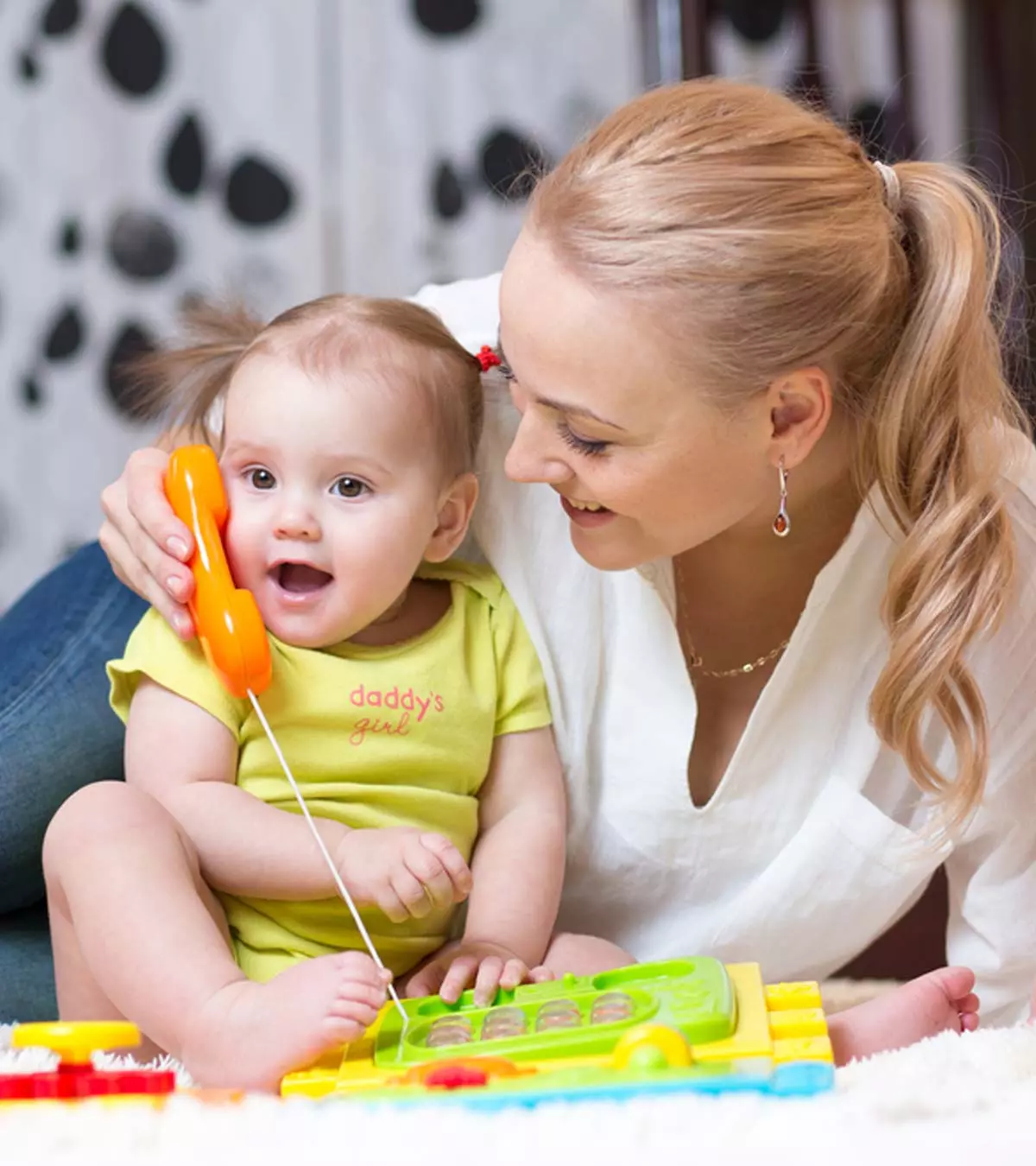
7. Play face-to-face
Sit close enough for your baby to see your face. Use blocks, cups, stuffed animals, or safe household items to create simple turns.
You might roll a ball and say, “Go!” Then wait for your baby to look, reach, or push it back. Use short phrases such as:
- “My turn.”
- “Your turn.”
- “In.”
- “Out.”
- “Open.”
- “All gone.”
Face-to-face play helps your baby watch mouth movements, facial expressions, and gestures.
8. Teach gestures
Gestures often come before spoken words. Show your baby how to wave, clap, point, reach, blow kisses, and raise arms to be picked up.
Pair each gesture with a word:
- Wave and say, “Bye-bye.”
- Point and say, “Look.”
- Offer your hand and say, “Give.”
- Raise your arms and say, “Up.”
Do not force your baby to copy you. Demonstrate the gesture often and respond when your baby uses any movement to communicate.
9. Expand your baby’s attempts
When your baby makes a sound or gesture, treat it as meaningful.
If your baby reaches for a cup, say, “Cup. You want the cup.” If your baby says “ba,” say, “Ball! You found the ball.”
You are not correcting your baby. You are showing how a small attempt can become a clearer message.
10. Offer choices
Hold up two safe options and name them: “Apple or banana?” Wait several seconds.
Your baby may look at one item, reach, vocalize, or turn away. Respond to that choice. This teaches that communication can influence what happens next.
Avoid asking many questions in a row. One question, followed by a pause, gives your baby more time to respond.
11. Reduce background noise
Turn off the television when no one is watching it. Put down your phone during play. Move closer when you speak.
The issue is not only screen time. Background noise can make it harder for a baby to focus on a person’s voice. The American Academy of Pediatrics advises avoiding routine screen use for children younger than 18 months, other than video calls, because real interaction is more useful for early language learning.
12. Use the language or languages your family knows best
Speak to your baby in the language that feels natural. If your child hears two or more languages, keep using them.
Learning more than one language does not cause a speech or language disorder. A bilingual baby may divide words across languages, so count communication in the full language environment rather than judging only one language.
The strongest language practice usually comes from warm, real interaction with family members—not from apps or videos.
A Simple Daily Plan for Building Language
You do not need a formal speech lesson. Add language to things you already do.
| Daily moment | What to try |
|---|---|
| Morning wake-up | Say your baby’s name, greet them, and describe the day |
| Breakfast | Name foods, offer two choices, and pause for a response |
| Diaper change | Sing a short song and label body parts |
| Floor play | Copy sounds and take turns with a toy |
| Walk outside | Name people, animals, cars, and trees |
| Bath time | Use action words such as “pour,” “splash,” and “in” |
| Bedtime | Read one short book and repeat a favorite phrase |
Aim for many brief interactions rather than one long practice session. A few minutes of focused play can happen several times a day.
How to Know Your Baby Is Making Progress
Speech progress does not always look like a new word. Look for changes in how your baby communicates.
Signs of progress may include:
- More frequent babbling
- More varied sounds
- Copying your sounds or actions
- Looking at you after making a sound
- Taking turns during vocal play
- Using gestures to request or share attention
- Responding to their name
- Looking toward familiar objects when you name them
- Showing excitement during songs or books
- Using sounds to protest, greet, or get help
A baby who is not saying words yet may still be developing strong early communication skills. The pattern over time matters more than one quiet day.
What to Do If Your 10-Month-Old Is Not Talking
First, check what “not talking” means. A 10-month-old who has no clear words may still be within a broad normal range. A baby who never babbles, rarely makes sounds, or does not respond to voices needs closer attention.
Contact your child’s pediatrician if your baby:
- Does not babble or make other sounds
- Does not respond to their name or loud sounds
- Rarely makes eye contact or shares smiles
- Does not use gestures such as reaching or waving
- Seems unable to hear
- Loses a skill they previously had
- Does not show interest in people or interaction
- Has feeding, movement, or other developmental concerns
Do not wait for a first birthday if you are worried. In the United States, you can ask your pediatrician about a hearing test and a developmental screening. You can also contact your state’s early intervention program directly. Early intervention services are available for eligible children from birth through age 3, and families do not need to wait for a diagnosis to ask about an evaluation.
Hearing problems can affect speech development, even when a baby reacts to some sounds. A pediatrician may refer your baby to an audiologist, speech-language pathologist, or other specialist based on the concern.

Common Mistakes to Avoid
Do not pressure your baby to repeat words
Repeatedly saying “Say mama” can turn play into a test. Instead, model the word in a real moment: “Mama is here,” or “More milk?”
Do not compare siblings or other babies
Two healthy babies may reach early language milestones at different times. Compare your baby with their own past skills, not with a neighbor’s child or a social media video.
Do not rely on speech apps or videos
Apps may label pictures or play sounds, but they cannot replace a responsive adult. Your baby learns most from shared attention, pauses, facial expressions, and real back-and-forth interaction.
Do not ignore regression
A missed milestone can have many explanations. Losing a skill is different from learning it later and should be discussed with a pediatrician promptly.
Do not assume bilingual exposure is the cause
Using two languages does not create a language disorder. Tell the clinician every language your baby hears and uses so the evaluation reflects the whole child.
FAQs About Encouraging a 10-Month-Old to Talk
Should my 10-month-old say “mama” or “dada”?
Some babies say these sounds by 10 months, but not all do. Early “mama” or “dada” sounds may be babbling rather than words used for a specific parent. By about 12 months, many babies use gestures and may say one or more meaningful words, but individual timing varies.
How many words should a 10-month-old say?
There is no single word count that defines typical development at 10 months. Babbling, gestures, responding to voices, and taking turns are important skills at this age. If your baby does not babble or respond to sound, contact the pediatrician.
Does talking to my baby really help?
Yes. Babies learn language through repeated, responsive interaction. Talk about what your baby sees, copy sounds, pause for a response, and respond to gestures. These actions build the foundation for later words.
Should I correct my baby’s sounds?
No. Treat your baby’s sounds as an attempt to communicate. Copy the sound, then model a simple word. For example, if your baby says “ba,” you might say, “Ba! Ball.”
When should I worry about speech delay?
Talk with your baby’s pediatrician if your 10-month-old does not babble, rarely vocalizes, does not respond to their name or sounds, loses a skill, or shows other developmental concerns. A hearing check is often an important early step.
Key Takeaways
- A 10-month-old may not say clear words yet.
- Babbling, gestures, eye contact, and sound-taking turns are key early skills.
- Talk during routines, copy sounds, read, sing, and follow your baby’s interests.
- Give your baby time to respond instead of asking for repeated words.
- Use your family’s natural language or languages.
- Ask a U.S. pediatrician about hearing or developmental screening if your baby is not babbling, does not respond to sound, or loses skills.
Conclusion
To encourage a 10-month-old to talk, make language part of ordinary life. Talk during meals, copy sounds during play, read short books, sing songs, and respond to every gesture as a real attempt to communicate.
Keep the mood warm and relaxed. Your baby does not need a vocabulary lesson; your baby needs many safe, enjoyable chances to connect sounds with people, objects, and actions. If you have concerns, contact your child’s pediatrician rather than waiting for speech to appear on its own.