
For families in the United States, babies usually start noticing their feet between 4 and 8 months of age. Many babies first look at their toes, grab their feet, or bring them to their mouths around 5 to 6 months. Some discover them earlier, while others take more time.
“Discovering” the feet is not one official developmental milestone. It is a group of new skills linked to vision, body awareness, movement, and hand control. The CDC’s developmental milestone guidance and the American Academy of Pediatrics’ HealthyChildren.org guidance can help parents track broader development.

When do babies discover their feet?
Most babies become interested in their feet during the middle of the first year. A common pattern looks like this:
| Baby’s age | What you may see |
|---|---|
| 2 to 4 months | Baby kicks, watches moving legs, and may notice toes by chance. |
| 4 to 6 months | Baby looks at, reaches for, grabs, or mouths the feet. |
| 6 to 8 months | Baby plays with the feet more often and may lift the legs to reach them. |
| 8 to 10 months | Baby may still explore the feet, but crawling, sitting, and other activities may become more interesting. |
These ranges are estimates, not deadlines. Babies develop at different rates. A baby who skips a favorite behavior, such as sucking on the toes, may still have normal development.


The first “discovery” often happens during relaxed floor play. A baby may lie on the back, notice a foot moving above the body, and then try to touch it. This simple act uses several skills at once: visual tracking, arm movement, grasping, and awareness of where the body is in space.
Why babies play with their feet
Foot play gives babies useful sensory information. They can see their toes, feel their skin, move their ankles, and learn that their legs are part of their own body.
Babies also explore with their mouths. Bringing a foot or toe to the mouth is usually normal during this stage. It does not mean that the baby is hungry or that anything is wrong.
A baby may show interest in one foot before the other. Early preferences can change often. Consistent use of only one side, especially with limited movement on the other side, is more meaningful than a short-lived preference.

Signs your baby is discovering their feet
The clearest sign is repeated interest in the feet. Your baby may:
- Stare at the toes or ankles
- Kick both legs while lying on the back
- Lift the legs toward the hands
- Reach for one or both feet
- Grab the toes or pull off socks
- Bring the feet to the mouth
- Wiggle the toes while watching them
- Roll or shift the body to reach the feet
- Laugh, babble, or smile during foot play
At first, movements may look random. A baby may brush a foot with the hand, lose it, and try again. With practice, the movements often become more direct.
Foot discovery can also support later movement. Reaching for the feet helps babies practice trunk control and coordination. It is not a required exercise for walking, and touching the toes does not predict when a baby will crawl or walk.
Foot discovery versus a developmental delay
Not showing interest in the feet by a specific month does not automatically suggest a delay. Some babies focus more on faces, toys, rolling, or sounds. Others have less opportunity to see their feet because they spend much of the day held, in a seat, or wearing long clothing.
Look at the full pattern of development rather than one behavior. The CDC recommends discussing concerns with a child’s doctor and using developmental screening at recommended ages. Parents can also contact their child’s pediatrician sooner if a baby loses a skill, seems unusually stiff or floppy, or uses one side much less than the other.

How to help your baby explore their feet safely
You do not need special equipment to encourage foot discovery. A few minutes of supervised floor time each day gives babies a good chance to see and reach for their bodies.


Try these simple steps:
- Place your baby on the back on a firm, clear floor. Stay close and keep the area free of small objects.
- Use comfortable clothing. Bare feet or loose socks can make the toes easier to see and feel.
- Talk about the feet. Say, “There are your toes,” while gently pointing, without forcing the legs.
- Offer a simple toy near the feet. Place it within easy reach, but do not push the baby to grab it.
- Allow free movement. Let your baby kick, bend the knees, and lift the legs at their own pace.
- Stop when your baby becomes tired or upset. Exploration should feel like play, not a workout.
Tummy time remains important for overall motor development, but babies often discover their feet while lying on their backs. Use both positions when your baby is awake and supervised.
The American Academy of Pediatrics advises placing babies on their backs for every sleep on a firm, flat sleep surface. Do not place toys, pillows, loose blankets, or stuffed items in the crib to encourage foot play. Move floor play away from the sleep space.
Safe ways to handle socks, shoes, and footed pajamas
Socks are fine when they fit well and do not leave deep marks. Check that your baby cannot pull off a loose sock and place it in the mouth. Remove clothing that restricts movement or causes overheating.
Babies who are not walking do not need hard-soled shoes. Soft, flexible footwear may protect the feet outdoors, but bare feet are often useful indoors when the temperature and surface allow it. Shoes should never be used to force standing or walking.
Avoid baby walkers with wheels. The American Academy of Pediatrics warns that these devices can cause falls and other injuries. A stationary activity center does not create the same rolling motion, but it should still be used only as directed and for limited periods.

What if my baby does not discover their feet?
If your baby has not shown interest in the feet, first consider normal differences and daily conditions. Thick clothing, limited floor time, or a baby who prefers looking at people may explain the behavior.
Check whether your baby can move both legs freely. Notice whether the baby kicks, bends the knees, tracks objects with the eyes, reaches for toys, and uses both sides of the body. These broader observations are more useful than asking whether the baby has grabbed the toes.
Contact your pediatrician if you notice any of the following:
- The baby does not move one leg or arm normally
- One side of the body is used much less than the other
- The legs seem very stiff, very floppy, or difficult to move
- The baby does not seem to see or track moving objects
- Previously learned skills disappear
- You have a concern about movement, vision, muscle tone, or overall development
Do not wait for a baby to “catch up” after losing a skill. A pediatrician can examine the baby, review the developmental history, and decide whether screening or an early intervention referral is appropriate.
Corrected age for premature babies
For babies born before 37 weeks of pregnancy, development is often considered using corrected age during the first two years. To estimate corrected age, subtract the number of weeks born early from the baby’s actual age.
For example, a baby who is 6 months old but was born 8 weeks early may be assessed closer to 4 months corrected age. Ask your child’s doctor how to use corrected age for developmental tracking, because individual medical needs vary.
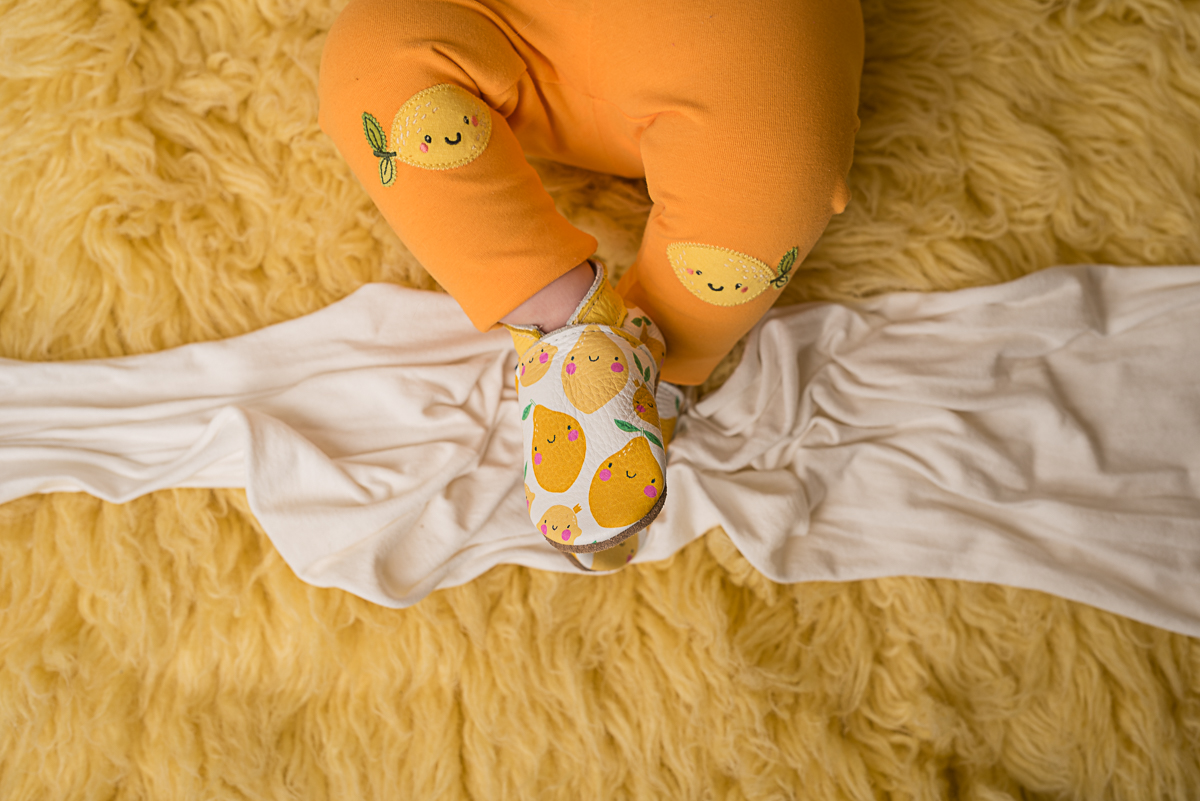
Common questions about babies discovering their feet
Is it normal for a baby to suck on their toes?
Yes. Many babies explore their feet with their mouths. This is usually normal sensory play. Keep the floor clean, check that socks are secure, and remove any small items nearby that could become choking hazards.


Do babies discover their hands before their feet?
Often, yes. Hands are closer to the face and easier to see during early months. Many babies notice their hands first, then become interested in their feet as they gain better control of the legs and trunk. The order can vary.
Why does my baby keep grabbing their feet?
Grabbing the feet is a way to explore the body and practice coordination. It may also help the baby learn how movement feels. It is usually not a sign of pain unless the baby seems distressed or the foot looks swollen, red, or injured.
Should I help my baby touch their toes?
You can gently point out the toes or place a toy near the feet, but do not pull, stretch, or force the legs. Let your baby control the movement. Stop if the baby resists, cries, or appears uncomfortable.
When should I call a doctor about my baby’s feet?
Call your pediatrician if one leg moves much less than the other, the baby loses a skill, the legs seem unusually stiff or floppy, or you are worried about movement or vision. For urgent concerns, such as a sudden injury, severe swelling, color change, or intense pain, seek prompt medical care.
Key takeaways
- Babies often discover their feet between 4 and 8 months.
- Looking, grabbing, kicking, and mouthing the feet can all be normal forms of exploration.
- There is no exact age when every baby should touch their toes.
- Supervised floor play gives babies a safe chance to explore.
- Use corrected age when considering development in a premature baby.
- Talk with your child’s pediatrician about skill loss, one-sided movement, unusual stiffness, floppiness, or other concerns.
Conclusion
Most babies discover their feet during the middle months of the first year. The behavior may begin with a few kicks or glances and grow into grabbing, toe sucking, and playful movement.
Give your baby safe floor time, keep the legs free to move, and watch the whole pattern of development. If something feels unusual or a skill disappears, contact your pediatrician rather than relying on a single milestone or age range.
