
Most baby birds stay in the nest for 10 to 30 days, but some leave within hours while others need several months.
Knowing how long do baby birds stay in the nest helps you understand what you see in your yard. A tiny bird on the ground may not be abandoned. It may be a healthy fledgling learning to fly while its parents watch from nearby. This guide explains nesting times by bird type, signs of trouble, and the safest way to help.
How long do baby birds stay in the nest?
Most songbird babies stay in the nest for about 10 to 21 days after hatching. Some small birds leave in less than two weeks, while larger birds may remain for three to four weeks.
The answer to how long do baby birds stay in the nest depends on more than age. Bird species, body size, food supply, weather, predators, and nest location all matter.
Here are common ranges:
• Small songbirds, such as chickadees and wrens, often stay 12 to 16 days.
• Robins and many sparrows usually leave after 12 to 16 days.
• Blue jays and cardinals may stay about 17 to 21 days.
• Woodpeckers and other cavity nesters may remain for 18 to 30 days.
• Owls may stay in or near the nest for 4 to 8 weeks.
• Eagles and other large raptors may depend on the nest area for 8 to 12 weeks or longer.
• Ducks, geese, and other precocial birds may leave the nest within hours of hatching.
A nestling is a baby bird that still depends on the nest. A fledgling has left the nest but may not fly well yet. This difference is key when deciding whether a bird needs help.

What affects a baby bird’s time in the nest?
Birds do not follow one fixed schedule. Their development follows a pattern shaped by biology and the risks around them.
Bird species and body size
Small birds grow fast because they face many threats. Leaving the nest early can reduce the chance that a predator finds the entire brood.
Large birds grow more slowly. Their wings, muscles, and hunting skills need more time. This is why an eagle chick stays near its nest far longer than a sparrow.
Nest type
A nest placed in a tree may be harder for a young bird to leave safely. A cavity nest gives better protection, so the parents may keep feeding the young inside for longer.
Ground-nesting birds often use a different strategy. Their babies may hatch with open eyes, downy feathers, and the ability to walk soon after birth.
Food and weather
Warm weather and steady food can help chicks grow on schedule. Cold rain, drought, or a lack of insects may slow growth.
Storms can also push a baby bird from the nest too soon. In that case, the bird may need help even if it looks almost ready to fly.
Predators and disturbance
Parents may encourage chicks to leave early if a predator discovers the nest. Loud noise, tree work, pets, and people can also disturb a nesting site.
Still, parents rarely abandon a nest simply because a person walked near it. Most birds rely on speed and concealment rather than a strong human scent rule.

Nestlings, fledglings, and hatchlings
Understanding bird development makes it easier to answer how long do baby birds stay in the nest without guessing.
Hatchlings
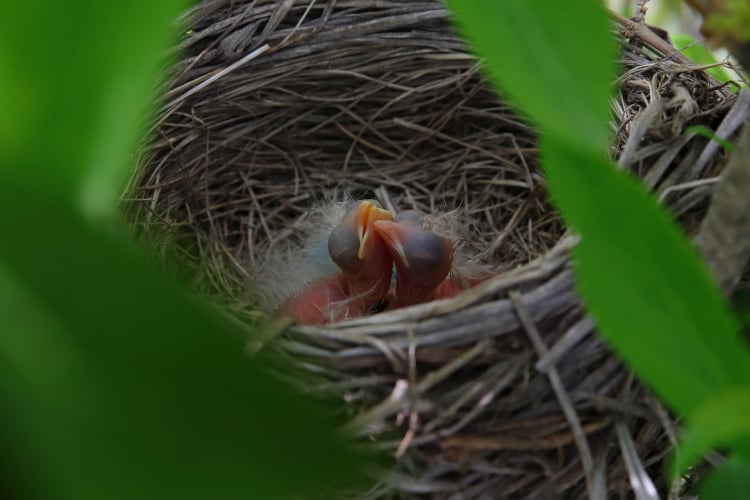
Hatchlings are newly born birds. They may have little or no down, closed eyes, and weak movement. Most cannot control their body temperature or survive without parental care.
A hatchling found outside the nest needs urgent attention. If possible, return it to the nest. Parent birds can continue caring for it after human contact.
Nestlings
Nestlings have begun to grow feathers but cannot fly well. They may grip with their feet, stretch their wings, and call loudly when hungry.
A nestling on the ground may have fallen or been pushed out. It should usually be placed back in the nest if you can do so safely.
Fledglings
Fledglings are fully feathered young birds that have left the nest. They often hop, flutter, or make short flights.
Their parents may stay close but remain hidden. The young bird may beg for food, and an adult may feed it several times each hour.
This stage can last several days or weeks. So, how long do baby birds stay in the nest? Often, not as long as they stay under parental care.
Why do baby birds leave the nest so soon?
Leaving the nest may seem risky, but remaining there can be even more dangerous. A nest holds several young birds in one small place. Predators can find it, and disease can spread through crowded nesting material.
Young songbirds often leave before they can fly well. Their short hops and weak flights spread them across a wider area. This makes it harder for one predator to catch the whole family.
Parents continue to feed fledglings on the ground. They may use soft calls to guide them toward shrubs, low branches, or safer cover.
A young bird that looks helpless may be following a normal path. Its best defense is often hiding among leaves while its parents provide food.
One useful lesson from bird rescue guidance is simple: do not judge a fledgling by its poor flight alone. Look at its feathers, alertness, injuries, and location.

How to tell whether a baby bird needs help
Before helping, watch from a distance for at least 30 to 60 minutes. Parent birds may avoid the area while a person stands nearby.
Signs of a healthy fledgling
A healthy fledgling usually has:
• Full or nearly full feathers
• Bright, open eyes
• The ability to hop, stand, or grip
• Normal movement on both legs and wings
• Calls that bring nearby adults
• No visible blood or major injury
Move pets indoors and keep children away. If the bird is in danger, place it under a nearby shrub or on a low branch.
Signs of a nestling that needs assistance
A nestling may need help when it has:
• Bare skin or only a few feathers
• Closed eyes or poor control of its head
• Trouble standing or gripping
• A cold, weak, or unresponsive body
• An obvious fall from a high nest
If you can see the nest and reach it safely, return the baby bird. Do not climb onto a roof or unstable branch.
Signs of injury or illness
Contact a licensed wildlife rehabilitator if the bird has:
• Bleeding
• A broken wing or leg
• Trouble breathing
• A cat or dog bite
• A drooping wing
• Swelling or severe weakness
Cat attacks need quick attention, even when no wound is easy to see. Bacteria from a cat’s mouth can cause deadly infections in birds.

What to do if a baby bird falls from the nest
The safest response depends on the bird’s stage.
Look at the bird from a safe distance.
Check whether it has feathers and can stand.
Search for the nest above and nearby.
Return a naked or lightly feathered nestling to the nest.
Place a feathered fledgling in nearby cover if it is exposed to traffic, pets, or predators.
Keep cats and dogs indoors.
Call a wildlife rehabilitator if the bird is injured, cold, or clearly orphaned.
You can make a simple replacement nest for a fallen nestling. Use a small basket or plastic container with drainage holes. Line it with dry grass or paper towels, then secure it near the original nest in a shaded place.
Do not use cotton, string, yarn, or loose fabric. These materials can wrap around a baby bird’s toes or legs.
Watch from inside or far away. If the parents return, leave the bird with them. If no adult appears after several hours, contact a licensed rehabilitator.
A common mistake is taking a healthy fledgling indoors. This removes it from its parents, who are usually the best caregivers.
What baby birds eat
Baby birds need the right food for their species. Many songbirds eat insects, even when the adults later eat seeds or fruit.
Do not give a baby bird:
• Milk
• Bread
• Birdseed
• Water by mouth
• Dog or cat food without expert guidance
Food or water can enter the lungs and cause choking or aspiration. A weak bird also needs warmth and professional care before feeding.
Bird parents provide more than meals. They bring food at the correct size, remove waste, protect the nest, and teach young birds where to hide.
This is another reason the answer to how long do baby birds stay in the nest should not be confused with how long they need their parents. A fledgling may leave the nest but still rely on adult care for weeks.
How long do different birds stay in or near the nest?
The timeline varies widely across North American birds.
Songbirds
Many songbirds leave the nest between 10 and 21 days after hatching. They may remain near the nest area while parents feed them and teach them basic survival skills.
Robins
American robins often leave after about two weeks. Their young may spend time on the ground or in low shrubs before they can fly well.
Bluebirds and chickadees
These small cavity nesters commonly remain in the nest for roughly 16 to 21 days. Parents continue feeding them after they leave.
Owls
Young owls may leave the nest before they can fly strongly. They can climb nearby branches and call for food while adults remain close.
Eagles
Bald eagle chicks often stay in the nest for about 10 to 12 weeks. After fledging, they may still depend on their parents while learning to fly and find food.
Ducks and geese
Ducklings and goslings are precocial. They may leave the nest within a day and follow a parent to water or feeding areas.
These examples show why there is no single answer to how long do baby birds stay in the nest. A bird’s family group matters more than a general calendar.
How long do baby birds stay with their parents?
Many young birds remain dependent on their parents after leaving the nest. Songbirds may receive food for one to three weeks, though some species need care for longer.
Raptors often stay dependent for several months. They must build strength, practice flight, learn to land, and develop hunting skills.
Parents may appear to ignore a young bird at times. This is normal. Adults often hide nearby, and constant calling could attract predators.
A fledgling’s loose, clumsy movement is similar to a child learning to ride a bike. The skill is coming, but balance takes practice.
During this stage, people can help most by reducing danger. Keep pets inside, avoid trimming trees during nesting season, and give the family space.
How to protect baby birds in your yard
You can support nesting birds without touching them.
• Keep cats indoors, especially during spring and summer.
• Use window decals or screens to prevent strikes.
• Avoid cutting trees and shrubs during active nesting periods.
• Keep bird baths clean and shallow.
• Plant native shrubs that offer cover and insects.
• Avoid pesticides near nesting areas.
• Watch from a distance instead of checking the nest often.
• Contact a wildlife expert before moving an active nest.
Birds face natural risks, so not every chick will survive. Your goal is not to control nature. It is to remove avoidable threats while letting wild parents do their work.
If you find a nest in an unsafe place, call a local wildlife agency before taking action. Laws may protect active nests, eggs, and native birds.
Common mistakes to avoid
People often mean well but accidentally cause harm. These errors are easy to prevent.
• Do not assume a quiet nest is abandoned. Parents may be feeding away from it.
• Do not move a fledgling far from where you found it. Its parents may be nearby.
• Do not keep a wild bird as a pet. Native birds need specialized care and may be protected by law.
• Do not force food or water into a bird’s mouth.
• Do not handle a baby bird more than needed.
• Do not use a nest made from string or fuzzy fabric.
• Do not wait to seek help after a cat attack.
The best rule is to pause, observe, and ask an expert when the situation is unclear. A few calm minutes can prevent a well-intended mistake.
Frequently Asked Questions About How Long Do Baby Birds Stay in the Nest
How long do baby birds stay in the nest before they can fly?
Many songbirds leave after 10 to 21 days, often before they fly well. Large birds, such as eagles, may stay for 10 to 12 weeks.
Do baby birds stay in the nest at night?
Most nestlings stay in the nest at night. Fledglings may sleep in shrubs, low branches, or other cover after leaving the nest.
How can you tell if a baby bird has been abandoned?
Watch from a distance for 30 to 60 minutes. If the bird is featherless, injured, cold, or still alone after observation, contact a licensed wildlife rehabilitator.
Should you put a baby bird back in its nest?
Return a bare or lightly feathered nestling to its nest when you can do so safely. A fully feathered fledgling usually belongs on the ground or in nearby cover.
Do mother birds reject babies touched by humans?
No. Most birds do not abandon a baby because a person touched it. Still, handle the bird only when needed and return it quickly.
What should you feed a baby bird?
Do not feed it unless a wildlife professional gives clear instructions. The wrong food or water can cause choking, illness, or death.
How long do fledgling birds need their parents?
Many fledglings receive care for one to three weeks after leaving the nest. Raptors and some larger birds may depend on their parents for several months.
Conclusion
So, how long do baby birds stay in the nest? Most songbirds stay for 10 to 30 days, while ducks may leave within hours and large raptors may remain for months. Leaving the nest does not mean a young bird is fully independent.
Learn to tell a nestling from a fledgling, watch from a distance, and protect the area from pets and other threats. When a bird is injured or clearly orphaned, contact a licensed wildlife rehabilitator instead of trying to raise it yourself.
The next time you see a baby bird on the ground, pause before stepping in. Your careful observation may be the help it needs. Share your bird encounter in the comments, and explore trusted local wildlife resources to learn more.